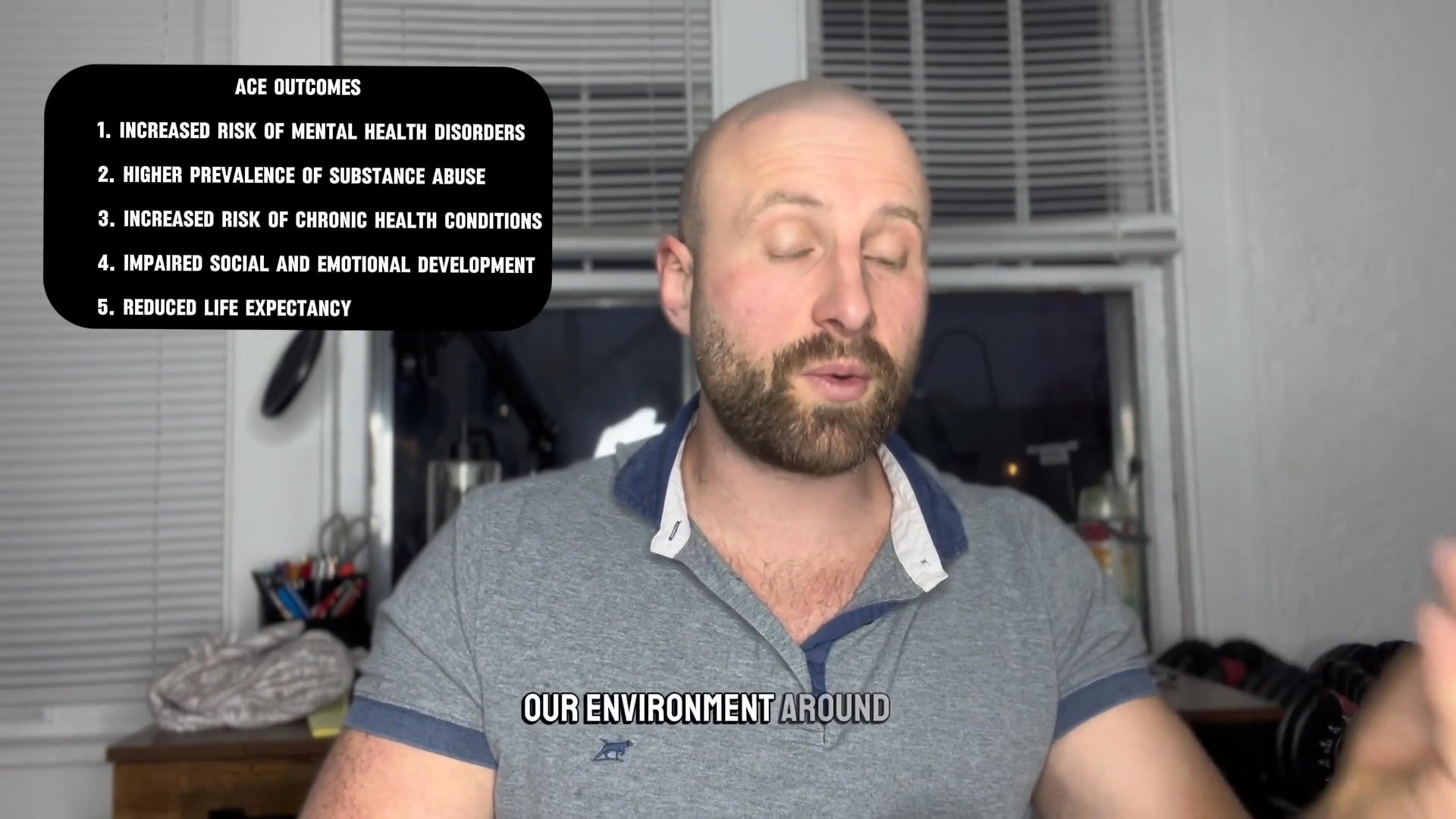
In this educational episode of "Healing Our Hidden Wounds," Evan, our resident mental health and addiction therapist, dives into the significant concept of Adverse Childhood Experiences, or ACEs. He explains what ACEs are, ranging from physical and emotional abuse to household dysfunction, and why they are crucial in understanding the long-term impacts of trauma. Evan discusses the importance of recognizing ACEs from a trauma-informed perspective and how they shape an individual's mental and physical health into adulthood. Join him as he elucidates the critical role ACEs play in trauma therapy and overall well-being, highlighting the importance of addressing these experiences in the healing journey.
There are ten experiences you can have as a child that are highly predictive of forming PTSD, mental health disorders, substance use, and even physical health disorders throughout your life. Knowing about the aces and assessing your own experience could really help give you insight into how you experience life now.
Did you know there are ten experiences you can have as a child that are highly predictive of forming PTSD, mental health disorders, substance use, and even physical health disorders throughout your life? I'm Evan, your resident mental health and addiction therapist, and today I'm going to be talking about adverse childhood experiences, traumas you can experience growing up that are very predictive of developing things like PTSD and many other negative outcomes in every aspect of your life. We know of these from a groundbreaking study from Kaiser Permanente, in association with the CDC, where they looked at these ten different traumatic experiences and how it impacted individuals in the long term.
So here they are. So, for the sake of my memory, I'm just going to go ahead and read each one off. First, we have physical abuse, emotional abuse, sexual abuse, physical neglect, emotional neglect, parental separation or divorce, household substance abuse, household mental illness, mother treated violently, or an incarcerated household member. As I mentioned earlier in this series, the more traumas we've had, they compound on each other. Therefore, the more aces that you've experienced in your life, the more likely you are to have all of those negative health outcomes and severe trauma reactions.
When we're children, our minds are much more susceptible to our environment around us, our brains are rapidly changing, and any of those severe disruptions really changes how we view ourself and the world, how our body and emotions react to all the input we receive. I wanted to share this in the series because knowing about the aces and assessing your own experience could really help give you insight into how you experience life now, how things start to make sense as you put the pieces of the puzzle together.
And this could really help as you start the trauma therapy and healing process.