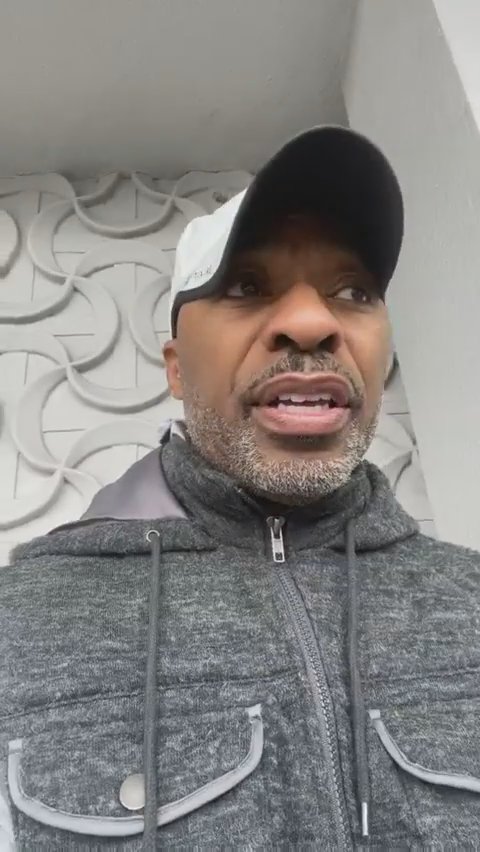
is coming to you a little bit late today. Thank you for joining. If not, thank you for clicking on at a later time. This month, Doctor E. It really comes down to backgrounds, beliefs, and if you really push yourself to think about that boundaries.
Doctor E. is coming to you a little bit late today. I just stepped off the plane and walked from the shuttle to the hotel lobby and jumped right on this live. Thank you for joining. If not, thank you for clicking on at a later time.
This month, Doctor E. breaks down biases and what are biases? It really comes down to backgrounds, beliefs, and if you really push yourself to think about that boundaries. When you're looking at biases, really wrestle with your own background, your beliefs and your boundaries.
Hello, Cadre family. Hope you are all doing well. Doctor E. Here I am coming to you a little bit late today, and I apologize. I just stepped off the plane and walked from the shuttle to the hotel lobby and jumped right on this live. And so, thank you for joining. Thank you for holding on. If not, thank you for clicking on at a later time. And I am trying to really start another series around bias. Last month, we talked about the do's and don'ts of Dei, and I thought this month would be a great follow up to do, breaking down biases and what are biases?
Well, if you think about biases in a real general way, it really comes down to what are we predisposed to, what shapes our perspective? How do we see things? Why do we react the way that we do? And what and where does all of that come from and stem from? And so I want to think about biases in an individualistic kind of way, starting with b, I, a, and s. And so if you understand, or if you define biases as our predispositions or how we see things, or the lens through which we see things react, that shapes and really molds are under our fundamental understanding of actions, philosophies, perspectives, etcetera, then the be in biases really comes down to backgrounds, beliefs, and if you really push yourself to think about that boundaries.
Right. And so my background, for instance, is I'm the product of a single parent household. And everything that fundamentally shapes what I think about in terms of life, in terms of being a parent, in terms of understanding how I react to different responsibilities, has been shaped and grounded by that premise or that that reality of being a latchkey kid raised in a single parent home where tons of responsibilities were heaped upon me at a very young age. So background really becomes important because all of our backgrounds shape how we see things.
And so if you think about background and narrative way, then it's very easy then to take the next step to beliefs. What has that background contributed to? How you see things, what you believe about responsibility, to use my example, what do you think about accountability? How do you hold yourself? How do you look at relationships? How do you engage all of those things really come down to, or really comes down to beliefs and sense of what do you bring to the table in terms of your beliefs and how.
How does that spill over into your expectations from other people? How do you believe other people should be behaving and acting and responding? And how then do the two kind of have a happy medium of meeting? And so you have background you have beliefs and then you have boundaries where many of us have really strong boundaries, particularly when it comes to work, particularly when it comes to relationships, whether it's work relationships or personal relationships. And it could be totally different.
But at the same time, what are those boundaries mean when it comes to how we view whatever it is as being separated by those demarcating lines or those boundaries? So I happen to believe we all have responsibilities as citizens. Some people might believe that those responsibilities as citizens involve other aspects of citizenry, right? So how do we begin to talk about some of those things in terms of our boundaries? And so when you're looking at biases, when you're trying to understand your own biases, really wrestle with your own background, your beliefs and your boundaries.
And as we start to get into the other aspects of biases, that should be the building block in the foundation. So I'm Doctor E. Thank you for watching and I will see you next week.