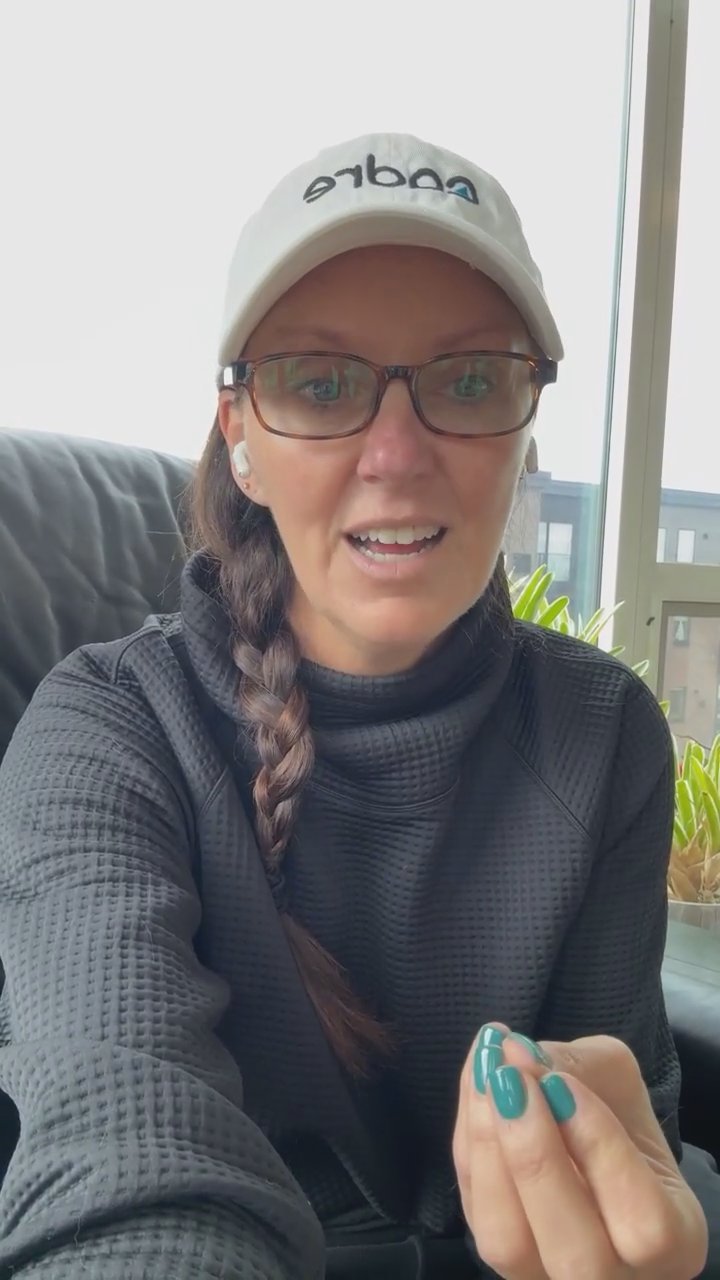
Living abundantly is a perspective of giving and receiving. We practice lifting up those around us, however receiving the same gift of abundance and gratitude can be uncomfortable. So let’s get uncomfortable receiving together.
Hello, Monday. Hello to my assistant Major, who is very much looking for a lot of pets today. Tried to move slow. Moved back from a little earlier this morning, but mostly am grateful to be here with everyone holding space.
On Mondays, it's leading with authenticity. And the title for today is the Art of receiving. Sometimes it can be very vulnerable to ask for help and then receive that help. If you're like me, sometimes asking for that help can be really, really hard.
Major: Are we really great at when we raise our hand, receiving help from others? He says sometimes it's really hard to receive that hug. The art of receiving it really is an art. It's giving ourselves permission to not be okay, Major says.
In my Strengths Finder themes, I have high responsibility up there in my top 10. When you raise your hand and ask for help, it has to be intentional. Sometimes raising our hand is the most vulnerable human act we can do as a leader. Here are some tools to help build trust.
As leaders, it's important that we remember that the people that surround us want to give back to us as much as we give to them. How might we consider receiving and allowing that receipt to be okay? Major is receiving all the love from you guys today.
Hello, Monday. Hello, Cadre. Hello to my assistant Major, who is very much looking for a lot of pets today. Like. Like a lot of pets. He's just here. Hopefully I didn't make anybody a little seasick on that one. Tried to move slow. It's Monday, and I appreciate that you are making an adjustment with me today. Moved back from a little earlier this morning, but mostly am grateful to be here with everyone holding space. So on Mondays, it's leading with authenticity. And the title for today is the Art of receiving.
Now, I don't know about everybody, but I do know that sometimes asking for help can be really, really hard. So when we think about being a leader, managing a team, leading a team, showing up for everybody around us, sometimes it can be very vulnerable to ask for help and then receiving that help. So we are very great, all of us, at looking around, seeing where there might be a need outside of us, seeing where someone else might need us, whether it's helping them to move or helping them to complete an assignment or covering a shift for somebody in need.
But if you're like me, sometimes asking for that help can be really, really hard. Hey, Zach, welcome. Hey, Elise. Welcome. Nice to have you here. I'm going to share with you guys my trusted supervisor. This is Major. He's here always with the hugs, the pets, and the love. So the art of receiving today, Mondays are leading with authenticity. So I'm going to go back to go forward a little bit. You can see the giving that Major has is fur. Today I'm fully receiving it and wearing black. Excited to be here now on this day, this beautiful Monday.
It's Chile in Minneapolis. But today's topic is really about the art of receiving. And if you just dialed in, I'm just gonna repeat this little segment here that says we are really, really great at offering help. Offer. Offering recommendations, offering advice if someone needs a hand moving or decorating their yard for Halloween. Or maybe they need somebody to cover their work for the day because they're out sick. We're really great at saying yes, raising our hand and saying yes. But are we really great at when we raise our hand, receiving help from others?
I don't know if I always am. Truthfully. I love being able to offer service, offer ideas to everybody around me. And Zach and Elise, since I know you both, I know you're both really great at that too. But sometimes it's really hard to receive that hug. It's really hard to allow someone else, when they see you in a state of despair, to open up and Say I need your help today. And sometimes that help could be as simple as I don't need any response back. I just simply need someone to listen so I can externally process out all of the emotion and let it go.
Otherwise I have to carry it all. Or maybe it's offering that hand to help paint a wall. Now, let's be super, super honest. If you know me, I am horrible at receiving help because I believe I am a superhero. Facts. However, just knowing that someone is there on the other side of the phone or the screen, or even just know that they're willing to just lean in and help out whether or not you receive it, just the simple act of knowing that someone cares enough to be there. Sometimes that's enough. So the art of receiving it really is an art.
It's giving ourselves permission to say, it's okay to not be okay. It's okay to not be strong every second of every day. And it's okay to allow someone who wants to be there for you to be there for you. Now I again, if I am sharing my own instances or experiences, I'm going to do a quick share and then I'm going to give you a couple of tools. So my quick share is, you know, in work a lot of times in my Strengths Finder themes, I have high responsibility up there in my top 10. So if you've ever taken the strengths finder inventory, there's a list of 1 to 34 themes and responsibility is high for me.
So what that means is, for me, how it shows up is if you say you're going to do something, then you need to do it in the timeline that you said you're going to do it. Or give me a heads up that it's not going to happen because if I'm asking for help, it's really vulnerable already for me to ask. And if it doesn't happen, then it feels like I'm not important or what I asked isn't important. Now I know logically that's not true because life gets busy and schedules get busy and people have to plot twist all the time, myself included.
But people that run with high responsibility themes, that's what it feels like. Now. It's funny because we have a manager on our team at the studio. I use a lot of examples there who Responsibility is her number two theme in her list of strengths. And it's great. I love working with people with that theme. One, because I know it really well and two, because I also know that they are going to be the people that will Say yes to everything, especially if that important, that relationship is important to them.
But what I also know is they'll say yes to things when they don't even have the capacity for it, but because the person that asks them is so meaningful to them and they respect them so much that they're going to say yes anyway. So it's great when I get to work with clients that have that theme because I can help them set bumpers around it. Your responsibility isn't to always say yes. Sometimes your responsibility is to hold people accountable instead and then communicate. So communication and accountability, those are two deal breakers for me.
If you say yes, then my expectation is you'll be accountable and you'll communicate along the way. Now, each of us has different things that can build those relationships so that when we're receiving the gift of someone else helping us out, it feels good. And sometimes raising our hand is the most vulnerable human act we can do as a leader. Because what I've learned, and Elise and Zach, I know that you both lead people as well, but what I've learned is raising our hand to ask for help is hard. And when you're the leader, everybody expects you to have the answer.
So when you raise your hand and ask for help, it has to be intentional. And it's sometimes going to be very vulnerable. Because we think as the leader, we have all the answers. We don't. We think as leaders, everything falls on our shoulders and we have to do it all. We don't. We just need to be really good at setting expectations, holding people accountable, and understanding that everyone in the equation is human too. Sounds easy, but it's not. So here are some tools that I've learned along the way.
1. When I'm working with someone new, I give them something easy to help build trust. And as a win, something simple. Something simple that if I had to do it myself, it would take me five minutes. And if I had to explain it to somebody else, I could do it really quickly. Why do I start with something simple? Because I want the relationship to be set up for success. So a simple task could be. Could you write a communication to send to the team? Whatever that communication looks like? It could be something super simple like that.
What this allows me to do is understand their communication patterns. Also helps me to understand what they need for clarity, to set expectations and build trust. And by writing that communication, it means that that's one less thing that I have to do on my list of to do's. So if I'm thinking about it logically, And I look at the Ben Zander model, the art of possibilities model. When I ask for help and get vulnerable in tiny bite sized chunks, what that creates is a circle that expands out. Now, that expansion means that I'm investing in someone else, they're investing in me, and we're building trust and communication together, and it becomes expansion.
Now, on the flip side, when I ask somebody to do something too soon, before trust is built or vulnerability isn't there, what can happen is an upward and a downward spiral. Maybe this happens in competition with a colleague sometimes, or somebody you feel intimidated by, or I feel intimidated by an upward, downward spiral in a conversation is I'm going to say or do something that makes me look really good and at the same time is going to make somebody else not look so good. So upward, downward spiral, when I lift up, that means somebody else has to squish down and get small.
Now, if we're looking at possibilities and we're looking at building trust and being vulnerable, being able to hold an expansion space where I'll hold space for you, if you hold space for me, I'll set you up for success if you set me up for success. That's expansion. That's the art of possibility. So when we go to those places where we need to receive help, do we want to be in an upward and a downward spiral, or do we want to be in a space where we feel vulnerable, comfortable, and everybody can expand together?
Now here's what's really cool about the team that Zach and I have curated at Psychobar is that on any given day, somebody can ask for help and they'll have at least two or three people that will volunteer and say yes. That's not because of Zachariah. That's because the space that has been curated and created by a team of people who are passionate about a common outcome, a common goal, are willing to invest and get vulnerable. They're willing to raise their hand and say, I need help. And it could be something for the studio.
It could be something outside of the studio, like I'm moving today, or I need to look for a new full time job, can you help me? And people will raise their hand left and right because trust has been created. A space where people can be vulnerable has been built so that when we ask, it's not I'm asking all the time. And now I'm that person on the team who is always complaining. It's when I'm asking, it means that there's something real and people can share what's happening. So the art of receiving also means that we are giving from a place of connectedness.
So the tools for today, thinking through small wins. What are simple, simple tasks to help build trust so that when you're asking for help or when someone is coming to you to offer help, you're able to receive because maybe your values are high responsibility or maybe you value just an ear. So it's really important that first you understand what are the most important things to you when receiving because oftentimes that's how you give. So there's your little insight right there. Two, taking a look to identify is what you're receiving or what you're giving.
Is it creating an expansive relationship, one that's collaborative, or are you in an upward and downward spiral? Lifting someone up while pushing someone down, lifting yourself up while pushing someone down, pushing yourself down to lift somebody else up. Those are the possibilities. So that's your second tool is really trying to address what happens when you're receiving. Do you feel like you're being forced to receive something or do you feel like you can authentically feel safe in that space?
As leaders, it's really important that we remember that the people that surround us want to give back to us as much as we give to them. So in those moments when we're vulnerable that we need to raise our hand and say, hey, I need help, it is a moment for someone else to shine. So how might we consider receiving and allowing that receipt to be okay? Major is receiving all the love today. I'm receiving all the love from you guys today. I hope you have the best day and tune in later and check out the schedule the rest of the week.
We have some really amazing contributors out here, so find one that resonates with you, add it to your calendar and take some you time today. Thank you for joining me and allowing me to receive your insights.