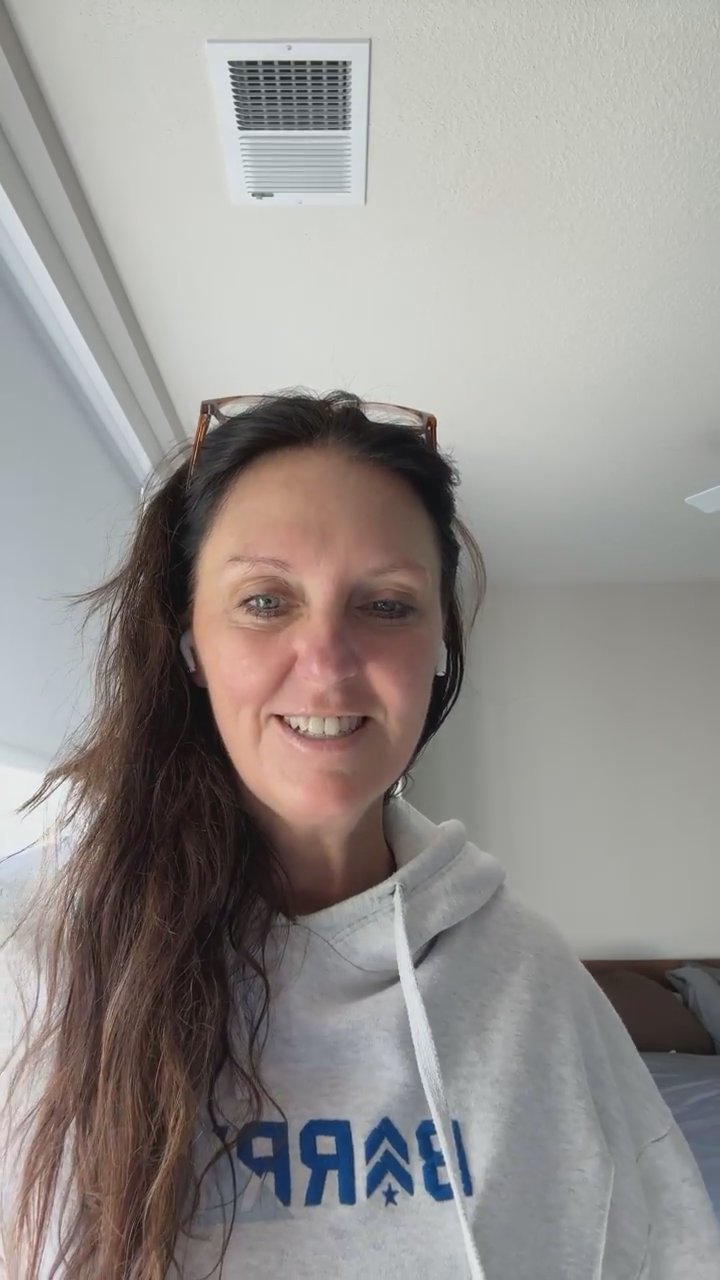
Living abundantly is a perspective of giving and receiving. What if we give more appreciations to our teams, co-workers, family members and to ourselves
Today is all about give a little, take a little. If you have anything that you're feeling right now in this moment, type it in the chat. All of it is welcome.
Today is really around the November theme of abundance and gratitude. Why is it hard to receive compliments? Why might it be hard for you to receive a compliment?
Giving compliments can transform individuals, relationships, and environments. In order to continue to build healthy relationships, we need to find ways to use our words. Sometimes that might mean altering my words slightly so that they can be received less harsh.
When we give, we also receive. It enhances our perspectives. It creates connection and enhances communication. It can boost self esteem, your self esteem. For all of us to expand, we need both. Reflect on it, receive.
So I went a little long today. My apologies for that but I feel very passionate about this topic. Whatever you feel today, however you're feeling as we transition closer to the holidays, feel it. And then allow yourself the opportunity to move.
Foreign hello everybody. It's a Monday. Hope you're all having a great one. My apologies. I think I double hit my buttons at 10 o' clock this morning so my live stream was not so live. But we're here and it's Monday and I am excited for hello, Speak Wonder. Hello, Brooks. Hello Rick. As you pop on in, I'd love to hear a word or phrase about how you feel right now in this moment. I feel curious. We have our little supervisor here making sure that we are on track. He is sitting at attention, which is kind of comical because his name is Major, so there's that.
So today, give a little, take a little. Yeah, for sure. If you have anything that you're feeling right now in this moment, type it in the chat. Something that you feel, something that you're excited about, maybe even something that you're not excited about, all of it is welcome because all of it is yours. In this moment, feeling me. You know what? I love that. Thank you for sharing, honest and real. I am feeling emotional today. It's got to be the full moon that's coming tomorrow because I have a whole bunch of different emotions that I've been oscillating between smiling, crying and it's only 10:30am Central Time, so it's been a lot.
But today is all about give a little, take a little. So when we look into the month of November, we are in the last 60 days, less than 60 days of the year of 2025, the year of the snake, the year of shedding layers. The year of the 9, 2025 adds to a 9. So numerically there's a special meaning with the number 9. The month of November starts to transition us into a new season, sometimes a new quarter, depending on your company cycle. But it also is the beginning of a journey through holiday season.
And sometimes holiday season can be super abundantly joyful. And sometimes for some people there can be a lot of emotion, maybe dread or conflict or sadness, you know, depending on where you're at in your grief phases with the loss of a job or a family member or a friend, it could be. Could bring up a lot of emotion of all different sorts. For me personally, I feel conflicted with the holidays. I'll be honest about that. I feel excitement because I love to bring other people joy during the holidays.
But I feel great sadness because I miss my mom and dad terribly. But I get to feel it all and I allow myself to. So give a little, take a little. Today is really around the November theme of abundance and gratitude. Right. We think about Thanksgiving and we tie gratitude with thankfulness and Thanksgiving in that holiday. And so when I think about this concept of giving a little, taking a little, it really is coming from a place of recent experience. So I've shared before that we have a team of people that work at our studio and it's really fun for me to highlight and recognize the strengths of our team and it's really not fun for them on the receiving end of my lavishing them with compliments and things that I've seen in them and how far they've grown.
Most recently, we have a person on our team who has been our general manager and has done an incredible job. When they came into this position, they were also a good friend of mine going through a transition in careers. And so I think we all thought that she would say yes to this role and it would only be a couple of months as she looked for a different job in her regular career. And what went from two months, it turned into 18 months, maybe even a little bit longer. And she did so much and it's been so impressive to see a friend of mine, but also a team member of ours grow into this leadership space.
So we're sitting at coffee on Friday discussing how her role is going to shift because she's taking a different full time job and wants to stay integrated with the team and that would serve everybody really well until she teeters on the line of balance. So I'm very conscious of that. So I was giving her, I said, we're gonna have a gene moment. And she looked down and she couldn't look at me because she knew what was going to come because I'm very emotional and I love to lift people up. And so my share with her was in the last year, all the ways in which I've watched her grow and how exciting it was to one, be her friend, but also her, her boss and coworker and to see how much she's grown in the last year.
And she stayed looking down and her face started to flush and. And it was just a reminder that it's really hard to receive. Right? So we can give and give and give all types of appreciation to people around us, an abundant amount of gratitude for those around us. But as someone on the receiving end of all of that, I can also relate that it's hard to hear why. Why is it hard to receive compliments? Type it in the chat. Why might it be hard for you to receive a compliment? So I have a couple of theories and then I want to talk about the power of appreciation.
So positive psychology, appreciative inquiry. So for me, if I just keep it real. For me, it's. When I hear all of these things, I think sometimes I'm waiting for the shoe to drop. Okay, great. Are they sharing all of these great things with me? Because now the shoe's gonna drop and they're gonna share a negative. Why do I think that? Probably it's happened in the past, right? So somebody gives me a disingenuous compliment so that they can come at me a little bit harder with something that they think is a weakness of mine or something I need to improve or something I did wrong, that doesn't feel good.
Right. We learn about the sandwich, right? Oreo, little Oreo cookie thing where we give a compliment, give some constructive feedback, give another compliment. Well, we've been learning that for so long that I think everybody is aware that when they get a compliment, something not great is coming next and then they're going to get another compliment. So we've conditioned ourselves to believe that something bad is going to come too, and it doesn't have to be bad. Constructive criticism doesn't always have to be bad.
Sometimes the way it frames isn't great and can feel not good. But it can also be an opportunity to help us grow. Or maybe there's a blind spot that we don't see and we need to reconnect to. But what if. What if we allowed ourselves the possibility that somebody has something nice to say and that's it. So speak wonder. I want to come in to you and say, remembering joyful gatherings from the past for the holidays. You feel wistful. I love your creativity with words always. And then as it relates to compliments, we love being humble.
However, false humidity. Humility is not winsome at all. Exactly. So it's really important that one. I find that if somebody wants to give me constructive feedback, usually I just say, just do that. I know that you appreciate me, but I want to hear what's coming next. So let's just go there. And so I'll preempt it a little bit if that's that really what the conversation is going to be. Because I don't want whatever they're going to say before or after that to feel like just fluff. Now sometimes when people give us constructive criticism in between a couple of compliments, it makes the compliments not feel as complementary.
Right. So I've been studying for years and certified in coaching techniques that all channel around appreciative inquiry and positive psychology. I Am a certified coach in a number of personal personality inventories. And the ones that I choose to use with my clients are the ones that are grounded in positive, appreciative, positive psychology and appreciative inquiry. So that's science. It's actually a science. The ones that I have a couple of certifications and other inventories. But as I learned more about them, I realized that they didn't come from the same place.
And so it's great for me to have that knowledge, but it doesn't ring true to my core, the core of who I am and how I want to work with my clients or my teams. It just doesn't feel right. But what I wanted to share today is giving compliments, being able to share the things that people are good at, recognizing the strengths in someone else that could feel intimidating to us because we have this mindset, this the art of possibility. Right. There's this Ben Zander. That's his name. Sorry, I was trying to think quick.
He wrote this book on the art of possibility, and inside that it's. If we're going to give somebody a compliment in the way that we think, normally we spiral up, right? But when you spiral something up, something has to come back down. So I'm not trying to give a compliment or I'm not trying to say something to lift someone up so I feel better or push someone else down so I feel taller. It's really more of when you look at it from the center. When we can feed more into the center, we push that out and.
And we can all win together. We can all feel connected together. So in the space of appreciative inquiry or the power of a true appreciation, when we share those insights, those compliments, we have the ability to actually transform individuals, relationships, and environments. So just because maybe you don't agree with somebody, it doesn't mean that you need to push them down. In order to continue to build healthy relationships, we need to find ways to use our words so that we can honor our truth and honor the truth in the perspective of those that are around us.
So sometimes that might mean altering my words slightly so that they can be received less harsh. Sometimes that might mean checking in with my own ego. Am I coming from a place of ego as I say this? And if yes, then is it to make me feel better? So spiral up so they feel worse, Spiral down? Or am I using my ego in a way that can be expansive for all? Now, that might sound confusing. I feel like I need to have a diagram with that. But when we think about this. Ego is, is never going to go away. It's always a part of us, right?
And, and that's okay because that's also been a survival mechanism. But there's different ways that we can use ego. We can use ego as a barrier to help us feel better or more than others to push them down. We can use ego in a way that says, here's what I have to offer. I'm going to give this out. Maybe it will be received, maybe it won't. Just takes a lot of work, right? It takes a lot of depth. When we're giving compliments to other people from an individual perspective and we really think about that power of appreciation, it can actually help in a few ways.
So I did some research, went through a bunch of my books. One of them that I love, that I keep on hand on my shelf all the time, that I use a lot, there's a bunch of different. There's eight different principles around appreciative inquiry and the one that is really important today. And Speak Wonder. Going to appreciate this one because you're so creative with your words and how you use them. Even in the chats, I'm like, oh yeah, that's a great word. Why didn't I think of that? But the number one principle is the constructionist principle.
Words create worlds. Think about that. Words create worlds. And I'm just going to read a little bit here. It places human communication and language at the center of human organizing and change. It's what gives meaning into a conversation, creates reality in a communication and shares knowledge through social interaction. So there's a whole bunch more, right? This book is dense with information, but when I think about giving a little and taking a little, there's two things that go with that one.
How am I sharing appreciation now? We could bring in the love languages. There's that Love languages for relationship. There's a love language for work environments. So they've really started to expand the target of this, but at the basis, at the core of it. Some people receive appreciation through words. Some people get appreciation through action. Some people get appreciation through more responsibility. They know that you trust them when you give them more responsibility, that's how they feel appreciated.
So there's the knowing myself and how I want to receive and how I feel is natural to give. And then there's also knowing the recipient and what works best for them. So it's a give and take. Sometimes I'm just gonna gush. All the words end with a hug and they will awkwardly receive it. Because they know I have positive intent. And sometimes I will do appreciation with different people by giving them more, more responsibility, more voice in a decision because that is how they feel respected and appreciated.
But here's what happens when we do this, and I did take some notes. It improves our mental health. So when we can have more appreciation for the walk that we're on. The furry legged friend that decides to lay on your foot as a heat warmer, this is a fact, it's happening right now. It can boost self esteem, your self esteem, because one, you're giving a gift that's going to lift up somebody else. So when we give, we also receive. It enhances our perspectives. It allows us to look outside of ourselves, to see how somebody around us might work or interact differently than we do.
So just a few ways with relationship, it creates connection and enhances communication. So when I give appreciation, I receive feedback, I receive maybe a compliment back, and I'm not even fishing for one. Or maybe what they tell me more of is what else they need to be able to be more successful. So that requires me to sometimes take that feedback in to say, okay, that didn't work for them, but cool. I still want to recognize them and so I'm going to still give them something more. And now I'm taking information back so I can do better in the future.
But also there's the taking it in. How might I simply receive the words that somebody else wants to say? So in that moment, our face might flush, we might feel warmth, we might look down because we're embarrassed at receiving all of these things. We might say, no, no, no, no. We might deny it or resist it, deflect it. But here's my invitation to you. Take it, receive it, Receive it, however feels good in that moment. And then when you walk away, write it on a piece of paper, put it in your journal, or just take a few minutes to pause and say, wow, one, I just got a compliment and I didn't get a zinger that followed it, so that means it was real.
And two, they see that in me. Wow, okay, that feels really good. And allow yourself to reflect and receive. Take it. We're really good at recognizing other people around us. We're also really good at being feeling emotionally insecure about somebody else's strengths. And that's okay too. But in the true art of receiving a compliment and allowing ourselves to feel it, feel celebratory for it, it's just another way for us to feel connected, another way for us to feel seen, to celebrate that what we're giving to the world that sometimes we don't think people see, they do.
So the next time you want to offer up some appreciation for someone, do it. Give it to them. But consider a way that might feel good to them and not make them feel uncomfortable or squirm. But then when they give something back, take it. Reflect on it, receive. We need both. For all of us to expand, we need both. So I went a little long today. My apologies for that but I feel very passionate about this topic and I hope that you all have a beautiful Monday. Whatever you feel today, however you're feeling as we transition closer to the holidays, feel it.
Know that it's right. It's yours. And then allow yourself the opportunity to move. Move through it. Talk about it. Be here together here at Cadre. We're here to support you. We'll show up for you every day and sending you all kinds of love. I love that. Ego versus spirit. Thank you, Rick.