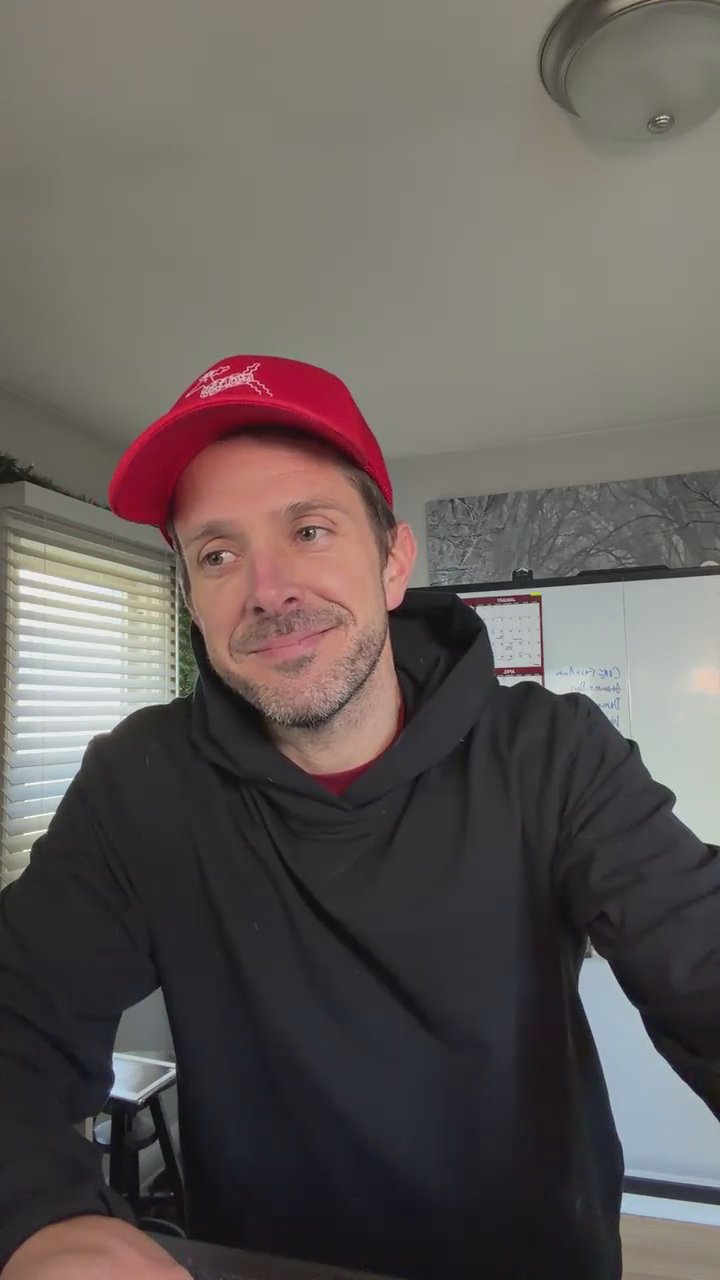
JC greets the audience, references Nazareth's "Love Hurts," and sets a warm, familiar tone. He frames the talk as part of a wellbeing conversation and prepares viewers for the topic.
JC greets the audience, references Nazareth's "Love Hurts," and sets a warm, familiar tone. He frames the talk as part of a wellbeing conversation and prepares viewers for the topic.
JC proposes that feelings of hurt point to underlying information rather than moral judgments, describing how the nervous system notices events without labeling them good or bad. He emphasizes pausing to interpret sensations and cites Viktor Frankl about the space between stimulus and response.
Using the example of being undervalued or taken advantage of at work, JC outlines common responses like trying to get stronger or changing behavior. He notes these responses can be valid but also suggests there are other ways to respond beyond simply gritting your teeth.
JC explains that hurt can remind you of your values and signal that you're diverging from the norm to pursue a unique path. He encourages seeing painful moments as teaching opportunities, amplifying your voice, and returning to purposeful work rather than conforming.
He concludes with a playful comment about the song and the computer sleeping, then signs off with the final refrain 'Love hurts' and an invitation to return tomorrow.
Gosh, that's one of those songs if you listen to the whole way through it. We know that song for a few seconds at a time. If you listen to the whole thing, it's like, oh my gosh, love hurts, love scars, love wounds and marks any heart, not tough or strong enough. Thank you, Nazareth, for one of those songs that just lays it on thick. My name's JC, everybody. If we've never shared time and space together before, thank you for the opportunity to spend some time with you right now. Speak Wonder, nice to see you.
Bop on in. I'm glad I'm here. I'm glad you're here. I know the things I know and I care about you. I am that everyday familiar voice right here in the cadre sphere reminding you that there are lots of ways to be well. In the highs and the lows and the easy and the hard and the light and the dark and the you got to figure it out and I don't know what's going on. You want to know something? A lot of times when we feel hurt or misused or abused or or all those things. Sometimes, actually I would say every time it points to something, right?
One of my favorite things to say is that our nervous system doesn't have an opinion. Our nervous system doesn't say something's happening and it's bad. Our nervous system says something's happening and then we deduce if that thing is good or bad. And sometimes, I would say at least 51% of the time, we go, hey, 1% better, nice to see you, my friend. I would say at least 51% of the time, we make assumptions about what our nervous system is saying. A lot of times we go, something's happening and it's bad without actually thinking, is this bad or is this good?
Or we go, wow, something's happening and it's good. You know, it's like sometimes we go, wow, every, like every, every painful moment is, you know, Is us getting stronger or pain is weakness leaving the body? Like all these kind of things we hear. Sometimes like the assumed positivity or the assumed benefit isn't. And when we take a moment to go, what's really happening right now? And is it something that I can be nourished by, that I can grow from? When we take that moment, that's where our power is.
Viktor Frankl's quote, the space in between something happening to us and us responding to it, that's where our power is. So I'd like to take a moment to talk about when being hurt is actually a really good indicator of some good stuff. So let's say you are being undervalued at work. Let's say your employer or your colleague or your boss or your report takes advantage of you. They ask for more than they give. They will, you know, only give if you ask. Fill in the blanks. A lot of times in those moments when we see it's like, wow, they they kind of misused me there or they kind of took advantage there.
Sometimes we think our response is, well, now I just need to get stronger. Now I need to change. Now I need to not do X until I do Y. And a lot of times that will be true. But sometimes these moments when you're like, I feel humiliated, I feel misused, I feel belittled, I feel like everybody's in on the joke except for me. Sometimes these are the moments that remind you of your values, of your vision, of your speciality, of why you do the things you do the way you do them. And in that moment, you may go, Even though I'm hurting right now, this hurt is an indicator of my value.
Now that doesn't mean you just sit there, grit it and take it. You can choose to do that. But more so what it does is it allows you to amplify your voice and go, you know what? The world says I should work this way. I should respond this way. I should be less of who I am and more of what the cultural normative says I should be. And then I will get what everybody else gets. But here's the deal, everybody. We are all outliers. That's hard to say. We are all outliers. And we all find that special path, that path to, as 1% better would say, to being 1% better when we don't do what everyone else is doing simply because that's what everybody else does.
One of my favorite thoughts is this. Following the industry standard or the best practice of what everybody else is doing and is only getting them so far, If you are attempting to get further, if you're attempting to blaze the trail, it makes no sense to follow the pathway that everybody else is taking. And then you go, okay, JC, but then how do I know what path to take? It's in those moments when your nervous system says something's happening and it may feel like hurt. It may feel like someone pulling the rug out from underneath you.
And then you deduce and you go, you know what this points to? This points to the fact that I'm on the right track. See those moments as opportunities. Not to blindly take it, but to consider what it's teaching you. And then get back to work. A little Nazareth to play out, because I blabbed so long, my computer went into sleep mode, so we're going to have to wait a second, but it's worth it, because the schmaltziness of Nazareth singing Love Hurts is worth it. Love hurts. We'll see you tomorrow.