The first thing you learn when you set boundaries is how people in your life respond to boundaries. Feelings are an important data point, but they are not a great basis for decision making. Work is sometimes the most dangerous form of procrastination.
Betsy: Staying connected without overgiving. The first thing you learn when you set boundaries is how people in your life respond to boundaries. My hope for myself and my relationships is that they are two way.
Feelings are an important data point, but they are not a great basis for decision making. Work is sometimes the most dangerous form of procrastination. Quitting your habit is not the same thing as quitting your habit.
If I let people fill me up, then there's always overflow and I can always give from the overflow. Staying connected without over giving requires a great deal. Have the two way street let people pour in to you as well as you pouring into them.
I'm grateful to be here. I'm grateful that I'm feeling better. Have a great, great week, Cadre. I will see you in the app.
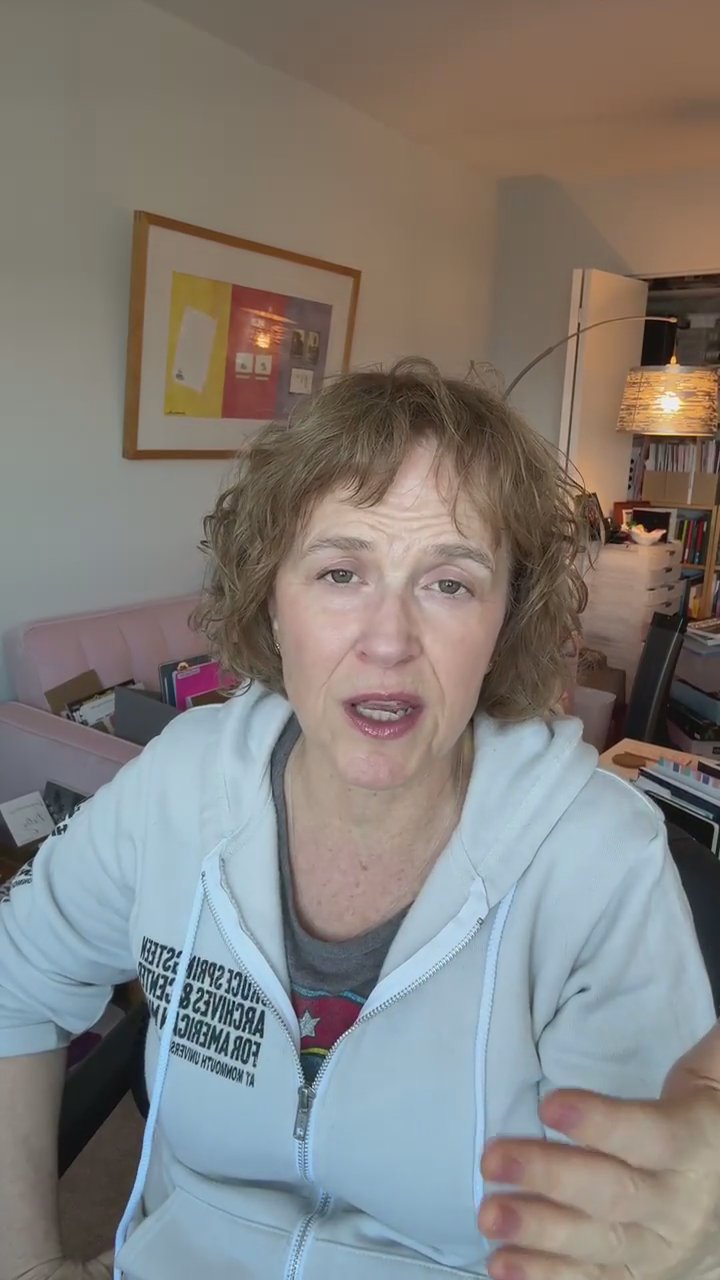
Hey team, it's Betsy, live from Silver Spring, Maryland. And I'm gonna take these off. I have. You are seeing me. I have Covid. I have Covid. This is the first sort of, excuse me, public talking I've done besides on the phone in quite a little while. I've been sick for a couple weeks. I had a head cold and then I had Covid. So. But I wanted to be here with all of you today. I am feeling better. Not 100%. I get tired very easily. Still clearly have some symptoms, but I am doing better. And my question for all of you is, how are you?
How are you today? Oof. Lot going on in the world still. Still a lot going on in the world. That's not what I'm here to talk about. The topic this week is staying connected without over giving. And my rules of engagement that have to do with staying connected without over giving. Which is a lot about boundaries. Which is a lot about deciding who you are and what behavior is acceptable from you to others and from others to you. And then having the courage to live into those boundaries. Live with those limits.
Yeah. Staying connected without overgiving. The first thing you learn when you set boundaries is how people in your life respond to boundaries. When you set healthy boundaries. Not you have to do this, but you can do that. And when you do that, here's how I'm going to respond. And then you make good on that. You know, if you start talking about my body in this way while we are at family dinner, I am actually just gonna leave or I'm gonna change the topic three times. And if you persist, I'm gonna leave.
Whatever it is, whatever your boundary is, and you can know it in your head, you can express it to someone else, whatever it is, you learn how other people respond to it. So the first thing I would say about staying connected without over giving is, is that you don't always get to choose whether you stay connected. Once you stop over giving. A lot of people are going to self select. Not a lot. I don't know your life. Sometimes people will self select out of your life because they are relying on your over giving.
It's what they're getting getting out of the relationship with you. And they are relying on you to keep doing it. And when you stop doing it, they leave. Usually those people who are sort of lampreys, you know, sort of feeding off the side of you, if you're no longer feeding them, they just detach and go find someone who will. It's actually one of the benefits of Boundaries. But in the moment, especially if you're new to it, it feels like a punishment for having boundaries, but it's actually a benefit, it's a reward for having boundaries is that you no longer have people in your life who a one way street for your energy.
It's just a complete one way street from you to them, as opposed to a two way street between the two of you. Which is what my hope for myself and my relationships is that they are two way. I have in the past had a lot of one way relationship energy relationships in my life. Sometimes energy coming from them to me some, but more often going from me to them. Now, women are more prone to this than men are. Just because our socialization teaches us that we should be endless sources of emotional labor and energy for men in general.
And so for a lot of women, especially women who date men, we are used to this one way street. But there's that expectation that we will be one way streets in general because we're expected to do that not only with men in general and husbands in particular, but with our children as well. And so we learn to do it with everybody. And for a lot of women, we get into these friendships where it's all one way and then all one way. It's not a back and forth. That's something I'm pondering. I don't have a lot of wisdom about it yet, but it's something I'm pondering.
This year I've actually made it one of my intentions for the year to really focus on two way street relationships in my life. And my theme for this winter has been releasing what no longer serves me. Whether that's people, whether that's stuff I'm getting rid of, stuff, whether that's habits or mindsets that I have. I mean, last summer was my summer of country music. I decided to do a theme for every season. This year I don't know what my spring theme is. But so far for winter, releasing what does not serve me has been a really great way to examine all kinds of things, including these boundaries.
So that's thing one, you don't always get to choose whether you stay connected without over giving. Because people who rely on you over giving for whatever it is they, whatever hole they're trying to fill, they try and get from other people's energy, they will not stick around for it. And that's good. That means you're leveling up. But it feels very painful in the moment, especially if it's a very close relationship or a family relationship or a Spouse, relate, whatever it is, it can be very, very, very painful in the moment.
Which brings me to. I do have one rule of engagement that I thought about for this. I mean, there are many that could apply, but this is the one I really thought of, number 24, which is going to go much higher on the list as I do. The reorder that's probably going to happen this spring is. Feelings are an important data point, but they are not a great basis for decision making. And this is a great example of what I mean by that. It's important to note that you feel awful, that once you set a boundary, someone else just floated out of your life or you know, ripped down all the posters, peed on the carpet and slammed themselves out the door.
You know, however they leave, you know, in a huff or just as a ghost, it's good to note how you feel about that. Like that's important information for you. It's an indicator of where you might need to heal. If you're mad, that's a sign a boundary's been violated. Great, they are done violating your boundaries because they're no longer in your life. But if you're super sad, what were you getting out of that relationship? If you are scared, what's going to happen to me if I don't over give? Who's going to stay in my life and who's not?
Whatever. That's important data. That's important data for like you and your mental health professional and your friends and your spiritual advisors, but it's not a great basis for decision making. The fact that you feel sad or scared or mad or ashamed that someone left as a result of you not over giving doesn't mean stopping over giving was the wrong thing to do. You see what I'm saying? Like, the fact that it feels bad to stop doesn't mean you should start back up, right? If we just do the things we know how to do to end the pain right away.
Well, I'm an expert in that. I'm an alcoholic for crying out loud. Recovery alcoholic. But you know, feelings are great, are important data, but they aren't terrible source of decision making. Their data point that goes into the decision, you know, the pace at which you relinquish over giving, who you start with, whatever. You know, it's important data. Like if you rip off the band aid all at once, sometimes that's more than we can handle. That's why, I mean, I needed an entire program in 12 steps and a whole bunch of people in order to stop drinking.
Because you Can't. I could not stop drinking slowly. If I tried slowly, I would never stop drinking. So I had to stop all at once. But I had all these resources in place and all this help and people who could tell me how to do it and company along the way. Right. I didn't just try and white knuckle it forever. And that's true with any of the habits that we're trying to break. Or what resources do you need in place in order to do it? Now, side note, don't spend so, you know, don't spend so much energy and time figuring out what resources you need.
As a way of procrastination. Work is sometimes the most dangerous is as Gretchen Rubin says, work is the most dangerous form of procrastination. Work busy, work around. Quitting your habit is not the same thing as quitting your habit. Some of that is important. Right? But. But you get what I'm saying. Like, I'm just don't spend so much time getting ready to do something that you actually don't do it. That's what I'm saying. The other thing I had was a guideline. Like, I have to. I took off my glasses so I have to like, go like this to see what I read.
Oh, yes, guideline number 13. The other thing that happens, One sign sometimes that we're over giving is that we keep saying to ourselves, well, maybe if I tried harder, maybe if I worked harder, if I just try harder and work harder, this will go differently. But of course, when you're over giving, you're already trying harder and working harder than whoever is on the other side of that over giving. You're already working harder and trying harder. Guideline. That guideline is try harder, work harder is rarely the right solution.
I'm not saying never, but it's rarely the right solution. Like, if you're already working hard, working harder is probably not the right solution. If you're not yet working hard. Some of us have trouble deciding are we working hard or not. I don't know if you're a Minnesotan. I'm gonna guess you already are working pretty hard. But there are exceptions to all rules. But you're here on a Cadre app. You're already. You're already trying. You're the kind of people who show up to this app. You're not the kind of people who aren't already working hard.
I will say that. But over giving is a sign you're already trying harder. You're already working harder. You're working harder and trying harder than Anybody else in that little thing you got going. In this instance, you can continue to try hard, but not even try hard, work hard, but you can work hard at setting your boundary. You can work hard on giving the appropriate amount and letting some flow back to you. Because here's what else I found. When we are over giving, we are not letting what the world has to offer us flow back to us because all our channels are already full, pushing stuff out, giving stuff out, instead of coming back to us.
In the recent period, I have been tracking a lot of people. I've just been keeping track of a number of people in my life, making sure they're okay, making sure they're drinking water. That's a role that I could play in this time. That's been very difficult for many people. I had someone in my life, a beloved, someone in my life, ask who's, who's tracking you? And I did not have a good answer to that question. There is a good answer. I think there are some people tracking me, but I wasn't letting them.
They were trying. I wasn't letting them. And so that was. My signal is like, oh, right. If I'm so busy just pushing energy out, out, out, out, out, I've got to create room for energy to come back in. I. If I'm. I can pour out from my excess, but I can't pour out from my core. If I'm pouring out from my core, I just have less and less to pour out until there's nothing. If I let people fill me up, then there's always overflow and I can always give from the overflow. So it's really important not to gum up every channel I have with sending energy out.
I get to let the energy back in as well. So staying connected without over giving requires a great deal. There's a lot of things to think about and a lot of skill. But the place to start in that dynamic for many people is what. What am I pretending not to know about over giving? What am I pretending not to know about my over giving? What's behind it? What will I find out about my over giving only by stopping doing it? And usually it's fear, it's loneliness, it's feeling unworthy, it's a lot of times shame.
It's conditional love. The only way anyone will ever like me, ever is that I'm constantly of service to them. You know, ask me how I know any of this, right? You know, that's the place to start for some people. I don't. It's not clear to me, I don't have an answer to this. It's not clear to me that you can truly be connected if you're over giving. Because if it's all going one way, one way, one way and you're not letting somebody pour back into you, they don't really know you and you end up more lonely than you were when you started, You end up more lonely than you were when you started.
If all you're doing is over giving, it's a very, very lonely thing to do. You've got to let people pour back into you. But of course people who over give so much are surrounded by people who don't know how to give back often. And so you've really got to identify where in your life is it a two way street? And this is what I'm doing right now and like really focus there, focus your time and energy there. Learn what that feels like, learn what that looks like and let go of. Identify whatever you're getting out of being a one way street, heal that part.
And part of the way you heal it is by staying in the two way street and seeing what comes up and what do you learn about that, right? And that's the only way to stay full enough to really give. And if you, you, you can only be connected with people if it's true giving and not over giving, it's got to be a two way street. That's how to stay connected. Have the two way street let people pour in to you as well as you pouring into them. Let it be a two way street if you're being totally self. There are seasons, right?
There are seasons where people just need to pour into you and we get to let that happen, right? I'm sick. There are people who have been helping me. You know, my husband's been delightful. But living a life as a one way street where you just let the energy come into you under giving, that's a whole other topic, right? Staying connected while under giving, you are also not connected if you're under giving. So that's what I had to say about this topic this week. Cadre. I wish I could see your comments, but I cannot.
But I'm thinking about you. I'm grateful to be here. I'm grateful that I'm feeling better. I'm grateful that I'm feeling well enough to be here with you. I will see you in the app. Have a great, great week, Cadre.