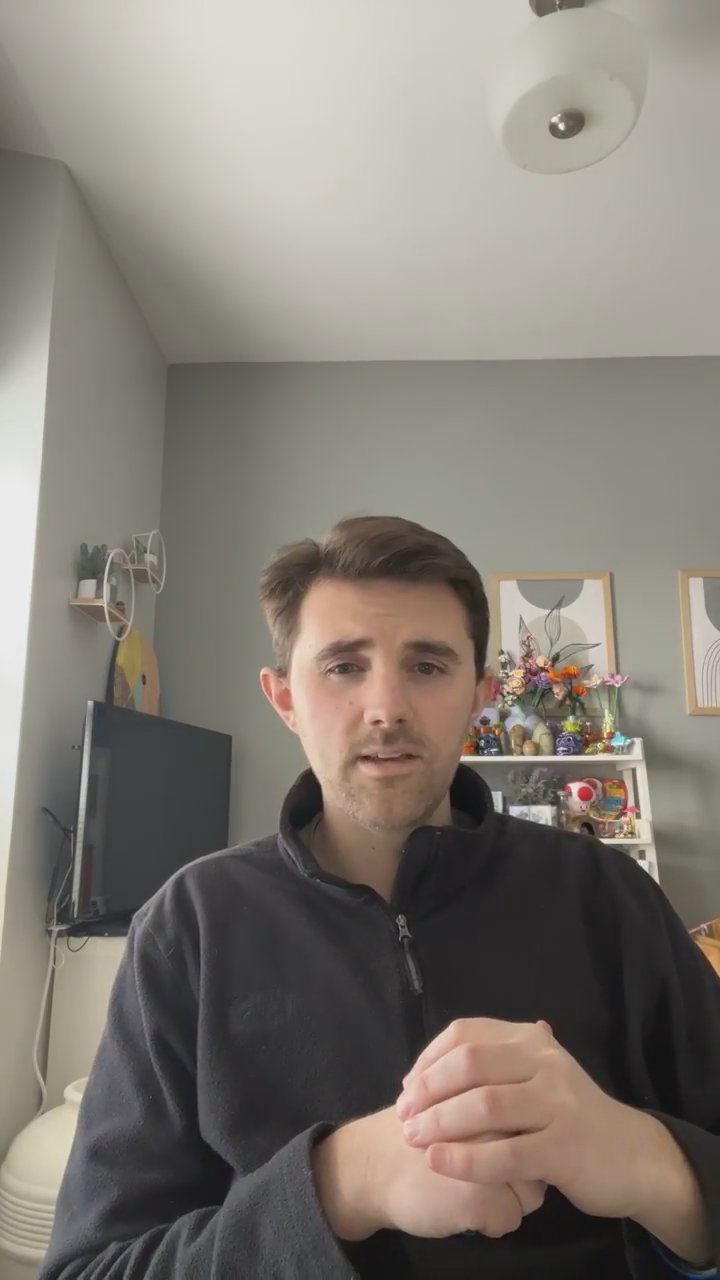
Viewers learn the plan to do the usual 'three things of three' before diving into the research topic. The speaker leads a brief reflective exercise asking participants to name three current feelings, three intentions for the day, and three things they are grateful for.
The host opens the livestream with greetings, small talk, and then previews the structure of the session. Viewers learn the plan to do the usual 'three things of three' before diving into the research topic.
The speaker leads a brief reflective exercise asking participants to name three current feelings, three intentions for the day, and three things they are grateful for. This segment is a practical reset to help listeners orient themselves before the main topic.
The presenter introduces a research article titled 'Zombie Leadership' by Alexander Haslam and explains why it's worth revisiting. This sets up the upcoming discussion contrasting older leadership ideas with newer research.
The host explains the core idea behind 'zombie leadership' and offers a modern definition of leadership as a social process based on relationships and context rather than individual charisma. This reframes leadership for the detailed critique to follow.
The speaker walks through eight common but outdated beliefs about leadership — including ideas like leadership being all about one person, universal traits or behaviors, and that leadership is always good. Each axiom is described and argued against with context-dependent alternatives.
Practical steps are offered to recognize and counteract zombie leadership, such as promoting democratic and collective approaches and focusing on group development. The livestream ends with contact info, well-wishes, and a farewell.
Happy Monday cadre crew. Hope you're having a great start to your week. Maybe a little tired and groggy from staying up late watching the Super Bowl. Maybe if you didn't, then you got a jump start on the day. So I hope you're having a great start to your Monday. I'll give it a couple minutes here, wait for some folks to join. And then we'll do our usual three things of three and then jump into some research and learning a new kind of topic concept today called zombie leadership. So get about one more minute.
Hello, welcome, update. Happy Monday. Be happy. Happy Monday. Welcome. Hope you're having a great start to your week. Happy Monday. So let's start with the three things of three. This is how I start all my cadre lives. So first, three things about what are you feeling right now? What are three emotions or sensations? Maybe you're cold, maybe you're tired, maybe emotions. So what are three things that you're feeling right now? Let's kind of identify this, use it as a time to reset, kind of learn You know, what are you carrying with you this morning going into the afternoon?
Kind of depending on where you are. Maybe you already started your afternoon, maybe you're not there yet, depending on where you are in the country. But what are you carrying with you right now about midday? And then our second list of three is three intentions. What are three intentions that we have for the rest of the day? This could be, you know, using our emotions effectively. This could be getting tasks done. So maybe specific things you want to get off your to-do list. Maybe you have a meeting and you want to come across a certain specific way in that meeting.
So what are three intentions? Could be emotions, could be tasks, could be anything. What are three intentions that pop up for you for the rest of the day. And then what are three things of gratitude that you have? Could be from the weekend, could be from the morning, could be going forward this week. What are three gratitudes that you have? What are three things that we can kind of set the tone for the rest of this day with gratitude, with gratefulness, kind of feeling good as we move forward or look forward to things.
So there are three list of three. Keep thinking about them. I'll dive into a research article that I came across. I think I talked about this probably about a year ago, but I just want to revisit it again because I saw it pop up. And it's called Zombie Leadership. It's by Alexander Haslam. He is a psychologist down in Australia. And it's a great article about kind of more modern leadership theories. And again, I talk about leadership on this live stream a lot, but leadership is different. Everybody can be a leader.
You can be a leader of a company or you could just be a leader of yourself. You could lead your family, you could lead anything around you. So when I talk about leadership, this applies almost always to any type of leadership. This could be leading yourself throughout the day. So this idea of zombie leadership is what they call it, and it describes leadership theories that continue to get researched, get brought into companies for leadership development despite being, you know, shown to not be effective forms of leadership.
It's called zombie leadership because it's dead theories of leadership that continue to walk among us. And these ideas usually get carried through kind of the elites of the leadership industry, maybe elites in organizations. Some researchers carry it mainly because these ideas of zombie leadership relate to really hierarchical leadership, having power and having an individual be the center of the leadership. And I'll get more into that in a little bit. And this is very important because Rob Kaiser and Gordon Curfew, famous leadership authors for the past almost 40, 50 years now, they're acknowledging that maybe their past leadership theories aren't as effective.
There's billions of dollars going into leadership development currently, and a lot of it's getting put into these leadership development theories where it's developing the individual as a leader and not as a team. So what is a more modern definition of leadership? Well, it's a social process where one or more people influence others to achieve collective goals. based on relationships and context rather than individual charisma and power. When we think of leadership, we might think of people like Steve Jobs who have this big charisma, large amounts of power, very influential, but they're not going to be always effective leaders.
So what are the eight kind of areas of zombie leadership? What are the eight ideas of leadership that have been proven dead but continue to walk among us? And the first one is leadership is all about the leaders. So there's a belief that leadership is only about the person in charge. But in reality, it's been found to be more effective when it's distributed across teams and followers. The second one is there are specific qualities that all great leaders have. You know, we often think that leaders have a specific trait or a specific quality like charisma, like intelligence, but really leadership is context dependent.
So anybody can be really a leader in different contexts and that will pop up again. Number three, there are specific things that all great leaders do. So we talked about last one is what are specific traits that they have, but this is behaviors. So there is not specific behaviors like being fair, initiating change in groups. So just because they do this behavior, it might not work in all teams, in all contexts. So it's leadership behaviors are more about adaptive to being a group needs. So while there's no specific behaviors that are replicable across all groups, leaders' behavior is more influential, more effective if it's more adaptive based on the group they're in.
Number four, we all know a great leader when we see one. So the myth there is that leadership greatness is universally recognized. But I'm sure that you've had a boss or a teacher which you didn't like, but other people liked them. And you're kind of like, why do they like them? What could make you like this person? I just can't get to like this teacher, this leader. But then maybe the opposite too. You like the teacher or leader, while other people didn't seem to like them. So it's very dependent on the people who are getting led.
So there's no great universal leader. It's very context dependent on the people who are being led. Number five, all leadership is the same. So across all organizations, you can pick up a great leader, put them in a different organization, and they're going to be a great leader there. That's just not true. It's very context dependent, environment dependent. So leading in politics and business and sports is completely different and not very easily transferable across all those different environments.
Number six, leadership is a special skill limited to special people. This is one that gets very pushed by people who are already leading, trying to get this idea across how special they are. So only a small elite capable of people, small elite people. Small amount of elite people are capable of leadership. While leadership is found at all levels of organizations, just like they talked about, anybody can be a leader. Now there's formal leadership, which is depending on what's your job title, job type.
But then leadership informally is more peer leadership, is more group leadership. It can be found at any type of level. Number 7, leadership is always good and it's always good for everyone. It's that is not a true statement as well. You know, leadership can be toxic and self-serving. Surprise, not really. So the assumption is that all leadership is beneficial and this was believed for a long time. but it often ignores the negative leadership phenomena such as dictatorships, corporate frauds, and other types of negative leadership that are becoming more aware as we research.
And number eight, the final one, people can't cope without leaders. This would make sense that people who are in leadership roles would push this idea that people can't cope with leaders. While this is a myth, groups often can self-organize without formal leadership. Just like this peer leadership, people can emerge as leaders informally within groups. So while groups do not function well without a leader, they don't need a formal leader set for them to function well to have an emergent leader show up and help guide the team.
So that was the eight axioms. A lot of articles online about the idea of zombie leadership. So what can you do to combat zombie leadership in your organization or in other ways? Recognize the problem. So learn about ideas of zombie leadership, learn more about modern theories of leadership. promote alternative views. So within a group, encourage more democratic, collaborative, collective, situational approaches for leadership or for group collaboration rather than having more of a one-minded lead the team.
And essentially, all these theories, all these axioms is what they call it, they come down to getting people to work together effectively. You know, a lot of these leadership development programs are more about, you know, character development or about personal development rather than leadership development. So really focus on the group you're trying to lead, learn from them as they learn from you. So that's all I got today here for my CADRE Live. If you've got questions, you can reach out, send me a message, add me on LinkedIn, send me questions there, love to connect on there.
So yeah, that's the idea behind zombie leadership. I hope you have a great rest of your week and I'll see you next Monday. Thanks for joining. Bye everyone.