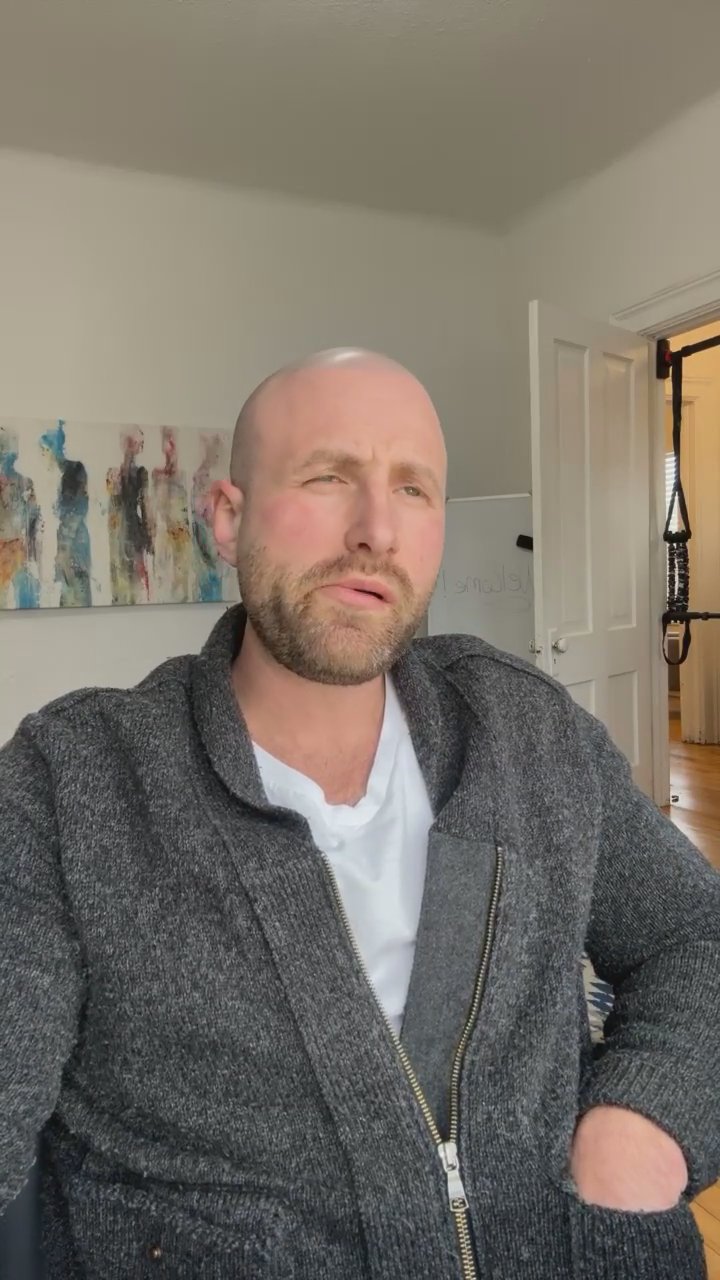
In this biweekly episode of mental health matters, I answer all of your questions related to mental health addiction or otherwise. So come join the conversation, bring any questions you may have and let’s have some fun.
This week on Mental Health Matters, we talk about post acute withdrawal symptoms. Depending on the substance you use, it's a different amount of time for how long you go into withdrawal. It really does depend on how bad those symptoms are.
Next topic is going to go into the world of mental health trauma. Called cptsd, it is a term referring to somebody experiencing a trauma reaction like ptsd. Is it a nervous system disorder? Phyllis, if you have any questions, ask them.
Do you use the same coping mechanisms as firsthand trauma? Coping skills are going to be good for just about anything. How do you approach your work in a way that you're not going to take it home?
Well, I don't know. I think we hit a good amount of time here. If anyone else has any last questions, and then I can save some of these for next time, I would appreciate it. Thanks for those who came in, who participated, and I will see you again next time.
What's up, folks? Welcome to another episode of Mental Health Matters. I'm Evan, your resident mental health and addiction therapist here. We talk about matters around mental health addiction. Every other week I do an ask me anything episode and that's what we have today. So I'm going to pull up some questions and hopefully we have some people joining that, they have some questions in this line of topic and we'll just go from there. How about that? So let's go ahead. I got something prepared. Where am I?
Okay, here we go. So this one is pertaining to addiction and essentially the question is about post acute withdrawal symptoms. And I don't know if this is something you've heard about, but when you start. So let's say you're dependent on a substance, alcohol, opioids, benzos, even weed, and you're a regular user and you gain a dependence on it. When you stop, you're going to have an equal opposite reaction in your body and you're going to go through withdrawal for alcohol. It could be so severe you're having seizures, handshaking, nausea, vomiting, you know, same stuff with opioids, something similar.
What's up, Car? Jaz, how's it going? It's been a while since we've seen you on here. And so when you stop, right, you have some of those really intense symptoms. And so a lot of the reason why people find themselves so hooked because, okay, let's say I really want to stop, but then I know if I do, I'm going to have horrible cravings and like feel like I have the worst case of the flu imaginable. And imagine the temptation to use when you're in that state of mind. So it makes it really difficult to get to that next level of recovery.
So now, depending on the substance you use, depending on the substance you use, it's a different amount of time for how long you go into withdrawal. So let's say I'm dependent on a substance and I just stop cold turkey. How long am I going to have withdrawal symptoms? So, you know, for something like opioids, it could be in the acute phase, a couple weeks, a few weeks of feeling really bad until, you know, you turn a corner again. It just depends on your particular body, how dependent you are. Hello, Phyllis, big fan of the show.
And so depending on your body, depending on your weight, depending on how much you used, whatever that may be, right? That's the degree to which you'll go into withdrawal. And sometimes you're surprised. You're like, oh, my God, this person's gonna have horrible withdrawal and then they don't, you're like, this person won't be so bad. And it's really bad. So yeah, it really, at the end of the day does depend on how bad those symptoms are gonna be. So let's say opioids, a couple weeks, alcohol, I don't know, maybe the same thing A week could be a few days, week, maybe a little bit more, depending how bad cannabis, that one could be, you know, similar benzos.
But the thing is, for some people, right, it could last way longer. And that's where we talk about post acute withdrawals. So acute is like right away. So those are acute withdrawals. Post acute is after acute, after that, right away. So let's say anything, forget the technique, anything after a month, three weeks where you should maybe be feeling better, and you probably do, you're out, you're going to feel better than day three. But it could still be uncomfortable with, you know, higher levels of cravings.
Maybe your nervous system feels overactive, you're anxious, you're sweaty, or it's hard for your body to calm, you're still feeling tired, sluggish, like if you get off of a stimulant, like a meth or Adderall or cocaine, right, where you feel just like sluggish. And so some people like can have these for like a year, for example, with some, like if someone's on a stimulant medication for a long time, when they get off, they could feel it could be really difficult for them to adjust and take a very long time.
So it's just something that's not talked about as much. And that is something that is normal for individuals when they are getting off substances to go into that post acute withdrawal. So hopefully that made sense. If you have any other questions on that one, let me know. So next topic is going to go into the world of mental health trauma. And this is about something called cptsd. You've probably heard of ptsd, but in, let's say the online spaces, the general public, people who struggle with mental health, who are interested in the topic on social media, right?
They reference this a lot, cptsd. So you may have heard this term. I was actually kind of surprised when I started making content because I'm like, I actually look it up, like what do they mean by cptsd? It's like, oh, complex ptsd. Okay, well I know what that is, but I was interested in know that's what they were referring to. But essentially complex ptsd. It's not an Official diagnosis, but it is a well established term referring to somebody experiencing a trauma reaction like ptsd. So ptsd, but stemming from years and years of complex trauma, mostly in childhood or it could be later on in adulthood.
Let's say you got into like a traumatic marriage for five years or something and maybe there were some particular instances that really stood out, but it was, you know, maybe years of being belittled, lied to, gaslit, you know, just like a bunch of level two and three things that just add up, right? Versus let's say a simple ptsd more so where it's like a very specific incident that happened that put your body into a fight or flight that lingered on past the 12 month mark where it just doesn't seem to be getting better and it really impacts your life.
And so I think this is more, you know, the CPTSD is actually more common to happen because like, if, let's say you had, you know, some toxic parenting or whatever else, you know, parents belittling you, instilling these really negative core beliefs. Physical, physical punishment, overuse. What's up, Jules? You know, very often like sexual assault, you know, if you went through a series of, you know, having an abuser. Right. So that's complex PTSD and that's what people are referring to. And one of the more difficult things to recover from.
And often that could be entwined with let's say a personality disorder, like borderline personality disorder. That is, you know, a really, in its essence, a trauma reaction. It's like a very specific type of trauma reaction that I've talked about quite a bit. Maybe you've heard to that. But you know, it's a disorder where you have difficulties with emotional dysregulation, attachment anger, a lot of self harm, you know, acting out behavior, suicidal ideation. So that's like a very specific type of reaction.
It's kind of like pretty much most people who have that, if not almost everybody have, has PTSD or some trauma disorder. However, not everyone who has trauma, ptsd, a trauma disorder is going to have BPD per se, but that's kind of the nature of cptsd and it's really interwoven into the fabric of someone. So it does make it a little more difficult. And the question here was like, is it a nervous system disorder? I thought that was a really interesting question. And like, well, technically no, it's a mental disorder, health disorder, however, I mean everything is intertwined, right?
So if I'm having a fear response, right, A PTSD fear response. Well, yeah, that's definitely like, really tied into the nervous system. A lot of people have very physical reactions. Right. So I would say that would be a fair categorization. Right. To say that this is something that has a profound impact on your nervous system. Right. So there's your peripheral nervous system, your central nervous system. And what's central? You know, it's like heart. What is it? It's like heart and spinal cord for your central nervous system, let's say.
But again, all of these things are connected. It's not just with the brain. And brain we have nerves and nerve endings and all that. So I would say very often, yeah, you could consider it that especially when you're having a lot of physical reactions that you could feel in the body. And that's like a very common idea and concept of, you know, how trauma impacts much more than the mind and that it's. The impact is stored in the body. So I think that would be technically. No, it's not how it's categorized, but wouldn't be all that inaccurate.
All right, so, folks, if you have any other questions about mental health, addiction, car, jazz, juuls, Phyllis, if you have any questions, ask me now because. Oh, there you go. We got a question. So, yeah, feel free to ask questions. I'll answer them. Otherwise, I'll just have the ones that I've compiled. And the more you ask, the less I have to dip into my cash here. What are your thoughts on secondary trauma? Do you use the same coping mechanisms as firsthand trauma? So, like, when we talk about secondary trauma and I assume what you're referring to is like, let's say.
Are you talking about, like, let's say you're my good friend and you had something really bad, a sexual assault or something. Or if you're like a therapist and you're hearing about all this trauma and it's having an impact on you, what do you do? Is that. I think maybe what you're referring to. But I think in the end, if you are having reactions that are unpleasant physically, emotionally. Yeah. Coping skills are going to be good for just about anything. Right. So basically, coping skills is anything that you can utilize.
Like a 911 dispatcher. Yeah. Okay. Yes. Because I'm thinking like, oh, a therapist. You hear this and that one dispatcher. So I mean, this. The question is, yeah, are you having a reaction to it? So in this case, you're saying yes. So I'd say there's like two elements here. One is coping with those lingering effects of the trauma, which. Yes. Any coping skill, Any Anything you utilize, positive or negative, to calm your mind and body and for your overall wellness. Right. And if trauma reactions are getting in the way of that, then yeah, absolutely.
Then there's the element of coping in that moment. Right. So what is it? What coping do you employ, let's say while you're picking up the phone and how do you. So basically it's like in this, how do you approach the work itself? Is there something you're doing that you could do differently for a 911 dispatcher? I don't know exactly. But say for a therapist, let's say you're maybe getting two enmeshed in a way or you're, you're, you know, finding that you're connecting on a level that, you know, moves from professional to personal.
And again, it's not easy to always separate, you know, you're human being, right. You care about the, the client sitting across from you and you know, but are you doing. So are you interacting in a way where you're more likely to take that on yourself? Because when you're doing that as well, you're actually not helping the client. You're, you're going to be a less effective therapist, let's say. So, you know, really doesn't matter what your job is, Right. Like, are you approaching it in a way that makes it so you're taking it home now?
You know, because there's one thing about having like, say you're a nurse, like you're having stress in the moment. You want to make sure, you know, some people like actually having distress and intense jobs. Some people like being a 911 operator, first responder, they get an adrenaline rush or they, they like it even though it is highly stressful or even people in the military, whatever, not everyone necessarily comes back or in the moment it impacts them all that much. But sometimes it is the secondary effect of just that, of not necessarily when you're in it, but when you're out of it almost, that would be another form of secondary trauma.
So how do you approach your work in a way that you're not going to take it home? Right. How do you process that with someone else at work? You know, is it processing it with, you know, people you're close with at work, doing a lot of self care when you're outside of work, making sure your batteries are recharged, doing those things that you love so you're not constantly in it. Right. And maybe at some point it's, you know, just pulling yourself out of it if you just can't do it. Or you're. It's just.
It's just having too much of an impact on you where you can't live a normal, healthy, happy, fulfilled life that you deserve, right? That maybe it's just not for you. I think a lot of times people feel guilty in that as well. Like, well, if I'm not going to do it, who else is going to do it? You know? Like, you know, and they do these things as a sacrifice to themselves, you know, sacrificing themselves, almost a sense of, like, codependency with the work they're doing. So. That is an excellent question, and actually one I've never really thought about all that much, actually, maybe in the realm of when people ask, like, oh, do you take your work home with you?
And I mean. And I found that, you know, I've talked to people, right, who work in, like, hospice. You know, me as a therapist, I'm like, how the h*** they do that? Or you're getting close or you're connecting with people and they're, like, going to die. So nature of hospice, how do you do that? Or how do you be a nerd? How do you clean up after grown adults, their bodily functions and blood and guts, you know, whatever, and cleaning that up. And me, like, how do you do that, right? How do you deal with, you know, am ambulance, paramedic, and showing up with people's limbs mangled and stuff?
Like, you know, like, I got one of my employees who's also a nurse, and she's told me some stories where I'm like, I. I'm almost having tertiary trauma, you know, hearing from her, you know, like, second. So it's like, it's pretty remarkable what we're able to get used to. But if it's just not a good fit or maybe it was fine for a while. And then sometimes there's an impact as well, just like any job on your personal life. So what you're able to tolerate and the stress you're able to tolerate at work is dependent on how your personal life is living and going, you know.
So, yeah, those are all very interesting things, but we're all built a little different. And it's okay if it's something just not working for you anymore and you need to stop or you need to take a break or you need to shift, you know, whether sometimes. Like, I had one friend who had severe PTSD from a couple instances as a paramedic, and he wanted to keep working, but it didn't make sense, you know, for him to. He couldn't really function in the field. So I think they had him, you know, doing like more operations level stuff, and that was better for him.
In the meantime, I think it was still really difficult, but, you know, still better than the alternative where he's doing more logistics or picking up the phones. I don't know. I don't remember exactly. But. So a lot of people, like, in my field, too, in mental health, we're doing, you know, maybe you're doing a lot of therapy. Maybe you could switch to doing more assessments or program oversight or whatever and move around in it so that you're. And sometimes it may not even just be your trauma test, but you're bored as well.
So there's a lot of reasons why that could be an effective approach to doing that too. Well, I don't know. I think we hit a good amount of time here. If anyone else has any last questions, and then I can save some of these for next time, I would appreciate it. So, yeah, folks, it's been awesome. Thanks for those who came in, who participated, and I will see you again next time. Take care.