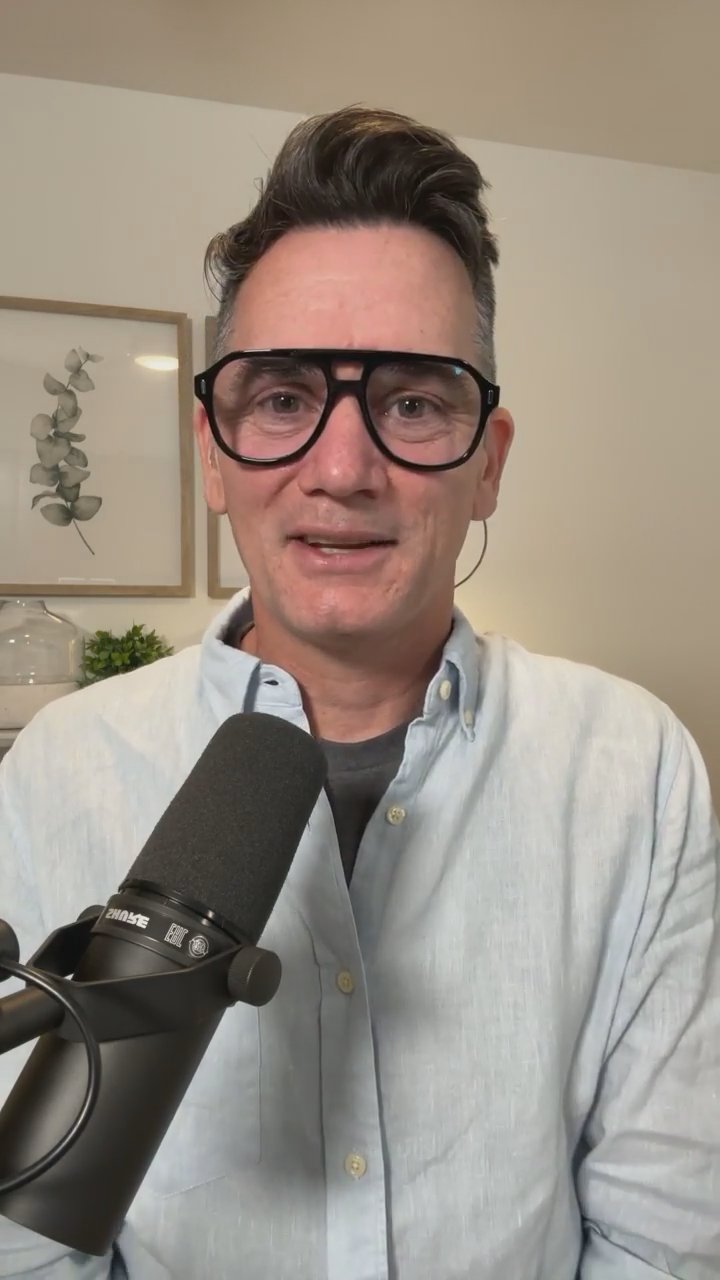
Steven Stefan is here to talk about mindfulness. Charlie started kindergarten and Joe started second grade. Focusing your attention on the breath. Noticing when you've been distracted or caught up in a story. Labeling and thinking and with kindness and care.
Steven Stefan is here to talk about mindfulness. We will do a traditional mindfulness of the breath practice. I will help you set up, guide you a bit and leave you alone for a little bit so that you can practice on your own.
Today was the first day of school for my boys. Charlie started kindergarten and Joe started second grade. We're going to do a traditional mindfulness practice and we'll start kind of slow.
Step one of the practice is to take our seat. We want to shift our posture into an active posture. We don't want to be so rigid that it's uncomfortable or hard to hold the position for a while. But not so comfortable that we may fall asleep.
meditation. Focusing your attention on the breath. Noticing when you've been distracted or caught up in a story. Labeling and thinking and with kindness and care. Reconnecting with those sensations of your breath in these last few moments.
Hey, cadres fear. It's Wednesday. m. on the east coast, and that means I'm here to talk about mindfulness. So I'm Steven Stefan, if you know me well, and last week I talked a bit about how I came to my fullness as a practice. And today I'm going to practice with you and guide you through practice. So we're going to do a traditional mindfulness of the breath practice today. I will help you set up, guide you a bit and also leave you alone for a little bit so that you can practice on your own. Before we get started, I have to acknowledge the fact that today, at least here, where I am, was the first day of school for my boys.
So my youngest son, Charlie started kindergarten today. My older boy, Joe started second grade. We walked them up to the bus stop and they saw all their friends waiting, ran to the bus, and it was really wonderful, actually. It was one of those little moments that sometimes happen and you can just forget about them or maybe not notice them. And it's something that reminds me how grateful I am to my mindfulness practice. To be able to be present for experiences with them, to be able to be in that experience in kind of a way that aligns with my intentions for how I want to show up as a dad.
So even though it sounds like I kind of joke all around a bit, or I've been joking for the past few weeks about the countdown to the first day of school, and I was counting down, it feels really special to have two little boys starting school. I probably will miss them tomorrow. Hey, welcome, W. Dickens. I probably will miss them tomorrow. Although today I'm going to enjoy the fact that they're in school and I can't wait to hear about their first day. So we're going to do a traditional mindfulness practice and we'll start kind of slow.
I'm going to give a few instructions. Then I have a timer here and I will allow us to practice together in mostly silence. I want to give you some space so that you can practice and I not be interrupted by me. I may have add a few cues here and there. Hello, Jules. Welcome, welcome, welcome, welcome. I was just saying the kids are in school. Jules, it's such a great day. But before we begin, let me just kind of refresh your memory about the three steps of this practice. So step one of the practice is simple.
It is to take our seat. And when I say take our seat, I mean to kind of move into an intentional posture. For our practice period, I happen to be sitting in a chair, so I'm going to give instructions around sitting in a chair. You could be sitting on a cushion on the floor. You could be sitting kind of crisscross applesauce to use the kindergarten language. You could be sitting on a yoga block or on a bench. You could also be sitting in your car while you do this practice. Hopefully not driving, but sitting.
There's a couple things I want us to keep in mind about our seat. One is that we want to be upright. You say upright but not uptight. And what that really is is we want to shift our posture into kind of an active posture that reflects our intention for the seriousness of the time that we'll spend practicing. We don't want to be so rigid that it's uncomfortable or it's hard to hold the position for a while since we're going to be here for ten or 15 minutes. So we want to be comfortable, but not so comfortable that we may fall asleep.
So slouching back in your chair probably isn't a good idea. I scoot to the very front of the chair so that I can sit upright without the support of the backrest. Feet should be planted on the floor about hips width distance apart. If you can. Your legs bent at like a 90 degree angle so that your knees are directly above your ankles. And then start to just maybe sway a tiny bit. You want to find this place where your shoulders are stacked above your hips. If you're leaning too far back or too far forward, it can cause some tension.
You may want to avoid that. So trying to allow your skeleton and your spine to support you as you sit upright. Now I'm on camera, so as soon as I do this, I think, am I going to get a double chin? But yeah, I am. That's okay. You want to tuck your chin just a little bit and that lengthens out the back of your neck. So we're kind of imagining a string here at the top of your head and kind of lifting your. The crown of your head nice and tall. Your hands can either rest in your lap or palms down on your thighs.
You don't want your hands to be so full forward to your knees that it kind of pulls you forward or so far back to your hips that it pushes you back. So find a neutral place for your hands to restore and then start to settle into your seated posture. Now we're going to start to focus our attention. Metaphor that I like to use with the attention is that of a flashlight, particularly those flashlights that you can kind of turn the top of. And when you turn it one way, the beam gets really wide, and when you turn it the other way, the beam gets more narrow and more focused.
So as you're here initially settling into your seat, imagine your attention is wide beam of a flashlight shining on your whole body, sitting here, just starting to arrive. As you kind of shift from all of the doing and activity of your day to just being here, being here in this moment and noticing what is here, maybe that means you've noticed a spot of tension in your shoulders, like I am. So taking a little shrug and roll feels good. Notice a little bit of a fluttery sensation in my belly, probably nerves, a little chill on my legs, a breeze from the h vac system blowing.
Noticing not only the sensations you feel, but maybe any emotions, any thoughts, any urges you may have. Maybe to stop practicing or to do this at another time, maybe to scratch an itch or shift postures. Maybe there's this feeling of uncertainty. In my case, a feeling of nerves. Kind of the hope that this practice serves everyone in the quadrisphere who takes some time to sit with me. Now, as you think about that flashlight of your attention and noticing your whole body sitting here, it's time to narrow the beam, narrow the focus.
First, bringing your focus to your feet, sitting on the floor, grounding you, grounding your seat, connecting you to the earth and noticing whatever may be here. And then, like, you can move the flashlight, moving the flashlight of your attention to your seat, to that feeling of contact with the chair or the cushion, the floor, the block beneath you, that sense of support rising up to meet you, just noticing what's here. And then shifting from your seat to your hands, noticing any sensations that may be in your hands, shining the flashlight of your attention there, noticing any sensations of stability, steadiness, of arriving here for practice, and from here, shifting the spotlight of your attention to your breath.
This could be the sensations of your breath in the belly, maybe the rise and fall of your chest as you inhale and exhale, or maybe at the nostrils as the air moves in and out. So we're anchoring our attention here to the breath, not changing the breath, not holding our breath or counting or manipulating the breath, just noticing the sensations of the natural breath anchoring us here to this moment, to this present moment. And as we do, thoughts may come up. In fact, they most definitely will. Sometimes it's just a little thought, a little blip that distracts you from the breath for a moment, and you can shift right back.
That's okay. Totally natural. Occasionally a story will come up where you're remembering something from the past or thinking about something in the future, and you get carried away and realize you're not focused on the breath anymore. When that happens, we're just going to gently kind of label that thought, thinking, whatever it is, the story that's happening, just label it, thinking, let it go. And shift your attention back to the breath. That is the practice today. Focusing your attention on the breath.
Noticing when you've been distracted or caught up in a story or a thought, and labeling it as thinking and then shifting your attention back to the breath. I'll give you some time to practice on your own. Quietly. We'll practice for about eight minutes. Eight more minutes and I'll let you know when the time is up. Every time you notice you're caught in a thought, a story, you can label that thought and begin again. Noticing thoughts as they arise. Labeling and thinking and with kindness and care.
Shifting back to your breath. Reconnecting with those sensations of your breath in these last few moments. Taking the opportunity to begin again. As we come to the end of our practice time, quietly, slowly. Maybe taking some gentle movements. Just shifting back and forth, side to side, rolling the shoulders a bit. And when you're ready, you can open your eyes if they're closed and take any other movements that feel like they would support you at the moment. There is a well known western meditation teacher named Sharon Salzburg, and she said that the critical element in meditation practice is beginning again.
Everyone loses focus at times, everyone loses interest at times. And everyone gets distracted over and over again. What is essential, and also incredibly transforming, is realizing that we have the ability to begin again without blaming or judging ourselves, without thinking. We have failed without losing heart. We can and need to constantly be beginning again. Thank you so much for sharing your time and practice with me today. m. i'd love to see you live. Please say hi, rolls. Thanks for being here.
Hey, I'm a schwartz. I see you here. Must have joined while you were practicing. So great to have you. And my kids are back in school, so all is right in the world. No, just kidding. Listen, have a wonderful rest of your week, and I'll talk to you soon. Thanks. Bye. There's always this countdown.