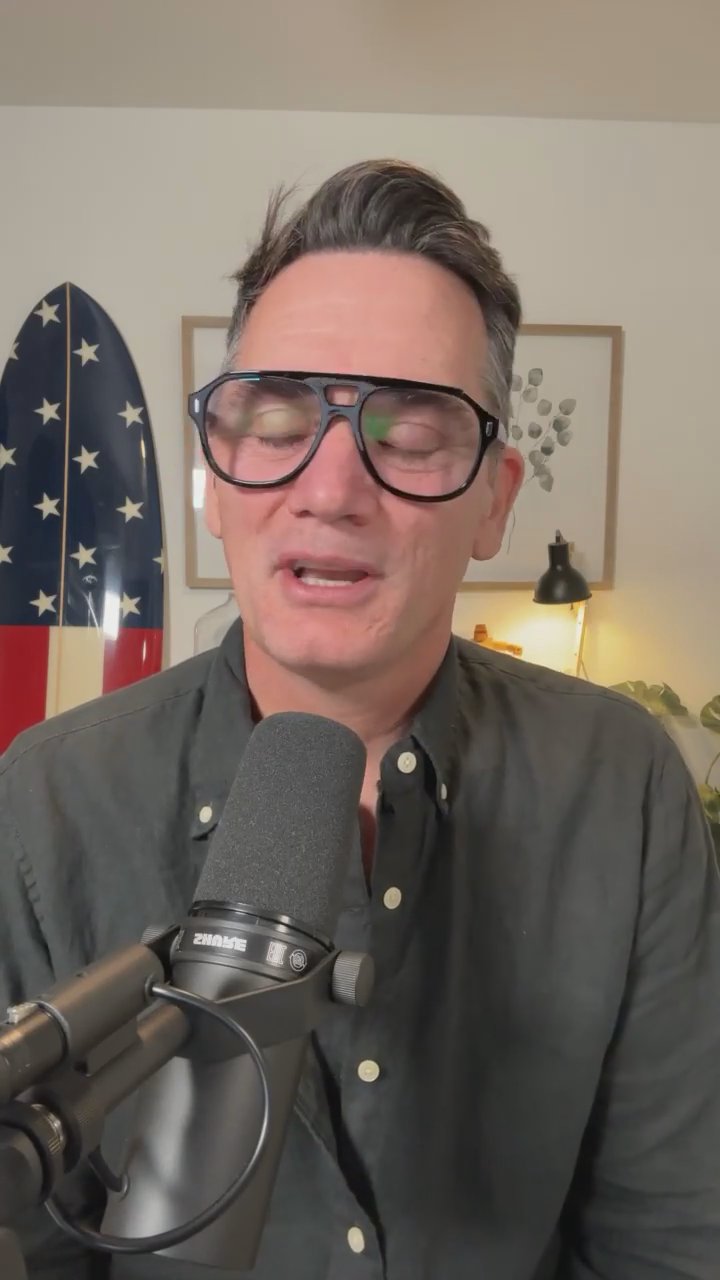
He talks about how he got into mindfulness as a practice and as kind of the centerpiece of his personal practices. The author says he spent so much time talking and revisiting past trauma that it was constantly present on his mind. He decided to stick with a meditation practice.
Stephen Kadre: Today marks one week until my kids are back in school. He talks about how he got into mindfulness as a practice and as kind of the centerpiece of his personal practices. For those of you who've joined other live streams, occasionally I ramble.
The author says he spent so much time talking and revisiting past trauma that it was constantly present on his mind. He decided to stick with a meditation practice. Within a month, he started noticing a huge difference in the way he felt.
The inner work practice is not a complex practice, but it's incredibly powerful. I want people who are suffering, who are in the place that I was when I started on this inner work path, to be careful of the messages that they're taking in. I'll be back next week to guide the practice.
Hello, cadres fear. It's 11:00 I'm Stephen. This means it's time to talk about mindfulness a bit here in the Kadre space. So I'm excited to be here. I'm particularly excited because today marks one week until my kids are back in school. Yeah, I love having them home in the summertime and doing all this fun stuff. Hey, Joanna. I think some other people join, but names flash by really fast, so please say hi so I can greet you. Hi, Andy. I was just saying that my kids will be in school one week from today when I do this live stream.
It will be first day of school, and I can't wait. I mean, I'm loving the summertime and having them home, and it will be awesome to be back into a more normal schedule. Hey, m. I'm not sure. M Dean. Welcome. So I'm Steven, or Stefan, if you know me, and I usually come here on Wednesdays, and I talk about mindfulness, and I'm going to do that today, but slightly more kind of in an adjacent way and talk a little bit how I got into mindfulness as a practice and as kind of the centerpiece of my personal practices.
For those of you who've joined other live streams, occasionally I ramble, and my gut is telling me that this 1 may be slightly rambling as well. So please forgive me and bear with me as we go on this little journey together. You know, I was a tech guy. I had a tech startup that I started 27 years ago and ran for a long time, up until, actually this year when I finally closed that business. And I had kind of all the things. I had a great house in the Boston and great car and interesting life. We were active and did all these nonprofit things, and, you know, were at the time becoming.
I was becoming a dad. So on the outside, you know, life seemed great. And around the time I became a father, my father, who I had a challenging relationship with, told me on my birthday, actually, that he had cancer, and it was multiple melanoma, which is a type of blood cancer in his case. It moved very quickly through his body, and he only lived for about three months after he was diagnosed. I kind of watched him deteriorating as this cancer kind of moved through his system. And I had a couple of realizations along the way.
One was that he was just this guy, right? I mean, he was dad. Yeah. There was this kind of mythical figure of dad out there, but ultimately, he was just a. A guy and flesh and bone like the rest of us. And I noticed as he was battling this illness, that if he was just a guy, he probably had his own stuff going on, his own issues. Hey, Steph. Welcome. And because of the generation he was from, maybe from the place that we were from, our family history, he was not open to getting help or didn't see the need to get help for whatever was.
Whatever was plaguing him. And that had some ripple effects on all the people around him. You know, his kind of unresolved stuff, his inner work not being resolved, that had effects on his relationships with his kids and spouse and everyone in his orbit. I think I probably spent a lot of time just kind of blaming him for what he was, for the relationships and the challenges that our relationship had. But at that time, when I saw him kind of more human in a more human way, I started to feel sad that he never had the help or the support for whatever it was that was really bothering him.
So there was this thing of kind of noticing his humanity, noticing the reaction of all the people in his immediate family to his passing and the dynamic of all of our family relationships. And what I became really, of course, Steph. Thank you. What I became really aware of, in addition to the fact that my dad was just a guy who had his own stuff going on that he didn't know how to manage or work with, was that I was also a dad. And while I had all of the outer trappings of success, if I didn't work on myself in some way, I was going to run the risk of repeating the same pattern that I had with my father and he had with his father, with my son, my new son at the time.
And that, I think, really terrified me. You know, I did not want to have the relationship with my son that I had with my father. And when he did finally pass away, it started me on this bit of an inner work journey. And one of the first places I started was with meditation. And unfortunately, so I sought out this teacher who was recommended to me, and the teacher added sugar is on my plate again. I don't know what that means. Added sugar is on my plate again. Okay. I'm not sure what that means, Andy.
I started with this meditation program, and the premise of the program and the thrust of the material was that in our lives, we. Stuff happens. And whether that's kind of capital t or lower case t trauma that we are this kind of individual moving forward in life, and then stuff happens in our childhood, in our socialization, et cetera. And when that happens, there is this bifurcation of kind of who we were before that happened and then who we became after that, after this thing, whatever it may be, or whatever these things may be, happen, we figure out ways to shield ourselves from being hurt again.
We build up kind of the armor and protection and that we find ways to soothe ourselves. And whether that be through accumulating things or through substances or through compulsive fitness or whatever it might be, we find things to soothe ourselves. And the example was even given. I remember very clearly that, like, when an animal is wounded in the wild, if he hurts his paw, if a dog hurts its paw, it will often shield the paw so it will hold it close and doesn't want to be touched, and that it will lick the wound.
So it's a way of shielding and soothing. Right. So on some level, this kind of made sense to me that, yeah, stuff happens. We react to it sometimes in adaptive ways and we can just release it, or sometimes in maladaptive ways that affect who we are and how we show up in the world. So with that story as kind of a foundation, I went on this journey. I landed in men's workspaces. So I was sitting in men's groups and sharing and kind of doing talk or group therapy with other guys who were also suffering in some way.
I spent a lot of time in those spaces, and that led me to learning about shadow work, that led me learning about somatic experiencing, which is this idea that trauma is stored in our body in some way, and that through movement and various practices, we can release that trauma. And I did all of these courses, all of this work, after a couple of years of really intensively doing this work, I was feeling awful. I was just a mess. And I definitely didn't feel like I was in a better place than I was before I started at all.
Now, even though some experiencing, I think, is that a validity modality? And that shadow work, I think, has its place, and that men's work and sharing in circle has its place in building community and helping men, in particular, access emotion and talk through it. There is this guardrail and this boundary of those practices which I saw over and over again come up, which is that men in particular, when they maybe have not had a lot of experience in sharing and accessing emotion and what's happening in their bodies and being able to kind of connect to that once they're given a place to do it, they really go for it.
The phrase that kept coming up in discussions about these circles and about these different experiences was that it was a bit of trauma p***. I know that's a harsh phrase, but that people were showing up to these groups to share, and they were sharing all of the things that had happened to them, connecting with other people who had shared experience. What that meant, and what I think research and science is showing us now is that their body has kept reliving those experiences, that talking about and getting that kind of emotional charge of sharing past trauma in those environments, cortisol levels go up.
The same kind of fight or flight responses can be triggered in our minds, and it can reinforce that pattern, it can reinforce that feeling and strengthen it. And it almost like when you're dragging your foot in the sand and you kind of carve these grooves, you carve these neural pathways in your mind that are leading towards those reactions and those somatic experiences in your body. And that was definitely my experience, that I had spent so much time talking and revisiting past trauma that it was constantly present on my mind, constantly thinking about, how am I going to let this go?
How am I going to get past this? And that actually was reinforcing in me some of the exact patterns and feelings that I was trying to let go of. And I think that was the experience of many of the men who I was in these spaces with, and the women as well, who were in other programs, not specifically men's work programs, that constantly revisiting without truly being able to release it, without letting it, being able to be guided through a way to work with that energy and kind of let it go, was doing a lot more harm than it was good for me.
So I stopped. I stopped doing everything. I stopped doing all of these shadow work programs and men's work programs and everything years ago now. And I decided, I'm going to stick with a meditation practice. Meditation had been something that was kind of a through line in a lot of these programs that people had recommended. Oh, you should be meditating every day. And I had started meditating 25 or more years ago. In yoga classes, I had experimented or experienced body scans and other meditation practices.
Often at the end of a yoga class, there would be some sort of guided meditation during shavasana or during that period when we're cooling down at the end of a class. And that was my experience of meditation, aside from this one, where I got this story about us being split and coming back together and what we had to do to become whole again. But I went back to a teacher, a different teacher, and said, I just want to start a meditation practice, and I just want a basic meditation practice. What should I do?
And they introduced mindfulness meditation to me. So I said, I'm just going to do this every day. I'm going to do a mindfulness meditation, sit on my own. I started that in my car. I was still, at the time, very busy. I was working and lived a very busy life. One of the few times that I could kind of carve out to sit every day or most days, was in my car waiting to pick my kids up from preschool. They were very young at the time. I had two by this point. And I would pick them up from preschool, and I would arrive about 15 minutes before kids were done with school.
And in my car, I would sit and I would do a meditation practice on my own. No guidance, no app telling me what to do, no one speaking. It was just a simple practice of, in my case, observing the breath. Maybe some days it was ten minutes, some days it was 20 minutes. What was somewhat miraculous for me, at least, I felt that way. It wasn't actually. It was really what happens when you do the practice. Within probably a month, I started noticing a huge difference in the way that I was showing up in the world and in the way that I was feeling every day.
And I, to me, that was kind of like when you start going to the gym and then all of a sudden you realize, wait, I'm stronger than I used to be, or my body is feeling more like I want it to feel that. That can be very motivating and pull you in to sticking with your fitness routine. And in my case, seeing that I was showing up in a different way and seeing that I was experiencing life in a completely different way, and my interactions with people and my interactions with my kids, my partner, seeing all of those amazing changes made me incredibly motivated to keep doing the practice.
So then I started finding more time and more time and was eventually practicing for quite, quite a bit of time each day. I was, whether it be little five minute sits here or there, whether it be longer sits when I had some downtime. And that led me to a teacher training program, which I did ultimately because I wanted deepen my practice. I wanted to learn more about what I was doing so that I could experience it in a different way. And found during that program how much I loved teaching. And that led me to Brown University, the Center for Mindfulness at Brown University, where I train to teach a curriculum called mindfulness based stress reduction.
And the Oxford Mindfulness Institute, both of which are kind of secular organizations that are teaching secular mindfulness practices, also landed in programs at the path, which is an organization based in New York that teaches more traditional Theravadan buddhist practice, and Tibet House, which is another organization based in New York. It's the western seat of his Holiness, the Dalai Lama. And I've done training with all of these different organizations to teach people to practice and the why of all that.
Thanks, Stefan. That's really kind and exciting to hear that this is inspiring you to want to practice more. So now I can teach MBSR, which is really in depth, kind of eight week curriculum, and a really powerful program. And I teach workshops and in some corporate environments, individuals, one on one. And ultimately, my hope is to just get more people doing a 15 minutes daily sit without guidance. I want to teach them how to practice on their own, hopefully motivate them to keep going when motivation dips a bit, help them form the habit of practice, and then lay out the markers of.
Okay, this is what you may experience when you're moving along this path of practice. I think about it like, there was some conservation land behind our home in Massachusetts, and someone had taken the time to go through the forest and the trails and marked the trees with little dots of color. And if you wanted to take a certain path or a certain loop, you could just follow the yellow dots, and there'd be a yellow dot on this tree, and then as you follow down the path, there'd be another yellow dot, and that would guide you through miles and miles and miles of conservation land, because someone else had been down the path before and had laid out some markers.
And while all of these modalities that I've trained in, I think are really beautiful practices and can be really beautiful practices, I don't think of myself as a guru. I think of myself as someone else who's on the path. I'm probably further down the path than a lot of people and have done practice in a way that a lot of people haven't. And I just want to leave those little trail markers behind me so that as you come down the path, steph, you kind of know which way to go and what might be ahead.
Hey, there's a fallen tree ahead, or there's a creek ahead. There's some muddy, muddy trail to traverse, or you got to go this way because there's a beautiful view. And that's what brings me here to Cadre, to all of you, is to share what is, I think, a really incredibly simple practice. Simple in that it's not a complex practice, but it's incredibly powerful. Might not be easy, but not complex. Right. And I want people who are suffering, who are in the place that I was when I started on this inner work path, to be careful of their teachers, to be careful of the messages that they're taking in.
Because I can tell you that early message that I got about trauma resulted in me having this split between who I was and who I would have been versus who I was after trauma when I was. That story, which I think is pretty common in the kind of inner work space, is incredibly dangerous. It put me on the wrong path, and I spent a lot of time suffering because of that story, which is why it's always been very important to me to be really careful about what I teach and be trained to teach things that I know work and that other people have proven that they work.
Because I don't want someone to spend a couple of years suffering and struggling in the way that I did. I care, actually, I care that people find the relief that they're looking for. So this was kind of a heavy live, and I appreciate those of you who have stayed around. And I'll be back next week. My kids will be in school for the first day of the new year, which I can't wait for. And next week, I'm going to guide the practice. So we'll practice together for a brief time, but I'm going to provide all of the instruction that you would need to start this practice on your own and to try it out on your own.
So with that, I'm going to say goodbye for today. Thank you all so much. Have a wonderful rest of your week. Enjoy the holiday weekend if you're here in the US and celebrating, and I'll talk to you soon. Cadre. Thanks. Bye.