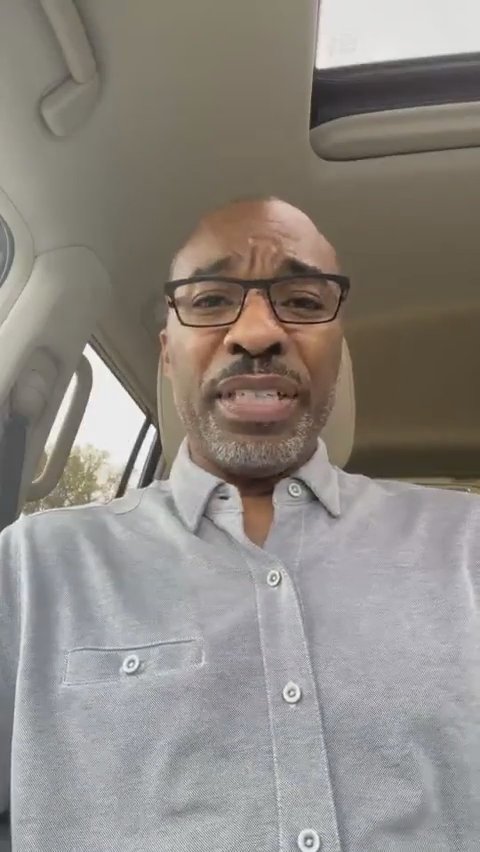
Hope you are doing well. Hope your week is going enjoyed the fall approaches. Doctor e here your diversity equity and inclusationist. What is necessary is a critical understanding of what's expected to happen in those spaces. You don't need a safe space to encourage challenging conversations.
Good afternoon Cadre community. Hope you are doing well. Hope your week is going enjoyed the fall approaches. Doctor e here your diversity equity and inclusationist.
Are safe spaces necessary? What is necessary is a critical understanding of what's expected to happen in those spaces. You don't need a safe space to encourage challenging conversations. Spaces that don't necessarily have to be safe but can be equally learning and sharing.
Good afternoon Cadre community. Hope you are doing well. Doctor e here your diversity equity and inclusationist. Hope you are doing well. Hope your week is going enjoyed the fall approaches. I hope you enjoy that season as well. Going to talk to you a little bit today about our safe spaces necessary this is a really interesting question that was posed to me a couple weeks ago, and I think it bears off by saying safe spaces typically what safe spaces is to allow, share in a way that pawn, judgment, shame, all of those kinds of things.
And so what it share freely. I can't say that enough. Share freely, share openly and engage. Now why is that a very important starting point? Because typically who are requiring safe spaces are individuals who don't necessarily tend to feel safe all of the time. So if you are a person who is on the lower end of the power dynamic or the power construct, if you are a person who is not necessarily in the majority, if you are a group who typically does not find themselves able to utilize their voice, that is typically what safe spaces are created for, that lesser, that lesser dynamic, if you will.
And for those who typically tend to have power, for those who typically tend to be in the majority, for those who typically find themselves able to utilize their voice whenever and however they want. Safe spaces really aren't necessarily a need for you. Because every day, every construct, everything is a safe space for you. Because you typically are in power. You typically are in the majority. You typically find access in all of those ways where you are not limited or inhibited. Now, if that is the case, and when that is the case, which is typically the majority of the time, safe spaces tend to function as a maintenance of the status quo.
If you typically have power, you stay in power. You're able to limit, you're able to designate, you're able to construct, you're able to do all of those kinds of things, and your safety doesn't necessarily have to be preserved or even prescribed. Now, if individuals are in that space and they don't feel welcomed, they don't feel wanted, they don't feel heard, typically, safe spaces are designed or thought of, theoretically, to be able to allow some of that to happen. Now, my direct response, or my direct answer to this question is, are safe spaces necessary?
And I want to say the way they're typically constructed and how they're typically thought of, absolutely not. You don't need a safe space to encourage challenging conversations. You don't need a safe space to create a context where folks can share. You don't need a safe space for folks to engage in and with topics that are typically tension filled, typically worrisome or troublesome or dare I say, conflict oriented. What you need to do is to create. All of these opportunities are going to be challenged differently.
We want to challenge individuals to engage in different perspectives, challenging constructs, right. Individuals to challenge themselves in the way that they think and the way that they share and the way that they process in the way that they critique in the safe to be vulnerable. It's not safe to critically examine. It's not safe to fundamentally interrogate who you are, how you think and what you do is that's established and created at the outset as the premise behind being in that space, understand it as fundamentally safe.
So all of those kinds of things can be welcomed and valued and under and understood if they are made. No, the purpose that, and it doesn't necessarily have to be safe or understood as safe. So that's my answer. No, safe spaces aren't necessary. But what is necessary is a critical understanding of what's expected to happen in those spaces. And I say challenging, interrogating, understanding, engaging are all purposes and goals and spaces that don't necessarily have to be safe but can be equally learning and sharing.
I will see you again next week and I hope you have a wonderful, wonderful bye.