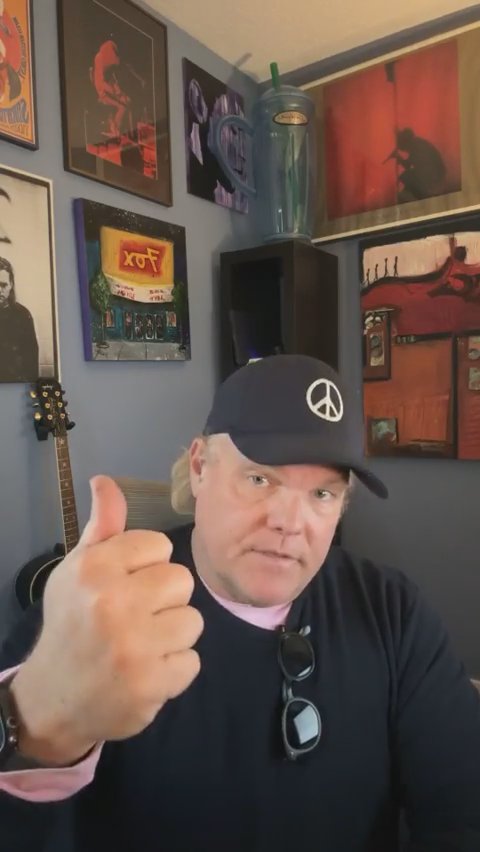
Lots of old adages and archaic ideas about getting sober and staying sober. In this video, I will highlight the stupid ones and explain why they are stupid.
Chris: Some people say things like, "I'm not going to help you because you're not ready" to get sober. He says that's not helpful to people in early recovery. Chris: We need to have real conversations in real language about what's going on.
The last thing I would like to say is that these other little crazy thoughts about, you're not sober if you smoke pot. Acceptance, inclusion and belonging. That's what recovery is about. Come be sober with us. Let's go get a life.
Hey, guys. Chris here from Cadre. Of course. I got a nice one for you. I was at an AA meeting recently, heard somebody say some stuff I thought was really, really stupid, and it's just been bugging me. And then on Twitter, I follow this hashtag called recoveryposse, which is totally cool. Really great stuff going on for people who don't have any real connection in recovery and just connecting more and more and more people. It's phenomenal. And somebody on there said something really stupid, so I tweeted back at them, of course, that I thought what they said was dangerous and reckless and archaic.
And so here it is. There's some value in understanding that people who are trying to get sober and who struggle are maybe not ready, but to use that context and say, you need to go out and do more research, which means go out and use more, drink more, which is stupid and dangerous, that's bullshit. The other one is that they don't. They're not. They're not open to getting sober until they're ready, which means wait until they're ready, which is also bullshit, because both of those things keep you out there using in a very dangerous world, especially today with fentanyl.
It's russian roulette. I won't get into the rest of that, but it doesn't matter if you're drinking yourself to death with vodka or shooting fentanyl and cocaine in your veins every day, it's still dangerous. So, personally, I probably push my opinion out loudly. I don't think unfairly or uneducatedly, if that's a word. I respond when I think I'm right, and I'm usually right. So that being said, it's really not helpful. It's really not helpful to say things like that to people in early recovery, especially this thing about, well, I'm not going to help you because you're not ready.
You know, I've tried to get you to go to detox, and you won't go. There's all kinds of crappy context there that doesn't make any sense, one of which is a lot of people don't know what they're doing trying to help somebody, so get somebody who does. But, you know, God bless you for trying to help. The reality of it is coming from the addict side or the alcoholic side. I reached out for help. When I reached out for help, when I reached out for help, I remembered who had offered it, right? So I got some people in my life saying, I'm here when you need me.
I'll be here. I'll be here. I'll be here. When more people found out about my using, I got more of those. I have done that for years. I reached out to a guy two days ago who's in Denver, who's trying to kill himself with booze, who used to work for me, and I just had heard his name and I heard where he was, so I reached out. I put something together to try to get him into a place in Colorado. I hope he made. I don't know yet if he made it there. If he gets that, if he gets there and gets into that place, it will be like he hit the lottery, because he's on the street, in the 16th street mall in Denver, drinking himself to death, homeless.
And if he gets into this place in Colorado, I'm not going to use the name. That's never going to happen in his life because no one was going to offer that to him. His family's burnt, his friends are burnt. I don't have that approach with people where, well, he's not asking me or he doesn't deserve it, or that's all bullshit. This disease is deadly and we need to cut to the chase and we need to have real conversations in real language about what's going on. Recovery is messy. It's difficult to start.
It tears people apart, it p***** everyone off. It creates all kinds of problems for not just the individual, but everyone else around them. And there are really great smart ways to try to angle somebody into getting help while taking care of yourself so that you're not giving yourself away every day. And I want to encourage that kind of thought about this process and discourage this crazy stuff about, well, you know, those alcoholics, they're not going to do anything until they're ready. It's shut the f*** up.
That's just not helpful. So the right kind of approach is to, let's just say you have someone in your life, friend, family, cousin, sister, whatever, who's struggling. If you constantly and consistently, I should say, put the hand of help out there. There's a saying in AA, I want the hand of AA always to be there. If you constantly, I shouldn't say constantly, consistently, make that person aware that there is help. It's here, here's the number, here's the ejection lever. All you got to do is call.
And given the nature of using this person's using substances, it's on you to remind them. So you need to consistently put that out there, make the call, make the text drop by, whatever. I'm still here. I'm still available when you're ready. Let's go. I'll be here. Right. You kind of have to have parameters there that this help only goes one way. It only goes to help to get sober. It doesn't go to help lend you money, buy you stuff, pay your mortgage. That's not the help we're talking about. So if you look at it like, I'm going to give you the right kind of help, then there's no reason to stop giving it just because you're frustrated that they won't go.
Right? I mean, your two year old isn't going to start, isn't going to stop crying or s******* themselves, and you don't. You don't go, ah, you know, I'm just not gonna do this till you're ready. That's just insane. And it doesn't help anybody. It doesn't get the person who needs help any further down the road, and it doesn't get the loved ones any relief. So when it isn't, it is an old school thought in AA, and it's even in the big book about some people need to go out, experience a little bit more pain before they're ready.
There's anecdotal sort of context there that I don't want to say it makes sense. It just sort of. It is a thing, but it's terrible advice to somebody who's trying to start in their recovery, because I think what it leaves out is that what people who are really looking for in early recovery is a place to belong. Like, I don't belong in this world. And that's why I'm drinking all the time. I can't live in this world. I'm not part of it. Nobody wants me here. And this inclusion and belonging piece about recovery is the medicine.
That's what they want. So the opposite of that is, well, I'm not gonna. I'm not gonna help you because you're not ready. Like, what, are you supposed to get an email when they're ready? I mean, it's nonsensical. I'll quit going there. The last thing I would like to say is that these other little crazy thoughts about, you're not sober. You're not sober if you smoke pot. I had a guy on Twitter yesterday say, well, I'm going to smoke pot, but I'm not. Alcohol destroyed my life, but I'm going to smoke pot.
And a whole bunch of holier than now aa people got all up his a** about, you know, well, you're not really sober on the. But that's what Twitter is. It's just a big, giant 14 year old argument for 14 year olds. But the point I want to make is that. So what do your path? I don't encourage people to use other substances, but I'm not going to discount any progress you made stopping alcohol, that was killing you. I don't want to throw that away because I disagree. I think a lot of that stuff is about jealousy, because a lot of us would like to be able to smoke pot.
Not me personally. I always thought it was sort of loony. Smoked a lot of pot in Sewell hall at the University of Colorado in Boulder, and I couldn't find my way back to my room freshman year, so it really wasn't my thing. But to put these parameter guardrails and boxes around sobriety and you have to do it this way, and I think you should do it that way, is pointless. And the antithesis of acceptance, inclusion and belonging, that's what recovery is about. Acceptance, inclusion and belonging. You belong here.
We want you here. Come be sober with us. Let's go get a life. That's what recovery is about. Till next time. Sign in. Sign up. Listen to some smart people. They're super good looking and really smart, and they have all kinds of things to say. Those people on Cadre. Have. Have fun. Till next time. Bye.