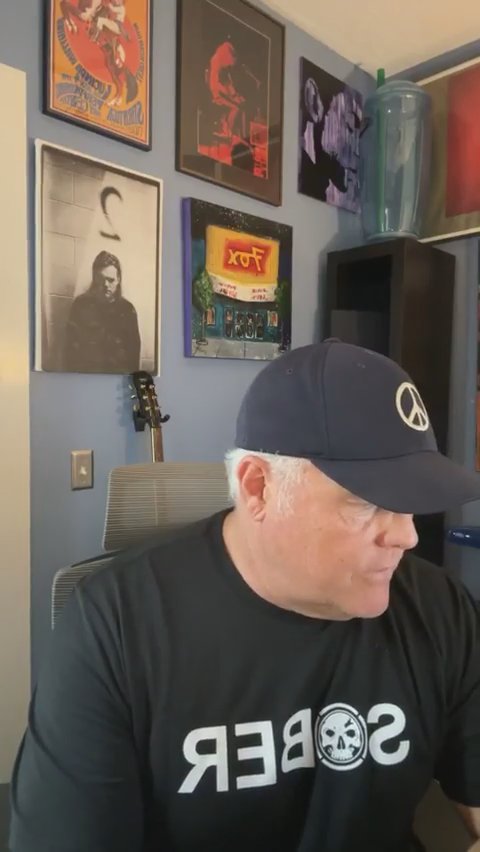
General questions about sobriety, what about this? what do I do about that?…. If you log onto this live ask anything!
Chris from Cadre has been running sober living homes for 20 years, and sober almost 25 years. His role is to help people navigate early recovery. Here are some general questions he'll answer.
Second question. I quit drinking and using substances, and now I'm just frustrated, and I find myself irritable a lot. Any suggestions?
Everyone is telling me what to do after I quit using. Is this normal? Yeah. This is very common in early recovery. People tell you stuff that you just think is just unbelievably mundane and stupid. But there's a miracle in the mundane.
Hey, guys. Chris here from Cadre. Got a special short question and answer video here for you today. I asked some of my compadres for some ideas and some questions and some other people, and maybe one or two of them will pop up on the screen as well. So just some general questions I'm going to do my best to answer. Just so you know, I've been running sober living homes for 20 years, and sober almost 25 years. No fronts. 24 years. I'll let you know when it's 25. Couple weeks or a little less than that.
Ten days. Eleven days. And on my role, I believe, at Cadre, is to try to help people navigate early recovery. I mean, not just early, but all recovery, but it's. It tends to be much more focused on early recovery because people live in sober living and really struggle in the beginning, and some people struggle later on, and some of us struggle with everything, not naming any names. So here we go. Here's the first question. I quit drinking and I realized my identity has completely changed. Is this normal?
The answer is 100%. And actually, it's kind of what you want to have happen, because the identity may be not the right word, but what you really want to do is have your whole perspective change. Like, the way I see myself, the way I look at the world, the way I respond to things, and recovery is incredibly comprehensive in that way. The things you learn in recovery and treatment and aa, in doing the twelve step work is a very comprehensive sort of take everything out of the closet and only put back what we need.
Right. And don't tell me what you're going to throw away, because I'll try to keep it. So, yes, your identity is going to change. It's going to feel like you lost something and that you're marginalized and that you can't be the person you were and you have the same routine. It's going to feel different, and it's gonna feel like loss, but it's not. It's really not. It's actually gain. It's actually like, think about it, like shedding a layer of skin and putting on a whole new set of. I don't know what would be the word, like a whole new sort of set of clothes, like a whole new wardrobe, a whole new perspective, a whole new you.
And you get the opportunity to rebuild it. And, yeah, there's maybe a little bit of a mourning of losing the. Some of the who you thought you were. But I think if you ask most people who are a few years sober, they would probably say, yeah, don't miss the person I thought I was. Second question. I quit drinking and using substances, and now I'm just frustrated, and I find myself irritable a lot. Any suggestions? Well, welcome to the human race. I find myself irritable a lot. Any suggestions? So, like I said earlier, when you're coming off of the substances, depending on what it is, a lot of them, there's a lot of physiological stuff that goes on.
There's a lot of your body. There's a really great book by Gorski is the author, called post traumatic withdrawal. And you have, I guess, what it says, and what I've known to be is your body kind of does this thing where it's used to you drinking and using so much that it doesn't actually produce some of the things that it needs, because it's just waiting for you to stop. Like, it's. It's a waste of time for the body to produce those things. And I'm not a doctor, and I'm not really, you know, well versed in the.
In the mechanics of this, but your body tends to shut down and run on basic fumes or whatever, what it needs to while you're medicating yourself. And so part of the withdrawal, but also the sort of reforming physiologically when you get sober, there's a big noticeable difference. When you get, like, several months sober or maybe a year sober, you feel different. And a lot of people suddenly become way more active. I mean, it's obviously, you can be a more active person if you're not drinking a bottle of vodka every day or three bottles or five bottles of wine or whatever it was, or shooting heroin and cocaine, like, I was, like, for lunch.
So. And I did it for almost a decade. So I felt like my body took a couple of years to come back. But I think the irritability thing, although it's, you know, that that's very telling, right? It's very telling. Like, you will meet people in early recovery who are uncomfortable. They're scared. That's where a lot of it comes from, the irritability. But it's. I like to think of it as the evil spirits are coming out. So, like, in my sober houses, you know, the people who are brand new, they're irritable.
They're really irritable. And, you know, you can. Somebody steals their peanut butter in the kitchen and they want to call the FBI. So there's some joking around that and some anecdotal stuff around. Yeah, you're gonna be irritable and discontent for a little while. But there's really actually good information in there, too, because if you figure out that you're really irritable and you don't really have a reason, then that's really telling of, like, what am I in a mad mood for? Why am I even irritated?
And you. Those kinds of things, those kinds of self examination kind of ideas is what you get to do when you get sober. You get to really ask yourself questions like that and fix a lot of stuff and change the way you do things and the way that you look at things and you wouldn't otherwise get that opportunity, or not necessarily. Anyway, next question. Everyone is telling me what to do after I quit using. I feel so overwhelmed. Is this normal? Yeah. So once you sort of put yourself in care, so to speak, you know, if you went to the hospital, you're going to have all kinds of people telling you what to do.
Stick this in you, eat this, take this pill, drink this, don't eat that. That's kind of part of the deal, right? You have sort of thrown your hands up in not letting go of control because what you're doing is not working. You know, for me, it was that old saying in aa that, you know, it's like you're driving down the road at 70 miles an hour and you get in the back seat and you're the only one in the car, and it's really letting go of control and it's scary and it's terrifying. And you kind of put yourself in a place where you have to understand that you have to go put yourself in a mindset of, there are people who are ahead of me and more experienced and having changed their lives, and I want them telling me what to do.
It's going to seem like you're an idiot. It's going to seem like you're a child. This is very, very, very common in early recovery. People tell you s*** that you just think is just unbelievably mundane and stupid. Stupid. But there's a miracle in the mundane. As my grand sponsor used to say, there's some miracles in that mundane, in that mundane sort of world. If you pay attention to those little things, like you hear things, like in early recovery, like, is the cap on your toothpaste? Did you make your bed today?
And they seem trite and stupid, but there's real cause and thoughtfulness behind them. Like, do the things that people are telling you to do. Just try to do them before you say, stop telling me what to do, because the world doesn't really work like that, I mean, you're always told what, we're all told what to do all the time in different ways. And it isn't, it isn't a process where you have to be beaten down, like in recovery. You know, there used to be treatment centers that behavioral modification where they would scream at you and shave your head and yell at you and beat you down and then build you back up.
Like, I think the, you know, the marines used to be known for or whatever. That's not what we're talking about. That's a bullshit process. We're not talking about breaking people down. We're just trying to say, you're going to hear a lot of advice from a lot of people. You're going to hear a lot of advice from people you don't think really have good advice. And it's just part of the deal. You get into early recovery. Everybody thinks they've got an idea, but mostly you got a. You got a community.
If you engage in the community, you. You have a whole community full of people who have your back and that there's nothing. There's nothing like that. There's nothing more productive than that last one. I took a leave of absence from work after using and abusing drugs and alcohol for years. I feel like everyone is judging me, even though they may not be. I feel like I'm living with mirrors and judgment 24/7 what do I do? That's a real feeling. That is 100% real feeling. I made a video last year about going home for Christmas the first time when you're sober, and how it's really important that you just do the dishes and take out the garbage and play with the kids and don't engage in the conversation with every aunt, uncle, and cousin about your recovery.
And don't make a big deal about, I'm the sober person at Christmas this year, and I think it's really hard to avoid feeling judged because you've kind of shed a layer of skin and you've let a lot of the armor off and you're kind of vulnerable. That's also a good thing. But you can control some of this by surrounding yourself with people in early recovery in the beginning, and they're going through it, too, and they're get. They feel judged also. So, hey, man, let's all go to the coffee shop and feel judged by our families together, and you'll survive, right?
There's some really good advice on how to avoid situations where you really get sort of overly criticized or over or like too much oversight, you know, like, if you go home for Christmas too early or you go to office party, you know, when you just got out of treatment, like, don't go to the party. I mean, you know, let's do that next year, maybe, and we can work our way up to that when we have a different set of skills behind us where we can handle something like that, because there are ways to do those things and not feel judged.
And here's the last thing I'll say about this. The more you do the work in recovery, the more you do the things that you get recommended to do, meetings, sponsorship, you know, the twelve step work, engaging with different people, it doesn't mean you have to ignore every friend you ever had. You just have to make different choices about who you surround yourself with, what kind of a job you have. How do you build your network of people in support of you, in your community there? Everyone needs it and everyone wants to do it.
It's not a new, it's not a, it's not a unicorn kind of a thing. So if you build that network around you, these judging things and these sort of, like, the irritability and, you know, I've lost myself, these questions will all get answered and you will be surprised. I promise you, you will be surprised. So take some of this to heart. There's a lot more I could talk about on each one of these things. These were good. Four good points sent to, sent to my, to my phone last night, so I hope this was helpful.
I've got all kinds of ideas about how to make recovery easier, anything from getting into treatment, to leaving treatment, to going to a sober house to relapsing after ten years. And there's a whole bunch of history behind that. I've been doing this work for 20 years in St. Paul, Minnesota, and out in the, in the Aspen Valley in Colorado. I've got sober living out there as well, and working with people, talking with people. All I do is talk about how do we navigate this thing? How can we help people who are new, how can we help people who are struggling, how can we help families figure it out?
So a lot of that kind of help, it's very comprehensive on Cadre with a lot of really smart, very attractive people who know a lot of stuff and have lived the experience that they're sharing with you on Cadre. So sign up, sign into Cadre. See you next time.