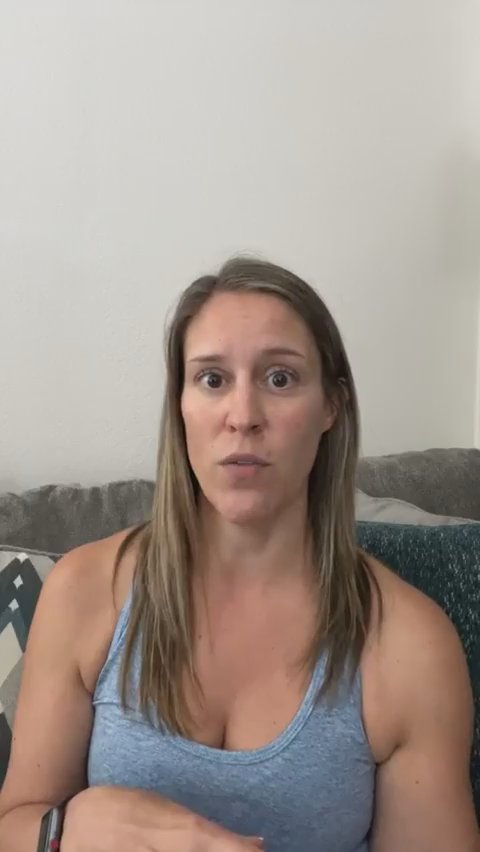
An expert in healing from trauma, healthy relationships, all things nursing-related, quality improvement and establishing company culture, Dr. Carrie will answer your burning questions on this livestream!
Today is an ask me anything livestream, so ask away. Anything you want to know about me, about my areas of expertise. These include trauma, healing from trauma, PTSD relationships, unhealthy and healthy relationships. And I will answer anything to the best of my ability.
The weather is the thing we wait for in the spring. Mike would like to know, what do you want to do for dinner tonight? I think we should play our day by year since we've got a lot of errands to run.
My favorite season is fall. That was a hard thing for me to give up moving to San Diego. We don't have leaves and, like, just the fall, crisp air like we do in Minnesota. Mike wants to know, what is my favorite season?
How, when, and how can individuals get over being triggered? Everything seems to trigger us. All of us have some sort of triggers in our life, depending on what we've been through. The goal is not to get rid of triggers, but to make them less severe.
At what point can individuals turn triggers into a source of power? Sometimes we don't understand our triggers, but that's when you can really start to have an impact on other people.
Luke, happy nurses week. It is such an honored profession to be a nurse. They celebrate for a whole week because, because I think it is a hard profession, and there's just high levels of burnout and the sacrifices nurses make.
Luke: What makes a good nurse is somebody who can recognize when they're getting burnt out. The other characteristic is letting things roll off their back. How can Cadre help the nursing field or hospitals?
Do you think it is healthy to share if something has triggered you? Is there a line where you should keep it internal? How do you navigate triggers if they are becoming a distraction?
Any other questions today? These are great. Again, I usually do these like once a month and I will answer any question. Otherwise, go to the community feed. Drop questions for me there if you want, and just stay tuned for the rest of our incredible live streams this week.
Supportadre IO has an email dedicated if you need support in any area of your life. If you want to ask a certain creator a question, feed anonymously. We are always here for you. Have a fantastic day.
Hey, Cadre family doctor Carrie here. Going live on this beautiful Thursday. Today is an ask me anything livestream, so ask away. I have been asked some of the strangest questions in my life and I will answer anything to the best of my ability. Anything you want to know about me, about my areas of expertise, which include trauma, healing from trauma, PTSD relationships, unhealthy and healthy relationships, anything process and quality improvement. I am here to answer whatever questions you have today about any of these topics, as strange as they may seem.
So just pop them in the chat and anything you want to know. Hi, how are you doing there? MJ Weiss is the name, huh? That's actually my fiance, in case anybody's wondering. But I wonder what questions he has for me today. Go ahead and ask away. Mike, this is your platform to ask any question you want on a live stream with thousands of people viewing. And I have to answer it honestly. So please answer if you have or please ask if you have a question that you want me to answer today. So happy to answer any questions today.
A little bit cloudy here in San Diego, but the beautiful thing about San Diego weather is that you, it's just so unpredictable. You never know, like if the sun's gonna come out in about 30 minutes in the month of May, it's really amazing, like how it can transform so quickly. So I'm just excited to see the sun later today. So anyway, I will talk a little bit about the weather while we're waiting. I was listening to some other creators videos on our app, and I was just laughing at how many of our Minnesota creators commented when the weather got nice.
Because as a fellow minnesotan, that's where I grew up. It is. It is the thing we wait for in the spring, and if you don't live in Minnesota, you don't get it. But we wait for it every year, and so they just cannot stop talking about how nice it gets when the weather gets nice. Mike would like to know, what do you want to do for dinner tonight? That's a loaded question right then and there, Mike. I think we should play our day by year since we've got a lot of errands to run, and maybe we go get some food out in a new restaurant we haven't tried.
We'll do that. Up for adventure, whatever the day takes us to today, Mike, we can do that. So great question. Let's get deeper, though. Maybe something besides dinner and anything else do you want to know on this live stream today? I've got my companion for the livestream over here cuddling with me, my little girl. She's so calm and peaceful this morning. So, anyway, so back to my story about the weather. So if you. If you are a minnesotan, you have this kind of, like, you never know when it's going to get better in the winter.
And you just sit and go, when are we going to see the sun? When is the snow going away? When is this cold going away? I just cannot seem to, like, make it through, but we'd make it through every year in Minnesota. Mike wants to know, what is my favorite season? My favorite season is fall, and that was a hard thing for me to give up moving to San Diego, because we don't have leaves and, like, just the fall, crisp air like we do in Minnesota. But that is definitely, by far, my favorite season. Um, all right, Luke wants to know, speaking of trauma, how, when, and how can individuals get over being triggered?
I hear that word a lot. Yes, we use that word a little bit too much these days. Everything seems to trigger us. Triggers are really your own unique experience, though, as far as what triggers you, what doesn't, and you can't really judge someone for being triggered by something. I used to get triggered by the weather changing to, to be honest, like, that was a thing for me in the spring in Minnesota, because my sexual assault happened in June, and it was like one of those days when you wore flip flops finally and didn't have a winter jacket on.
And so the weather used to trigger me. So we can't really quantify or say if somebody's triggers are valid or not, but we do tend to overuse that word a little bit. But when do you get over it? I'm sorry to tell you, Luke, but I think it's never. I think there are just triggers that our brains and our bodies want to store because they want to protect us. That is the basics of what's happening with a trigger. Your brain has stored a memory of an event or of a traumatic thing that happened to you, and it's saying there's something associated with this, this.
This thing, whether it's a sight, a sound, a smell, it's usually a sensory input that triggers, and your brain goes, I'm going to pull that file out of the file cabinet, and I'm going to remind you of this event, because I'm trying to protect you. You. So it's actually a good thing that we get triggered. It can be very distressing, though, in our lives. And so what. What you want to do is just, first of all, acknowledging that you have triggers, and all of us have some sort of triggers in our life, depending on what we've been through.
But just acknowledge that your brain is actually doing its job to protect you. And over time, when you work through, especially like, a trauma focused therapy, you work with a trauma coach, the goal is not to get rid of triggers. The goal is actually to make them less severe and less significant of an impact. So, for example, I used to get triggered, like I said, by the weather changing every year, and I would get anxious and panicky, and I would just be so on edge, like, irritable for an entire month as my brain was like, this was a momentous occasion.
It was a horrible thing. We're trying to remind you of it, so you should remember this. And over time, that trigger has kind of gone away. But if I were back in Minnesota right now and the weather was changing, I might feel triggered. I just notice that I might be a little bit more anxious and irritable than usual and then say, you know what? Thanks, brain. You're doing your job and just. Just moving on. So when you work through your trauma, you're not trying to get rid of that trigger. You're trying to just lessen its severity and impact on your daily life.
So I hope that answers your question. At what point can individuals turn triggers into a source of power? Oh, that's a great question, because honestly, that's what you're trying to do, right? You're trying to say, I almost have this, like, intuitive nature that nobody else has about things. And I used to have an intuitive nature about women that were in abusive situations after my experience with my sexual assault. Like, I just had this intuition and I never had that before, but I had this intuition and I used it like a superpower, if you could call it that, because what I did was I would make sure that I could get them the help that they needed or the resources they needed.
So that's when you really can start to use your triggers as a source of power, because you can channel it and saying, I'm going to use this for good. Maybe my. Maybe I'm triggered right now, and maybe there's something that my brain wants to tell me right now. So it's really starting to honor the trigger, honor what your brain is doing and then using it to help other people, too, because if you've been through trauma, there's somebody else who's been through trauma and is probably similar to yours.
No trauma is the same, but that's when you can really start to relate to people when I used to tell people that, like, putting flip flops on in May was a trigger, they're like, that's a little weird, but somebody who's been through a trauma who has a weird trigger, they're like, oh, thank gosh you have that, too. I thought that was the strangest trigger. And, like, sometimes we don't understand our triggers, but that's when you can really start to have an impact on other people, when you can relate to them on a very different level when you've been through a trauma like that.
So hope that answers your question. Luke, nursing week. I know I saw, I usually have the date on my calendar, but I'm a little far removed from nursing right now. So, yes, happy nurses Week. I should have done a video on that. It is such an honored profession to be a nurse, and they celebrate for a whole week because, because I think it is a hard profession, and there's just high levels of burnout and the sacrifices nurses make. So happy nurses week. To anybody listening, anybody that has a family member that's a nurse or a friend, wish them happy nurses week.
It is such an honor to be in that profession, but also to have the recognition is really important. So what do you believe makes an amazing nurse characteristics? Oh, I'm going to speak on behalf of just broad instead of ER nurse, which was my background, because the characteristics of a good ER nurse are different than the characteristics of an oncology nurse, for example. But in general, what makes a good nurse is somebody who can recognize when they're getting burnt out, because it will happen.
It is not just a matter of if, it's when. In that profession, no matter what part of nursing you work in, whether you work in a school, whether you work in a clinic, whether you work in the cath lab, the ER, whatever it is, you will get burnt out. And so it's recognizing, kind of when you get to that point of starting to have compassion fatigue and being able to say, gosh, this is a very difficult profession, especially the ethical things that you experience that, like, no other human being in their job has to think about certain ethical things, like a nurse does.
And it's, it's a hard, hard thing to get through sometimes, like, mentally and emotionally. So I think that's what makes a good nurse is somebody who can recognize, like, I have compassion fatigue and I no longer really care about my patients, or I'm burnt out and I'm sick of going to work. And it's showing up in how I interact with my patients, because that's really why we do that job, right, is for the patients so that we can give them the best care possible. And so if you can recognize that that's what makes you a good nurse.
The other characteristic, I would say, is somebody who lets things roll off their back pretty easily because. Because it can be a highly stressful field, even every setting of nursing, just like I said, with some of, like, the emotional fatigue and ethical considerations you have to endure. So if you can learn to let things kind of roll off and have your self care program or package or things that you do to make sure that you get filled back up and then just letting things not bother you as much, because I think that was especially a big thing in the ER.
These people are there on the worst day of their life. They might swear at you they're having a tough time. And I've been that patient. I know that I'm not my best self when I'm in an ER as a patient. Right. Like, I might be stressed beyond belief, and I probably am not the friendliest at times to the person taking care of me. So if you can learn to let things roll off your back, that I think is also a really good characteristic of a nurse and just not taking things too seriously, because that's going to also give you more resiliency to last in the profession.
How can Cadre help the nursing field or hospitals? I think, Luke, just the same thing of what we're doing right now, you know, talking about resiliency, talking about burnout, giving them an app like Cadre, giving them the resources they need. I was joking around with someone the other day, but this is a true story. I used to actually go to the bathroom during my shift for, like, two minutes and hide. And I would do, like, a relaxation meditation practice. And people who hear this, they laugh at me, and they're like, you literally lock yourself in the bathroom?
Like, yeah, because that's the only place I can get privacy in an ER, in, like, maybe the locker room. But I literally, during the day, would have to, like, take a long bathroom break because I needed to recharge, like, just physically meditate and just calm myself. Especially if I'd been through a particularly stressing thing during my day, I needed to go back out and show up for the rest of my patients. So I think giving also our nurses practices and, like, practical tips they can use in their day to day is another thing that we could provide at Cadre, like, giving them video content of, like, here's a 1 minute meditation.
Here's a 1 minute breathing exercise. We have content like that on our app. So giving them stuff like that that they can consume in the middle of their workday, I think, is another thing we could do to support nurses in a team. Do you think it is healthy to share if something has triggered you? Is there a line where you should keep it internal? That's a really good question, Mike. I say, yes. I think we're talking, like, in a work situation here, not necessarily in a relationship. So, yes, I think it is important for people to know what's going on with you.
There's always a kindness in sharing what's happening in your life, and that transparency, as long as it doesn't become kind of like a hijacked focus. So I think it's okay to say, hey, I'm a little bit triggered by something, and it's not anybody else's responsibility to actually fix this right now. It's me. But just so you all know that my reaction right now might be a little bit out of line with what you think it should be, because I'm actually triggered by something, and I think that's perfectly okay.
If you have a team like we have at Cadre. We have such an authentic team. I mean, we are real, real people, as you can see on our live streams, on our content. Like, we are real to the core. We're like a family, but actually like, a healthy family where we will offend each other and then say, you know what? I'm sorry I didn't show up the best today. I actually was triggered by something, and we do that at Cadre, and that is feasible to do within a team. I talk to a lot of fire paramedics, first responders, and they say, oh, gosh, we don't do that in our team.
No, we don't show weakness. Well, why, like, where did that culture come from? Why don't you change that narrative and make that normal? Make it normal to say, hey, I'm really triggered. Especially, like, I tell people if you're riding with a partner, like an amp, like, ambulance, like two paramedics or something, let them know when something triggers you on the job, because then they. Then they understand why you're reacting the way you are, and they can show up differently for you in that moment if they so choose.
So giving information like that is actually really kind. And I always encourage transparency. I'm a very transparent person with my team. With the team at Cadre. They know everything about me, and there's. There's a vulnerability there and maybe a sign of weakness, but it's actually a sign of strength when you can be vulnerable. And I think it was. That was Luke who told me that one day that that is a sign of strength when you can be vulnerable and share with your team. So, is there a line where you should keep an internal?
I think really only the line is if you are using it in a manipulative way to get a certain response out of people, or if you're doing it every day, like, if you constantly. Every day go. Cause I'm so triggered by this and this and this. It's like, okay, now that's kind of becoming the focus of. Of everything, and you're using that as a manipulation to get empathy and things like that. So it's a very fine line there, but I think that's where you need to then take some ownership and go get the help that you need.
Right. Like, hire a coach on Cadre, go see a therapist, all of the things, and get some. And work through some of that stuff, because it doesn't necessarily mean you need to leave your job if you're triggered, but maybe you need some additional support, and that's where your leader or your coworkers can point that out and say, like, hey, let's get you some support. You've been mentioning that you're triggered a lot lately, so that this doesn't just become, like, a chronic narrative that we hear from you that kind of derails kind of, like, the focus of the rest of the team and the progress that we're making in the company.
So I hope that makes sense. Mike, as a leader, how do you navigate triggers if they are becoming a distraction? I have a lot of experience with triggers. I have kind of my toolbox for triggers, and I have my go to things that I do, which is immediately pray and talk to God. It is my board of advisors that I reach out to, too, of, like, am I off base here? Like, I just want some external wisdom, and I have a very select group of people that I go to for those things and just doing that internal reflection.
There are days I need to sit down and journal and pray and cry and, like, kind of process something, especially if I'm really triggered, so that I don't take that back to my team. Right. Like, I need to show up as the best version of myself, whether I'm in a leadership role or not. And we all need to have the responsibility to do that. So it's taking the time outside of the team to do that work that I think is the best way for it to not become a distraction and not then trickle down and impact your team.
Because leaders who get triggered, leaders who have undelt trauma, can really trickle that down to their team. That is that it can be a huge culture shift when a leader has some of those things and just in the way they communicate. Maybe it's an anxiety response, maybe it's whatever it is. You can totally impact your team with that kind of undet trauma. So I'd say do the work, go get yourself healed in that way and get some support and make sure that you can kind of compartmentalize when you need to.
Because a good leader does know how to compartmentalize when. When they have to kind of show up for their team and when they then need to, like, take the time to do their own work. So I hope that answers your question. Any other questions today? These are great. Wow. I should have had more coffee. I didn't know I'd be going this deep this morning. But we usually call this deep dive with Doctor Carrie. So I should have expected that we go deep on all of mine. I just. I can't do anything. But guys, I'm sorry.
I just am a deep person. I'm one of those that makes the dinner conversation just come to a complete screeching halt because I start mentioning the word rape and trauma and trigger and the PTSD and they're just like, whoa, this girl goes dark fast. And it's just. It's just how I show up. So I'm sorry, not sorry, but that's just how I prefer to be, is deep and vulnerable. So no other questions popping in, then we will go ahead and end this one. I hope this was helpful for you guys. Again, I usually do these like once a month and I will answer any question.
Like I said, I've been asked some really strange questions after I've done, like, a presentation in a room full of 250 people and there isn't anything I won't try to answer. So save it up for next time. Otherwise, go to the community feed. Drop questions for me there if you want, and just stay tuned for the rest of our incredible live streams this week. And also just engage in that community feed because it is such a positive, uplifting thing that we offer. And I just. I love going in there and seeing just the positivity and like, it just makes me smile every time I open it.
So I highly encourage you to check it out and open it and comment in there as well. So thank you guys for the questions. I appreciate it. Have a fantastic day. Luke has one last thing. All right, Luke, what do you got? Supportadre IO. Thank you for sharing that, Luke. We have an email dedicated if you need support in any area of your life. If you want to ask a certain creator a question and you want to ask it not in the community, feed anonymously. If you want to ask me a question, if you want to just get some support, send a message to me.
Anything, email support and one of our leadership team will respond to you, most likely me or Luke. So just please use that. If you need anything from us, we are always here for you. So thank you, guys. Have a fantastic day. God bless.