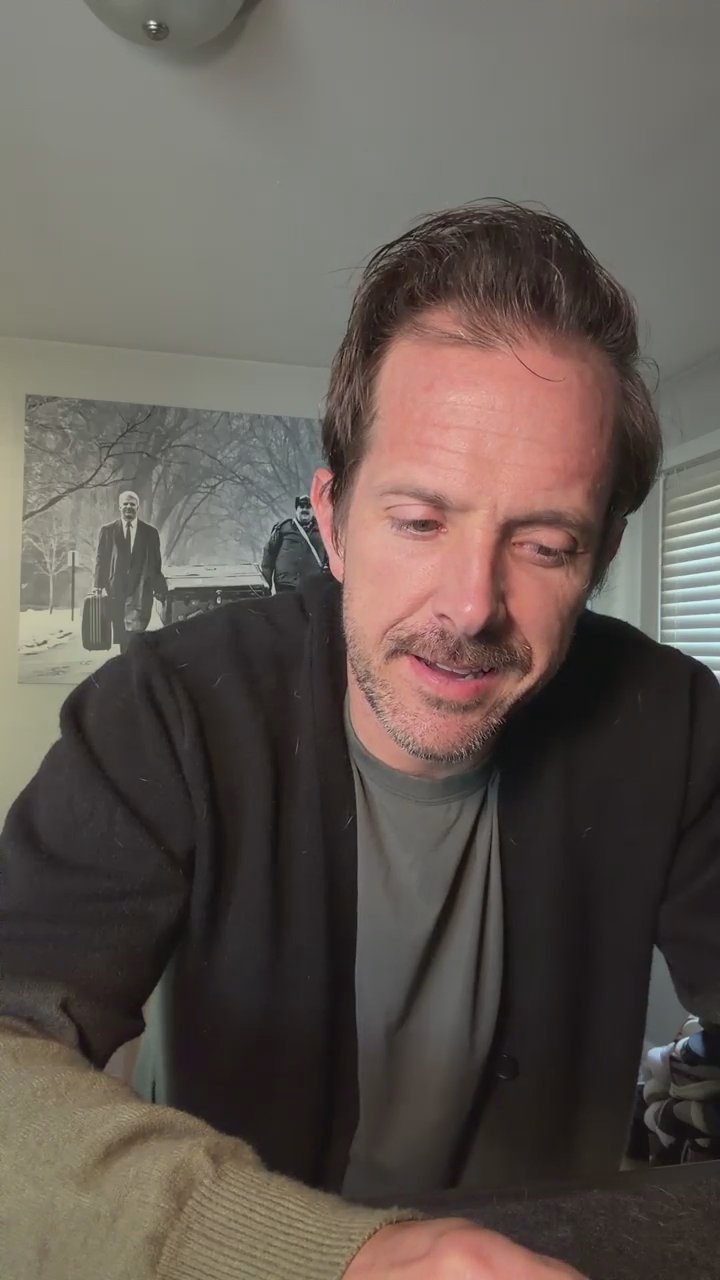
The host greets the audience, expresses gladness to be present, and asks how everyone is doing to set a warm, conversational tone for the short episode.
The host greets the audience, expresses gladness to be present, and asks how everyone is doing to set a warm, conversational tone for the short episode.
The host introduces the central question of the episode, explains why they prefer it to questions like 'How are you?' or 'What are you up to?', and notes it can answer multiple things at once.
Through examples, the host unpacks how people’s answers (weekend plans, projects, dinners) can point to deeper needs—time, space, connection—and highlights that lack of an answer can be revealing too.
Using a family vacation example, the host encourages listeners to identify what they truly crave now rather than waiting, and to care for themselves so they can be more like themselves.
The host invites viewers to reflect on 'What are you looking forward to?' and to figure out what they need to feel cared for.
Cadre, happy Friday. How are we? How are we doing out there? You know, we'll talk about how in a moment, but what I am, I'm glad I'm here. I'm glad you're here, Cole. I know the things I know and I care about you. I'm all just full of questions today, apparently. What are you looking forward to? I love asking that question, and I love asking that question more than I love asking the question, like, how are you? Or, like, what are you up to? Matthew, nice to see you, my friend, because I like questions that kind of answer 2 questions.
Like, what are you looking forward to? People will say something. the weekend, or when I finish this project, or dinner with my friend, or the walk with my dog later today, whatever. And that gives you an answer. But I think it points to a second answer. It's like if someone answers the question, Hey, what are you looking forward to with the weekend? Maybe that points to what they need or what they're craving is, is time or space. If they're, they say, I'm looking forward to, you know, hanging out with my high school buddies playing golf this weekend, maybe what they're really saying is, need conversation or I need to remember who I used to be and find that person again.
The cool thing is what we're looking forward to points to not a moment of what we get to consume in that moment, but what we are missing or what we are deficient in, in a moment. So, if you're asked a question and you go, Ah, I don't know what the answer is, that's normally me. I don't answer your questions very well. Maybe what the question will offer you is the opportunity to think about, Hey, what do I need? or What have I not had in a while? or Where is there an imbalance? Because the cool thing is you may be able to find that thing a lot sooner.
What are you looking forward to? Oh, well, we're going on a family vacation in November. If that's the thing that you're looking forward to and it's August and the thing is in November, maybe what you can do is go, huh, what do I really need? Or what am I really craving? So all of a sudden it's not about waiting months or waiting for the weekend. But it's giving yourself the thing you need right now so you can be the person that you always are simply if you're cared for a little bit more. And that begins with how we care about ourselves.
Y'all, my invitation for you today is to answer the question, what are you looking forward to? And figure out what you need. Bye.