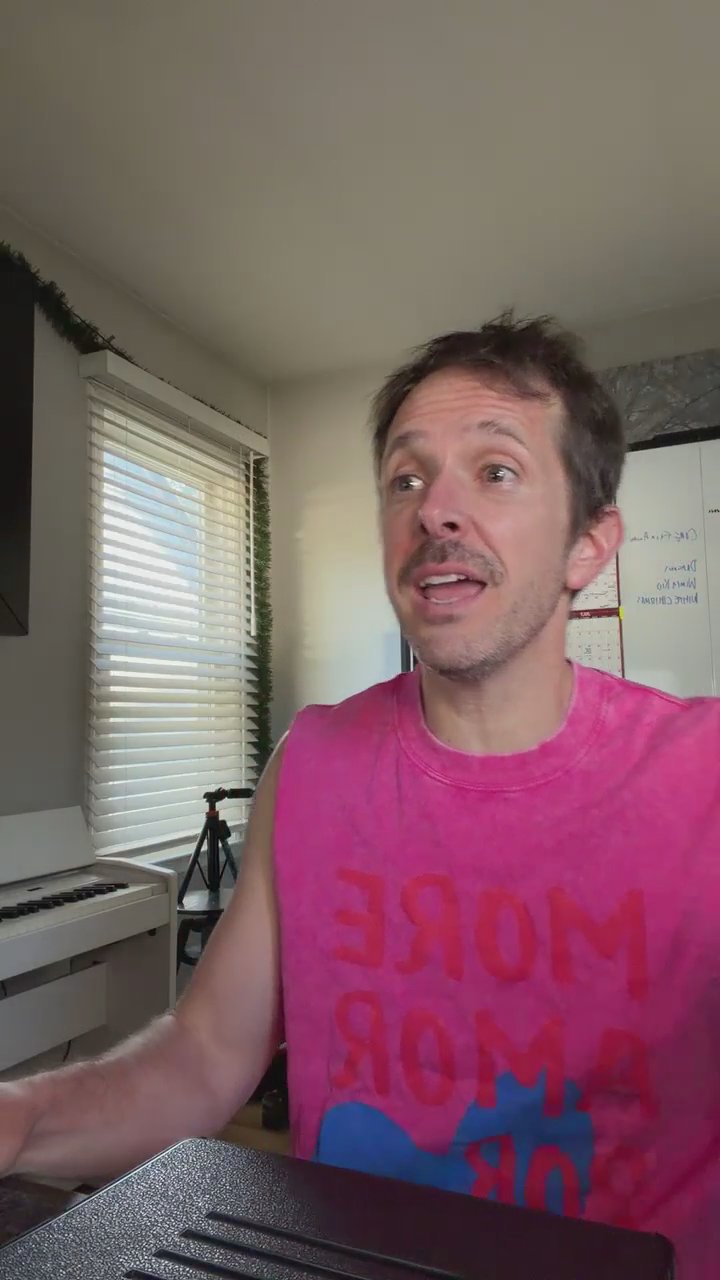
The host opens the session with greetings, asks how everyone is doing, and normalizes not feeling great. This brief check-in sets a supportive tone for the rest of the talk.
The host opens the session with greetings, asks how everyone is doing, and normalizes not feeling great. This brief check-in sets a supportive tone for the rest of the talk.
The speaker mentions searching for 'can' songs, notes most are 'can't' songs, and introduces the motivational sequence 'can, am, will, do' as a popular mantra to use during struggle.
The presenter suggests placing 'what if I' before each phrase (what if I can/am/will/do), explains finishing those sentences with realistic prompts, and highlights how this framing reveals motivations and opportunity costs.
The speaker reassures listeners that they are supported by their 'cadre sphere' and offers encouragement regardless of current struggles.
The speaker attempts to lead a small chorus related to validation, sings briefly, and says goodbye, ending with a closing line about the moment.
Hi, Jen. We'll get through the chorus, You just have to. We have to get there. Trust me, I'm my I-N-D-E-P-E-N-T. Okay, we'll stop right there. How's everybody doing? I hope you're doing swell. And if you're not doing swell, that's A-OK as well. You know, you are still capable of doing lots of great things, even when you don't feel like it, even when you don't got it. Cole man, You can still do those things. I'm glad I'm here. I'm glad you're here. I know the things I know and I care about you. I typed the word can into my Spotify this morning to go, what's a song that has can in the title, Marisa?
Guess what? All the songs that come up are can't songs. Can't Stop Us, Can't Be Tamed, I Can't Dance. There's not a lot of can songs that have a lot of popularity. Can, am, will, do. It's kind of a popular thing in the motivation world to move through the I can, I am, I will, I do. So when you're in work, when you're in struggle, when you're in that endurance brain to go, hey, I can, I am, I will, I do. That's a really good mantra. Mantra translated from Sanskrit into English, vehicle for the mind.
So as the mind wanders through reality, through the light and the dark and the easy and the hard and the dissonant and the harmonious, A mantra, a vehicle for the mind allows that mind, the thing that has the perspective and the capacity to go, what do I do with this? The vehicle, the mantra protects it. I can, I am, I will, I do. Here's what I like to do. I like to put what if I before the sentence. What if I can? What if I am? What if I do? What if I will? What if I will, what if I do? I always mix them up.
And the order doesn't matter. And then you finish those sentences. What if I can get through today? What if I am worthy of being in the room? What if I will show up? What if I do what I can, and it is enough. I like putting the what if before, because all of a sudden, I do the opportunity cost. Because it's like, I am this. It's like, am I? And if I'm not, what would I have to do to make it happen? And why would I want to? Or why would I have to? Or what would I get out of it? And by the time those questions start pouring, we go, meh.
If you put the what if before the can, am, will, do, it may invite you to see the value of what it is that you are doing. And there's something really, really beautiful there. So no matter what you have going on today, everybody, I hope you remember that you have your cadre sphere right here, supporting you, settling you in to whatever comes next. Let me see if I can find a little bit of a chorus. Let's start with that validation comes from giving it back to the people. Now sing a song and it goes like this.
We'll see you tomorrow, everybody. Can we go back? This is the moment until it's over. Just like the ceiling can't hold up.