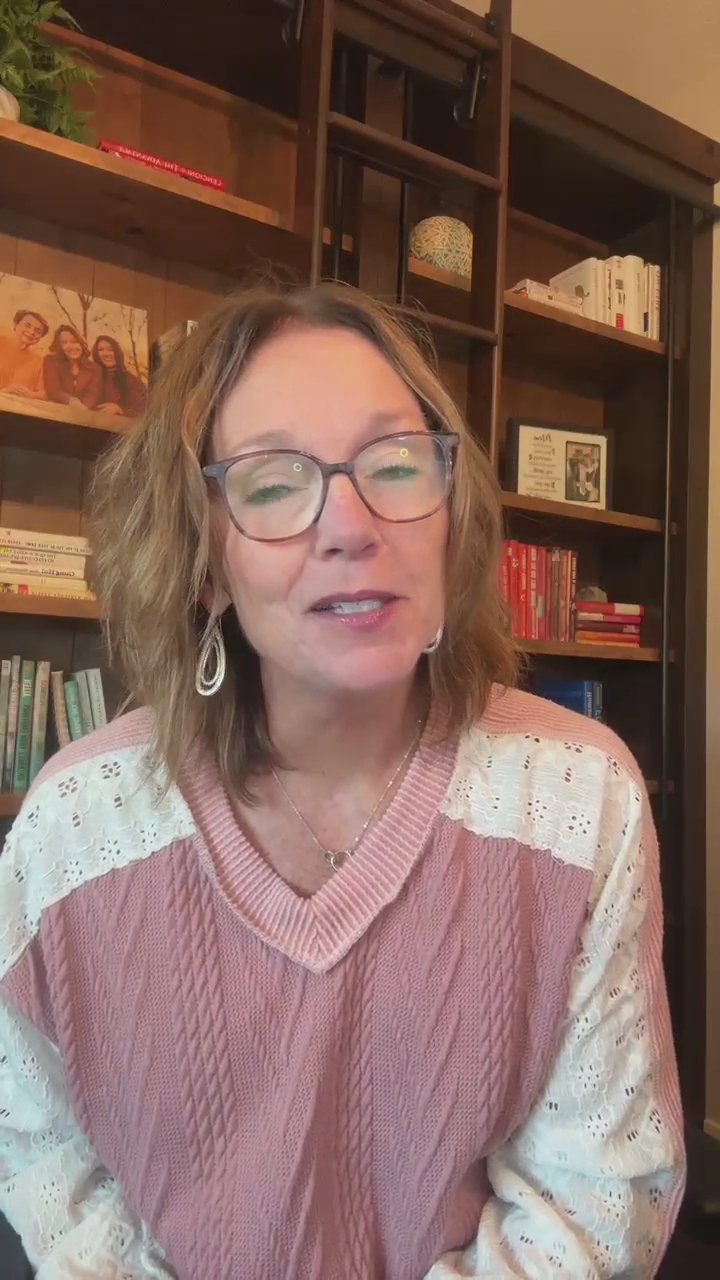
Carrie, a former CHRO turned caregiver and wellness advocate, explores why leadership feels emotionally heavy, links empathy and neuroscience, shares her own mental health story, and offers three concrete weekly reflections to notice and lessen isolation.
Carrie opens the live stream, introduces herself as a former CHRO turned caregiver and wellness advocate, and explains the threefold mission of the community: recognize, unpack, and renew. She also previews today's topic of emotional load and loneliness in leadership.
Carrie explores why the weight of leadership feels heavier than workload alone, drawing on neuroscience concepts like mirror neurons and empathy overload to explain how absorbing others' pain is a biological reality, not a personal weakness.
Using vivid real-world scenarios—divorces, cancer diagnoses, workforce reductions—Carrie paints a picture of the constant emotional readiness required of HR leaders and other leaders, referencing Cleo Wade's quote about the unsustainable state of perpetual war-readiness.
Carrie opens up about her own mental health journey, including trauma, anxiety, and depression, and how being labeled a 'master compartmentalizer' eventually led to a breakdown in 2015. She describes the flooding of emotions during her commute home and the difficulty of finding anyone to confide in.
Carrie explores the structural loneliness of leadership—the impossibility of fully venting to your team, your peers, or the employees you protect—and explains, with neuroscience backing, that this isolation registers in the brain as physical pain. She draws on Brené Brown to distinguish between holding space and carrying others' burdens.
Carrie introduces three concrete weekly reflections: a two-question check-in (carry vs. support), a daily connection audit (who did you go to?), and one micro-moment of authenticity. Each practice targets in-the-moment processing, awareness of isolation patterns, and incremental vulnerability.
Carrie thanks viewers, previews the next live stream on setting boundaries as a form of self-care, and closes with an encouraging reminder that those who take care of everyone else deserve the same care in return.
Good morning everyone. I am so sorry for the delay in getting this started. I struggled. I for whatever reason I couldn't get the live to start and so I had to reschedule and it only allowed me to go to 11:45. So I'm starting a little bit earlier 'cause I didn't want to keep people waiting. Hello K. I don't know if I pronounced that right, but so good to have you here. Welcome back for those who've been here before, and thank you so much for joining. If you're brand new, I am super excited to be with you today.
This is only my third live stream, so please bear with me as I continue to try to work out the nerves and all the kinks and all the things. But I'm glad to be here. So our goal for this community is just to have a space for people to think, reflect, take a little time out of their day and feel a little bit less alone. So our focus, Adria and I are teaming up on this. She's a fantastic partner. Hello, Speak Wonder. Adria is my partner in building this community and you'll have a chance to meet and spend time with her as well.
And our focus is gonna be really threefold. Number one, recognizing some of the things that are happening to us and the way we're feeling. Number two, hopefully working with you to do some of the inner work to unpack it a little bit and identify different patterns that you could be experiencing and things that are wearing you down. And number three, renewal. So what does it look like to get on better footing and be able to live our best lives and truly be well? As we always say, there are more than one way to be well and we are just glad to be a small part of your journey to help with that.
So I was planning to start with a story about how I started my day today. So I had a dentist appointment today and what I want to know is does it ever get any less anxiety producing to go to the dentist? So just drop me a note in the chat if you feel me, it's anxiety provoking, give me a one. I'll tell you what, it doesn't seem to matter how old I get. I totally get stressed out when I go to the dentist. I was convinced I was gonna have a mouthful of cavities and the good news is I didn't. So I came home and celebrated with a nice cup of coffee.
And interestingly enough, the mug that I chose, it was kind of random, was, You're doing great. So I thought you'd like to see this and hear that message from me today too. So who am I? I am Carrie Heimer. I'm the former CHRO for Red Wing Shoe Company. I was there for 16 and a half years. It was absolutely a wonderful time. Speak wonders still and always anxiety. Thank you for making me feel less alone in that feeling. Oh my gosh, you're a retired dentist? Oh my gosh, what are the odds of Thank you so much for sharing.
They actually were wonderful with me. It's just all me. You know, they take your blood pressure right before you start. I'm like, it's going to be off the charts. And it was actually fine. But anyhow, back to who I am. Semi-retired CHRO on a new chapter in my career. I retired early to be a caregiver for my mom who is battling cancer. And now I am in this next phase of life and figuring out where my purpose is and what my true calling is. And Cadre is a big, big part of that. I also have my own lived mental health experience and I'll, thank you.
You're doing great. Speak wonder. Yeah, I'm glad you like that mug. It's always nice to have those little inspirational notes. But I have my own lived mental health experience. You'll hear me talk about that more from time to time. But Those who do know me know I'm an avid learner. I cannot get enough knowledge in learning about why I behave the way I do, why I feel the way I do, why others do the same. And so from time to time, you'll hear me drop little neuroscience tidbits or psychology tidbits.
I certainly don't claim to be an expert at all. It just is something that I've picked up along the way and think you might find it helpful. So I want to start with a quick note. My last live, I mentioned earlier, I've done 2 lives so far. My last one was lost. It was lost a couple days after I recorded it. And so I'm going to repeat some of the things that I shared there so that there's a kind of red thread that weaves throughout all of this. So I apologize if it's a repeat if you listened to the last one.
I also want to put in a huge plug for Adria. Adria had an incredible live on Sunday. She is amazing. She's so relatable. And she talked a lot about these topics as well from her lens as she spent many, many years working for Target, a very large organization managing their mental health area. So please check that out if you haven't. She also opened with some really cool music and I'm gonna have to up my game and get some music for starters between Adria and JC. They are just rocking it with getting the mood right.
I thought about bringing my dog Bailey in today to help with that, but maybe next time. So today I'm gonna focus on the emotional load and also, oh, thank you, Speak Wonder. I love my sweater. I appreciate that. It's super cozy. So I'm going to share some of my last live content and also bridge the topic to loneliness 'cause honestly they really go hand in hand. I also want to mention that while this title is HR leaders, it really can apply to many people who lead lead in different ways. Leaders at all levels so and I will speak wonder.
I'll bring Bailey on next time. So I want to start with a question. Why does the load in the work feel so heavy right now? It always has, but many tell me that it feels heavier now than it has for a long time. And I think most of us would agree that it's not so much the workload, the back-to-back meetings, the constant emails, the various presentations, competing priorities. It's oftentimes something that's a lot harder to name. And what I have come to understand both from my own experience and from some of the research that I've done into this is that there's two things really happening at once.
You will see me look away from time to time. I have a few notes just in case I lose my train of thought. Maybe eventually I won't have to do this, but for now I do. The first one, the first thing that's happening is you're absorbing more than you realize. That's the weight, that's the load. The second thing that's happening is you're carrying it more alone than anyone knows. That's the loneliness. And so here's where I'll geek out a little bit on the neuroscience and refer to some notes that I have in front of me.
What the neuroscience tells us is that when someone shares their pain with you, which when you're in a leadership role that happens often, your brain activates the same circuits as if you are experiencing it yourself. I'd ask you to think for a minute about when a family member of yours shares something hard. They're hurt. They're getting picked on in school. Can you relate to that, that weight? It feels like it's happening to you. In fact, sometimes you would wish it was happening to you rather than them.
This is not a weakness. It's how the human brains are built. The second thing I wanted to touch on from a neuroscience perspective is when you absorb that weight and you have nowhere to release it, and oftentimes that's the case when you're an HR leader or a leader of any kind, whether that's due to the confidentiality of your role or you don't have someone to process it with, neuroscience refers to this as empathy overload. And that's a term that I can resonate with, just think about that. empathy overload.
When you have nowhere to release it or no one to release it with because of the role you hold or the confidentiality that's expected, that can create some social isolation. The brain registers being professionally alone the same way it registers physical pain. And so that's also something to think about. that is emotionally alone the same way as I registered physical pain. I think I got my words mixed up a little bit there, but I think you understand the broader concept. So the bottom line is the heaviness you feel, it is not in your head.
It is your biology. So hold that for a moment. The weight you carry, the exhaustion you can't fully explain has a neurological basis. You're not weak. your brain is doing exactly what it was designed to do. And so the first series of lives we're having are really just about that, trying to name what's happening in our bodies, what's happening in our brains, so that we can begin to come up with different strategies to help address it. Okay, so let's talk about the life of an HR leader or of a leader in general.
A day might start like this. An employee confides in us about a deeply personal experience. Maybe they're going through a divorce. You pivot from that and a leader shares a deep vulnerability with you that he doesn't know who else to share it with. Maybe for them, they just learned of a cancer diagnosis of themselves or someone that they love. The leadership teams are wrestling with difficult decisions they have to make. Maybe there is a workforce reduction or some other measure that is being taken and they're worried about how it's going to affect the lives of the people they care about.
And so you're there, you're there for it all. And you're the calm in what feels like a storm. Either on the outside, it looks like I've got this, but on the inside, it can feel really, really happy. Not to mention all the stuff you're carrying of your own in addition to everyone else's. I love, love, love to read books and if you do too, please share book recommendations to me. I thrive on that, having a list of books that I have the opportunity to read. But this winter, I picked up one called Heart Talk and I'm gonna hold it up.
It's by Cleo Wade, Poetic Wisdom for a Better Life and I love this book. One of my favorite quotes, and I'm gonna read it here from my screen, she says, To exist in a state that requires you to constantly be prepared to go to war is exhausting and no human body or soul can sustain that type of energy as a lifestyle. And yet many of us do that. Many of us try to do that. So while HR might not look like war, that's not a term that we oftentimes use. Oh, speak wonder. I'm glad you like that. Yeah, it's beautiful.
I mean, it seems like whenever I flip to a page, it's like I was meant to read that day. It gives me a gift of something I needed in that moment. So while HR doesn't get referred, we don't use the term war, I think you understand the broader concept of the quote. We are in a constant state of readiness and that constant readiness, that's what our nervous system experiences all day and it wasn't built to sustain that indefinitely. So I'll share a little bit of a personal story. I'll try to do this for each live just to be able to relate to maybe what you're going through.
So in my role as CHRO, many of those closest to me knew about some of the things that I've, oh, book title. Yes, it is. Let me grab it. It is Heart Talk: Poetic Wisdom for a Better Life by Cleo Wade. I think you'll like it. So when I was a CHRO, I had a really close relationship with the CEO and I was fortunate to be able to share with him some of the challenges I was having from a mental health perspective. You know, like many that are on these lives, I have had my own trauma. I have struggled with anxiety.
you know, battle depression on and off, and then just my own uncertainty about what the future holds. That's kind of where I'm at right now. And all day when I was at work, I was able to set all of that aside, game face on, 'cause that's what you do. In fact, my former CEO, he used to use a term that I had not really used very often or heard very often before, he said, Kari, you are a master compartmentalizing. And I thought, what does that mean? And he meant it as a compliment. But as I grew to understand the term, I can now look back on that and realize why that caused an eventual collapse for me in 2015.
So in case you're unfamiliar with the term, compartmentalization is a psychological defense mechanism where the brain literally separates different thoughts, emotions, experiences into distinct mental compartments. It's like having separate filing cabinets in your mind. You can access one without the contents of the other spilling over. So I was able to compartmentalize all of my personal lived experience to be game on. when I was stepping up to perform in my role. So I was good at this during my work day.
It allowed me to flow from a hard conversation with an employee to another employee to a leader and pivot to talk about planning or budgeting. So again, during the day, I could do that and I could do it well. And then at the end of my day, I'd get in my car, I'd drive home, and for me, I had a two or a one hour commute. I live in Rochester, Minnesota, I worked in Red Wing. And it all would come flooding in. All of the emotions that I had carried for the day and then the anticipation of what I was going to be met with when I got home, and my mind wouldn't stop.
I actually wrote about this in an article called The Prisoner of My Own Mind. For many, many years I've lived as a prisoner in my own mind and struggled to find a way to be set free. I'm getting there. It's a journey. It's not a sprint. It's a journey for sure. So anyways, when I got home and walked through the door, I wasn't just tired from my day. And I think you all can relate to this. I was tired from everyone else's day too, from the emotions that I carried with me. And one of the challenging things when you're in a leadership role whether that be HR or otherwise, is it's hard to find your people that you can go to, your confidence that you can just let it all down with.
And that's where I want to bridge from the topic of emotional load to loneliness. I'm glad to speak wonder. I'm glad that this is relevant and helpful for you in this season. That's our overarching goal, right, is that none of us feel like we're doing this alone and we're going to get through this together by putting one foot in front of the other and learning from each other. So thank you. I had a wonderful husband and I have a wonderful husband who was always eager to help me de-stress, unload or whatever.
But by the time I hit the door, I was too tired to talk. I was too tired to open up what felt like a can of worms again and to rehash a lot of things that had been giving me challenges. And so I just ask you to think about your day too. I mean, for a moment, how many people came to you today? How many conversations did you have? Now let me ask you something different. Just take a minute to think about it. Who did you go to? Who was your go-to person? For most leaders, that question is really hard to answer.
You know, we're kind of in the middle of everything. We can't fully vent, if you will, to our team. We lead them. We're supposed to inspire them. We can't always be open with the leaders we work with because we're their rock. And we can't process it out loud with employees. We protect them and we inspire them. And so that's a difficult road to hold when you're feeling the feels and you don't have a place to put them down. And so this is what again neuroscience confirms. The aloneness isn't just uncomfortable.
Our brain experiences this professional isolation the same way it experiences physical pain. So none of this loneliness isn't a perception. It's a physiological reality. I mentioned I love to read and are there any Brene Brown fans on the call? If there are, just drop me a one. I read many of her pieces of work. She really taught me a lot about vulnerability and how to lean into that more as a part of my leadership journey and personal journey. She writes also a lot about how we often take on the emotions.
Thank you Speak Wonder, we take on the emotions that aren't ours. especially when we care deeply and we want to help. Now the thing I want to offer you, and these are things we all probably know in our heart of hearts, but it bears reminding each other from time to time, is there's a difference between holding space for someone and caring all that they're going through. Holding space means you're present, you're listening intently, you're supportive. On the other hand, carrying what they're going through is when we try to fix and we try to absorb it all.
And so recognize that distinction and at the end of this we'll talk about some practices that help me and maybe they'll help you. So key point here, just because you can carry it doesn't mean you should. And the loneliness, that's not a personal failure either. It's structural actually. It's the nature of the role we signed up to do as leaders. And I know for many of us, it's one of our greatest joys and honor to be the person that people feel comfortable that they can come to and be themselves.
And so naming this, naming what it is and how we're experiencing it is really just the first step of not letting it quietly destroy us in the background. All right. So now I want to get to some weekly reflections that I would ask you to do, and I'll do this at each of the different sessions. So if you have a pen and paper or whatever works best for you, I'd offer up three things. And I'm going to take a quick sip of coffee and a chance to remind you one more time you're doing great. All right, this week's reflection, number one, the two question check-in.
So here are the two questions that I'd ask you to do. When you're in difficult conversations, ask yourself, is this mind a carry or just mind a support? This could be whether you're in a conversation with a coworker or a conversation with a family member. Why do this? It's simple, it's immediate, and it really does help the brain process and regulate better. Again, a little neuroscience tidbit. The second thing is called the Daily Connect. So what is this? The Daily Connection Audit, excuse me. In this one you want to ask who did I go to today?
Who did I reach out to this week? Why? Because that kind of builds awareness of maybe some of the isolation patterns that you're creating or you're experiencing and it helps you kind of think through True, were there connection opportunities there for me that I can choose to take next time? The third one I'm calling one micro moment of authenticity. You know, I think we can probably all agree that the more real people are with us, the more connected and close we feel to them. It's humanity, right?
We all want to feel like we belong. like we are loved for who we are and that we are enough. And so one of the micro moments of authenticity this week is, can I be just a little bit more real with someone this week? Can I let them in just a little bit more? Why? It's a small step towards breaking down the isolation that you oftentimes feel carrying what you're carrying. It's a step towards vulnerability and the the side effect is probably it helps the other person feel less alone too. So those are the three steps.
So why these work so well together? Number one helps you process in the moment. Number two builds awareness and support patterns. Number three takes one step forward towards being more vulnerable. So That's what I wanted to leave you with today. And I hope that you found this helpful. I hope you'll join me back here next week. Next week, we're gonna dig in a little bit to boundaries and how we can, as human beings, maybe do a little bit better job of creating some boundaries for ourselves so that we can take care of ourselves because the people who take care of everyone else deserve that same care too.
So thank you so much for joining me. I'm really grateful again. My apologies for starting late due to the technical areas, but I'm grateful for you. I care about you and I can't wait to keep getting to know you and being on this journey. Have a good day and one more. You're doing great.