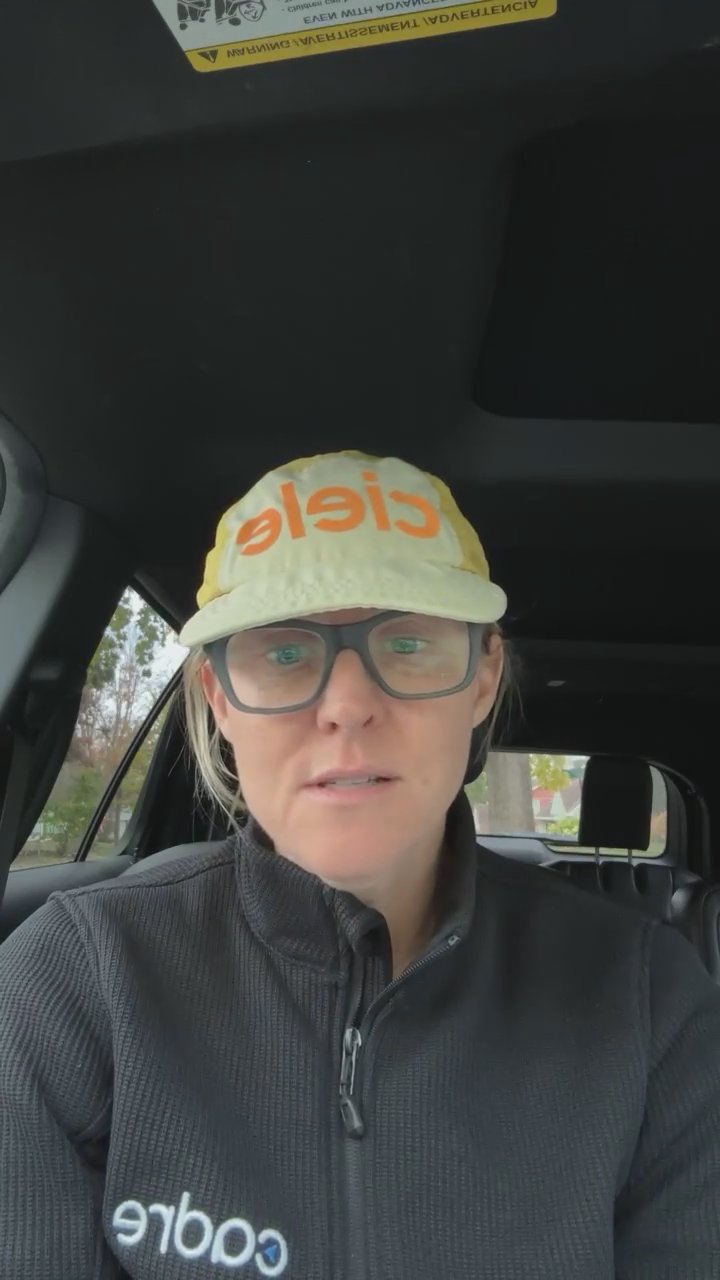
Sharing with I've learned as a person living with Anxiety, CPTSD and as a Caregiver of a child with autism going through human experiences many of us have.
Shannon from Cadre is a person who lives with anxiety cptsd and is a caregiver to a child with autism. Her live stream is about what she learned in eight years in therapy. She talks about things that might be valuable to someone who doesn't have access to therapy.
Cadre: I struggle with trusting other humans. One of my rules as a human is that people get to value what they value. My hardest thing is just really building deep, deep trusting relationships.
And I hope your takeaway from this is just to know a. It's complicated. We're each gonna bring different parts to every situation. And so it's just that continuous effort together to understand one another.
All right, guys, that's it. Beautiful and hard and complex and worth the effort. 100 speak wonder. Have a great day. See you soon again in the cadres.
Cadre. Good morning. It is Shannon from Cadre. Happy Tuesday morning. It is 8:47am Central Standard Time here in Cadre. Excuse me, here in Minneapolis, actually I'm in St. Paul, Minnesota. Welcome to my live stream. If I have not met you before, my name is Shannon. I am actually part of the Cadre team. And so the way I always introduce myself in my live stream is I am a human who is not a clinician. I am not a mental health professional. I'm a person who lives with anxiety cptsd. And I'm a caregiver to a child with autism.
And so. Good morning. So my live stream is about what I learned in eight years in therapy. And then I talk about just things I learn and how that might be valuable to you as someone who maybe doesn't have access to therapy or has thought about therapy, but they don't do therapy. I don't know, it's just stuff that. The different identities that I have and the different things that I learn and think about, I want to bring my learnings to you in case you can't find it. Right. Okay. Good morning. Good morning, Anila.
Good morning. Speak wonder. I haven't seen you in a long time. And Paul, hey, it's great to see you. Okay, you guys, so this one was like a whopper this week. And this is like a, this is like a punch in the stomach of therapy. And this is a learning from just in the last two weeks. And so what this lesson is, if I had to say it in a sentence, is that I can't break my own rules. So I have rules, I have, you know, I have beliefs, I have rules that I live by and values, I'm super values driven person.
And I have these like super strong beliefs. And then my therapist, Tracy, the beautiful Tracy, you know, this last week in conversation with her, I realized that I have been trying desperately to break my own rules and think that I'm the exception to my own rule. And so I'll just tell you how that even as I'm talking about it right now, my stomach is like churning because I'm like, oh my God, this is horrible. So I talked a little bit about CPTSD being something I live with. And truly what that is is just trust, right?
I struggle with trusting other humans. It's really hard for me. So I have a relationship right now in my life that's really important to me, just like you all probably do too. And so this relationship is one that's pushing me to trust. I gotta even breathe through it right now, you guys, this is. This is the truth. So it's pushing me to trust. And as I'm sharing with my therapist, you know, God, this is hard. I. I hate trusting. It's. It's. To me, one of the words that I use, and I don't know if this is.
Is resonant with any of you as you build new relationships. To me, sometimes it feels like fire. It's literally like my hardest thing is just really building deep, deep trusting relationships that are just about me as a human and not my performance. So I'm a high achiever. I'm very much about. I can perform, I can be a great athlete, I can be a good worker. I can do all the things. I can hit all my marks. If it's just me as a human, it's like, you know, am I enough? Classic for many people. But so as I'm telling her, like, this is just feels overwhelming.
This person just, you know, cares for me, and I don't know what to do with that. And it feels like so much. And so. But one of my rules as a human, one of my beliefs, if you've ever watched me on Cadre or in general, is that, like, people get to value what they value. And whatever people go through, wherever they choose to spend their time, whatever they love, whatever they care about, all day long, like, awesome, they get to do that, right? And so that's a core value of mine. Like, I'm going to honor and respect anything that anyone wants to value.
So as she listens to me talk about how this feels overwhelming and all the things, you know, she said, okay, so can I ask you a question? And I said, sure. And she said, so, you know, is it. Is it wrong that this person values you? And I'm like, oh, my God, you know, I'm on fire. And my stomach and all the things. And I said, it's not wrong. And she's like, so it sounds like from everything you just said that he, you know, that this person focuses on you, that they send you nice messages, that they care for you is wrong to you.
And so it was like this huge punch in the stomach, if you will, of like, oh, my God. I go around in the world saying that people can value whatever they want, and they. And I'm going to honor that forever. And in this particular case, I am rejecting his value of me. And it was just such an interesting moment in time because I. I laughed, actually. And we have, you know, Tracy and I have this fantastic relationship, but I ended up laughing and smiling because I was like, oh my God, Tracy, of course you got me.
I was like, you got me. I was like, oh, you know, punch in the stomach. Because the truth of it is is that she's right. If I'm a person of my values, which I am, and you know, I do want to acknowledge that I am also a person who has a hard time trusting people because of my past experience, probably like many of you, right, you don't have to have a CPTSD diagnosis or anything like that to potentially have had lived experiences that make it hard to trust, whether that's at work, whether that's at home with your family system, whatever that is.
Right. So juxtaposing those two things in real life is hard. And I was at that moment again felt this gut punch in my stomach and have been honestly sitting with it for, since that conversation. And I actually, I went to the person and I said, hey, you want, you want my therapy today? You know, obviously joking. And I'm like, you and I shared everything. And I said, she's right, you know, like, I have to honor the fact that this is something that you feel this is, you know, this is something important to you.
And certainly we can find a balance. But it was this clash of my needs and an honoring of this person's also, you know, also their experience. And so, you know, I think what I ultimately just, you know, wanted to share with someone maybe who can't access a therapist for something like that. That is so complicated, right? There's a lot in there, and I don't know that I would have gotten to that without her. I think it took someone, you know, just asking me back, back in my face to say, are you, are you honoring that?
And you know, the sentence that I really said back to her was like, it's okay for everyone except when it's about me, which certainly says more about me than anyone else. And that really does highlight work, you know, that I need to do on my own ability to trust and et cetera. And so I will do it. But again, it's just, it's one of those things that such a great notice of. If I am going to be a values based person who lives in the world and believes something, I have to believe it everywhere. At least for me.
That's what I believe. That's how I have alignment with my internal self, my external self. So, yeah, guys, I don't know. The thing about the world is it's, it's crazy. Relationships are hard. They're freaking beautiful and they're hard and they're complex, and we're never gonna have it perfect. We're never gonna have it figured out. But we get to be here together doing that. And that's why this community is amazing, is we just get to talk about it together. And so that's what we're doing. And I hope your takeaway from this is just to know a.
It's complicated. It's all complicated. We're each gonna bring different parts to every situation. My intent was fantastic in this. His intent is fantastic in this situation. And no one's wrong. And so it's just that continuous effort together to understand one another, communicate, and, you know, I think give one another the benefit of the doubt of where you're coming from. So I think whatever relationship you're in, again, if that is at work, if that is a romantic partner, a friendship, a child, right?
Really seeking to understand all the parts that you're all bringing to the table and then just breaking it down and also, I think, owning what is yours. All right, guys, that's it. Today. I'm just breathing it out. Beautiful and hard and complex and worth the effort. 100 speak wonder. Thank you guys for letting me share with you. Have a great day. I'm so glad you're here, and we'll see you soon again in the Cadre sphere. And I just really appreciate you all. Anila. Speak, Wonder. Paul. You guys have a great day.
Bye, everybody. See you. See you soon again in the cadres. Beer. Bye, guys.