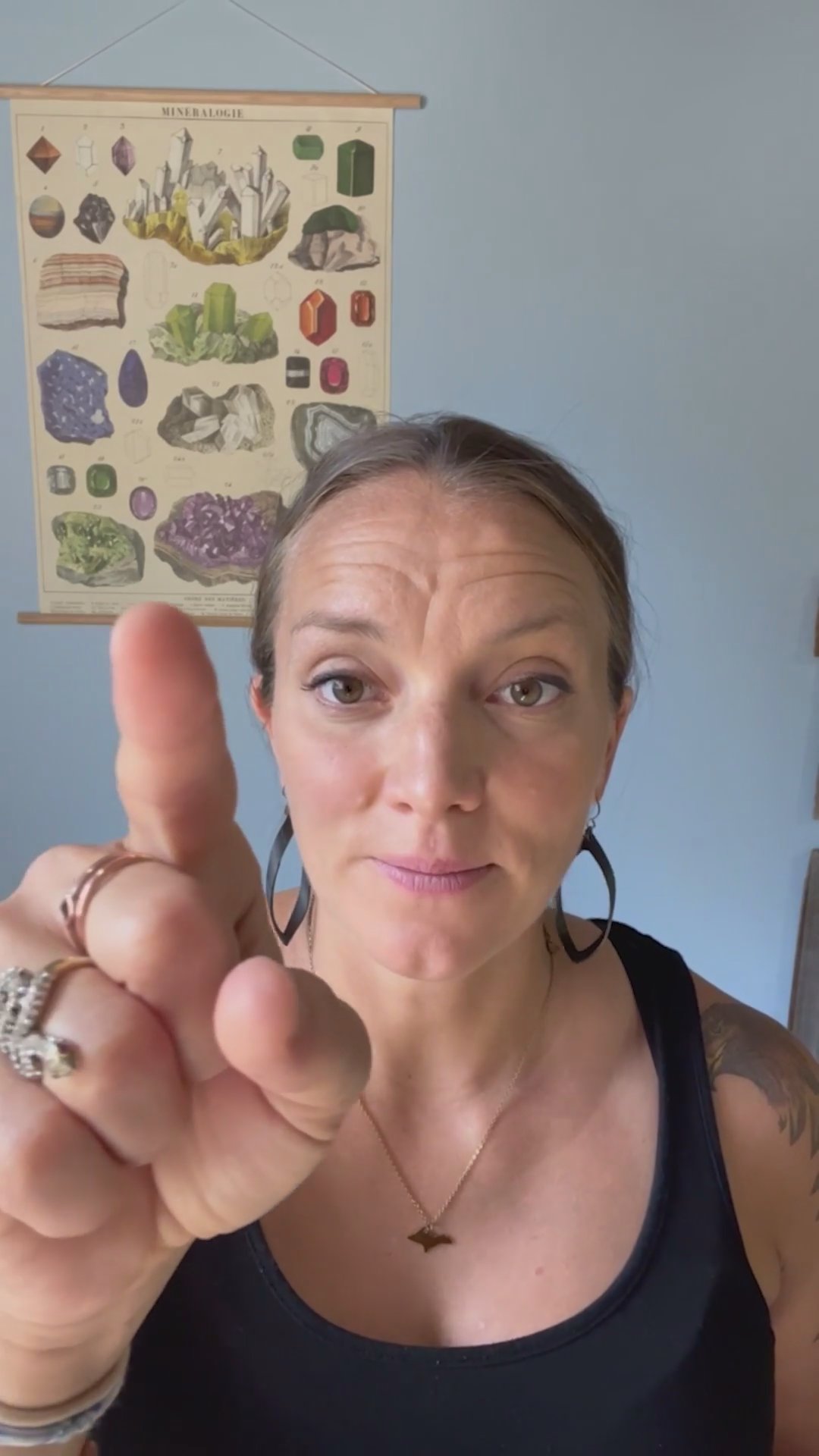
Danielle Jokonen briefly introduces herself and asks what breath work is, emphasizing the power of the breath as a life force and a reliable tool. This short opening explains why viewers should care about learning breath practices.
Danielle Jokonen briefly introduces herself and asks what breath work is, emphasizing the power of the breath as a life force and a reliable tool. This short opening explains why viewers should care about learning breath practices.
She describes breathing beyond just the nostrils — filling the forehead space, throat, rib cage, and belly — and names the vagus nerve between the shoulder blades as a calming pathway. Practical tips include lengthening the breath, counting patterns, and how extended breathing can mimic the effect of breathing into a paper bag during panic.
The speaker encourages feeling the breath move through nostrils, throat, lungs, and belly to build body awareness, then presents the box-breathing framework (equal counts for inhale, hold, exhale, hold). This section sets up the subsequent guided practice.
A step-by-step, audible demonstration walks through inhaling, holding, exhaling, and holding on a count, repeated several times so viewers can follow along. Listeners are invited to try the rhythm to experience its calming effect.
Danielle outlines the outcomes of using breath work: increased calm, present-moment awareness, the ability to choose responses instead of reacting with fight/flight/freeze, and activation of rest-and-digest via the vagus nerve. This clarifies why the techniques are useful in stressful moments.
The speaker reaffirms the power of the breath, invites tuning into it, offers to take questions, states her name, and signs off with a friendly farewell.
Hi there, my name is Danielle Jokonen and I'm talking about breath work today. And what is breath work? You know, the power of your breath. Number one, it really creates a life force in your body. It is your best friend. It will always be there for you. Just gotta tap into it, tune into it. And not only just like nostril breathing, a lot of times just breathing like we're just thinking nostrils versus even letting that breath fill up to the space between your eyebrows, to the back of your throat.
the bottoms of your rib cage to your lowest part of your belly into your diaphragm. Deep belly breath. It also triggers the space between your shoulder blades, which is your vagus nerve, which helps you calm down. Think about if you're like having a panic attack or like call it hyperventilating, right? Old school way of helping is breathing into a bag because it makes you breathe longer. So you have to fill up the bag and so crunch the bag, right? Same type of thing. So you can even think about breathing in for the count of two, exhaling out for the count of two.
Lengthening your breath, you can start there, but also really know the physical feel. Not only know the difference of knowing and getting into your body, that's the biggest thing. Feeling, feeling your breath move into your body, moving through your nostrils, space between your eyebrows, back of your throat, to your lungs. Into your belly, next thing out the belly, the lungs, back of the throat, space between the eyebrows, out the nose. You can also do some box breathing, like think of four sides, right?
So you inhale for the count of four, three, two, one, hold four, three, two, one, exhale four, three, two, one, hold four, three, two, one, inhale. Hold. Exhale. Hold. Inhale. Hold. Exhale. Hold. Inhale. Exhale. Hold the breath. Inhale one more time. Hold. Exhale. Hold. And try that on. That'll first off help calm you down, get you present to the now moment. And then from that space, be able to choose what you want to do versus being in fight, fright or freeze. You can get down, be in your body, calm down and be rest and digest and get really present to the now moment instead of being in the frantic space.
So yes, the breath is your best friend if you use it to get you into the now moment, to get you present and really increase your life force or vitality and calm down the vagus nerve that stimulates stress, okay? So, power of your breath. Tune into it, my friends. Questions? Again, my name is Danielle Jokonen. Let me know. Have a great day.