PLAN TO BE YOUR BEST …As You Navigate Pain. Your best is greater than the pain.
Rick Cram: Life isn't about finding yourself. Life is all about creating yourself. I'm here to talk about different ways and three key steps in finding how to seek freedom, to pursue, to chase your personal growth, to evolve and.
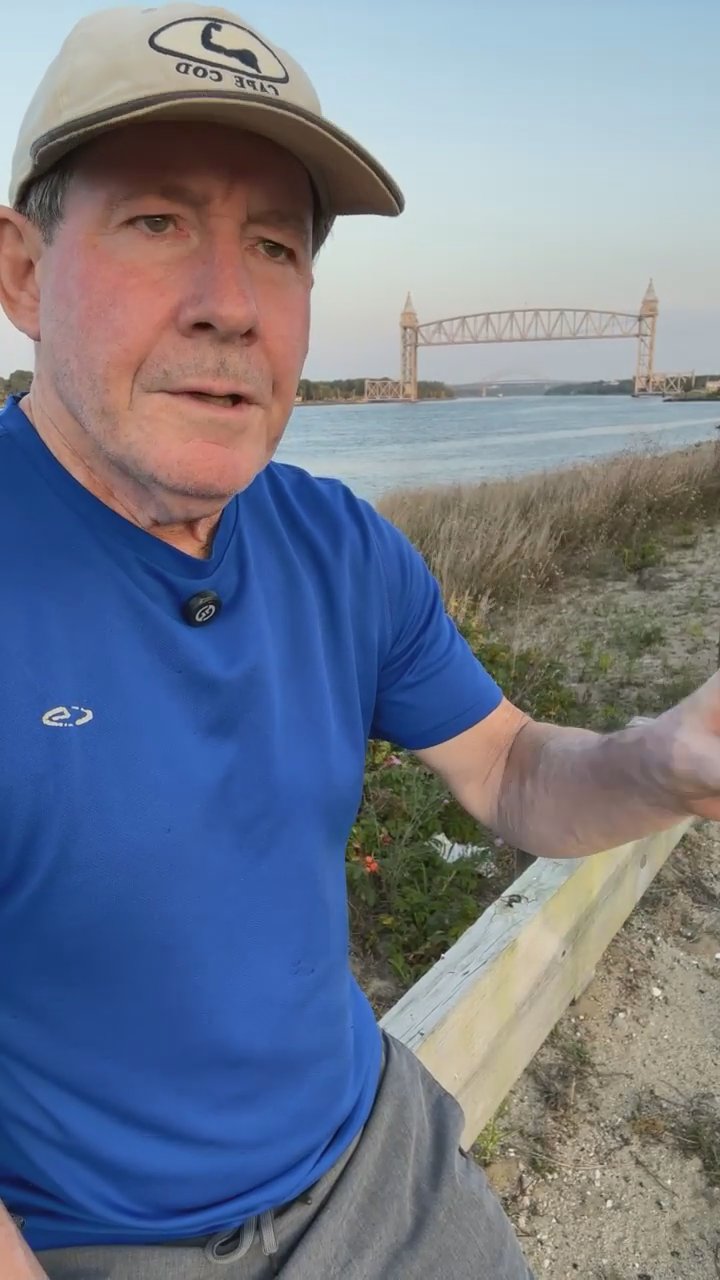
Cape Cod Canal was created almost 100 years ago. Water is ripping at about six miles an hour, sometimes more than that. Current so powerful you and I would basically not be able to swim against it. Will lead into our topic about how to be resilient as you seek freedom.
The comedian is in Cape Cod for a memorial service for his mom. He says surgery number seven on his left knee in 2019 has left the knee in a state of trauma. Every day, multiple blasts of pain that he never know when they're coming. But he says being with you helps him with his resilience.
Let's follow the three steps of resilience to look at how we can seek freedom to personally grow. Let me ask you, on a scale of 10, 10 being the most, one being the least, how much would you say that you are?
As we tune in, what might and again, the three steps of resilience. What might be the hurdles or challenges in your path to seek freedom. Is there anything in particular barriers, negative self talk? What do you do to break procrastination? And let's move into the plan step.
Gabby: We have a vocabulary to describe our pain. Do you have a set of words to describe your pain management? When we go from the word hope to aspiration, there are some significant changes. I'm hoping that you'll gain some strength in your resilience.
Nicky: I would like to invite you to aspire with me to be more resilient. What does that look like to you? Niki: Using something like the three steps of resilience is a process for training certain quantifiable goals. Your best is when you're taking your most positive strengths and putting them into action.
Have you ever thought about your inner vows? Some of the grief is coming from inner vows that may have gone unfulfilled, may have even been broken. There's an aspect of accountability that might not be spoken, but it might be thought, might even be felt.
This is the Cape Cod Canal. What is the fate if you try swimming across this canal? The only way you can do it is to actually go with the currents which are flowing at about 6 mph. A trip like this always means a dramatic increase in the amount of my pain.
Bob Greene: Enjoy the view of the Cape Cod Canal on both sides. He says there is a period of restoration that is needed. When we care for ourselves and we think about what is meaningful to us, there's restoration that takes place. Our time together has been victorious.
The eight domains of thriving that work together within each of the eight domains. The essence of that is all about understanding our values, which defines those Things we will choose to aspire to. Pain happens in the moment, but so does resilience.
George Bernard Shaw once said, life isn't about finding yourself. Life is all about creating yourself. Hi, I'm Rick Cram and welcome to your Resilience Coach studio. How would you like to talk about resilience? I'm here to talk about different ways and three key steps in finding how to seek freedom, to pursue, to chase your personal growth, to evolve and. Hello. Great to see you. Thank you for joining. Hello. Is it Mafi and Amarg? Great to see you. Speak wonder. Kathy, I'm so glad you're here. I was hoping both of you would be here.
And speaking of here, I'm at the Cape Cod Canal and let me just take a moment to share with you a few things that you'll find, I think rather interesting about the Cape Cod Canal. This waterway created almost 100 years ago, basically created. What you see on the other side is the largest man made island in the world, Cape Cod. And that bridge you see behind me, that's a railroad bridge. That truss up above that you see there going across that big span, the arc at the top, that's actually that holds the railroad tracks.
The towers you might see on the sides there raise and lower that. It needs to be up in that upward position most of the time because some ships come in, sometimes cruise ships, sometimes tall ships and they need to be able to fit under there. So when the train's coming that actually is lowered with hydraulic cables and then it comes down to just about just over the water level and the train crosses over. And let me just say hello. Glad to see you. And Luke, hi. Thank you, Luke, thank you so much.
I'm glad you're on more often. I always look forward to everything that you got to share. There's something about this waterway that's also very interesting and will lead into our topic about how to be resilient as you seek freedom to evolve, pursue personal growth. That water is ripping at about six miles an hour, sometimes more than that. Depends upon the tides and the direction. That's about the speed of a world class swimmer swimming at top speed in a sprint, which means if you try to swim against it, it's just going to be a matter of minutes, maybe even seconds before even a world class swimmer will not only go nowhere but become exhausted.
You know, you hear me talk about going with flow so much. If you wanted to cross the other side and actually every once in a blue moon, I think the last time was either last year or the year before a bear came down from New Hampshire, made it all the way down to the Cape Cod Canal. Crossed it, crossed it with those six mile an hour waters, a current that is so powerful you and I would basically not be able to swim against it. It got to the other side and went at least 40 miles out onto Cape Cod before being captured and taken back to New Hampshire.
Talk about a resilient bear, huh? So I'm here on Cape Cod because I came down on Saturday and for a memorial service for a dear friend, my mom, who's 93, her best friend for 64 years. She lived to 62, 63 and just passed away. So we had a memorial service for her and then I stayed on a couple of nights, which means a few things. One, it means my pain experience is about five fold more than it is for me to drive an hour or more in the car, immediately experience so much more pain. I am sitting here with you mentally, emotionally and physically exhausted.
The pain sometimes is constant. And for those of you who might be connecting with, if we're connecting for the first time, very, very Briefly, surgery number seven on my left knee in 2019, a partial revision of the total knee replacement from 20 years before, has left the knee in a state of trauma. And I experienced chronic severe pain. Every day, multiple blasts of pain that I never know when they're coming. And it's been about 500% more than baseline. But I have a plan and the plan involves you.
The reason I'm here. While I thought about canceling this numerous times over the past couple of days, I decided, no, I'm going to stick to my plan because you are part of my pain management strategy. You being able to be here with you helps me with my resilience. And the more we'll talk about resilience now, the more I think collectively, together we'll experience it. Let's follow the three steps of resilience to look at what is involved and how we can seek freedom to personally grow, to be on a path perpetually to seeking our growth.
Let me ask you, on a scale of 10, 10 being the most, one being the least, how much would you say that you are? Would you actually agree that you're on a path of personal growth? How Maybe the question is, how meaningful is that to you? Or at word or two that might describe exactly what your experience is right now. And thank you. I'm so glad to be. I'm so very glad I'm in pain, but I'm also experiencing truly the connection that we have, the community we have, the joy. I'm not surprised. Yes, I know knowing both of You, Amar and Kathy, we're on that same path together.
It means so much. Let me ask you this. As we tune in, what might and again, the three steps of resilience. Number one, tune in, plan and be your best. And when we get to the plan step, you'll experience it differently than we have in the past couple of months together. What would you say as you tune in, what is keeping you? What might be the hurdles or challenges in your path to seek freedom, to evolve, to seek your own way of finding and creating? As George Bernard show us said, it's more about creating ourselves or creating who we are.
It's not about finding ourselves, it's about creating ourselves. What might be as we tune into what are the challenges? One of the things that some people will share with me and I know what this is like, I think we probably all do. Tuning in sometimes is something about the way our brains work naturally. Sometimes our brains can have us stuck right where we are. And it makes sense. There are aspects of the way our brains work which keeps us right where we are with the familiar. And that familiarity can mean it can be more challenging to move forward.
What one word might describe as you think about and tune into what might be challenging you to move forward. Maybe there's something today, maybe there's something that you're dwelling on, maybe there's something you're stuck on. A certain thought, a worry, what one word or so might or phrase might describe what it is that you're tuning into in this moment that keeps you or has you stuck at least for a moment or perhaps has been an issue over the past several weeks or the past several months in this year so far.
Is there anything in particular barriers, negative self talk? Thank you, Kathy. Thank you so much. Without a doubt, when. And I can relate. I've had this as part of my life that I noticed really once I was an adult there are these patterns of negative self talk and we've talked about this. Nikki was very courageous and shared with us back in. I think it was in May when she had injured herself, she had accidentally cut herself and part of that triggered thoughts, even things that she would. She was saying to herself, though she would never say them to anybody else.
But there are these triggers that we can find that will spark those negative thoughts. Part of what is a challenge for us and an opportunity, especially embracing George Bernard Shaw's second half of that quote, it's creating who we are. That is what life is all about, not finding it. Thank you, Kathy. Procrastination. My last name being cram trying to get something done in the last minute or I think I'll get to it in a few minutes and I'll be able to get get it done quickly. I can completely relate to that.
What do you do to break procrastination? Or what do you do? And let's move into the plan step. What has worked for you in the past to break through those thoughts, to break through the procrastination, to break through the negative self talk. I'm about to share a word with you that I'd like you to consider adding to one of your sets of vocabulary. Consider this. We have a vocabulary to describe our pain. I try not to use that vocabulary using words like I'll use now. I was thinking about this on the way over as I'm leaving the cave today, heading back home up to Metro West Boston this evening.
But the pain this past several days has been. It's been brutal. That's the first time I've actually used that word to describe the pain. It has been crushing and it's been exhausting. To be sure, there are certain words we've got in our pain vocabulary. Share one if you have one that comes to mind. What do you use to describe your pain? Do you have a set of words, perhaps a vocabulary zone to describe your pain management? I've got a vocabulary assigned to my resiliency and there's a word I'd like you to consider to add to in this plan step that is going to be part of your resilience toolkit.
And the word is. Let me just check notes to see your comments. It's a way of elevating the word hope. And the word is aspiration. We hope for many things. I'm hoping for pain relief after a trip like this. When I came down here in January, it took about a month and a half for the knee to get back down to baseline. I'm hoping that it will calm down in the days ahead. I'm hoping that the next treatment, which will be a spinal cord stimulator, will work and block the pain signals from going from my knee up to my brain.
I'm hoping that the poem that I wrote this afternoon was a healthy way of expressing where I am at emotionally. I'm hoping that you'll gain some strength in your resilience. And when we go from the word hope to aspiration, there are some significant changes when we aspire to something. Let me ask you when you aspire to anything. What are you doing? Let me start with this. We're striving for something, aren't we? It's more than just hoping. We're actually working towards it. When you aspire to something, what does that mean to you?
So, yes, Kathy, I'll share the poem with you. Sometimes I found. And there's a poem that I wrote when I was grieving the loss of Warren, who died the day he was born, my first son. And a few weeks later, I wrote a poem that I'll share with you and I'll share it this week. And I found that sometimes, certainly expressing thoughts and feelings and emotions, whether it's thinking it out loud, talking it out loud, writing it down, having a conversation with someone else is a healthy part of the releasing, the expressing a healthy part of the grieving and trusting it means believing.
I like that. If we aspire to something, I mean, I believe it, I can see it. And here's what I'd like to add to that. Thank you so much, Gabby. If we're going to strive to something, then we're automatically asking a particular type of set of questions, risking how? How are we going to do this? We're going to ask ourselves when we might even ask ourselves, why am I going to pursue this? Why am I going to strive for this? And when we're asking those questions, which aren't planning questions, that's the difference between hope and having aspirations.
That means there's planning involved and that means we are thinking about what are we going to do? How are we going to achieve this, what we're aspiring to. And I would like to invite you to aspire with me to be more resilient. And what does that look like to you? If you have an aspiration to be more resilient, what does that look like? Add a phrase or a thought if you will, and let me know what it means to you for me to aspire, to have an aspiration, to be more resilient. One of the things that means for me is to work at it every day.
And this is as you often hear me talk about, as you hear me talk about virtually every time we're together, that the level of pain needs to be matched by a level of intentionality. And the lion of intentionality in me does seek to inspire, to be so active in the process that I'm working on it every day. In fact, without a doubt, I need to be resilient dozens of times a day, especially on a trip like this and having the kind of pain that I'm having. And I must admit, since we're talking about Resiliency.
I'm feeling it my friends. I and this is exactly what I needed. I've been a very low spot yesterday was I was in the pit and I was curled up in bed and not in a good place. But I didn't stay there. I keep coming back using flexing that resiliency muscle set of muscles that are part of being resilient and I emerged from that. I did that a couple times today as well. But what does it look like to you? So thank you. You know Kathy, that's what we. That's what I feel so strongly about. It's pushing through the pain in the moment.
And to do this when I yesterday I almost thought numerous times emailing Nicky, what do I do? Do you mind if I cancel? And then I made the decision to do this. And once I made that decision, I felt myself convicted. I aspired and my aspiration was to follow through on this, to be with you. So that's one of the one my example you will what it means to aspire. I made a choice. And going back to George Bernard Shaw's quote, life isn't about finding yourself. It's about basically in so many words, in the course of creating yourself, I mean making a lot of choices in the mix.
So let me ask you, what hope is a trust fall? It's letting go of anxiety and trusting the process. So true. Being resilient and using. Using something like the three steps of resilience is a process for training certain kinds of quantifiable goals, if you will, for process oriented goals. And it's how I get through my pain and how I've. I have those opportunities to have these conversations with small groups or one on one. We are putting life and breath into that process. And the beauty of seeing, especially if it's a group five or six is really one of the best sizes.
Where there's an intimacy, everyone's equally participating. There is this. The conversation goes from those pain points to talking about here's how I'm going to be resilient. And there's a contagious aspect to that. What questions might you have at this point? What thoughts might you have? So if we identify as we tune in with that first step, what are those things that are creating roadblocks to our seeking freedom for personal growth to evolve? And then we step into the plan step and we think about what it means to have our aspirations aimed towards being resilient.
Then we can identify, identify specific things that we can do and those are the things that we do in the third step, be your best. If we come out of a conversation like this, come out of thinking through and if you have journaled or written down your answers to what does it look like for you to aspire to be more resilient? You're creating a set of action steps. You're creating new strengths. Those are your best strengths. Your best is when you're taking your most positive strengths and putting them into action.
And check your comments. I believe that's right, Kathy. The very Heart of Cadre is about exactly that. Thank you so much for that. It helps to pursue goals in community. Wow. So true. And I want to thank you also for it might have been a live video that you did the other day. I think you were outside like I am here. And there's a word that stood out. In fact, it's the same word that I thought of when I read some of Nikki's, Anna's, and actually Luke is you as well. An inner vow. Have you ever thought about your inner vows?
When Nikki wrote about a pattern of thought, grieving those lives that have been lived, at least not yet there. Some of those. The grief. Some of the grief is coming from inner vows that may have gone unfulfilled, may have even been broken. I do know what that's like. There have been decisions that I've had to make make, and I would make them again. That broke an inner vow and that creates something to grieve and to heal from. So going back to the very heart of Kandre, when we're in community, when we're sharing with each other, there are a number of things that we're doing.
One, we are expressing aspirations. We're listening to others and their aspirations as well as their. Their pain points. We're also creating a set of expectations, a new set of expectations. In community. There's an aspect of accountability that might not be spoken, but it might be thought, might even be felt. And perhaps we may use that thought as a source of encouragement for taking those things that we tune into, those things that we plan. And then in the third step, be our best as we move forward and pursue creating ourselves.
There's a question that I heard the other day. It was in a talk and it was someone who was speaking on the idea. It was actually a pastor of the Brewster Baptist Church in Brewster, Cape Cod. And he used the word striving and he used the word aspiration. And he had me thinking about certainly some of what we're talking about here. And the idea of asking this question for ourselves and Let me ask it of all of us right here and now, if we were to think about down the road, what do we want people to remember us for?
What would be the number one quality that you would want to be remembered for? And do you notice that as you think about the answer? That's an aspiration. If I want people to know that I was someone who sought to live out my purpose, my mission, to equip and encourage people to plan, to be your best as you navigate pain, that's an aspiration. What do you want other people to think of you say to others? The thing about Amara that I know most of all is blank. Or Kathy, what do you want? Amar being helper?
You know you're already doing that, my friend. Inner vows. Sacred, fragile, spacious. That's what it is. Very sacred, isn't it? Hi Nikki. So glad you're here. Thank you for that. And Nikki, I'm not sure how long you've been with us, but let me just repeat again. I'll take a moment. This is the Cape Cod Canal. I've been on the Cape, came down Saturday for memorial service, stayed with my mom while my sister lives with my mom. Went away for a few nights to get away. And a trip like this always means a dramatic increase in the amount of my pain.
And I almost emailed you to say I need to cancel tonight, but I decided and felt this lift by deciding, no, I'm going to do this because this is going to actually be fuel for my resilience. I'm glad to say it's exactly that. But if you're just joining. Your brother once worked in Worcester, Mass. In fact, behind the camera is a maritime school. There are some fantastic schools in Worcester, including Clark University, Massachusetts. Metro Boston area has the highest concentration of various higher level education schools, colleges, universities and maritime centers like there is here.
And more than anywhere else, I believe in the world. There are over 160 colleges and universities in the greater Boston area, which includes Worcester. But this canal, as you might have heard me say earlier, is, and I'll perhaps invite your thoughts on this. When we tune into whatever is challenging, we're often thinking about what is the tide that we're fighting again? What is the fate if you try swimming across this canal? The only way you can do it is to actually go with the currents which are flowing at about 6 mph.
A world class swimmer swimming against it would not only go nowhere, but within about a matter of probably 90 seconds or so become utterly exhausted. The only way to get to the other Side, you might swim straight across, but you're going to end up going downstream very rapidly. And I would say, let me actually share this view with you. When boats come across or go through the canal, which whales sometimes do, Sam, illustrate it for you this way. If I were to enter the water right here, if I swam to the other side, and it would probably take the better part of 20 minutes, I would end up getting on the shore down there.
Are any of you good swimmers? The boats are wonderful. Sometimes there are cruise ships or even tall ships that sail through here. Fishing boats, commercial fishing boats, commercial freighters and so forth. That's why that train track bridge behind me, you see there is elevated so that the large ships can sail through. Hydraulic powered cables lower it to just below, just above the water level, so that the train can then cross over and then they raise it up. Looking further in the distance is the Bourne Bridge.
Speakwinder I wrote a poem about being caught in an undertow. Wow. I know what that's like. Kathy, would you share that or at least send it to me or whether it's by email or Facebook or perhaps on. I'll tell you what, I'll make a deal with you if you share that poem. I'll share both. The poem I wrote after losing Warren. I do know when you're in an undertow, it is so powerful, it takes control of you. And there's only one way, whether it's a riptide, this canal, the currents here, six miles an hour.
The only way to navigate it is to do the exact opposite of fighting it. And if you've been actually, I'd love to see how what you're doing, what you're sharing that poem, the experience of how you experience that undertone. What questions might you have? How can I be here for you in this moment to answer any questions that you've got about seeking freedom to create who you are? Do you agree with that quote by George Bernard Shaw? Life isn't all about finding yourself. Life is all about creating yourself.
And we often talk about neuroplasticity, the flexibility of the mind, flexibility of our thoughts and feelings, where we can pick and choose and build pictures of what we aspire to. Create a plan to chase that and bring it in. Life. Thank you, Kathy. Thank you so much. So it's just about half past. I'll stay on for another minute. I'll just take in the view, perhaps for a moment. Enjoy this view of the Cape Cod Canal on both sides, with the length of the canal which opens up into Cape Cod Bay open are bike paths.
There are people sitting along just over by the bridge now. And it takes about 20 minutes to half an hour to bike all the way down to the other side of the canal. Perhaps not even that long. But it's a venue people come to just relax. I'll post a photograph of the last striped bass that I caught here, down to the other end near the Sagamore Bridge. It is a wonderful view. It's a chance to relax, find peace, which we need more of, don't we? It's a chance to think, a chance to process, think about our aspirations, think about who we are, what we're experiencing.
So let go. To let go of what's painful, to heal what's painful and to embrace. It's a journey, isn't it? It's a journey. When I came down on Saturday morning, I was here at about 6am And I thought, maybe I'll fish on and maybe I'll do that before the sun goes down and see if I can catch up on striped bass. If you catch a striped bass, you can only keep one a day and it has to be between 28 in and 31 inches. The way the regulations read, it has to be less than 3 inches. So in that 3 inch span, striped bass can't be any less than 28, can't be any more 31.
I do the same. So yes, that does look like and reminds me of the London Tower, the London Bridge rather. And I breathe more deeply when I'm by the water. I breathe more deeply when I'm truly on the water as well as by the water. As I wrote a few weeks ago, when I go over any one of these bridges, I will feel a sense of being whole and being with you. Having this chance to actually transition from eight days to being with you restores me. There's a word that we could talk about for a while. Restore.
Restoring. Especially if we've gone through challenging times, there is a period of restoration that is needed. Our minds need, our emotions need, that our spirits need. And I do believe that when we are being resilient, when we are caring for those thoughts and feelings of all that we experience, whether it's chronic pain, whether it's something that we're grieving or it's something stressful that just happened a few days ago, that there's a restoration that's taking place. And to a great extent, so much of that really comes about by virtue of giving ourselves more care than we may have in the past, more care than we did.
Yesterday. It's the kind of level of care found in choosing an aspiration. When we care for ourselves and we think about what is so meaningful to us, part of who we are, our sense of values, when we're caring for ourselves. And there's restoration that takes place and that's a factor in the healing. How do you restore? There have been years. There have been a set of years that went by where I was more working on the. Everything from the different sources of pain, as well as even shame specifically.
It was a set of years pursuing where I kept saying, I want to be free from this, I want to be free from shame. I want to be free from the pain so that I could be free for being more of who I really am, to fulfill getting back to being the real me. There was a time that went by when I finally realized that because of the amount of self care, in a way, truly being more loving to myself, restoration was taking place. And there was, I would say, like a door opening up when I realized restoration is taking place, healing is taking place.
And that creates more energy for me to pursue those things that are defined in my aspirations. Thank you so much for being with me all this time. You know, the. Perhaps the final thought, you know, I always say your best is greater than the pain. Today, I'll say, has been victorious. Our time together has been victorious. Because all the pain that I've been experiencing the last several days hasn't defined me. What we're doing here defines me. Your aspirations define you. The way you go about pursuing what you aspire to, what you strive for is what defines you, not what holds you back.
So what more can you do to embrace the person you're becoming, the person you're creating? You're free to do that, embrace that freedom, embracing it and pursuing that and acting on it, that's what defines you. In a weird way. Pain makes us keenly present in each moment. So true, so true pain. As we have no choice, I have no choice. With the kind of pain I experience, my full attention is captivated by the pain. So it's all a matter of using the three steps of resilience. And I'll get into more and more.
Maybe I'll touch on one of them right now. The eight domains of thriving that work together within each of the eight domains of thriving. And this is actually going to be very fitting for us. As I mentioned before, the first domain of thriving is prepare. The P in plan stands for prepare. The essence of that is all about understanding our values, which defines those Things we will choose to aspire to. It's anchoring in. There's that word, Nikita. Anchoring in our identity. When you take a look at our identity and our values, that's what creates the foundation for us to say I'm going to choose to aspire.
I'm going to choose my aspirations. And flexing that. When we come out of time in that actually going through spending time in the prepare domain of thriving, we identify these things that adds fuel for energy for and guidance for our resilience to win back that focus that pain has taken away to create new energy for moving forward, to be able to find ways to instead of trying to swim against the current, go with the current and get to the side that way. And that thought Kathy, thank you. The idea of being present, even if the pain has hijacked our focus, we are completely ourselves in that it is a moment, a present moment, but in our whole person is there.
Everything that I'm made of is there. And then it's up to us, isn't it? To make choices together in community together. When we pair up with someone or a smart or even on our own in a quiet personal moment of pain, it's a choice that we make and sometimes it needs to be made over and over again in each moment by moment where we are processing everything from the pain, experiencing our whole person. One of the reasons why I'm so passionate about the plan to be your best approach is that it is a whole person approach.
When we go through all eight domains of thriving, we look at every aspect of the part of you and me that we need to. I would submit we need to spend time in to really create a foundation for being resilient and to thrive and to. To discover what it takes to create the restoration that we need. So just as you've heard me say, and I'll say it again until I'm blue in the face, as blue as this shirt. Pain happens in the moment, but so does resilience. I'm so glad that you've been with me through this moment.
You've helped me exercise resilience so that I needed to. And to conclude this day, I'll have about an hour drive home from here and I'll just take another moment share this with you. Cape Cod Canal. It's your aspirations, your values. Those are the things that define you as you think about this. Be your best. I wish you well. I hope you have a great night and I look forward to seeing you next Tuesday for our resilience coaching studio. Any last thoughts, Kathy or anyone. Thank you so much. It.