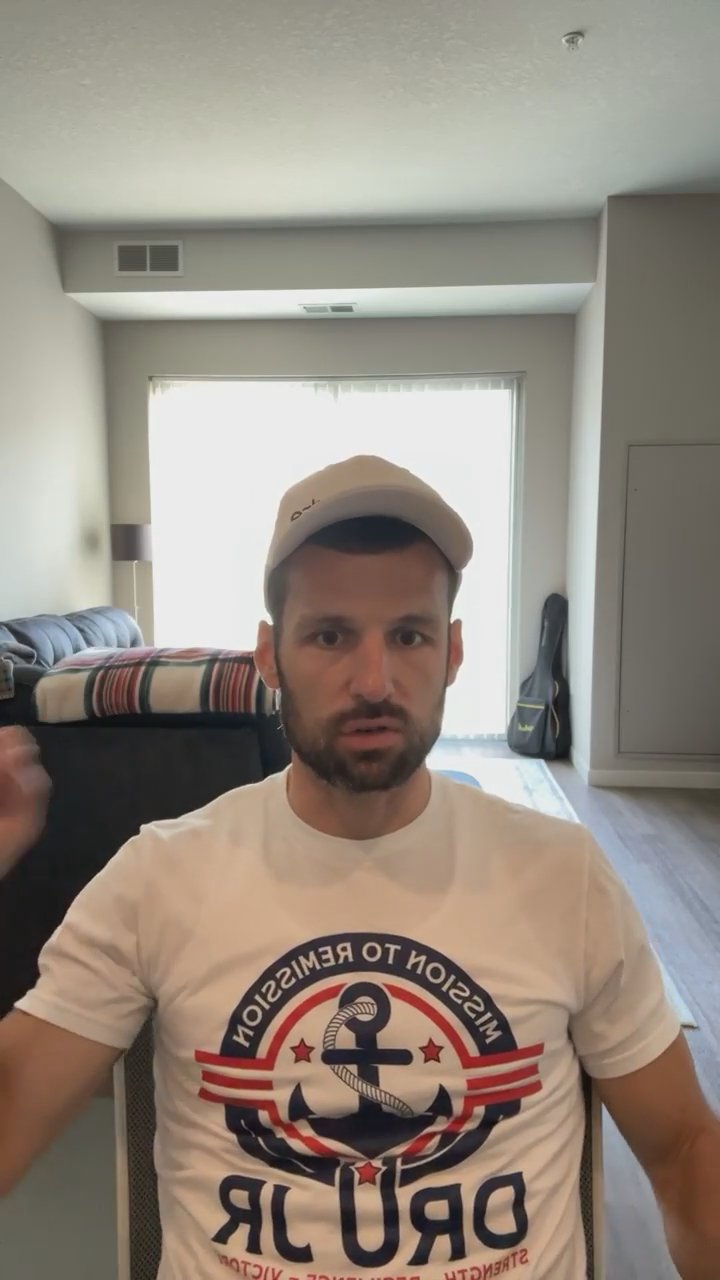
Four part series on freedom and what it means in relation to addiction. Jason Lennox, resident recovery champion, here to talk about all things recovery, mental health, well being. Comparison to others also played a bigger role in addiction. He says he felt like he was the odd one out of his family.
Four part series on freedom and what it means in relation to addiction. Jason Lennox, resident recovery champion, here to talk about all things recovery, mental health, well being. Second two sessions we'll get into more of this idea of creating freedom in a free lifestyle.
For me, mental health was probably the biggest underlying condition that I had that was sitting underneath drugs, alcohol and everything that came with drugs and alcohol. Comparison to others also played a bigger role in addiction. How did I get out of that, and how did I actually address those things?
Jason Johnson: Like substance use with mental health, there's a stigma. He says he felt like he was the odd one out of his family. Johnson: He decided to take a stand for himself and get his family to do something different.
CNN anchor says mental health and underlying conditions that plagued him for so long live on a spectrum. He says if he's not actively participating in things that will keep him well, he could slide back down that scale. Next Sunday, he'll be on the road.
Good evening and happy Sunday to everybody in the Cadre sphere tuning in from around the country. I'm Jason Lennox and I'm your resident recovery champion coming to you from the great state of Minnesota and happy to be here with you. Session number two of July, the freedom, the freedom theme here that we have going on at Cadre. Happy to again have a four part series on freedom and what it means in relation to addiction. But again, Jason Lennox, resident recovery champion, here to talk about all things recovery, mental health, well being and again, freedom is a huge part of recovery.
Addiction, drugs, alcohol. There's so much just in that word, freedom. But I broke it down to really two different types of freedoms. These first two sessions talking about breaking free from things that have been holding us back or kind of holding us down, weighing us down. And then the second two sessions we'll get into more of this idea of creating freedom in a free lifestyle. So last week talked about breaking free from what we tend to call this obsession to drugs and alcohol and just the kind of natural instinct to just go back to that.
And there's just, there's psychologically a lot going on there. And so breaking free from that and removing ourselves from that, that obsession and just that natural instinct to go back to drugs and alcohol is obviously very critical for anyone looking to find long term recovery. The second part of that, that took me years to learn and I'm still learning is there are a lot of things that were contributing to my addiction, my problems with substances and alcohol that I had never addressed and frankly didn't even realize that I hadn't addressed for a long time.
We don't know what we don't know until we, we know it. So I want to talk a little bit about those and those all kind of live in this world of mental health. For me, mental health was probably the biggest underlying condition that I had that was sitting underneath drugs, alcohol and, and everything that came with drugs and alcohol. So I'll talk in threes again and I'll talk in threes when it comes to the things that were contributing to that mental health. And then in threes when it comes to how did I get out of that, what did I do, how did I actually address those things?
So first of all, for me, growing up as a child in our home and just kind of the upbringing that was one of the huge contributors to just my mental health, my anxiety and my wor, I was always thinking I had to be doing everything perfectly and worried about when I was going to be in trouble. What was Going to happen, all the things. So I had school, which felt like a little bit of a sanctuary, a place that I could go and I could kind of do my thing and excel. But outside of that, I always carried with me this, like, always tiptoeing, wondering what was going to happen next.
Anxiety, worry, guilt, all those things that existed. So that was from a young age, you know, I can remember five, six, all the way through the rest of my school years. That was a significant part. And then there was this part of me that was always comparing to the next person. And I think actually all humans have this. Some of us just take it to a different extreme or it turns out to play a bigger role in addiction, but comparison to others. Always looked at the rest of the people and my classmates, and I looked at all the people around me and thought, if only I could have what they have.
And some of that was true because I didn't get to play sports. I didn't go hang out with the friends, stay overnight. I didn't do a lot of those things I saw other kids doing. But I also always looked and I can do this as an adult. And I think we all tend to do this. We look out there and out there and out there and think that that's. That's where it's at. And those people in our lives have everything. What we don't know is they walk around thinking the same things that we do. So anyway, that. That plagued me as a child, Always comparing myself and wanting what the rest of the people had, that I thought that whether they had it, whether I thought they had it.
There was some of both. Certainly. The third thing was I did tend to find myself in spots where I would be the kid getting picked on. We'd probably call it bullying in today's. With today's definition. And, you know, it just didn't really ever feel good. I just wanted to fit in. I just wanted to be like some of the other kids. Every time I would try to do that, it felt like my attempts to do that would actually create more of the same, more reasons for people to kind of take shots at me, poke fun, all the things.
So those three things just had me kind of tightly wound inside as a young child and just wanting to fit in somewhere. So by the time I found drugs and alcohol, alcohol specifically came first, I was 12. Twelveish in that range. And I'm hanging out with a group of kids on the weekends, and they're a little bit older, and that's what they're doing. They're drinking hard liquor, they drink a whiskey, they're smoking cigarettes. And even though I vowed never to do any of that because I knew that my dad had issues, and I just always wanted to do things the right way and live a good life, I found myself, you know, jumping right in with them.
And that was really because I wanted to feel like I belong somewhere. In fact, I used to get sick because I was 12 and taking in all these chemicals that my body's not used to. I'm already sensitive to them. So I would get sick, and you know what? I would wake up the next day, not feel great, and I would go back and do it again, the normal person. That would happen. And I would say, I'm not going to do that again. I didn't feel good when I did it. I didn't feel good after. But the power to fit in and feel like I belong was so strong that I was willing to go back just so that I had a place to hang and I had a place to fit in again.
So that was a. There was a huge part of that that drew me and kept me kind of in the world of drugs and alcohol. Then I got used to all that, and then it became a thing that would actually soothe all the pain. I realized quickly, as I climbed up the scale of different kinds of drugs, the more powerful they got, the faster the pain went away and the more the pain went away. And so, of course, naturally, as I. As I was introduced to that world and I was carrying all this pain and all this hurt and all this, you know, these traumatic things with me, of course I'm gonna gravitate toward the thing that would take that pain away.
So that was my journey into. And those are the underlying conditions of my mental health that led me there. And what happened then is I always like to say that we go on this journey and we start here as kids. And I know I had dreams and aspirations to be a professional athlete, a business analyst, a sports analyst, and a business owner. And so I had this path, even President of the United States. I mean, I had all kinds of wild ideas, but as I lived out my life and as I was crippled with the mental health and the drugs and alcohol came into play, I started going actually the opposite direction.
So I would go down and down. And as I knew as I was supposed to be here, this gap just continues to get bigger, and. And this gap is full of pain. For me, it was full of pain. I know I could be here. This is where I wanted to be. This is where I actually am. It creates this. I'm out of alignment again. It's just this gap that I like to say, the gap I like to call the gap of pain. And so how do I solve that problem? Well, I'm already familiar with the thing that takes my pain away. So I would do more of it.
I would drink more, I would do more drugs. And that cycle just continued on. And. And as I got further away to get more drugs, to get more alcohol, I would have to hurt people. And so I just kept going lower down that scale. And again, the only way for me to feel any better and by the end, it was just to feel a little more. Okay, I wouldn't feel good, but I just had to feel less pain was to use more drugs and drink more alcohol. So fast forward last week, I talked about, you know, the work of recovery and being blessed with the people that I was blessed with to do this kind of work that removed obsession, it removed me from the problem of drugs and alcohol, at least acutely.
But there were all these things that were left there, and if I was going to find lasting peace and wellness and health, I needed to address those. But see, here's the thing. Just like substance use with mental health, there's a stigma and there's, at least for me, there was a thing that said, well, now I'm two years into, three years into recovery. I can't possibly go to someone and talk about, you know, these thoughts I'm having and the things that I haven't addressed because of the stigma. But I want to tell you the three things that helped me most.
One, I sat in front of the person who was a treatment director at the program that I went through, and that person told me about their journey with therapy. And I looked at that person and went, okay, if that person at that stage and in that kind of position can be talking openly about going to mental health therapy, leveraging mental health therapy and working through problems, certainly a guy like me could, right? I looked up to this person. This person had a position of authority over me at one point.
And so it made me go, if that person can, I can. And I actually ended up seeing the same therapist and work through many, many things with that person over the next several years. And it was critical. I went on medication to be able to get deep into some of those things that plagued me for so long. So that was key number one. The second thing I want to talk about when it comes to addressing this mental health, I worked in this. I worked. I did this work development Work. I just always was looking for ways to get better.
And I was in a seminar one weekend, and the seminar actually challenged us that were part of it in ways that I had never been challenged before. And part of that was my own family now. Growing up, I had this family. But as I come down this path of drugs, I was then the odd one out. And I felt like I was disowned to some extent. They didn't want anything to do with me. I could understand to some extent. But, you know, even though they had problems with drinking and a lot of other things were the norm in our family, the drugs weren't.
And so I became the kid that got left out. And I felt like I was on an island for most of that family. And I was really mad about it for a long time. And I thought that they owed me something because that actually contributed to more of the same for me. That feeling of inferior, just kind of everything that came with that. So I wasn't going to be the person. Like, the interactions and family things, it was all superficial surface level, like, okay, we can be around each other. It's great. Jason's doing all right.
But there was never any deep connection. I was in the seminar, and the. And the whole point of it, and what I was challenged to do was forget about all of that and what I think I knew about these other people and what they owed me. And the point was for me to actually take a stand for myself. And if I wanted to be part of this family and I wanted to see this family do something different and be something different, it was up to me to take some action. We went to my grandpa's funeral in 2015. He died unexpectedly.
And he was kind of the godfather of our family, if you will. The top of the trees. Everybody came for this, and we all got together, and I was, frankly tired of, like, the funerals. That's when we saw each other. I had just, again, been doing some of this work, and I made the decision then within the next year or two, because we talked about getting back together and going up to family cabins like my grandpa used to have us do. Ironically, he passed, and we thought we should be doing what he used to do, and nobody did.
But within a couple years, I really took that stand and did that work and said, you know what? I'm gonna make this happen. And I took a cousin and we went up and we found a place. And the next year, we had 50 people from this family up in the. The northern part of Minnesota on a resort with a Bunch of cabins and all the kids. It was like reliving everything that we experience as children. The most amazing feeling ever as I sat and watched that kind of play out. And there were also some things with other family members.
And I really just had to come to terms and do this work, do this deep work on myself. And I'm not saying that that's always the answer. I'm not saying it's always just about forgetting what other people are doing. But for me, in those moments, it really was about taking action on my side of the street and saying, you know what? I'm gonna give people the benefit of the doubt. I'm gonna trust that, you know, we all walk through this life. Because I've made so many mistakes, especially at that point.
I had done so many things that I felt terribly about. We walk through this life and we do the best we can with what we know at the time. And I did that. I gave that benefit of the doubt to mom, to stepdad, to family, to all of them and said, just going to fight for this family and for relationships for the sake of me and, you know, keeping myself in a well spot. And I got to tell you, from that came a lot of the conversations that I actually was just waiting for that I wished would have happened, that people would have come to me and they would have said and they would have owned up to and they would have all the things apologized, all those things we think we're owed.
All that happened naturally as those relationships started to form. So it was so critical. So I actually had to do the therapy work and I had to dive a little deeper. The third thing I want to finish with is that I actually have to continue this work. So mental health and the underlying conditions that plagued me for so long weren't an event that happened. And then I addressed it and then it unhappened. That's not the way it works, at least not in my life. These underlying conditions in my mental health and my well being live on a spectrum.
Again, not these points in time that one can happen, one can erase the one that happened and so on. No, this is a spectrum of I was here, I was here and I swung this way. I started out here. I was just this right in the middle, neutral baby boy that was born and life got me and I started swinging this way, and I found the drugs and the alcohol and started swinging even further. Then I got a little bit better. I went to treatment, then I did the therapy, and then I started. So I'm here, but guess what.
I don't, I'm not just stuck, stuck up here. It's not a guarantee. So I swing back and forth. Things in my life happen and hopefully the swinging gets a little bit, you know, less in terms of the volatility, but it still happens. And so I have to continue this work. It's, it's the most important thing because all those, all that work I did with therapy, all that work I did with just kind of self discovery and taking a stand for me, for my family could be wiped away if I don't maintain and I don't continue down this path of doing the things that matter for me.
And today that does mean therapy. So I still spend time talking through things and keeping myself in a well position in life. That means eating right, that means sleeping right. I pay very close attention to those exercise. It means my daily practices of gratitude, reading, of meditation, of, you know, dedicating days to people, of being there for family, of going out of my way to suffer others, to serve this world. So all of those things drive me crazy sometimes, but they really contribute to me kind of staying steady here in a good place mentally and not getting too far one way or the other.
And so those are the few things that have helped me again, the therapy, the self discovery work, and then regularly continuing all of it. Because if I'm not getting better, if I'm not actively participating in things that I know will keep me well and improve my wellness, going to slide back down that scale. And for someone like me with drugs, alcohol is a primary problem in my past. If I go too far that way, those things might start looking pretty appealing again because I know that they worked at one point and even though I know in the long run they don't, our minds have a way of looking for what's going to work right now.
So it's, it's very critical for me to complete and continue on with those three things that I'm talking about, mostly maintaining what I'm doing. So I hope you've gotten some value here. This is, it's, it's incredibly important to address these underlying conditions. If we don't, we could be headed for trouble. I was in Ireland in April and I met the leader of a treatment center, the biggest one over there, and a senator that was there. We had good conversation. I was learning a little bit about their system.
They've actually got laws over there that prevents somebody from receiving any kind of mental health therapy until they have six months of sobriety under their belt. So it blew my mind when they told me I couldn't get over that or get off that thought or that topic. So you mean nobody can address the underlying condition unless they address the symptomatic, kind of like residual effects of that that lands with addiction sometimes until six months into that. It just blew my mind. So we're very fortunate here that we look at this and we know mental health is an underlying condition so often, so, so often to drugs and alcohol.
We have to really start playing with both sides of that. And, you know, if we do, amazing things can happen and we can do some amazing things. So gotten a little long here, but again, this is very important. We have to find freedom from the things that were plaguing us and driving us to the drugs and the alcohol in the first place. Otherwise, we're at risk of going back. So grateful to have spent a little time with you this Sunday. Next Sunday, I'm actually going to be on the road, but I think I'll be able to do a live stream.
As long as you got good wi fi, I will probably be hitting you from a vehicle. And we will talk a little more then about creating freedom, which is just as important, like, how do we start to then create a different kind of freedom? Instead of breaking free, now we get to create free. And I'm looking forward to that. So I hope you all have wonderful weeks and look forward to doing this again next week. Bye.