Sometimes getting out of the toxic loyalty doesn't necessarily mean ending the relationship. Another way to get free from toxic loyalty is to have someone to hold you accountable. It's been one of those days, y' All.
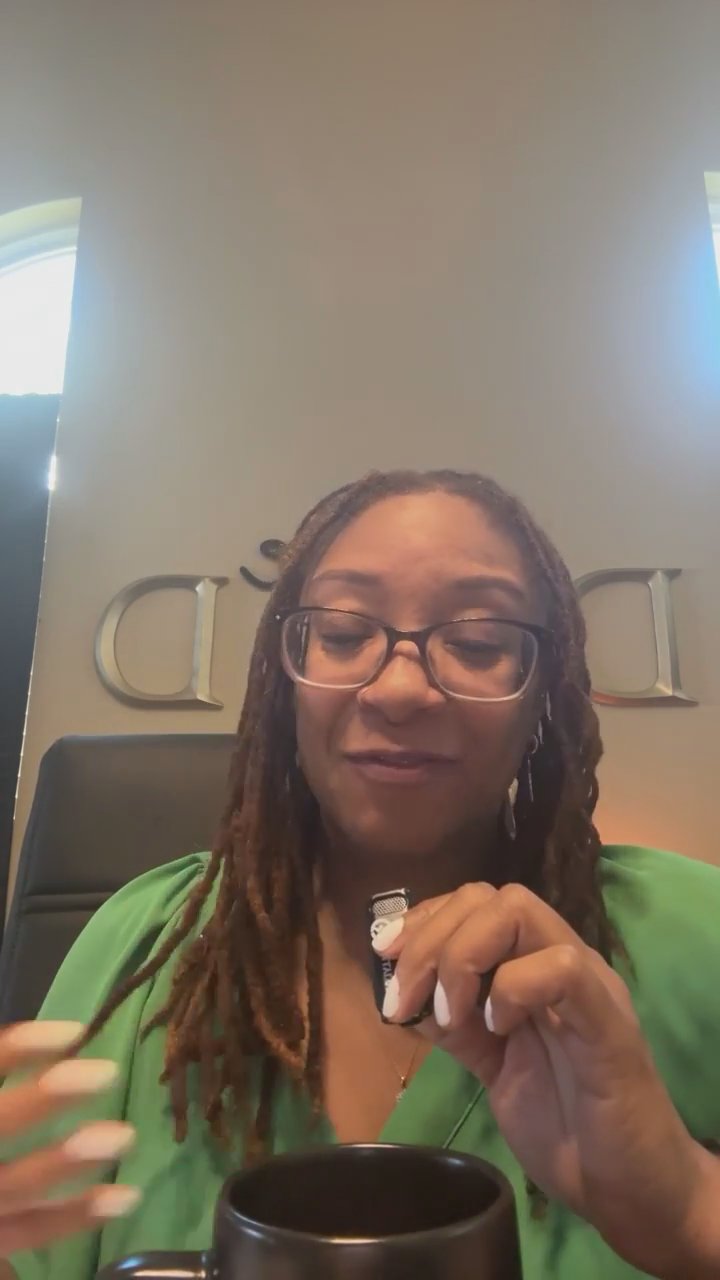
Hey, Cadre, what's going on? It's me, Dr. D. I'm trying to get my setup here. Tony and Luke, how you doing, Luke?
Today we're talking about toxic loyalty. I define toxic loyalty as when we choose to remain loyal to a relationship that's been harmful to our well being. Why are we stuck in toxic loyalty? Two reasons. We are often afraid to leave and there is fear involved in doing something new.
We get connection again. Being connected, even when it doesn't feel good, is still something that serves us. Sometimes getting out of the toxic loyalty doesn't necessarily mean ending the relationship. Another way to get free from toxic loyalty is to have someone to hold you accountable.
This is cup number two for me today. It's been one of those days, y' All. Make sure you join me next week. We're going to continue the theme. I forgot the topic already, but I will make sure that I send out a reminder.
Hey, Cadre, what's going on? It's me, Dr. D. I'm trying to get my setup here. So if you're watching replay, forgive me for moving around, but I am sitting at my desk at my home office and I'm not liking the angle this is giving me for some reason. It's a little, I don't know. But it's okay, I'm here. Hello, Josh Cadre, thank you for joining me today. And Tony and Luke, how you doing, Luke? So we are continuing this theme of freedom for the month of July. And if you saw my post earlier in the month, I did pre plan some topics for the month and today we're going to be talking about toxic loyalty.
Now it is a good thing to be loyal. I think that's something we look for in relationships. And if we don't experience experience loyalty in relationships, that's a reason why we often dip out. We're like, I'm not getting the loyalty I need, I'm gonna go somewhere else or just be by myself, right? And that shows up in all types of relationships, including work relationships. So let's get into our toxic loyalty for the day. And so I want to define it for you. And I define toxic loyalty as when we choose to remain loyal to a relationship that's been harmful to our well being.
So we experience pain in the relationship and it's not just that one time pain unless it's very detrimental. But it's over time, like repeated patterns of toxicity, repeated patterns of emotional abuse or psychological abuse. And we choose to stay loyal to the relationship, maybe not necessarily loyal to the person. And I want you to think about that. We can stay loyal to relationships because we don't want to be alone because we need connection and it may not be about the specific person. And we might find reasons why we want to stay loyal to someone who's so toxic to us.
Maybe it's, you know, we've seen them at their best and we're trying to maybe help them get back to that and sometimes that just doesn't work out. So we stay loyal. So why are we stuck in toxic loyalty? And I'll give you two reasons. They're both based out of fear. The first is we are often afraid to leave and there is fear involved in doing something new. There's fear of being alone because we want connection and we need connection. And for those of us who have been in relationships for years, so let's say you've been married or you've been in partnership for years, you've built a life with someone.
And although that relationship is toxic, you are so loyal to it out of fear of leaving because you don't know how to be alone. It's been too long. And I think that's what keeps us stuck sometimes. And that also applies to work. I don't know if you've ever stayed in a, in a company that is toxic, meaning the boss might be toxic or the coworkers are. Just the way the systems are built in that company are toxic to you. And you choose to stay out of fear of starting over. You just don't want to do it.
So the second part of that fear is there's fear of failure. So what does it say about us if we choose to walk away? We might immediately think, well, if I end this relationship, then there's something wrong with me, I couldn't make it work. And we look at the failure piece of it rather than looking at the ability to have some freedom that we really need. So I think sometimes we stay in these toxic relationships and we, we stay in toxic loyalty because we do get some benefit from it. So think about maybe a relationship, maybe it was a friendship that didn't really feel good at times, but there was some benefit to you being connected to that person.
And I'll give you an example of that. You know, maybe there's a friend. And I've had friendships like this when I was younger. Girls are toxic, y', all, I'm just gonna let you know. But when I was younger, I had friends that would maybe use me for my car. I had a car and they didn't. And so this is teenage years where I was the one that would drive people around. And I felt bad about it, but I never spoke up about how it made me feel. And so I was loyal to the people that were using me. And I've also been in adult friendships where people don't show up for me, but I'm loyal to them.
I give them everything. I will drop whatever it is. If they say, hey, Leslie, I need your help, I'm right there. And that's toxic because it's not being reciprocated. It's just a one sided relationship. But I chose to stay in that connection, in that friendship for a very long time. Although it hurt because I got something from it. And what I got from it was this sense of they need me. And that feels good. I am naturally a helper. So I like to help people with their problems. I like to help them feel good about themselves.
I like to help them Learn about themselves. Right. That's why I'm a therapist. But in me trying to help other people with their own problems and their own toxicities, you know, it feels good to do that, but at the same time, I'm being hurt. And I don't know if you've been there. Hey, Mandy, thank you for joining or being friends. You said only when it's convenient for them. Yes. And we have to unlearn that. Right. And I think if you. Maybe back in the day, and I'm old, y', all, I'm older than I look.
But back in the day, I think loyalty is something that we're taught to do. Loyalty is a value. Right. And it's something that is mandatory in relationships. And I think recent culture, I would say back to the early 2000s, you know, there's even music that starts talking about, you know, these girls, and they use another word, these girls ain't loyal. And there's this freedom of being in multiple relationships or hopping from one friendship to the next and not having any friends, like, there's no new friends.
And I think that that language is damaging because we do need connection, but we do need to realize when we do need emotional freedom, when we're in this sense of toxic loyalty. Tell me if that's hidden with y'. All. So if that. If you feel in that, drop a coffee mug in the chat for me. But. Okay, let me get back to why we stay. So what else are we getting from staying in toxic loyalty? We get connection again. We need it. It's a basic human need that we have. So being connected, even when it doesn't feel good, is still something that serves us.
We also get identity now, if you're a part of a company or a group of some sort, or even in a relationship where you have the status of being a boyfriend or girlfriend or wife or husband, that identity is something that we also need. And so we will stay in toxic relationships and toxic partnerships out of the sense of, if I leave that, then I no longer have that identity, and then who am I? And we can get confused on that. So I've done it. And I just recently tell y' all my business, I just recently left my gym.
Y' all know I trained jiu jitsu, and I was fiercely loyal to the gym that I was in. But there are some things going on that I didn't necessarily align with. But I stayed regardless of how I felt, and I saw the signs. And this happens in romantic relationships, too. We often see the signs that an environment or A connection is unhealthy for us and we ignore it. We ignore what we're feeling. We're ignoring what we really know. We ignore even when other people are pointing it out to us because we're just so loyal, we can't let it go.
It hurts to try to even think about letting it go because we would lose so much if we did. And so we will stay longer than we should out of toxic loyalty. So I want you to think about that. When are some moments that you have been stuck in a pattern of being loyal? When it was time to say goodbye and how long did it take you to get out? And if you can learn to do it sooner. And sometimes getting out of the toxic loyalty doesn't necessarily mean ending the relationship or ending the connection. Sometimes it just means you need to put up a boundary.
So maybe this person or this group is doing something that is damaging to you and hurts you, and you just need to put up a healthy boundary, call it out. Call out the behavior that is toxic and decide, sorry, there's a fly in here, y'. All, decide. If after some time, if you put up this boundary and you're clear on it and you're standing on business with this boundary, if they are continuing to override that boundary and they're continuing to be toxic and it's damaging to you, then maybe that's your time to exit.
But that does take time. But if you don't ever speak up about what's hurting you and creating the healthy boundary, then they're going to keep doing it and they don't even know that they're hurting you. But I will say another way to get free from toxic loyalty is to have someone to hold you accountable. So that requires you to even share your experience, to talk about what hurts so bad. And when you share that, sometimes even if you're just in that space of questioning, so if we're in the stage of change, like, I wonder, is this bad?
Like, it feels bad, but am I tripping? And you need to talk to someone about it. And if that person is like, you know what? That's toxic, it's time to go. Or maybe you need to do something about that. Use that person, that individual, to help you stay accountable to your decision to get free. Okay? And what that could look like is that person can check on you like, hey, how's it going? Has anything changed? Or maybe that person is just kind of nudging you like, hey, you said that you were going to leave and it's been a month or two, you're still there, what's going on?
And they just kind of give you these gentle nudges and make sure someone that's, you know, not so damaging and forceful to make you do what you say you want to do, but they're giving this gentle nudge that it's time to leave. Okay, so that's number two. The third thing of how to get free is consider your loss. So what is the cost of leaving? What would you lose? And I'm a rephrase that. What would you lose if you stayed? So consider that. What would you lose if you stayed and remained toxic in toxic loyalty?
Sometimes what we lose is a piece of ourselves. We lose a part of ourselves. We lose our authentic self. We lose our peace of mind. We lose our energy. We lose the love that we had for something or the person. If we continue to stay, we can get so damaged that we don't ever love again or we don't ever try anything new again, and we become lifeless. And I don't know if you've ever experienced that. I have. Where I've lost a lot. I've lost a lot of energy. I lost a piece of myself out of trying to stay loyal to someone that hurt me so bad or a place that hurt me so bad because I thought I could change it.
And it just never works out that way. So three things on how to get free from toxic loyalty. I'm going to say it again. One, have someone to hold you accountable. Two, set boundaries if you choose to stay. And the third one is just consider the losses if you remain in toxic loyalty. So that's all I got for y' all today. Thank you for joining me. I'm so sorry I was late. I was trying to get some creamer for my coffee. This is cup number two for me today. It's been one of those days, y'. All. But I am so grateful to be here in this space with you.
Make sure you join me next week. We're going to continue the theme, and I forgot the topic already, but I will make sure that I send out a reminder, and I'll see y' all next week. Hey, Brittany. Just saw you join us, girl. All right, talk to y' all later. Bye.