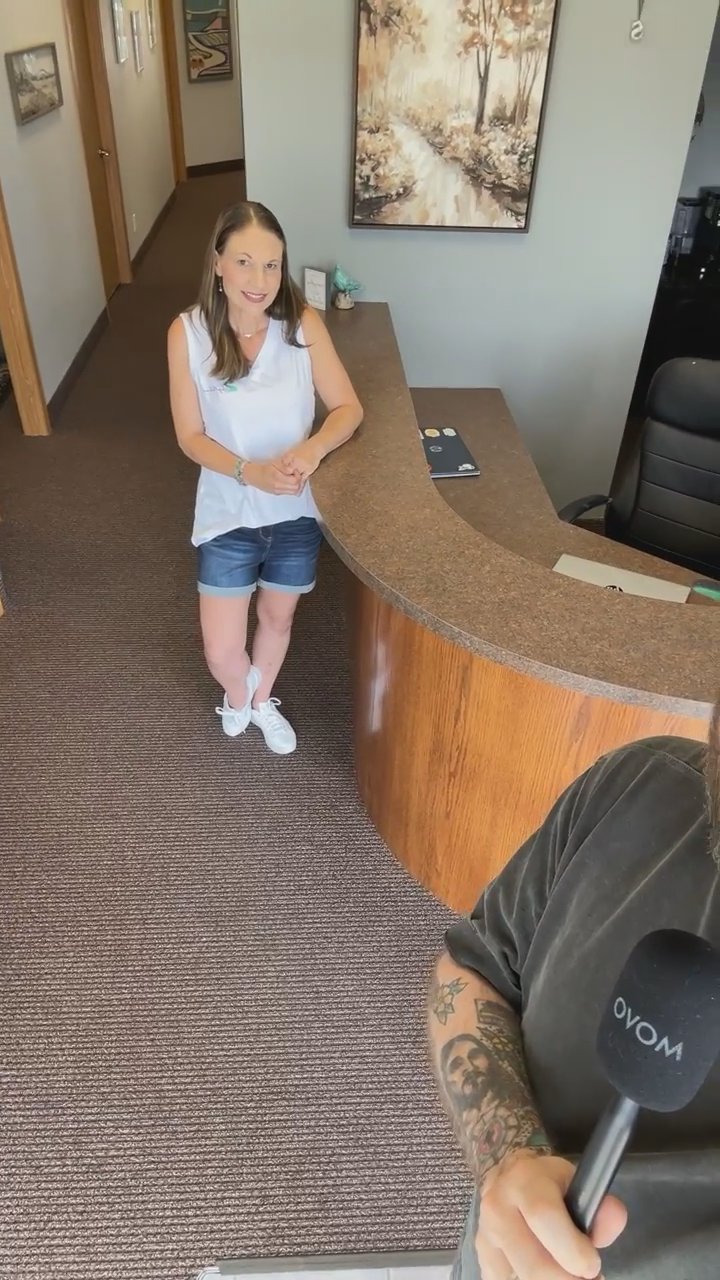
Today I look at how certified peer recovery specialists make treatment easier in rural communities. Waymakers to Recovery is a rural Recovery Community Organization based in Forest Lake, MN. Going live at 3:30 with the founder of Waymakers, Lisa!
Pastor Seth Perry is live in Forest Lake, Minnesota, at Waymakers to Recovery. The organization received opioid settlement funding to provide services to the community. Expert on rural recovery will be on hand to answer your questions.
Waymakers to Recovery is the founder and executive director of Recovery. Show us where you do intake. What are some of the things you do to help someone feel welcome. Everything starts with a conversation.
This will be a coworker, Ryan's office. He will be working more with probation officers, also doing prevention. Anyone who's just as impacted would be able to get services here. Where'd you get the money to put this whole thing on?
This is going to be our support group room, meeting room. We'll be doing AA meetings, narcotic anonymous meeting, celebrate recovery. We're going to bring circle to Forest Lake, which is an indigenous practice. The website is up and head down this way.
This is a clothing closet. For a lot of us, resources are tight. This makes things a little bit more possible to get our basic needs met. Clothing is a huge part of those first steps of recovery. It's a wonderful resource and what a cool way to support others.
My favorite space will be the final spot that we go to. And you know what that spot is, right? The lounge. Knowing that you're here, able to provide a personal touch, I think is very, very important.
For me was really important for dignity. Anyone who's connected with your services and has done intake can come into this calming space. This kind of space is something that did not exist only a few weeks ago. And so you've used some public funding to create this project.
An opioid settlement grant with the intention to get a nonprofit started here. The goal is to become a nonprofit. Once you get that started, then it's much easier to fundraise directly for a non profit.
Lisa Ling started her recovery journey September 13th of 2018. How do you keep balance in between your recovery and your performance, professional life? My recovery always has to come first.
I'm a certified peer recovery specialist. I feel that there are, you know, it's growing in the mental health area. But with recovery and addiction specifically, we still got a long ways to go. What gives you hope?
What's giving you hope right now? Hope is knowing that we're just about to open. And the best thing for me today really was I brought four people down here from the church that were advocates for mental health and addiction recovery. So I want to thank everyone for tuning in.
Hello, everyone. Welcome to Talk Stigma. My name is Pastor Seth Perry and I'm live on location in Forest Lake, Minnesota, here at Waymakers to Recovery. It is a new organization. It's an organization that received opioid settlement funding to provide services to the community here. And we're going to be talking about rural recovery. I'm right here on Highway 97 and this is a place that traditionally has not had much in the way of services, certainly not peer recovery services. So I want to welcome you today to today's livestream as we are going to And Sandra, welcome to the live stream.
Ask us any questions, Shannon, ask us any questions about rural recovery because we're going to have an expert on rural recovery right inside those doors. Everyone who's tuning in right now, make sure you ask those questions. And hello, Shannon. I'm glad that you're here. I saw that you said hi and I'm glad that you said hi. So what's your question for today? What's your question for me? What's your question for our expert certified peer recovery specialist working right here in Forest Lake, serving the rural community, looking at all of the rural issues.
I want to see if you have any specific questions for her that I can ask her while we do the tour of this brand new facility that hasn't even opened yet. It's opening on July 14th and they are a new emerging organization that will become a non profit to serve the community. We're going to talk about what services that they provide. So we're going to come right in to this wonderful brand new facility. You get to see it today and I'm grateful that I get to give you a tour. All right, inside we go. And I want to introduce you to Lisa, everybody.
So just right over here, there's Lisa. Lisa, what would you say that your position is here at Waymakers to Recovery, the founder and executive director of Recovery. Yeah, Waymakers to Recovery. Perfect. And so let's have a look at this. We're in the reception space. Is that what you're calling it these days? Yeah. So, oh, first question is how can we support people whose social network used to be centered around drinking in a small town? Well, let's start with that question from Shannon and I'm going to get you to answer it, Lisa.
So how would you like to answer that question before we go through the rest of the tour? I think by asking them directly how they would like to be supported is always a good start for some people. They want to still be included on all of the regular Day to day activities and invites, but also like expand that offer them to go to support groups, support meetings, discover new hobbies and interests with them. Perfect. That's a great answer and I love that. So someone who were to access services here would come right in here to the lobby to reception space and you'd meet them here at the desk and then they'd go on to intake.
Why don't you show us where you do intake? Absolutely. Intake is right over to this corner here. Perfect. And we'll come on right in here. And so someone be sitting right here when they came in for intake. And so tell us what you do when you bring someone through intake. So you'd be the one doing intake when you guys first initially open. So what are some of the things you do to help someone feel welcome and someone feel like this is the right place for them to be? I believe everything starts with a conversation.
So while we're doing paperwork to just be able to get the vital information discussing what recovery looks like to you, where you're at in a recovery journey. Is it something you're testing the waters with? Is it something that you know is for you, where exactly you're at and what's important to you with your recovery as well? Just giving everybody a good idea of what services we have to offer and what we provide here and just want to be able to walk alongside you regardless of what your recovery looks like to you.
And you can provide referrals to many different services. And I think we've talked about that just today when I was hanging out with you today. So let's move on to the next area that someone might. So we'll finish in the lounge. But why don't you show me your next space in here? And I like maybe right in here. Tell us what's going on in here. This will be eventually once we get there. This will be a coworker, Ryan's office. He will be working more with probation officers, also doing prevention, focusing more with family and prevention and probation.
Yeah. And so anyone who's just as impacted would be able to get services here. And Nikki, thanks for tuning in. If you have any questions for us specifically about rural recovery, I definitely know that Lisa is the person to ask here in Forest Lake. So we'll move on down the hallway and I mean this is a beautiful facility. One thing I'd like you to maybe tell us right now is where'd you get the money to put this whole thing on? I was so grateful to be. To be awarded awarded funds from The Washington county opioid settlement.
Yeah. And you've made great use of them, so. Thank you. Love it. All right, so this is a room that I. When I saw it, I just thought it was great. So tell us what we're working with here. This is going to be our support group room, meeting room. So we'll be doing AA meetings, narcotic anonymous meeting, celebrate recovery, and we're going to bring circle to Forest Lake, which is an indigenous practice basically all about just talking about where we're at and being able to make connections with people and getting more of a personal support group.
That's great that you're able to build community in a brick and mortar space. And one thing that I wanted to ask, though, is specifically, what is your website so people know? And it is. org and check them out there. The website is up and head down this way and you can show us the. Let's go to the break room. How about that? The break room? Yeah, this is the break room. We just had a little bit of a coffee and snacks here with some of the crew I brought down from the church. Very, very nice. And I mean, this is amazing that you're able to start such a wicked organization that had.
So who did all the work in here? You're looking at her. Yeah, exactly. Excellent. So there's a break space, but this is one of the most important spaces that really impressed me. So let's go right into the closet. So what do we got here? This is a clothing closet. So for a lot of us, resources are tight, and this makes things a little bit more possible to get our basic needs met. Let's get right side up. There we go. And now we can see all of the. Like, there's so much clothes in here. Right. Look at that.
And so if someone were to come here, why would they need clothes? Specifically, a lot of people who. Who are in early recovery, sometimes people come with just the clothes on their back. Sometimes people don't have the best relationships with their immediate family or are just getting out of different situations. And we want to be able to support the best we can. Awesome. And then Nikki, who's the head of coaching at Cadre, says, let's make sure that Lisa has a Cadre account and can. And get an access code and can make sure that Forest Lake folks can get connected to this app, too.
It's a wonderful resource and what a cool way to support others. Absolutely. Because when I went into treatment, I didn't have much in the way of clothes, I ended up having to make a few trips to get clothes. But clothing is a huge part of those first steps of recovery, and I'm glad you're doing that. Thank you. And Nikki says, what a cool way to support others. So I think we can move on to another space. Let's look in here. Yeah. I think this was great that I did not. Not expect to see this today when I came in for the tour earlier.
So where are we? What space is this? We're in the workforce room. So this is a place where we can work on resumes, applications, you know, furthering education, you name it. So just good place to be able to have access to a computer and then also have access to somebody who might be able to help guide the way. And again, in this rural area, this was a spot that was lacking. Pretty much the only spot you could go to were at. At the specific hours at the library. That was one of the places. But now, knowing that you're here, able to provide a personal touch, I think is very, very important.
All right, so thank you. My favorite space will be the final spot that we go to. And you know what that spot is, right? The lounge. The lounge. I love it. Okay, so here we are in the lounge. Why don't we just sit on this side? You sit right there. All right, Perfect. All right, so why did you create this space this way? First of all, you did some painting, you painted some furniture. You got new rugs in here. This was new, right? Yep. Okay, so why was this space important to create? For me was really important for dignity.
I think that a lot of places that are. Are focused on recovery. We are grateful for anything that we have. However, it's nice to just be able to be in a space that is warm, welcoming, soft, and conducive to having a starting, you know, laying a new foundation, starting a new path. And so anyone who's, you know, connected with your services and has done intake can come into this calming space, a place to relax if they're in a supported living house, sober living, wherever. This kind of space is something that did not exist only a few weeks ago, really, and now it's here.
And so you've used some public funding to create this project. And I want to just let the viewers know the stages that you're going through. We just talked to the whole crew that I gave a tour with from my church that were just here with me about the steps that you took. So you were just a very motivated individual that got an opioid settlement grant with the intention to get a nonprofit started here. So you have a board of directors of four people and you're. You say they're very supportive and motivated people.
Absolutely. And so the goal is to become a nonprofit. And so share with the viewers right now what exactly, like how, how long in the process before you become a nonprofit? I'm hoping we are. No, no further than two months away. And. And then once you get that started, then it's much easier to fundraise directly for a non profit. Absolutely. So you yourself are a person in recovery. Tell briefly how long you've been in recovery and why it's important now to be forming a nonprofit to help others.
Go ahead. I started my recovery journey September 13th of 2018. It has been an amazing road. You know, even though you're in recovery, life still happens. And you know, there's good times, there's bad times. But to know that there's other others out there, like rooting you on, supporting you, makes a huge difference. So then you have gone from, you know, being in really dire straits when you came into recovery to where you are now super motivated. But how do you keep balance right now in between your recovery and your performance, professional life?
My recovery always has to come first. Always. And my kids know that. I have two kids who are 12 and 16 and they are very well aware that recovery has to come even before sometimes their sporting events or school engagements. Yeah. Has to come first. Absolutely. And then I will not lie, balance is not a huge thing for me right now. I'm spending a little more time than, than I would care to admit on getting this, this adventure started, but it is well worth it. And we've been talking about balance and imbalance on the app recently, and you're not alone in that.
Yeah, I'm going to check in and see if anyone has any questions right now. But one person says, what a cool way to support others. And thanks for all you do, Lisa. And so, yeah, I think it's awesome that people have really gotten a lot out of this. There's a lot of people that have that use Cadre that come from a rural context. And so your specific professional role and title, let's talk about that right now. So tell everybody what you are certified to do and what your actual role and title is. Go ahead, sir.
I'm a certified peer recovery specialist, which is just a really long way of saying that I am somebody who walks alongside others while they're starting their recovery journey. And here in Forest Lake, before you came along There were some psychiatrists that you could get appointments with, there were counseling that you could get some help with. Just right down the road here on Broadway. Um, did you think there were enough services? Were there, was there a balance of services here in Forest Lake?
No, no, not at all. Um, I feel that there are, you know, it's growing in the mental health area, but like with recovery and addiction specifically, we still got a long ways to go. And In Minneapolis and St. Paul, there, there are resources all over. And then in Washington county especially, this ended in Washington county, where we've got some catch up to do when it comes to the resources that we have access to. And within Washington county, there are amazing resources, but it's just, it's knowing how to navigate those resources and knowing how to connect them where, you know, people like, people like me come in who just by having a normal conversation, my brain's just kind of wired to.
I have a resource for that. Yeah. So nice to see it growing a little bit. Just had a comment come in and I appreciate your vulnerability and giving us a backstage pass and pass into your life and your new venture. So a lot of support coming from folks in the Cadre sphere and I'm grateful for all that. So then just looking ahead to the future in general. What gives you hope? We'll end with that question. What's giving you hope right now? Hope is knowing that we're just about to open and seeing, you know, knowing that there are others that, that can benefit from what we're trying to produce here.
You know, hope is, is a really, that's a powerful word. And hope is like just bringing awareness, using our voices, discussing these. You know, I'm very open and I'm very transparent about my recovery journey because I believe that the more open and the more we discuss it amongst ourselves, the more awareness gets brought and the more things actually do start to change. So just what gives me hope is knowing that we're getting louder. Yep. And the best thing for me today really was I brought four people down here from the church that were advocates for mental health and addiction recovery.
And they had had a lot of struggles in the past getting services and getting other people's services and for them to come here, meet you, see what you do. org and check them out, follow them, and look forward to seeing what they do locally here in Forest Lake and the this little corner of Washington county that needs services so much. So I want to thank everyone for tuning in. Thank you. And I'll be back again sometime soon. And I just hope you have a wonderful Sunday and I'll see you again next time.
Thank you.