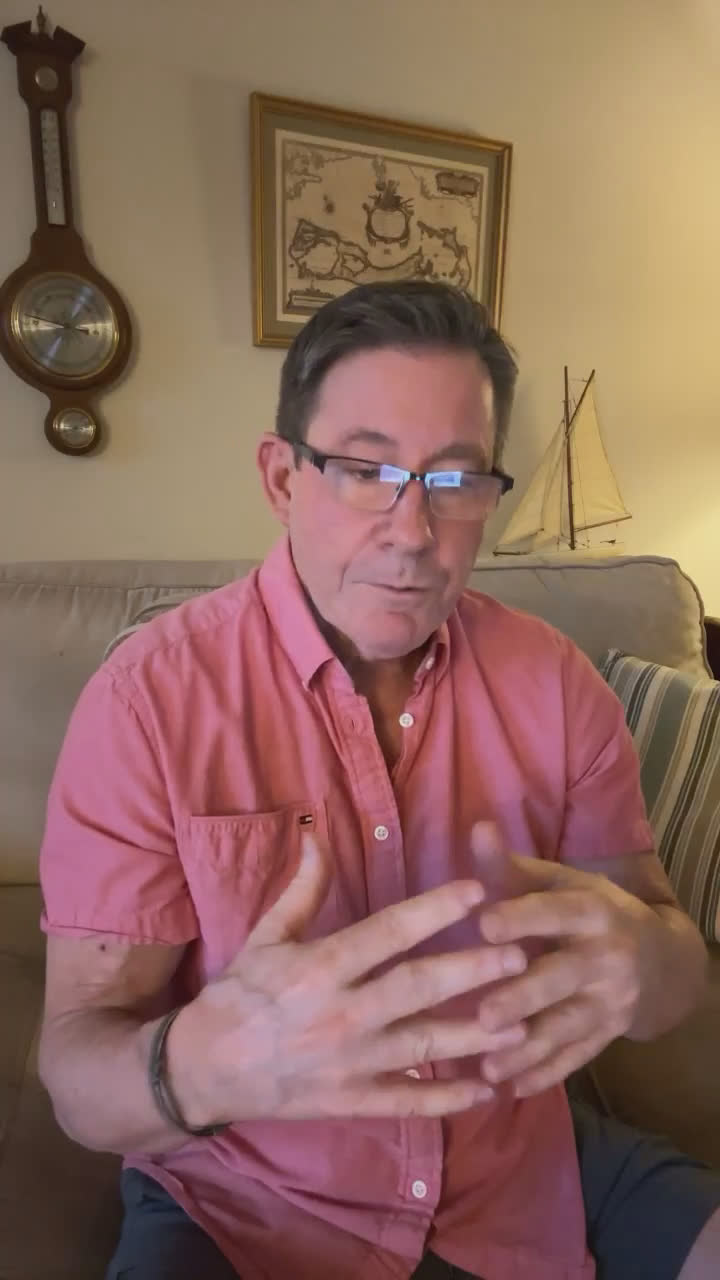
Foreign Brown. This is my first time doing live stream with Cadre. I'll introduce myself and will dive into your Resilience coaching studio. First one here on Cadre on this Monday evening, the 16th of June. Can't believe it's mid June already.
Nikki: One of the most significant things in life is when you find your sense of purpose. There's so much energy that comes from just finding it. As we peel back the layers of plan to be your best as you navigate pain, we'll get into that.
How would you rate your balance on a scale of 1 to 10? 10 being I am feeling the most imbalance. We'll talk about both the patterns of imbalance and what new patterns can actually help us regain our balance.
If you're in pain, whatever form of pain, I see you, I get it. Surgery number seven on my left knee in 2019 has left my knee in a state of trauma. Have you identified the patterns that need to be disrupted? And have you found something that's working for you?
When we experience pain, especially sudden pain, that's the primary source of pain. But as we think about Nikki's story, we quickly realize and see evidence of this secondary array of pain points. What is it that can regain our sense of focus and spark new positive energy?
The three steps of resilience are to undo exactly what pain and the mental and emotional reaction does. The first step is to tune in. The more we understand ourselves, the more we can step into the second step to plan. What plan is all about is making choices, thinking through.
So what if we find safety in a different kind of goal? We have goals, we have needs, we want to see things happen right as soon as possible. What if the goal are process oriented goals? We are only at our best, aren't we, when we're taking action.
Suffering means pain, but there's another definition to the word suffer. To suffer something means to allow it as we take these three steps together and make it personal. Allow the process to go with the flow.
Happiness is not a matter of intensity, but of balance, order, rhythm and harmony. You'll find a worksheet for the three steps of resilience. I believe in being honest and that expressing everything that we're experiencing is one of the most important things to do.
The Atlanta Braves won the World Series. The number one movie was no Way Home. The top song was Levitating by Dua Lipa. If I have it right, that was the year that Cadre was launched. So glad you're here.
Three steps to building your own resilience toolkit. Think of something that is of a concern to you. Think through what, what is it that you need? Plan. What new thought might you embrace? What new emotion might you choose? Resilience is more than bouncing back, but it's moving forward with purpose.
At the age of 40, my knee, my whole leg had atrophied. After physical therapy, the physical therapist would start every time with lift. Repeat it, flex the thigh, lift the weight, eventually it's going to kick in. Tune in, plan and be your best.
On a scale of 1 to 10, how much balance, how would you rate your balance? Now? Get resilient is the word and, and it is who you are. Next week what we'll do is take a look at another way of using the three steps of resilience.
Rick Cram: Let me encourage you to share a certain code to invite people to experience all the goodness of Cadre. It's available and good through August 15th of this year. If you have any final questions of me, I'll stay on for just another 15 or 20 seconds.
We will talk about anxiety, because that is another one of those sources of pain. And the good news is when it comes to anxiety, there's a plan for that, too. Until then, have a good night and make it a great week.
Foreign Brown. I'm Rick Cram, Welcome. This is my first time doing live stream with Cadre. It's great to be here and I welcome you. I hope you've had a good start to the week. I'll introduce myself and will dive into your Resilience coaching studio, the first one here on Cadre on this Monday evening, the 16th of June. I can't believe it's mid June already. And Shannon, great to see you. Glad you're here. Thank you so much for this. You know, if I may, have you ever experienced something in your life where you find that one of the most significant parts of it is how it drives so much change in your life?
Hello Nikki, great to see you. Been looking forward to this. Thank you all so much for this. And perhaps one of the most significant things in life is when you find your sense of purpose. There's so much energy that comes from just finding it. There are. Have you ever found a time in your life in the past years when you said, ah, that's what I'm here for, that's what my purpose is. Have you ever experienced that? And then experienced also the energy that comes from that also? Then everything you do to bring that purpose to life, to fulfill it, every step you take, there's energy that comes from that too.
That's what this is for me. And the as you'll hear me say, I probably say it too many times in a lot of my videos is I become a lion of intentionality. The amount of pain that I deal with, this is no solace for me, but mostly to share as been a call to find a purpose and to fulfill it because every time I do there's more energy that comes from it. We'll come back to talking about energy in a few minutes, but I want to welcome you and just with the thought about as we get into plan to be your best as you navigate pain and the different resources, the different skills and strategies within it to take a look at how that connects with balance?
I posted a video, was hoping to get it up earlier but about an hour, hour and a half or so ago to make the point that one of the things that different forms of pain will do, whether it's stress, grieving or physical pain, it saps our energy, it hijacks our focus and frustrates our whole. So when it comes to being thrown off balance, isn't that actually always the place we start when we are thinking I need to find balance. And the idea of doing exactly that is what our task is. This evening and thinking in terms of all right, if I'm feeling any degree of being off balance, the good news is there's a plan for that.
And as we peel back the layers of plan to be your best as you navigate pain, we'll get into that. So I suppose the title for this is balance and the path to being your best. Let me ask you a question. Whether it's how you feel right now or in general today, on a scale of 1 to 10, how would you rate your sense of being in balance? Go ahead and add a thought, add the number that comes to mind. Follow your gut with whatever first reaction you have, that first number that pops into your head. How would you rate your balance on a scale of 1 to 10?
10 being I am feeling the most imbalance. Share that if you would. Thank you for that, Shannon. Seven. Yes, Nikki. Five. As you'll see. We'll share your story. Nikki, I hope you're healing. And we'll get into this as an example of how something so sudden, so something very common can throw us off balance. And there's actually a kind of a pain of its own in that feeling not fully balanced. And it starts to trigger those kinds of questions, such as how. How do I achieve being back to balance? How do I work through whatever's throwing my balance off?
And what steps do we take? And we'll actually go through in our time together today, specific steps to do exactly that. And then I'll ask you at the end of our time together, hopefully those numbers that you just shared will actually be improved. There are patterns, aren't there? If you think about what you're experiencing today, those things that perhaps disrupt your balance, there are also patterns or things that we can actually even start to create new patterns to do a better job of being resilient with our balance and rebuilding that.
So we'll talk about both the patterns of imbalance and what new patterns can actually help us regain our balance. There's this wonderful quote by Albert Einstein. Life is like riding a bicycle. To keep your balance, you must keep moving. Isn't that true? And part of what we'll do as we progress with our conversation today is move forward. On one hand, there's a real truth in that, like with a bicycle, need to keep moving. But there is something to be said for hitting the pause button and, well, actually, what we do in the moment and in our pausing are find ways to actually get rolling again and with a greater sense of balance.
So we'll do some of that. So let me ask you this have you ever experienced something where you say things to yourself that you'd never say to someone else? Such as the case with Nicky's story. And it's one that I can relate to. There are times when I and just to share with you so you know where I'm coming from. If you're in pain, whatever form of pain, I see you, I get it. Surgery number seven on my left knee in 2019 has left my knee in a state of trauma. None of the doctors know what to do. And I feel, at times to your point, stuck.
But that's always a temporary place to be. I've had plenty of practice at getting unstuck. And I've found to thrive and to be resilient is a sequence of steps to get unstuck over and over again. So just curious, if you are looking to create new patterns, is it because your previous pattern. Have you identified the patterns that need to be disrupted? And also have you found something that's working for you? If so, please share as you'd like to. Sometimes I want to create a healthy balance of sharing just a certain amount and then not over sharing not too much information.
But I experience with my baseline pain dozens of blasts of acute pain in my knee, over 20 different pain sensations. And I have to bounce back from each one of those. If I start to get. If I leave my home here and go see clients or go see family, that baseline gets to the point where it's multiplied three or four times and even to the point where I'm. I'm in misery, where I'm getting at a rate of a dozen blasts of agony every hour. And I've seen in my recent year, it's been now over five years, the variety of patterns.
And I've been disrupting it and creating some new patterns and perhaps I'll share that with you. But if you're in pain, I see you, I get it. I know how hard it is. Depression and being in grieving, doing good grief is part of this journey. So I also know what it's like to grieve. I've lost my firstborn son, wasn't able to survive past the first several hours. And it's hard. It's life not to minimize it. But all these things bring us to spark our most fundamental, our first, earliest emotion. And that is curiosity, asking the question.
And it's good to ask questions and find answers. How do I do this? How do I do this? How do I find a balance? So, Nikki's story. Nikki, thank you for letting me share this with you. You cut your fingers out of the blue by accident. And you share with me how, over the course of about 90 seconds, there was this sequence of reactions. But where you went with it was an example of resilience. You recoil, you immediately had both a mental reaction and an emotional reaction to seeing the blood, just realizing that you got cut.
And there's that initial reaction. There's an. In any case, when we experience pain, especially sudden pain, that's the primary source of pain. And yet, as we think about Nikki's story, we quickly realize and see evidence of this secondary array of pain points. There's that pain in the thoughts that you have, pain in the emotional reaction. And you say things like I've said to myself with different. Whether I've cut myself, stun by toe or whatever it might be, I'll think things and say things to myself I would never say to anybody else.
Can you relate? But in the course of those first seconds and maybe the first minute of reacting to and sort of maybe being overwhelmed by those thoughts, overwhelmed by those emotions, and there's immediately. There's that tempest, that storm that just whipped up and it went up and with you, and it locks you into it. It's like a trap. It's. All of a sudden, there's that. There's that hijacking of your ability to focus. It's what I experience every time I get a blast of pain. There's the sapping of the energy and it's upsetting.
So the idea. Hello, welcome. Amar or Amara, if that's your. We exchanged a quick hello earlier. I'm glad you're here. So. Yes. Right. It rushes in. It's almost as if you have no option. It is a normal human reaction. And therefore, if we're actually experiencing that, what is it that can regain our sense of focus and spark new positive energy? So, yes, this is my first one. Glad you're here. And chime right in. One question for you that you'll see a couple of numbers earlier on. How would you rate, on a scale of 1 to 10, your balance?
Is it a 5, 7, 10, or maybe a 2? Appreciate your honesty. I'm sitting here feeling a sense of balance that I would say a nine, bordering on ten. Because of you. Because of this chance for me to live out my purpose. I. I feel this positive energy from being. Having the gift to share with you these thoughts that we're about to get into in terms of something from the plan to be your best as you navigate pain. Thank you very much for sharing that a 4 is a challenging place to be. But I like to think if you follow along, let's peel back some layers on this and practice something.
The three steps of resilience, and see if we can move that up a little bit. So the three steps of resilience basically play out this way. Oh, let me share this because the. Well, I'll blend it with Nikki's story to complete her story. There she is in that storm of thought, storm of emotion, that spiraling tempest that is all familiar to us. It is normal. And it becomes more of a secondary array of sources of pain, which can be more of a trap and harder for us to get out of. But the three steps of resilience works in a way to do exactly.
To undo exactly what pain and the mental and emotional reaction does. The first step is to tune in. And by tune in, I mean to pause, take a deep breath and take a look, a step of objectivity, a step back, so to speak, maybe even a step up and think about, what is it that I'm experiencing? What are the words that I'm using? How am I reacting to this? What do I need? I found that even if it's just for a quick moment, the idea of identifying it, validating everything that you're thinking and feeling and understanding, it is the place to begin.
It's also not the very first step of intentionality. And by virtue of pausing, taking that deep breath and thinking for a moment with some objectivity, you've already started that process of regaining your own focus. So I found the more we understand ourselves, continue to understand ourselves, the more we can actually then step into the second step to plan. And with. Armed with information that we can use, armed with a sense of, all right, what do I need in this moment? So what plan is all about is making choices, thinking through.
What have I done before in this kind of situation that's going to help me get out of. Get out of this. What is the need I have most of all? Maybe, what is it that I haven't tried before? And in that moment of planning, I have found whether it's in a moment of pain or coming away from a doctor's visit with a for the first time. For example, when my orthopedic surgeon said about a year or so after the seventh surgery, there's nothing I can do, I went into that meeting desperate, truly desperate for hoping he was going to tell me there's an infection and that they knew that by virtue of redoing the whole surgery over again, redoing the knee replacement, I'd be back to where I Hope to be 90%, 85, 90% pain free.
But he told me something that I had never thought I'd hear and I my spirits, mentally, emotionally, I tanked. But I went home. I know this sounds a little nerdy, but I opened up my plan document and started planning. And immediately I felt this new fresh sense of energy and calming down. The cortisol level calmed down. I started looking at what do I have control over in this moment or in this time when everything seems to be so out of control? So thank you very much for that, you know, or we're encouraging each other, aren't we?
And there's this wonderful quote by von Goethe. I believe it's instruction does much but encouragement, everything. We're here to encourage each other, aren't we? So if I may share this balance, for me it's difficult. Wanted to share in terms of that question about feeling safe. Safety is key. So what if we find safety in a different kind of goal? We have goals, we have needs, we want to see things happen right as soon as possible. But what if the goal isn't for example, 90% pain free? But what if the goal are process oriented goals?
It's more of a matter of all right, if I take these steps and take these actions, the process is going to get me to where, to a better place where I need to be. And there's a safety in that, there's a confidence in that. And if I share with you now those three steps of resilience. Let me finish describing this way. That plan step, there's tune in, plan and then be your best, be your best is all about taking action. We are only at our best, aren't we, when we're taking action. And in effect to conclude Nikki's story within 90 seconds, she had gotten herself out of that tempest, that spinning storm and ended up speaking to and affirming who she is and what she just went through to a place where she's able to squelch the negativity, to write over, so to speak, those thoughts that she would never say to anybody else.
And so she went through a process, 90 seconds, reeling from the getting cut, that mental reaction, emotional reaction, but then that resilient action as I've been getting to know her, you, Shannon, all, all of you, I am so impressed and encouraged to be just as resilient as you are. Thank you. So let me have us do this ourselves and let's walk through those three steps and let me share a thought. With you in terms of a certain word as we go through the three steps of resilience. Tune in. Plan a beer best.
The suffer word can often come up silently or even verbally, but there's a and suffering is hard. Suffering means pain. But there's another definition to the word suffer, and that means to allow. To suffer something means to allow it as we take these three steps together and make it personal. Allow it. Allow the process to go with the flow. So there's one other quote as we get into this Happiness is not a matter of intensity, but of balance, order, rhythm and harmony. Thomas Merton and the word.
I'm curious to know which one of the words stood out for you. Happiness is not a matter of intensity, but of balance, order, rhythm and harmony. Does one of those words stand out for you? And as I. As I. As you think about it. Two. Two things. One, you'll find a worksheet that you can download and reuse over and over again. It's a fillable PDF. com Cadre it is a worksheet for the three steps of resilience. It'll be there even for those of you who are watching this as a recording. So and so I wanted to just say thank you for your honesty when I read with anxiety and exalted assaulted at the office.
That's. That's awful. I'm so sorry for you. And I am a holder of hope for you. With all that you're working through, all that you're living through and want to heal from. I'm a holder of hope for you. I saw one of your videos and read some of your writings and I see a strong strength in you. There's reason to take confidence in that and that you can go through. And when I say go through, I mean address it head on. I believe in being honest and that expressing everything that we're experiencing, especially when it's hard, especially when it's.
It's really tough, that expressing it, validating it, is one of the most important things to do, to actually not only just go through it, but grow through it. And I believe you're going to do exactly that. So the three steps of resilience and let me have a little fun to lighten up the mood here because sometimes talking about pain and all of this is tough. What was the year Atlanta Braves won the World Series? The number one movie was no Way Home. The top song was Levitating by Dua Lipa. What was the year?
Go ahead and type in what year you think that was? I'll give you a moment. The Atlanta Braves won the World Series. The number one movie was Spider man, no Way Home. And the top song, levitating. You want to take a stab at it. So it was 2021, and if I have it right, that was the year that Cadre was launched. Congratulations, Cadre. So glad you're here. Glad to be a part of it. So the three three steps of resilience. Think of something that is of a concern to you. Source of pain. Maybe it's not just that primary source of pain, but it's one of the secondary sources of pain.
Thoughts, emotions. And it could be everything from something that you might find overwhelming right now or might be something that's from the past. And then the idea of tuning in and thinking through, what are my feelings? What am I? And actually, the more if I can invite you to do this, write it down, or if you're with someone, go ahead and speak it out. So, for example, when I tune in after a shot of pain, one of the first things that I realize when I'm really tuning in is that I've stopped breathing.
And I usually remember and make that the first thing that I do. I take a really deep breath. And then the idea of, what do I need right now? I validated, all right, the pain. I might be heading to a client meeting or I might be with a friend just watching a movie. And it's just random. And one of the things I have a tough time with is when I have a blast of pain and I'm in public, especially if I'm at a restaurant and it's one person start dialing 911 right away. And I'm the kind of person that likes to think about how I bring light and life and smiles into a place.
Even five years into it. I'm not quite. It's not well with my soul in terms of being someone who brings pain into a space. But I tune in and think about, what do I need? Think through what, what is it that you need? And then let's go into that most powerful part of these three steps. Plan. What might you do? And by that I mean what thought, what new thought might you embrace? What new feeling, what new emotion might you choose? This might be challenging to hear, but we can choose our emotions. It takes a greater level of emotional maturity and strength to practice doing that.
But it is possible. Sometimes I will. One of my favorite things to do, especially here, if I'm at my place, have a blast of pain. I will go pick up a couple of weights and start working out, even if it's for 90 seconds. And, and it always, always pivots the moment because what I'm immediately doing is now focusing on the weights, the number of reps, I'm focusing on my breathing. It works like a charm. And I always end up ending the weightlifting. 90 seconds or whatever it might be feeling a hundred percent different than I felt just a moment before.
And that's what resilience is. It's. It's more than just bouncing back, but it's moving forward with purpose. So what is it that you might do in this moment? What would you add to that plan list which actually is the start of building your own unique resilience toolkit? And so positive thinking is. Let me just read this. Positive thinking working, removing what you've learned and gone through with going to the mental health hospital to get help for mental health. One of the. That's actually there's a strength right there.
The idea of being able to know that you should ask for and what's in store for you when you ask for help. That's one of the reasons why Cadre is here. That's one of the reasons why I'm here. It takes a inner strength and isn't when you ask for help, isn't that a way of exercising an inner vow? I vow to myself I'm going to take care of myself, do whatever I need to through the. Through this to get. To get through it and to grow through it. So thank you very much for your honesty and for sharing, for sharing your strength.
So then let's think about. You've made a choice, now we follow through in be your best. The definition of being your best are your greatest strengths in action. And I'll peel that apart next Monday. But it's always a matter of action, which is where it happens. And if you have the worksheet or when you use it, use the space next to be your best to write down what you experience from being your best. The idea of acknowledging the good that came out of it or maybe it didn't work and learning from that.
If it did work, celebrate it. If it didn't work, you've actually successfully, successfully found something that doesn't work and you don't need to include that in your personal resilience toolkit. So let me actually, I'll pause before we, we come close to our time of concluding and I, I've. I've gotten on a bit of a roll here. I wasn't quite sure how long this first one would go, but thank you very much for bearing with me. I'll conclude with two thoughts that if you practice doing those three steps, tune in, plan, be your best, and doing it over and over with this in mind, going into the sixth knee surgery total knee replacement.
At the age of 40, my knee, my whole leg had atrophied. And afterwards with the physical therapy, the physical therapist would start every time with lift. Flex the thigh and lift the leg. I had no quad, Nothing happened for the first several days. Flex the thigh, lift the leg. Nothing happened. More than a week went by, still nothing. Two weeks later. Flex the thigh, lift the leg. I finally was able to lift it about an inch and a half to two inches up. I had quite an emotional release, I gotta tell you.
But that's the kind of repetition if you don't first, don't succeed with the first time through. Tune in, plan and be your best. Repeat it, flex the thigh, lift the weight, eventually it's going to kick in that that's part of strengthening your own unique resilience. And now let me ask you, on a scale of 1 to 10, how much balance, how would you rate your balance? Now? Get resilient is the word and, and it is who you are. On a scale of 1 to 10, what would you say? I'm still, I'm still at, I'm at a 10.
I'm feeling very balanced because you've given me the opportunity, you've given me a gift to share this with you and I hope it helps. I hope it's a blessing for you. And it's the. So that's, isn't that a 50% improvement? Those are great numbers. Those are great numbers. And if you keep at it, because sometimes it does not kick in right away, tune in, plan and be your best. Especially if you're in constant pain or if it's overwhelming in a long term way. It takes a repetition of doing that. Next week what we'll do is take a look at another way of using the three steps of resilience.
And that is using it for future moment. So what you've done is that you've come as you are and you're leaving stronger, I believe, I hope you are. I'm feeling stronger myself. So thank you very much. I'll stay on for just another moment. That calmness is something to appreciate. That calmness and that increase and that sense of, of having balance is something to celebrate. Because when we attach a positive emotion to that and acknowledge it, we're going to be more likely to repeat it. There's this beginning of starting to embed new patterns when we celebrate it, as you may have heard, neurons that fire together, wire together.
You're firing new ones. Thank you. Thank you very much. I'll conclude now, unless you have any final questions of me, I'll stay on for just another 15 or 20 seconds to see if you do. But I thank you for bearing with me as I've gone the distance here and I look forward to being with you again next Monday, same time, same place, and again, look for that worksheet. And for the future, let me encourage you, you can share a certain code to invite people to experience all the goodness of Cadre, all uppercase Rick Cram.
It'll give your family, friends, anyone who you think would benefit from even a short experience with Cadre. It's available and good through August 15th of this year. So let me just check to see if you've got any questions. So, yes, thank you for that. We will talk about anxiety, because that is another one of those sources of pain, that secondary array of sources of pain. And the good news is when it comes to anxiety, there's a plan for that, too. Thank you so much. Thank you. Thank you all. You're the best and I remain a holder of hope for you all.
And until then, have a good night and make it a great week.