She also has a parent to a child with autism. Shannon says she learned this week about how loud her voice needs to be. She says louder, bigger, more isn't always better. The biggest win is just knowing what your voice is. The rest of it is just tuning.
Shannon: How I Stopped Living in Survival Mode. Shannon: I am a human who lives with something called cptsd. She also has a parent to a child with autism. Shannon says she learned this week about how loud her voice needs to be. She says louder, bigger, more isn't always better.
This week I learned that my work voice is loud. Sometimes I can turn it down, or sometimes I can go last. I'm still practicing it being louder or being bigger or going first. The biggest win is just knowing what your voice is. The rest of it is just tuning.
"I'm so glad to see you all. Thank you so much for being a Cadre, part of this Cadre community. And I hope you have a beautiful weekend and we'll see you again soon "
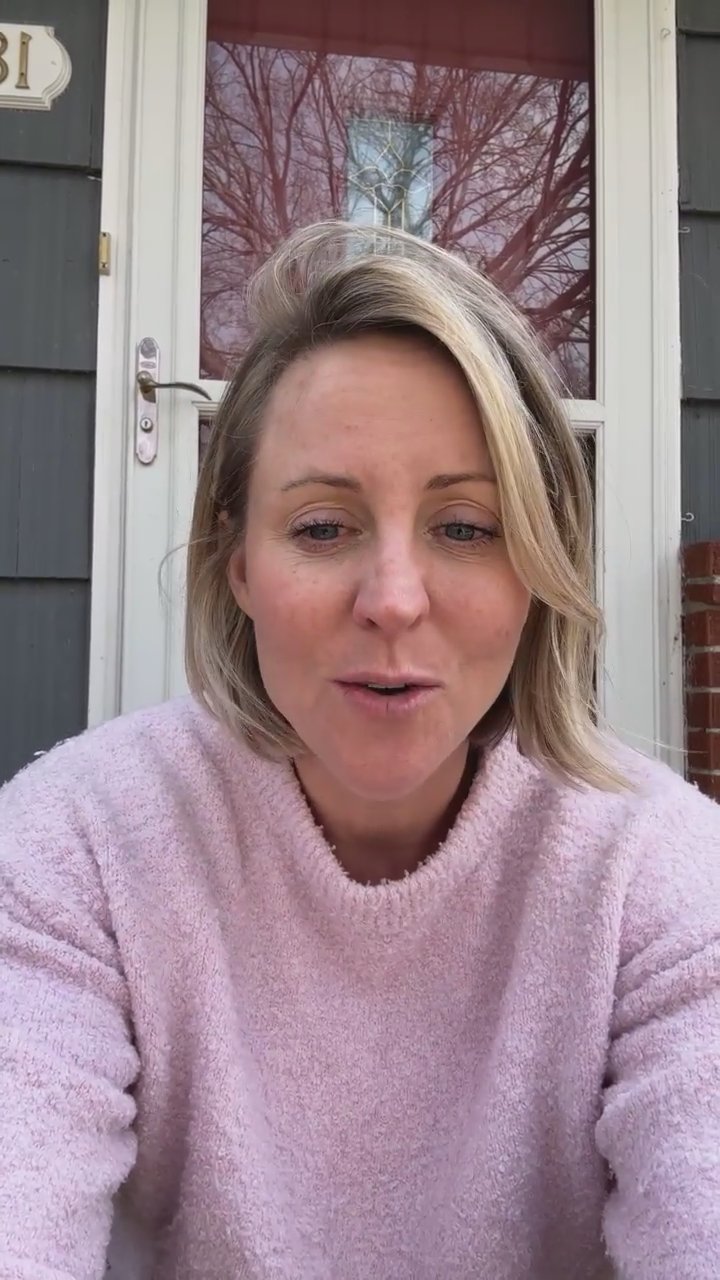
Hi, Day. It is Shannon from the Cadre Team. It's a little windy. I'm outside, sitting outside on my front porch. Coming to you live from St. Paul, Minnesota. It is 11:56 Central Standard Time here in Minnesota. Happy Friday and welcome to the title of my live stream is How I Stopped Living in Survival Mode. And so for those of you who don't know me, my name is Shannon. I am part of the Cadre team. I am not a clinician. I am not a mental health professional. I am a human who lives with something called cptsd.
I have anxiety. I live with that. And then I also have a parent to a child with autism. So I'm a caregiver. And so today I wanted to talk about something that I learned this week, which is about how loud my voice needs to be. And I think this is an important one for anyone who does live with trauma and anyone who grew up with stuff that makes you. That makes you feel like you're unseen. And so that's what we're here to talk about today. Welcome, Robert. Hello. It's nice to see you. Okay, so I've been in therapy for eight years for a number of different things.
But my. My. The trauma that I went through in childhood is sort of like. It's called cptsd because it really comes from not being able to depend on your primary caregivers. And so as a result of that, I don't tr. Easily. I don't trust in people easily. And that's difficult as a human in the world because people are people, right? And we need them to survive. And trusting people. Sorry, it's so shaky. Trusting people is part of the human experience, right? At work, at home, all the things. And so one of the things, as I've been in therapy, like I said, for eight years that I've learned is to trust my own intuition, to trust what I know to be true in my body.
And that's a practice and something that I have talked about on my live streams before, which is, you know, what's happening on the inside and the outside and are those in alignment and all the things. But one of the things that I have come to notice about myself is as I've learned to know my truth and I've learned to know what I believe and what I don't believe, I have found a voice, which is awesome, right? So now that I know what I believe, now that I know who I am and I can advocate for myself, I have a voice, I have a perspective.
I have a point of view, and I want to share it, right? And wanting to share it can be great. And wanting to share it is a super important part of me learning how to advocate for who I am in this world. And what I learned this week is that louder, bigger, more isn't always better. And the learning came via just a personality test we're taking for something here at work. And, you know, there's all kinds of different personality tests, and this one is about basically how big is your voice compared to your colleagues.
And my voice is big, right? My voice is loud. My voice is like, here it is, friends. I'm coming at you with my voice. And I think the interesting part that I realized as someone who is in therapy and who is in trauma and who has spent so much time trying to be like, who am I? And where is my place in this world? Is that I realize I have to find this balance of, yes, I have a voice. Yes, my voice is valuable. Yes, I am so grateful to know who I am and what I believe in. And that doesn't mean I need to always be using it at 10, right?
It doesn't mean that the options for my voice are 1 or 10. It doesn't mean that I have to just sit there waiting to be the next one to talk for it to be valuable. And I think that's a practice, especially for those of us who maybe didn't find our voices until later in life, especially for those of us who might be working on finding our voices right now, whether that is at work, whether that is at home, whether that is in a relationship. Right. Whatever that is, whether that is maybe identifying today, you know, part of who you are, that's like such a win and such a gift as a human to finally know who you are and what you stand for and what you want in the world.
And then I think it's a practice to temper that with. Now, what's the dial on that? Right. I'm gonna try to do a little. I'll do a gesture here. Sorry, I'm sitting outside. So here's the dial. Right? So, yeah, I have a voice. I am who I am. Let's turn that up a little bit. Right? And maybe there are moments where I do need to turn it up more, because the setting calls for it or the relationship calls for it, or the moment calls for it. And maybe there are times where you need to turn it down. And what I learned this week is that my.
My work voice is loud. And sometimes I can turn it down, or sometimes I can go last and If I go last, that actually might leave space for others whose. Whose work voices are softer to go first. And so it requires me to notice and all the work that I've done for myself to say, hey, you know what? Your work voice is good. You're good on that one. So that voice, it can go down a little or you can go last because somebody else needs to get in here, too. And that's so fine because you're good in that space.
And maybe there are other parts of my life, and I will tell you, there are other parts of my life where I need to continue to keep that voice To a 10, to an eight, right? Because I'm still practicing it being louder or being bigger or going first. And I'm doing that in my personal life right now. I'm practicing having my voice be a 10. I'm practicing it going first. Is it comfortable? It is absolutely not comfortable. My friend Nikki calls him my growth edge. I'm riding that growth edge, right? It's an edge.
It's called an edge because it sometimes feels sharp. But it's the exercise of knowing the difference and knowing when to turn it up and when to turn it down. So I wanted to share that this week because if you know what your voice is or you don't know what your voice is and you don't know what you want and you're figuring out what you want and you're figuring out the dials and you're figuring out the settings where you need to turn it up or you need to turn it down, I think I just wanted to share that I learned this week that it's a practice of knowing, and you're gonna figure it out through trial and error.
And I think the biggest win is just knowing what your voice is. And if you get to that, knowing what you believe, knowing what you care about, the rest of it is just tuning. It's fine tuning, right? It's jacking it up a little. It's tuning it down a little. But it's. Yeah, it's adjustments. So that's what I have to share today, you guys. I'm so glad to see you all. I see Robert, I see Jules. I see Andy Mack. I see so many awesome people here. And I came out a little early today because my friend Colleen is picking me up to go to a Cadre meeting.
So we're gonna go as. As teammates and do a lot of Cadre work. And, you know, today I'm gonna turn my voice down a little and I'm gonna do more listening. So I love seeing you guys here. Thank you so much for being a Cadre, part of this Cadre community. I am deeply grateful for you, and I just couldn't be more thankful for you guys being part of Cadre, being part of my community. And I hope you have a beautiful weekend and we'll see you all again soon here in the Cadre sphere. Bye, you guys. Have a fantastic weekend and see you soon.
Bye, everybody.