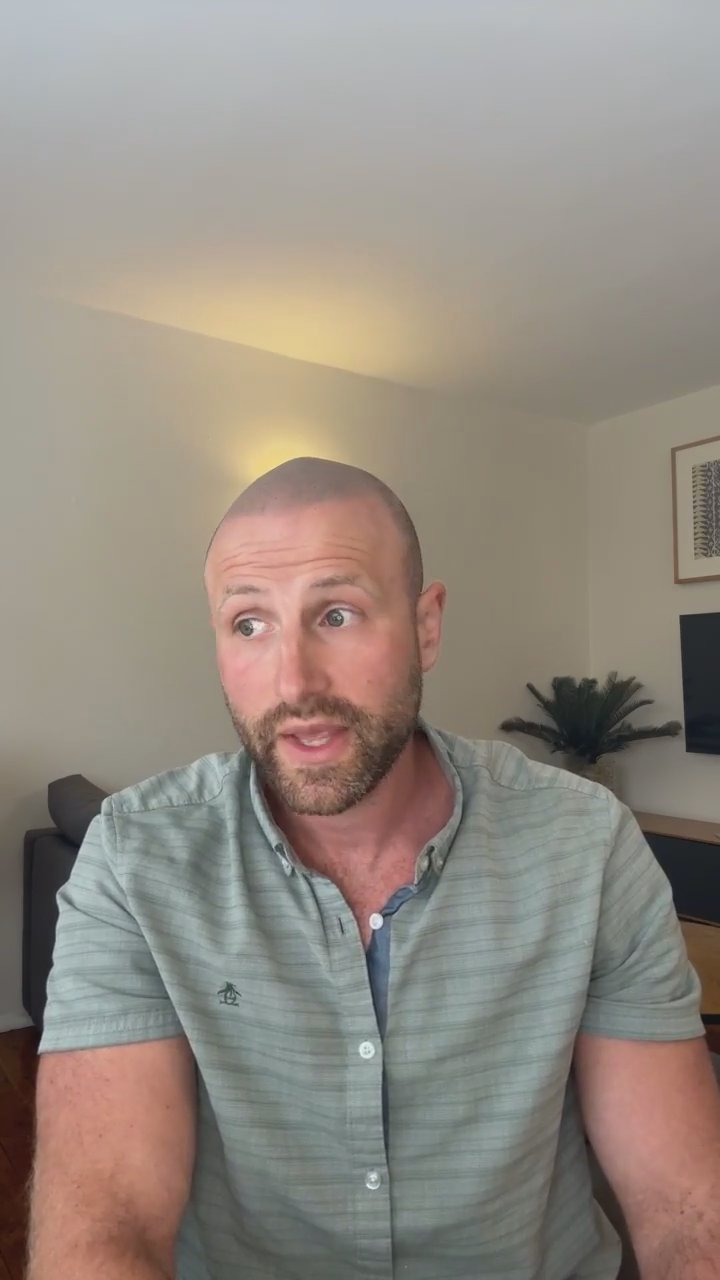
In this live stream of mental health matters, I will be answering all of your questions regarding mental health and addiction. Whether it’s from Cadre members, social media followers, or most importantly, the questions you bring to the live stream give me your best questions and I will give you my best answers. I look forward to your participation!
This is Mental Health Matters. In this show we talk about matters around mental health and addiction. Today we are doing our AMA Ask Me Anything. Feel free to chime in and I'd like to hear updates on you all.
How bad are certain drugs and substances for you? Some of them are not necessarily directly correlated, though often are with are causal of how damaging they are to your life. One example of one being the least psychologically damaging and presence of substance use disorder symptoms.
There is some evidence there, but it's actually a little bit more mixed than what I thought. Evidence is mixed, but there is definitely connections with certain cancers. Is it correlation, causation? There's always other variables in place.
D disorders associated with trauma are much more highly correlated with women. Something like borderline personality disorder may be like 4 to 1 in females versus males. These things become self reinforcing because if you start to see them more in one population, that's where you're going to start looking.
BPD is a really just say in demand topic. A lot of people consume social media and the mental health space are interested in bpd. Some of the stuff about trauma, healing, bpd, mental health, addiction are just like more interesting. And so I think it's a more popular topic.
You have like narcissism and antisocial personality disorder for a man. Borderline personality disorder, but again, it just looks different. When you're able to catch it, it is super helpful because some of the same treatments are really helpful for guys as well.
Folks, welcome to another episode of Mental Health Matters. I'm Evan, your resident mental health and addiction therapist. And in this show we talk about matters around mental health and addiction. And because mental health and talking about it is important. Anyways, today we are doing our AMA Ask Me Anything. So this is based on questions that you, the Cadre sphere folk, have had for me. Also, people who follow me on social media ask quite a few questions as well. Oh, Sherry, all the regulars, boom, are in it.
I logged in and I was a little bit late earlier and I was just talking to myself because it didn't connect. So glad to see people are in here. So anyway, if anybody has any questions about mental health and addiction, this is what it's all about. But I did bring some questions just to keep it going in case. Good evening. Good evening. For me, it is right in the early afternoon. I hear it's cold, cold there in the Midwest and maybe other parts of the US Single digit, someone told me earlier. So hopefully y'all are staying warm, as am I.
Anyway, what else? What else? So I have a few questions that I brought. So again, feel free to chime in and I'd like to hear updates on you all. Jules and Sherry, let me know what's going on in your life. We haven't checked in in a while on you all and that's important too. Let's see, which one should we start with? Huh? Like, okay, so this is one I saw today. Someone asked me, so I did a video and I'm going to do a more detailed video for Cadre on this topic of how bad are certain drugs and substances for you?
Right now you may be thinking, well, you know, obviously most are probably not good for you. And I'm not even talking about as far as addiction and how addictive they are, but actually how bad toxic damaging are they for your mind and body, your brain, really your brain and body, not just your faculties, but that too. So I went through some of those and some of them are actually not necessarily directly correlated, though often are with are causal of how damaging they are to your life. So for example, on one end you have like nicotine, particularly cigarettes, which are going to be probably some of the worst things you can do.
But let's say you didn't get cancer or heart disease while you're doing it. It's not going to really ruin your life. You know, it probably won't have like all that much of an effect except that it's like annoying and then you're like close smell like cigarettes and you just, you know, get that nagging sensation. You gotta feed your addiction and it costs money, right? But it doesn't really impact your faculties like some of the other substances do and ruin your life. However, that's like the perfect example of one being the least psychologically damaging and presence of substance use disorder symptoms, which is interesting.
Actually. That brings up an interesting point because it's like you say, you may say cigarettes are an addiction, but does that really qualify? Now cigarettes, tobacco, nicotine, there is a use disorder. I think it's a tobacco use disorder. I don't know if anyone ever diagnoses it unless they're gonna do some like cessation treatment or something, and they need to. But it doesn't really have that same impact. But the physical impacts are quite great. Now, the opposite of that and some of this, like half my opinion and experience, half medical, but take something like an opioid, like a painkiller, a powerful painkiller.
Now that's going to be extremely addictive and damaging. However, if you just take it normally, if you like ingest it, you know, maybe you're not like snorting it or like it's not like all that damaging for your brain and body, but you create such a dependence and it messes your life up like crazy, but doesn't have like those ongoing consequences. Now you may get so constipated that you die, like that's a thing. But other than that, it's like really not all that harmful. So it's kind of interesting.
So then when it comes to marijuana, what I talked about was like, I'm not like the biggest fan of it. I'm not the biggest fan of medicinal, except for in certain circumstances. I think some of the, you know, that's unbiased because I work in the addiction world and people using that as a crutch and how that can have an impact. However, when it's taken, let's say in like ingestible form, it's not all that bad for you. You know, it's not going to have like huge damaging effects on your brain and on your body.
And when smoke, though, that's, that's the question. It's hard because, you know, it's always been associated with cancers. And I had someone comment on one of my videos, they're like, well, that's really more like correlation. There's really not that much evidence that it's causal. So I just kind of assumed it like, you know, you really shouldn't be putting smoke in your lungs because, you know, There is with marijuana smoking the flower, whatever it is, has tar. And that's one of the things that are correlated.
But when I looked into it, I mean there is some evidence there, but it's actually a little bit more mixed than what I thought. And when I think about it, I'm like, I guess I don't know anyone or heard really of anyone who's like purely gotten lung cancer from just smoking a lot of weed. But sometimes it's just hard to know for sure. It's hard to know like what caused what. Why does this keep turning off? So that's a good question. So I guess it's maybe a little bit more mixed than I thought. But I don't think someone's going to like smoke or not smoke based on know the potential cancer causing this of it.
So. But I think it is important for it to be accurate. So I did find that interesting. So evidence is mixed, but there is definitely connections with certain cancers. Is it correlation, causation? There's always other variables in place. So I've been doing a lot of talking about disorders and whether or not they are diagnosed more in male or female individuals. And you could even look at like an LGBTQ category. I may start talking about that more as well of like which ones like individuals are more susceptible to.
And one of those right is like disorders associated with trauma and those are much more highly correlated with women. Now let's take something like PTSD when it was first being like a diagnosis and recognize it was much more common in men because that's where we were looking for men in combat and stuff situations. But then when it opened up to more things and we gained more of an insight about things like domestic violence, sexual assault and other types of stressors and traumas that women would also be more likely to go through, the impacts are very similar, you know, to the point where it is significant, diagnosable and needing to be treated.
So what is it with. Okay, so something like borderline personality disorder may be like 4 to 1 in females versus males. And for those of you who don't know what that is, it's basically a trauma reaction that causes a lot of issues with emotional instability, trouble and relationships, attachment, acting out behaviors like substance use. And a big key feature is chronic suicidality and self harm. So it's extremely difficult disorder to have. And if you have someone close to you has it, it could be really difficult for those individuals as well because of those symptoms.
So that's like a four to one with females. A lot of it is from complex childhood trauma, meaning a series of traumas that happens throughout someone's life, especially in childhood. For example, you know, verbal abuse, neglect, physical emotional abuse that really when your mind is most vulnerable and developing and most impacted, you know, it really kind of changes that structure and narratives that you have as well as your abilities to emotionally regulate. So like 4 to 1 there and then something like PTSD maybe 2 to 1.
I think I'd have to go back and look but you know, more common in females. And then if you look at what other, like something like dissociative identity disorder, like multiple personalities that's associated with trauma, I think it's like a seven, eight or nine to one kind of deal. So like that one's extremely weighs heavily on that. So there's a whole bunch of reasons for all these. But yeah, so that's some of the reasons why you see some of those higher degrees where Whereas if you look at other disorders for men, more common would be like adhd, autism, Narcissistic personality disorder, antisocial personality disorder that are more associated with males.
Now let's say you have these like diagnosis discrepancies now however, these things become self reinforcing because if you start to see them more in one population, that's where you're going to start looking. And some of the symptoms are more associated with what we would typically stereotype as male or female behaviors. So it becomes a self reinforcing cycle where it diverges in the diagnosis rates. Whereas as we gain more knowledge and understanding that it is probably with all of these, or here sometimes it's maybe even, but that is debatable.
Like for example, like adhd, we're starting to see much more. Instead of being like a three to four to one, it's maybe more of like a one, like you know, two to one. Some people would say even, but some of that's just kind of like an emotional place. Whereas like with kids with adhd, you know, like boys are more likely to have more of the hyperactivity and it becomes more obvious and problematic. Therefore they get diagnosed more. Whereas women, it may be more of the inattentive piece. And the same thing goes with autism, which is even more like 4 to 1 or 5 to 1.
Male to female diagnosis, however, especially in its more extreme form, there has to be some kind of genetic biological component that males are more susceptible to it. However, some of its less severe levels, women have also been under diagnosed. It's been missed. Women are better at like masking and more socially appropriate behavior. So that, so it may get missed unless they're on the higher end of the spectrum as well. So that four to one, five to one, you know, maybe more like a two to three.
So yeah, so it's kind of, so it's interesting. And so then the initial question was something like borderline personality disorder, which we talked about before in men, and I've done videos on this in the past and they've actually done pretty well. People, I think, find this to be interesting. BPD is a really just say in demand topic. You know, a lot of people consume social media and the mental health space are interested in bpd and one of the reasons I believe for that, or they're interested in mental health because a lot of these folks have been in the system, especially from a young age.
So they've worked with a ton of therapists, they've been hospitalized, they've gotten a lot of benefit from therapy. So for them, some of the stuff about trauma, healing, bpd, mental health, addiction, you know, all the coping skills, all those things are just like more interesting. You know, they're more drawn to that. And so I think it's a more popular topic. And so I think it's super interesting, as do many folks about, well, how does BP show up differently in men? Because that has a pretty disparate diagnosis rate.
And just like you may miss autism or ADHD in women, you may miss borderline personality disorder in men because often, let's say instead of, you know, maybe their emotional dysregulation comes out more as like anger or aggression, which is more associated with just kind of normally being a guy, you know, more stereotyped to being a guy. Sometimes that I notice like that attachment is there as well. Could become like paranoia about like their partners, like cheating on them, leaving them, like whatever.
And so yeah, so with men it can look very different, but they also do have some of the self harm as well. So that's like a huge indicator sometimes like eating disorders, common in both. But a lot of those things too get diagnosed more and more. Eating disorders is a big one too. So sometimes when you see some of that in men, if you're able to catch it, then you know you can diagnose that. Borderline personality disorder, but again, it just looks different. And when you're able to catch it, it is super helpful because some of the same treatments are really helpful for guys as well.
You just have to be able to find it like on the opposite end of the spectrum too. You have like narcissism and antisocial personality disorder, you know, for. For a man. Right. Let's see some of the key features of narcissism. Things like, you know, status, seeking, control, you know, need for like, you know, certain types of admiration, money, power, status, you know, all those things. The lack. Oh, yeah, lack of empathy, lack of emotion, limited emotional range. I mean, that could be seen more as a male type of disorder, but a lot of women do have that as well, have those narcissistic type tendencies and could meet criteria for diagnosis.
But it gets overlooked for the same reason as borderline personality disorder as well as the antisocial, which is more of like the lack of empathy and conduct. Criminal type behaviors. Criminal like, thinking, you know, high percentage of people in prisons have like, antisocial personality disorder. Some controversies there, but I mean, that's pretty. Makes sense. So I don't know, maybe we'll just like, leave it there and, you know, we kind of covered a lot of topics and I'll save some questions for next time and maybe next time we'll get some questions for you all.
Feel free to tag me in the community feed if you have any questions and then, yeah, we'll go from there. Anyway, we'll see you next week right about the same time. Hope you have a good evening and stay warm. And with that, I'll talk to you all later. Cheers.