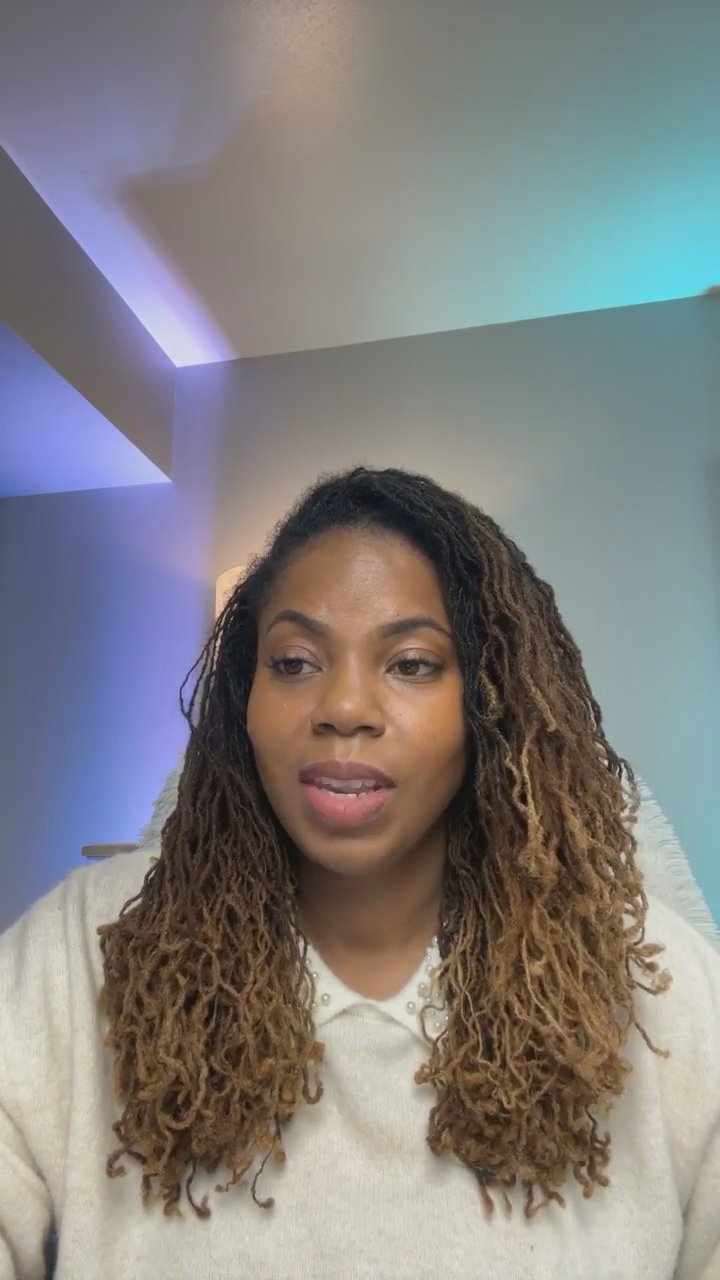
Rachel Logan is a counselor who helps people heal and soar by getting to the root of their emotions and cycles. Happy New Year to everyone. With new beginnings come fresh starts. They are still home. It's like journaling is like cleaning out a messy closet.
Rachel Logan is a counselor who helps people heal and soar by getting to the root of their emotions and cycles. Happy New Year to everyone. With new beginnings come fresh starts.
Ray Ray: I was off for two weeks. I focused on my family and my kiddos and guess what? They are still home. What kind of memories did you make over the break with yourself, with loved ones? What was a funny memory that you made during the break?
Journaling is an underrated tool that people kind of, I don't know, overthink. It's like journaling is like cleaning out a messy closet. Not something to feel pressured by, not something that you feel like you have to do every day.
For the month of January, we're going to go through the different areas that we as adults struggle with. Jewel: For me and for my clients, it's an opportunity to slow down and to no longer have those wrestling thoughts, but to put them on paper.
Loneliness and isolation is real. If it's not process properly, it can turn into feelings of depression. What steps can I take this week to reach out to someone I Trust? How can I build a sense of community around me?
What activities help me feel connected even when I'm alone? What helps you feel connected to your community? My challenge for you is to journal these three questions and activate them. Next Wednesday, I will be back with another topic and that topic will be trauma and ptsd.
Hello. Happy New Year, Cadre. Hello. Hello, Cadre. It's been a long time. I'm so happy to be back and live with you. Welcome, welcome, welcome. I am Rachel Logan. I am the get to the root counselor where I help people heal and soar by getting to the root of their emotions and cycles. And so I am excited to be with you, Cadre. What's up, Luke? Hello, Jules. Thank you for joining. Happy New Year to everyone. Listen, I'm excited because with new beginnings come fresh starts. Hallelujah. And listen, an opportunity.
An opportunity to get to the root. Good morning, Jewels. So I want us to kind of open up and think about what have we been enjoying since the break? Like I was off for two weeks. I closed my practice down. I focused on my family and my kiddos and guess what? They are still home. We here in the Midwest have been closed in due to a snowstorm and my kiddos have been out of school for two days. Two snow days. Now I think it's time for them to go back to school. Right? Hello, Ray Ray. That is my nickname.
I like it. What's up, Ray Ray? But I'm excited to be with them and to create memories and to be fun. Yesterday they did a snow challenge where they had to go outside with shorts and a T shirt on and go do snow angels. So that was fun. You know we're making memories, right? So I want to know, you know, what kind of memories did you make over the break? What kind of memories did you make over the break with yourself, with loved ones? Rather it's a tradition. What was a funny memory that you made during the break?
So definitely see my kids were outside at night time. It was really funny. It was really funny. I might post one. I'll post it. It'll be fun. It was a softball challenge. Cuz my daughter plays softball. So all the softball girls challenge one another to go outside in the weather. But anywho, I want us to shift our focus and I want us to think about intentionally this year something that has been such a powerful tool for me and a very powerful tool to my clients as we get to the root, as we heal and as we soar.
I think this is an underrated tool that people kind of, I don't know, overthink. And do you know what the tool is that helps us heal and soar? Journaling. Journaling. And listen, it is a tool that is underrated and overthought. People overthink it and it is a way. I have a really cool metaphor about journaling but it is truly a way to think things through. It's like journaling is like. This is my metaphor. Journaling is like cleaning out a messy closet. Now raise your hand. Give me a heart if you have a messy closet.
I have. I have two of them in my house that I'm gonna work on. Okay, but listen, it's like that junk drawer that has everything because, you know, we just need a spot for everything. But journaling is like opening up that junk drawer or opening up the closet door and sorting things out and deciding what we're going to keep and what we're going to get rid of. So journaling is an amazing tool. Not something to feel pressured by, not something that you feel like you have to do every day. Because, listen, I'm not decluttering every day, but when it's necessary, when things get over, when.
When the. The drawer is. Is to its max and I can't close it anymore, or when the clothes in my closet are on my floor and no longer organized and hanging up, that's a sign that it's time for me to begin to declutter. And journaling is that tool. And there is power in journaling. It helps us to. Well, let me ask you, if you journal, how does journaling help you? How does journaling help you? For me and for my clients, it's an opportunity. I look for opportunities now. Look for opportunities. But it's an opportunity to slow down and to no longer have those wrestling thoughts, but to put them on paper.
And it gives you a clear space to process, and it gives you an opportunity to think objectively instead of emotionally. So I want us to think about some things that we can begin to journal about. And I did some research, and Ray and Jules, if you're still with me, I did some research on what are the top things that we as adults tend to worry about or what are some of the things that. That has us kind of stuck. Because, you know, this is the new year. Every. We've been talking about starting the year strong with right intentions, but there still are roadblocks and barriers that we come up against.
And so I want to challenge you to journal. So for the month of January, we're going to go through the different areas that we as adults struggle with, that we as adults need help processing. Because a lot of times we go and it's the new year. We had a great time. We celebrated, we did toast. But then here we are, and it's January 8th, right? And the ball is rolling, but we still need to Heal and soar. So we continue to reach our goals. So Jewel says she journal once in a while. I journal as needed.
As needed. There are moments where I journal daily. There are moments where I may journal once a month. Because, hey, I'm maintaining. I'm flushing out my emotions regularly. I'm processing how I'm feeling. Yeah, everyone kind of has their own regimen. So I want to give you a couple of questions, and one of the areas that I'm just going to focus on today is loneliness and isolation. Loneliness and isolation. As an adult, sometimes either we can find ourselves working really hard and going and not connecting with people.
Sometimes we can find ourselves working from home and not, you know, connecting with co workers or leaving our homes or leaving our cubicles. Sometimes we can find ourselves closing people off because it's winter and it's cold. If you're in the Midwest or in parts of the world that gets cold weather. But isolation and loneliness is real. It's real. And if it's not process properly, it can turn into feelings of depression because truly, we're not meant to be alone too long. Right? Being alone and loneliness is two different feelings and emotions and experiences.
But today I'm gonna talk about how we're going to overcome loneliness in isolation. So I'm going to give you three journal questions that I want you to journal and process and activate. Okay? Number one. What steps can I take this week to reach out to someone I trust? What steps can I take this week to reach out to someone I Trust? Hello, Ms. G. Welcome. We are talking about journaling. The power of journaling. How we create space in our minds to think and to feel and process and not to wrestle.
And so the question, the first journal prompting that we are processing because we're going to overcome isolation and loneliness as adults. Sometimes we can work really hard, really long hours, and we wake up and we realize we haven't talked to anybody. We haven't done anything fun. We just been in grind mode because we spent the money in December, so now we got to recover in January. Whatever your story is, what are the steps you're going to take this week to reach out to someone you trust? Connection overrules.
Loneliness and isolation. Two, how can I build a sense of community around me, even in small ways? How can I build a sense of community even in small ways? Listen, I'll share here. I used to think that doing things alone was powerful and I was afraid of connection. So I found myself doing a lot of things independently until I recognized I had a deep Longing for connection. I had a deep longing for connection. So my small ways of building a sense of community is letting down my guard and calling people up and saying, hey, I'm just thinking about you.
And that broke ice. That created community over time. That said that small acts of just pouring into somebody else, doing something nice for somebody else. Sometimes I will randomly Send somebody like $510 on Cash App just to say, go get you a smoothie or coffee. Why? Because when you give, you get something back. And not that I was given to get something back, but to build community. Giving builds community. So that was my small way. So as you process Ms. G. Jules. Ray. Ray. What are some small ways you will build community?
Because isolation and loneliness creates depression. And we can overcome depressive symptoms by connecting. Last journal prompting. What activities help me feel connected even when I'm alone? What activities help me feel connected even when I'm alone, meaning no one else is around me. What helps you feel connected to the world? What helps you feel connected to your community? Rather you're in college. Rather you are an adult working a 9 to 5. Rather you are a single parent. How do you feel? How?
What activities help you feel connected? So one thing for me is even being snowed in. One of the activities was FaceTiming. I FaceTimed my best friend. I FaceTimed my mom. I FaceTime my sister. That was my way of feeling connected. I did zoom calls with a couple my church members. I made an effort. I made, I made, I took steps to feel connected. So my challenge for you is to journal these three questions and activate them. Activate. Activate. Activate. Activate Journaling. And activate these steps that you wrote down today.
So next Wednesday, I will be back with another topic and that topic will be trauma and ptsd. We will journal because, listen, as college students, as adults, as a single mom or a married wife, we have to learn how to process our emotions. We're not going to just keep them in. We're going to process them. We're going to clean out our closets. Okay? We're going to clean out our junk drawers by sorting things out, remembering what we're going to keep, and releasing what we're going to give away. So as I close, remember, journaling is your superpower this month.
Journaling is your superpower this month because you're going to release and activate. All right, good people, I will see you next week. Drop a hearts share. Let somebody know that journaling is their superpower. All right, peace out.