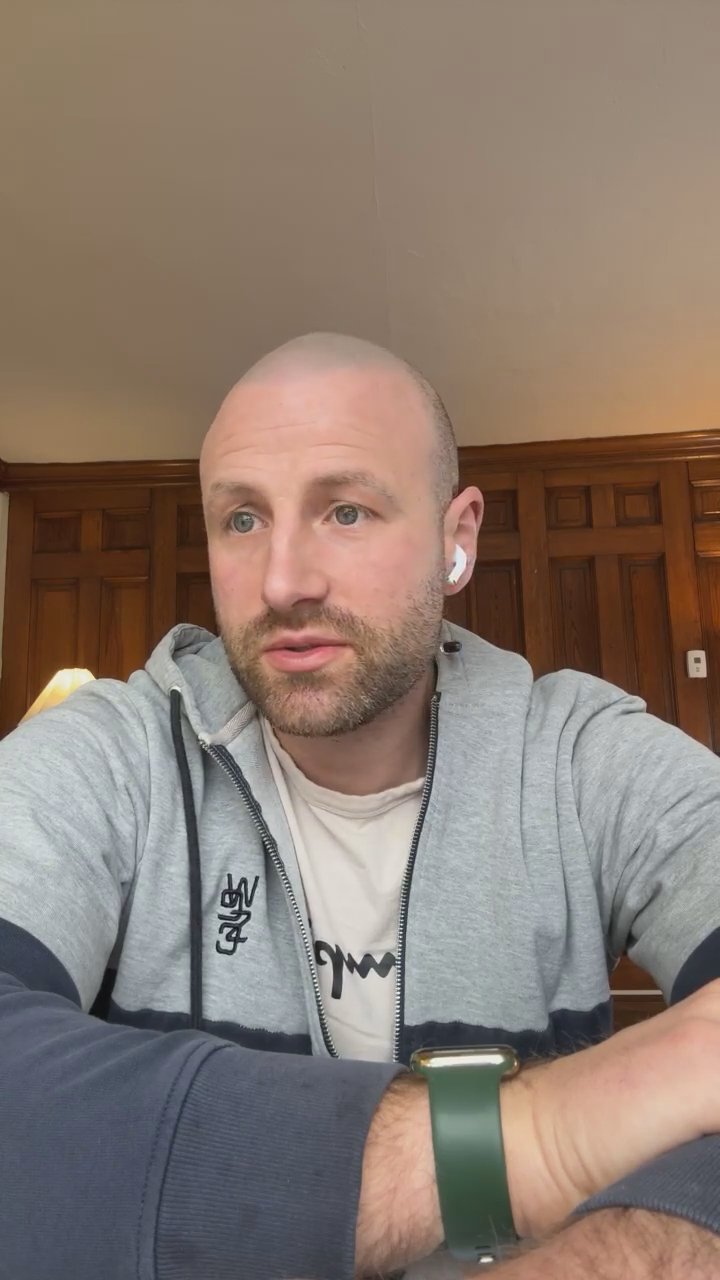
In this live stream, I’m going to break down the 11 symptoms of substance use disorder and discuss how it can be difficult to know the difference between regular heavier drinking and a problematic use disorder.  also, how much alcohol is too much?
This week's Mental Health Matters is all about what constitutes a drinking problem versus just regular drinking. If you have any questions about mental health or addiction, let me know Saturday.
Luke says he got lost on a winter hike in Duluth, Minnesota. At the end of the hike, he couldn't figure out how to get back to his car. Are you an outdoor run? Luke says he loves that feeling.
It's just, like, really dumb. But I'm a guy, and I just like to do dumb things that are semi sketchy. I recovered my AirPods. Then I walked back a mile out, ate some Vietnamese food and passed out. Is anyone still here?
What makes someone an alcoholic, or as we would say, technically, a substance use disorder? That word is quite triggering for some people. A lot of people identify that way and they don't view it as a bad thing.
Alcoholism. Could someone have a mild heroin or opioid use disorder? These are 11 symptoms of a substance use disorder. I'm going to see if I can get all 11.
The 11 symptoms of a substance use disorder have to be recurring and consequential. These have to create problems in your life, and they have to happen, like, more than once. The more you feed it, the more you sacrifice, the bigger it gets.
Useful in dangerous situations. Cravings and urges. Physical health, your mental health, motion. Social relationships may be two separate ones. Do the cravings ever go away?
Symptom number nine is basically having failed, unsuccessful attempts to cut back or quit and going back despite your best intention not to. Most likely afterward, he's back.
The most severe is withdrawal. Feeling like nausea, vomiting, diarrhea, handshaking cold sweats, just generally feeling uncomfortable. One of the most toxic things for a relationship is overuse of substances. Those are the 11 symptoms.
What's up, folks? Welcome to another episode of Mental Health Matters. I'm Evan, your resident mental health and addiction therapist, and we have a live stream today. We have a topic episode, and that is all about what constitutes a drinking problem versus just regular drinking. Where. Where is the line? And I swear to God, I could probably make all my content about stuff around this. I mean, this is something that I found. I get a lot of engagement on what's up our stigma, but I think it's because so many people drink regularly, and then a certain percentage of those may drink heavily or to a point where it kind of.
It rides a line. Wow, look at this. I should just. This is crazy. Look how many people we got. We got Russell, we got recovery frog, all the regulars, and some new folks. And this is Wild Sherry, of course. Sherry. You know, someone brought your organization up the other day, and I was like, oh, I know them. Yeah, let's reach out. So we're probably gonna reach out. I think it was in regard to, like, our sober housing, I think it was. Or. But yeah, so that was super cool. I'm like, oh, wait, I know Sherry.
So this is awesome. Maybe I should just do Saturday morning lives because more y'all are hanging out instead of my usual Friday ones when people are probably working or something. But anyways, let me know what's up. If you all have any questions about mental health or addiction, whatever that may be, I will answer it. Now's the chance. You could always put it in the community feed. Tag me, but. And then every other week, I do an ama. But today we'll talk about this topic, and then if you have any questions, let me know Saturday.
Yeah, me too. So first, let me. Before we get in, let me tell you a story. So I'm up in Duluth right now. I'm working on this house. A friend and I got right. Not too bad. It was, like, 20 degrees. Not bad, right. So I wanted to go on a hike. So yesterday in the afternoon, I kind of got my work done. And then they have this, like, really. The huge parks here with, like, amazing hiking trails. So I'm like, no, I'm gonna do, like, a winter hike. I love winter hikes, because I don't. I love that feeling where you work up a sweat but you're not cold, you know, because you're, you know, exerting.
So I went on, like, a hike, and then I. I just, like, kept. Every time I do a hike or a bike up here, I just get lost. Even though I have gps. Like, you Know, with the technology, I'm like. It knows exactly where I'm at, knows where the direction I'm pointing, and I still manage to get lost. But. So towards the end of the hike, you know, so it's about, like, probably, like, four miles in at this point. I think the whole hike was, like, three, three and a half. But now I'm, like, over four because I kept taking wrong turns somehow, because there's just, like, trails off of trails, you know, Some are for hiking and biking and skiing, and so it's easy to kind of get twisted up.
But at the end, I literally could not figure out how to get. I mean, it was literally, what up, Luke? So I'm literally on the last leg of my hike. Like, I'm. And I'm actually, like. I didn't even realize. I'm, like, right by my car, and I could not figure out how to do this last leg of the. So I literally, like, went down this hill. Yeah, same. So I go down. I'm, like, sketchily going down this hill, and I had to cross over. It's like, almost like a mini canyon, right? And then there's a creek, and it was, like, frozen over, but you could, like, hear it under you.
So I'm like, oh, God, there's nowhere to, like, cross. I'm like, all right, I'm just gonna, like, hit these rocks and hope I don't, like, put a foot through and get soaking wet or something stupid. So I kind of scurry across, and I, like, scurry up this hill, and I scramble up this hill, and then my message is real. And then I. Then I'm set in my car. I didn't even realize it. I was like, oh, s***, my car's right here. However, the story's not over. So then I. Before I'd actually realized this. Are you an outdoor run?
Yeah. I love that feeling. I wish I could run. I'm just like. My cardio does not allow me to run for some reason. Although on this, I did a little bit of jogging, you know, just to kind of get my heart. So maybe for like, a mile or so, I jogged, like, on and off. But it. Even though I don't, like, run while I was like. I'm like. I could barely even move. Like, it was so much worse. I think it was just because of the cold air and all the gear, you know, whatever. But I was like, I'm not very good at this.
I'm out of shape. Even though I work out, like, every day. Anywho. So I Get to my car. Oh, wait. Backtrack a little bit. So I'm in my car. Wait, I'm still not awake. Backtrack. I'm on the trail maybe like, 30 minutes before I realize my AirPod case. And I had one earbud in and my AirPod case was missing. I'm like, oh, crap. I go to find my iPhone, and it's like, two miles back. I'm like, oh, my God, I hope this isn't like a $230 mistake I just made. And I'm like, okay, well, maybe it's sitting there, but, like, what am I going to do?
I'm like, exhaust. Am I going to go two miles back and then another two miles in on this loop? I'm like, I don't know. Maybe I'll just get to my car and then see how close I could drive. However, now it's like 5:00 and it's getting dark, and I'm like, all right, I'm going to do a search and rescue mission. So at this point, I already went, like, four and a half miles. So then. So then I'm driving my car and I'm trying to get to this spot that's the closest. There's, like a parking on a different side of the park where I could maybe get closer to it.
And then the road's closed. Google Maps did not know this somehow. So I'm like, okay, I'm gonna go from the other way. Same thing, across the whole town. Roads closed. And then I had to go to another place. So I found this trail. And then I'm like, all right. I mean, it's like pitch black. I'm by myself. It's just, like, really dumb. But I'm a guy, and I just like to do dumb things that are, like, semi sketchy. So I'm, like, going through this trail system from the other side. It's, like, really dark, and I got some lights and stuff.
And then you got the snow, the moon on the snow. So it wasn't too bad. I see without light, it's actually kind of cool, but a little freaky. So I turn a corner on one of these trails, and all of a sudden I. I just hear. And I could, like, almost feel it. It was like wings flapping. And I could see what looked to be like a bird or something just in a tree, fly away. But it was massive and, like, it was just so powerful. And then I realized, oh, it's like an owl, like, and it must have been, like, a great horned owl.
Or something, because this thing was massive. So that was super cool. But anyway, I go in. It's probably about a mile in, and I get it. I recovered my AirPods. Where are they to prove it? So I recovered them and thank God for that, like, little beeping thing it does. Otherwise there's no way I would have found it, especially in the snow. So then I walked back a mile out, ate some Vietnamese food. They have, like, the best Vietnamese food up here, I swear to God. And passed out. And I'm so exhausted, I'm like, oh.
But anyway, so that's why I'm out of it. And I'm just trying to slam coffee down so we could do that and film some videos. I don't know if anyone's still here. They're probably like, this is f****** boring. Tell me about alcoholism. Is anyone still here? Just let me know. Sorry for swearing. I'm out of it. But anyway, that was my night yesterday. Back on topic. What makes someone an alcoholic, or as we would say, technically, a substance use disorder? That word is quite triggering for some people.
It's like old school word, kind of 12 step. You know, they use that, but, you know, a lot of people identify that way and they don't view it as a bad thing. It's almost like a point of pride. All right, we still got people here. Okay. All right. I'm glad people are here. Hopefully. I was like, oh, man. Maybe they tuned out. Maybe it wasn't that interesting a story, but it's the most interesting thing that happened to me in, like a month. I'd say now I want to go on another one, except I was going to go on another one today, like, further up north.
You know, in Minnesota, we go up north. I don't know if I have it in me, and I don't want to do it at night again, even though it's kind of fun and a little scary, but, oh, God, I'm in no condition for this. All right, let's do this. I'm not going to get off topic again. Alcoholism. So here I said I was going to talk about 11 symptoms of a substance use disorder. Now, I didn't write them down because I feel like I should know them by now, and I probably do, but it's like kind of one of those things.
Like, I always forget one of them. I know up north is great. I don't know if I've ever been up here in winter. Honestly, fall all the time. So we're gonna see if I could get them all. I'm Gonna tally to see if I. An addiction therapist who diagnoses substance use disorders all the time. I'm going to see if I can get all 11, maybe not in order. All right, so the reason we look at these is basically a set of consequences from, let's call it problematic drinking. You know, there's a bunch of them, and people can have it to such varying degrees where it's not always super clear.
Like, if you're doing heroin, it's like, yeah, there's like, not much mild heroin use. I don't know if I've. It's actually a funny thing I've never thought about, but, like, because we diagnose disorders by three levels. Mild, moderate, severe, or sometimes I think of it like the Taco Bell hot sauce is mild, medium hot. And I don't know, like, could someone have, like, a mild heroin, you know, or. We call it opioid use disorder. I don't think I've ever seen it. Maybe Luke has seen it. Could. He started up one of the first opioid focused treatment centers, which is pretty genius, I must say.
Anyway, I'm off topic again. Bring it back, Lieberman. Bring it back. All right, so 11 symptoms of a substance use disorder. Nowhere is these have to be recurring and consequential. So these have to create problems in your life, and they have to happen, like, more than once, right? Once is a fluke. Twice is a coincidence, three times. We got ourselves a pattern here, folks. All right, number one, does this impact your social life? Right? So relationships, Is it an impact on your family, your significant other, friendships?
So really more centered around affecting relationships. Do people tell you that they think you have a problem? Do they. Do they tell you that, you know, you have a problem or that they're concerned about you? Or maybe they stop hanging around you as much? Maybe they stop trusting you or asking for help, you know, whatever that may be, right? So it impacts your relationships. Number two is it impacts your. Let's call it recreational life. You know, it's like. And this is a similar one as depression, it impacts your desire to do things that you once loved, right?
So if you're like, oh, I used to place, you know, to play some kind of sports, or, you know, you play pickleball or you, you know, used to do a lot of art or music or whatever, right? Eats into that, right? I sometimes view addiction like a fire. And the more you feed it, the more you sacrifice, the bigger it gets and the more that you need. So it's kind of like your addiction takes up more and more of your energy and time. Which brings us to symptom number three, which is more time and energy put into the use or recovering from its effects.
So let's say I do opioids and we're talking about alcohol. So just like keep it with alcohol. So let's say spending more and more time to get the alcohol to go to party, you know, like at parties or I spend more and more time actually drinking sometimes it could be like, well, I need to make more money or do this, this and this so that I could get more alcohol. So like how much of your time and energy is centered around the getting of alcohol, the using of alcohol and the recovering from its effects?
Like, like let's say instead of this hike I did yesterday, I just like drank a bunch and probably would feel about just the same except I'd have a worse headache. So. Right. I just ate into like two hours of recovering that I could have been doing other more wholesome things. Right. So more and more time and energy put into it. So that's number three. Let's see if we can keep this thing going. Symptom number four is health related consequences. And this one with alcohol can be a little bit more subtle, like you don't realize it's impacting.
So I've seen this a bunch where an individual may like kind of have like pre diabetes, obesity. It could have all sorts of other effects. And especially the longer you do it, you know, it could be like you get, you go to the doctor and get all these tests done and high and this and low in this and your liver, you know a lot of stuff with like your liver functioning. A lot of times they could tell if you're been drinking too much. I've seen that. And then so they actually mention that in the symptom is like a medical professional has had concern and express that concern, yet you drink anyway.
Right. So for all these like this happens and then let's say the non alcoholic minded individual would have these things happen and then they would just stop and it wouldn't be all that hard. Right. But for these it's that recurring or as Jerry says here, the vicious cycle of stupid. So continuing to do it anyway. Symptom number four, Symptom number five is kind of similar, but it's doing it despite the mental health and emotional consequences. Right. So let's say you come to me, a mental health professional, I recommend decreasing to quitting, whatever and you still do it anyway.
Maybe you've been to treatment, you've been to treatment multiple times. You know it's an issue, yet you still do it. That's number five. All right, let's see if my brain could come up with what. How do you do math? Six more. Okay, so then we talked about, like, your personal life as far as social. Right. We talked about recreational. Now this one is about professional or in general, like roles, responsibilities. Right. So it impacts your work, it impacts your responsibilities at home, even as a parent or whatever that may be.
Right. So that's slipping. Number six. All right, let's see. Number seven. The last two I save for the end. So I always remember those. So let's say I do that. That would bring us to eight. So I need to think of three more. So there's recreational. And chime in if you could think of one or remember just to help your buddy out here. To recreational relationships, physical health, mental health. All right, now I'm starting to panic a little bit. Oh, using in dangerous situations. I just did a video on this I should remember that'll come out that I break these down further.
But using in situations that may or may not be dangerous or will be dangerous. So, like drinking and driving, operating heavy machinery. I don't know, maybe you do chainsaw art or something, and you're doing that drunk. But basically you're doing stuff that is patently dangerous. Seven. All right, so now I could get nine. So two more. So physical. So how else could this impact your life, essentially? So physical health, your mental health, motion. So, yeah, so we're looking at kind of every dimension.
Spiritual health. Well, no, that's not one. Dangerous. All right, well, I'll do the last two more physical ones. Oh, I got one. Cravings and urges. Oh, nice. FedEx is here. I needed that credit card. So cravings and urges. Right. So you have intense cravings, urges to use the substance, even when it is probably not convenient. You don't. They're, like, unwanted. They're intense, and you do them anyway, even though maybe you have all these other symptoms. That's eight. All right, so now I just need one more before I get to the last two.
So that was cravings, urges. So that's what I'm saying. I always forget one. It's never the same one. It's always a different one each time. Social relationships may be two separate ones. Like, it impacts your social life, but also your, like, relationship specifically. Do the cravings ever go away? That's a good question. So, yes, they do. So let's say, like, when you're in the using cycle, you have cravings, like, all day, every day, right? When you're not using or, you know, it's like you go through it, say, I use, like, four times a day, you know, just like, eating, right?
Like, I don't. I don't crave eating right after I've eating food, right? But a few hours later comes back and I'm used to eating three, four meals a day, whatever that may be, right? Which is really the same thing. So it's like the same process in many ways, because it's like your dopamine reward system driving your behavior for survival. The only difference is when you stop using substances, because it is an illusion, the cravings will actually go away. Whereas food, you're just going to have more and more, because if not, you're going to die.
However, when you hit that point with addiction, it goes to a different point where it starts decreasing, right? And so. And it just happens more and more over time, like, if you quit smoking or whatever, because, like, if you still had those intense cravings, you know, a month later, three months, like, no one would ever get sober. It's just too intense. And that's what's really hard. Like, it's like, hard to get started. It's kind of like if, like, it's hard to get started working out because, like, you know, you go 10 minutes in and you're choking.
Next day, you feel like me. And you're just not used to it, you know, so it's just like in everything, like humans, we can adapt to just about anything. So as we acclimatize to a new state of being, those cravings do get less and less to the point where you may not have them. Now, depending on your habits, your choices, whatever, you could have less cravings than you would otherwise. Because, you know, people who have addictions will tell you that cravings will come up way later on. They're just going to be fewer and far between, and it's going to be really impacted in certain situations.
Like, it could be you're going through, like, an immense amount of stress. It could be you're going through, you know, like a divorce or, you know, like, work is crazy or you get fired or something, right? So these, like, really stressful times and other times, it could be not really distress at all. It could be like you're in a situation where you're at, like, a work conference in Vegas and everyone's out partying and, like, man, this would be fun. This would be nice to join in and feel like I fit in and just have fun, you know, Or I'm at my daughter's wedding and I just want a glass of champagne.
And. Right. So that, like, that's the other types, or the two relapses are relapses of passion and then relapses of negligence, I call them. So the relapse of passion is a strong physical craving. It's an emotion. It's a stress response. But most people, it's really the other one that brings them back, which is, you know, they get disconnected from their recovery program. You know, they actually have not had cravings in a while, therefore, they think they're actually in a better place. Then they decide to use that first drink.
And. Okay, so it's like kind of this is. It's going to be different this time. Here's how is kind of the mindset. And then they go back. But if you stay diligent, if you maintain those healthy habits and behaviors you used to replace your addiction, you're going to be in a much better place for sure. Yeah. So that's a great question. I was hoping in the meantime, someone would spark so I could remember symptom number nine. Oh, duh, I remembered it. Symptom number nine is basically having failed, unsuccessful attempts to cut back or quit and going back despite your best intention not to.
All right, I'm going to cut back from five days to two or three days. I've tried multiple times. It just doesn't seem to be working. All right, I'm going to go three months without it. Two weeks in, I'm back, I go to treatment. Of course I want to stop. Most likely afterward, I'm back. So there's that. All right, so that's symptom number nine, which leaves us with two more, which I remember. The next one is tolerance. So this one is like, you need more and more to get the same effect. So I was drinking one to two drinks, but to get that desired effect, no need.
Three to four, four to five, six to seven, eight drinks, right? Which is just like a natural process that happens. So sometimes I'm like. Because, like, I can almost make a justification for anyone. Because, like, of course, if you, like, haven't drank at all for like months, and you have like two drinks, you're really drun. And then, you know, very soon after, you climatize to it. So sometimes with this one, I'm like, go either way. 10. Last one. The most severe is withdrawal. I stop using my hands.
You know, maybe you have nausea. Feeling like nausea, vomiting, diarrhea, handshaking cold sweats, just generally feeling uncomfortable. You know, those handshaking could lead to seizures, right? When you, when you depress your central nervous system, you have the equal opposite reaction. When you stop, you don't go back to baseline. You go, Your body goes into a hyper aroused state, which is not good. Right. That's why alcohol is one of the most dangerous. And that could actually kill you from the seizures because, you know, whereas if you're doing like an upper or whatever and you stop, you just kind of like super tired and stuff, you're not gonna like have your heart stop beating or anything.
So that is the most severe. Therefore, ladies and gentlemen, Those are the 11 symptoms. Have you had withdrawal before? Yeah, I mean, it's horrible. I mean, the worst would be like opioids, alcohol and benzos. Alcohol and benzos are the same process. So you got that. But yeah, that would be it. And so I guess the original question, when is it a problem? Well, you know, stack it up. If you're finding more and more of these, you're relating to more and more of these, you know, the more severe it is.
So sometimes people kind of hang out in that mild 2 to 3 symptom range. And so it never gets like that bad or the consequences may not be that obvious. So I do work on a lot of like divorce cases, custody cases for addiction. One of the most toxic things for a relationship is overuse of substances. I did a video on this I'll release here for Kabre, and I think it was like, so a certain percentage of divorce is right. Or due to heavy drinking could be like 10%. It's cited. And that's about the amount of people that have a use disorder.
However, when you look at relationships where there is heavy drinking, right, if you zoom in, the chances of getting divorced are much higher, right? So it goes like 2 times 2x3x. So if you really want to mess your relationship up, which most people I don't think do, you know, start drinking heavy or using drugs, that'll do it. You know, it really, over time, has that impact. And you could see why, you know, through these symptoms. So anyway, that was a long, roundabout way of saying that it was fun hanging out with you all on a Saturday morning.
Maybe I should do this Saturday morning. Who's still with me? Got Anna. Oh, car Jazz was in here. I didn't notice that. So, yeah, we'll see. You still here. But either way, I will bid you all adieu. And some of you all I need to connect with, you know, who you are. Y'all have a wonderful weekend. We're going to connect, and hopefully I won't do anything too stupid today. All right, folks, take care of yourselves. I love you. Goodbye.