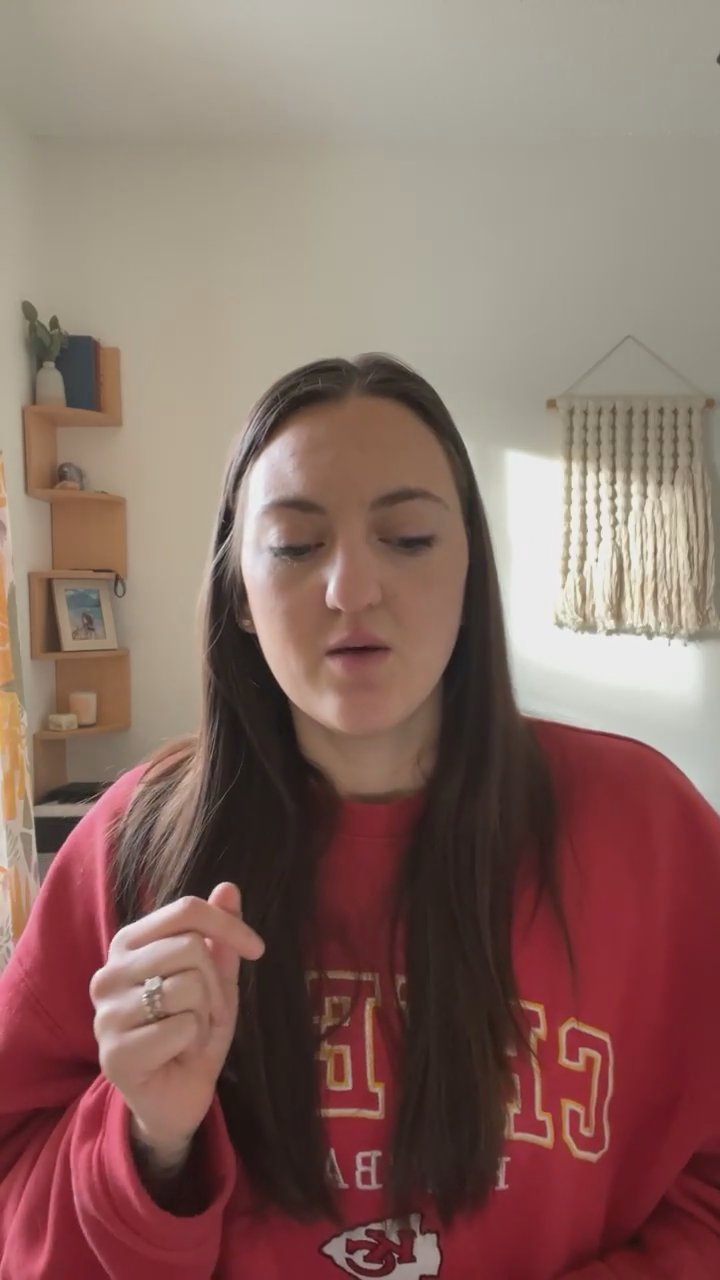
Right in the middle of the holiday season. Making food choices that honor your health and your taste buds. One of the biggest criticisms of intuitive eating is that it's all about eating whatever you want.
Good morning, Cadre. Happy Saturday. Right in the middle of the holiday season. I hope everyone's doing well and recovering from any sort of extravaganzas they've had over the last week.
Today we are at principle 10, which is gentle nutrition. Making food choices that honor your health and your taste buds. One of the biggest criticisms of intuitive eating is that it's all about eating whatever you want. If you're feeling like gentle nutrition is seeming like another set of rules, you're probably not ready.
One of my favorite things to do with clients is helping them to define what health means to them in all areas. Just because nutrition information exists somewhere does not mean that you have to or should integrate it for yourself.
Gentle nutrition is focused on addition rather than restriction. It allows for individual preferences. It is removing moral value, and it recognizes that nutrition is not the end all, be all of health.
Gentle nutrition is a challenging topic and for many, it takes a long time kind of existing in practicing this principle to begin to feel easy. The biggest positive that I see coming out of intuitive eating is that you are going to feel so much more solid in the decisions you're making when they're coming from you.
Speak Wonder. We've made it to Principle 10. We'll probably still continue to touch on intuitive eating topics. If there's any other topics that you are really interested in, let me know. I will see you in the new year 2025.
Good morning, Cadre. Happy Saturday. Happy. Right in the middle of the holiday season. I hope everyone's doing well and recovering from any sort of extravaganzas they've had over the last week. I'm guessing that it'll be a few less people this morning. Good morning, Jules. Happy Saturday. If you were here last week, you would know that today is the last day or last week of my. I think it's been 10 or 11 weeks now of going through the concept of intuitive eating and breaking down the principles one by one.
And that means today we are at principle 10, which is gentle nutrition. And you, if you've been following along, may have heard me talk about how a lot of these principles are kind of. There goes my light. Sad. A lot of these principles are kind of interchangeable. So we can go through these, you know, learning about honoring hunger and fullness and learning what feels good in your body. It doesn't have to be in order, but with gentle nutrition, things get a little bit more nuanced, a little more complicated, and it can be more helpful to kind of.
I don't have a good way to do this, so you're just gonna get me in bad lighting today. It can be more complicated if you haven't gone through the process of all of the other steps for first. So gentle nutrition is making food choices that honor your health and your taste buds. Good morning, Speak Wonder. Good morning, Rhonda. That's my mom. She's in the other room. Honoring your health and taste buds while making you feel good physically, mentally, emotionally, and practicing the concept and really trying to learn that it's not individual meals and individual foods that are going to impact your overall health and wellness.
It's what we are doing over time. So one of the biggest criticisms of intuitive eating is that it's all about just eating whatever you want, whenever you want. And because of that, you're never going to eat anything that has high nutrient density. Fruits and vegetables. People don't eat those when they're doing intuitive eating. And this principle really combats that, because this principle is where we start to learn and put into practice that the tongue or your taste. Hunger is not the only thing that we pay attention to, although it is a big piece of it, because a lot of people often ignore that.
So this is. This is that piece. Speak Wonder. I love the coffee emojis. I have mine right next to me. So why is it important to kind of work through some of these other principles first? Oftentimes, when people practice intuitive eating, you're coming from a history of eating disorder or disordered eating or just a really long history of chronic dieting. And it's hard to look at food with no judgment, with no shoulds. Right, I should do that. I should eat that. So going through specifically Principle 3, which is making peace with food, that principle where we are kind of challenging these external influences and the notion that, oh, there's good and bad foods and healthy and unhealthy, and if I eat this one thing, XYZ Principle 3 is really that one that's dedicated to removing the guilt and shame around eating.
Unless you've removed that and worked to process the guilt and the shame, it is very, very difficult to approach learning about nutrition science and, you know, health recommendations and using food in the management of certain diseases or diagnoses. It's very, very hard to do that from a very a neutral place if you haven't worked through the rest of it. So once you are working, you've worked through this kind of morality and gotten to a place of neutrality with food, then gentle nutrition can come in.
And if you're feeling like gentle nutrition and this concept is seeming more like another set of rules that is indicative that you are probably not ready for this principle. And we need to keep working on some of those earlier principles. So overall, gentle nutrition, we are coming into it with neutral, a neutral mindset. And we are beginning to honor not just our taste buds, but also how we feel physically. Something that is a phrase that the intuitive eating developers use is authentic health.
And it is the blending of your internal cues. So internal experiences, those are things like feelings, beliefs, physical sensations, hunger cues, that internal piece, blending it with the external sensations or external experiences, which is nutrition information, health recommendations, even things like philosophical values. So that could be, for example, if someone is following a vegan diet for ethical, philosophical reasons, that plays a role in our food choices. And that a piece that needs to be respected.
And with that, one of my favorite things to do with clients to help kind of put some guard rails on for figuring out how gentle nutrition shows up for them, is helping them to define what health means to them in all areas. So a while back I shared a really wonderful graphic that talks about the different sector sectors of health, physical, emotional, mental, social, spiritual. So going through that and defining what does health mean to me in each of those areas. And the wonderful thing about being an adult human is you get to decide.
And with that, that kind of becomes your anchor for blending those internal experiences and those external experiences and really honoring your individuality. So that is one really great practice. And if you've never done that before, I highly recommend it. It's also important to note, I think when it comes to gentle nutrition, that just because nutrition information exists somewhere does not mean that you have to or should integrate it for yourself. Um, so, for example, we know that there's a lot of nutritional benefits to incorporating omega 3 fatty acids in your diet in terms of inflammation, brain health, heart health, all the things.
If you are someone who hates fish, trying to then incorporate fish two to three times a week is not going to be very fun. And you don't have to. Right. We could do a supplement. We could talk about other omega 3 sources like flaxseed, chia seeds. So just because something does exist doesn't mean that you personally need to apply it to your own life. Yeah, that whole thing, I think, is just figuring out what health means to you and then deciding what you want to apply. And in that, honoring both the physical piece, the mental piece, the emotional piece, taste, hunger, and also how your body feels.
One of the biggest exercises for gentle nutrition, as written by, again, kind of the creators of intuitive eating, is a concept called food body choice congruence. And that is exploring how foods feel in your body so how eating a particular food or meal makes you feel physically. And this becomes data to inform future food choices. And I talked a little bit about that, I think 2ish weeks ago. If you were here for that, that piece comes back into the gentle nutrition sector as well. So what is gentle nutrition?
Gentle nutrition is eating enough. Baseline nutrition hierarchy, nutrition adequacy is at the bottom. So we're eating enough food to support our body's needs. Gentle nutrition is focused on addition rather than restriction. So how can I add things to my diet that would be supportive of my health rather than what are the things that I can cut out? Gentle nutrition is flexible. So you might go into a day having some sort of plan of I bought these groceries that I want to use and I was going to make this meal with this side.
Having flexibility and being able to notice in the moment, I don't want that at all. I instead I'm going to do something else that doesn't ruin your day. That flexibility piece is huge and it allows for individual differences. And what that means, if you're ever reading through the actual intuitive eating book, is that is pinpointing more like the genetic piece and individuality of, say, for example, you have high cholesterol and you are wanting to make choices that support that diagnosis. You might be Making choices that are different than someone else, practicing intuitive eating who doesn't have high cholesterol.
And that's okay. Gentle nutrition allows for individual preferences. So again, maybe you don't like fish, you don't have to eat fish. Someone else might be eating fish. You don't have to eat fish if you don't want to. It is autonomous. It is removing moral value, and it recognizes that nutrition is not the end all, be all of health. So much of wellness culture, so much of the online health and nutrition space, really emphasizes that nutrition is going to be the thing that changes your life. And it definitely can have huge impacts.
It can be utilized to manage different conditions. It is also connection. And it is not going to be the thing that makes or breaks your overall health. If you're doing all of the things, is it important? Yes. That's why I have a job. That's why dietitians exist. That's why we study nutrition. And there are so many other factors that play a role in our overall health and wellness that we also need to be considerate of. Things that gentle nutrition is not. It is not a diet. It is not a set of food rules.
Like I said earlier, if you're ever going through this practice and deciding, do I want to do intuitive eating, am I ready for this? If it's feeling like a diet, we're going to stay in the earlier principles. Because the entire purpose of this is really to take away any sort of emotion from it. That doesn't mean you can't enjoy food. That doesn't mean that food doesn't taste good. It doesn't mean you don't use food as a celebration or as kind of a centerpiece for getting together with your family on holidays.
But it means you're. You're able to make those decisions from a place of neutrality and without emotion, one way or another. So, yeah, that is my spiel for you this morning on gentle nutrition. Gentle nutrition is a challenging topic and for many, it takes a long time kind of existing in practicing this principle to begin to feel easy. So thank you all for joining me. Speak Wonder. This is so helpful and will really assist me in explaining my food choices to critics. Yes. And also you. I think this is, that's the biggest positive that I see coming out of intuitive eating and the people that I'm working with.
So Speak Wonder, is that you are going to feel so much more solid in the decisions you're making when they're coming from you. And those conversations are not as difficult. They can definitely still be kind of frustrating to, like, have to justify yourself. And you also don't need to do that if you don't want to. But I think that's a really good point that you're sharing. Is that when it's coming from me, when it's coming from a place and an understanding and a definition that I have made for myself, then that's a really easy conversation to have.
So I love it. Speak Wonder. We've made it. We've made it to Principle 10. So I'm not quite sure what the new year will bring. We'll probably still continue to touch on intuitive eating topics, because that's my jam. So if there's any other topics that you are really interested in. I really love diving into the science. So if there's specific medical conditions you want me to look into, if there's specific things that you've read on the Internet or just have questions about, I love. I love deep diving.
So let me know. Otherwise, thank you all for being here and I will see you in the new year 2025.