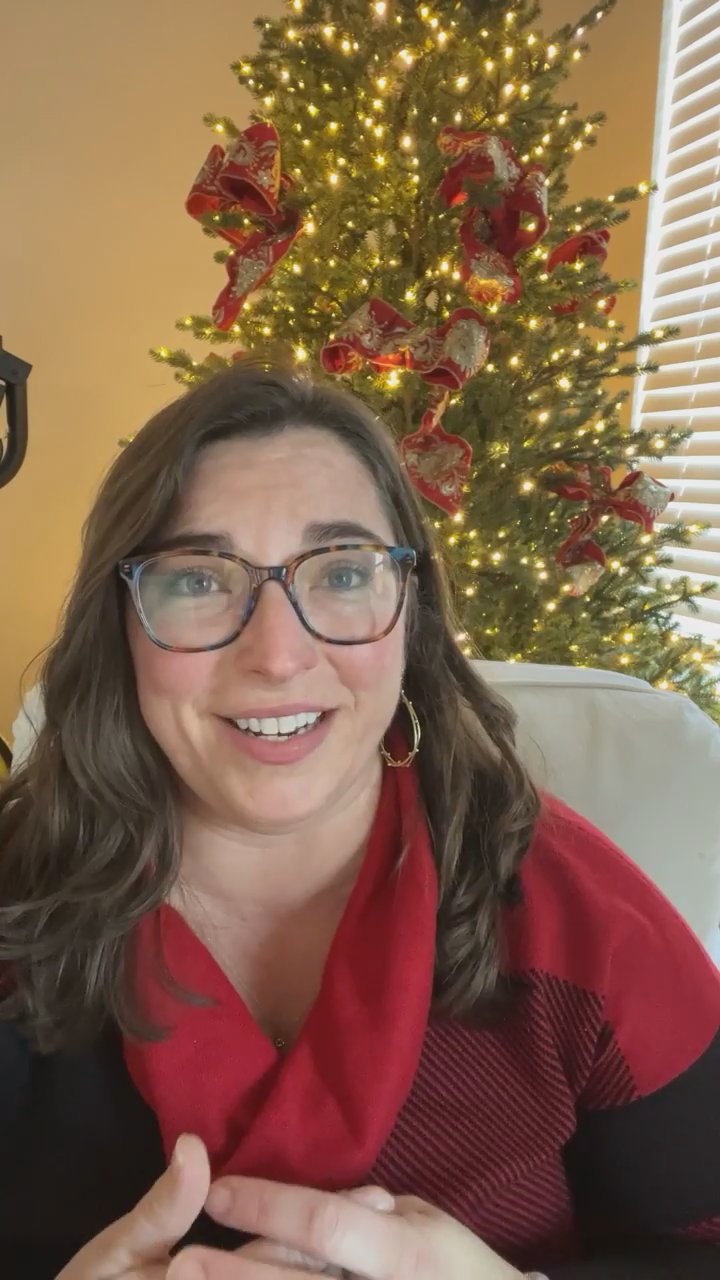
Steph Irwin is a mom of two neurodivergent children. She works for a nonprofit for children with cancer. She wants to talk to you about finding some peace during the holiday season. She has some great breathing techniques she wants to share with you.
Steph Irwin is a mom of two neurodivergent children. She works for a nonprofit for children with cancer. She wants to talk to you about finding some peace during the holiday season. She has some great breathing techniques she wants to share with you.
Robert Greene shares some of his favorite breathing techniques. Box bridge breathing is one of his favorites. Resonant breathing has been shown to maximize heart rate variability. Another one is the mindful sigh. These are tactics that I like to use.
Good morning, friends in the Cadre sphere. How are you guys doing today? Happy caregiver Thursday. I have my hug in a mug this morning. I hope you guys have yours. Something to warm yourself up, maybe something to sit back and enjoy and soak in a sense of peace right now in the busyness of the holiday season. For those of you I have not met yet, I am Steph Irwin. Good morning. Good to see you today. I am Steph Irwin. I am a mom of two wonderful neurodivergent children. My daughter was diagnosed with autism about this time last year, and so I am technically a caregiver for them and both of my kids and my.
My son has ADHD as well as my daughter. So we, we are just, you know, living the caregiver life here. I work for a nonprofit for children with cancer, facilitating programs for them both inside and outside of the hospital setting. And I've worked with hospitalized children for goodness over 16 years. And I want to talk to y'all a little bit today about finding some peace. And I know that we mentioned this last week and just the busyness of the season. Where can we find that little bit of peace? So today I have some great breathing techniques that I want to share with you guys.
And some of these are ones that I have used in the hospital working as a child life specialist. Some of these I just use use with myself to help give myself that sense of peace. I have tried with my children if I can get them to sit still long enough. So that is a work in progress because they are. They are both all over the place. So if you guys are willing to do some great breathing techniques with me, I would love that. And I feel like these can be helpful to a all of us caregivers for ourselves, for the people we care, for the people we work with.
And it's just something great to have in our toolbox to be able to pull out and use in those moments of stress when we need to find some peace. So I'm just going to share with you guys some of my favorites. I love, and some of you are probably really familiar with box bridge breathing. That is one of my favorites. It is just the easiest for my mind to go to because I can visualize the box when you do the breathing. But it can't hurt to be reminded because if you're anything like me, I tend to forget to do this for myself.
So it is always good to have a reminder. All right, you guys, so get in a comfortable position and I want you to take your finger and you follow it along in a box. In a box shape. So you're going to breathe up for four seconds. Good morning, Robert. Breathe up for four seconds. Hold your breath. Breathe out for four seconds. Out your mouth. Hold your breath. Breathe in for four seconds. Hold your breath for four. Breathe out for four. Hold your breath for four. Breathe in for four. Hold for four.
Out for four. Hold for four. Hi, Robert. And that is just a great thing that we can sit there and do in the middle of the day. And you don't necessarily have to draw the box, but you can just think it in your head while you're doing it. That is definitely one of my favorites. Another one that I like to do is just simply belly breathing and putting your hand on your stomach, just below your ribcage. I like to also put my other hand on my heart when I do it. And just slowly breathing and being aware of your breath filling up your belly as you breathe.
And that can really create a sense of calm and peace and as well, let's see. Resonant breathing. So this one has been shown to maximize your heart rate variability. So it's just steady breathing for six seconds in and six seconds out. And you're going to do about five breaths per minute when you do that. So, yeah, just six seconds in and six seconds out. All right, let's try it, you guys. All right, six seconds in. Okay, out. And you can keep repeating that. And over time, that is going to help with your heart rate variability.
Another one of my favorites is 478. I've been doing this one for a long time. Okay, so with this, you're going to breathe in for four seconds, and you hold it at the top for seven seconds, and then you're going to breathe out for eight. So, okay, let's practice. All right, Breathe in for four, hold for seven. Now breathe out your mouth for eight. And you can repeat that cycle throughout the day, just a few times, and just see what works best for your body and go from there. There's also lion's breath.
A lot of you probably are familiar with that. It is a breath that is often used yoga, where you're basically breathing in and then you breathe out with like a loud exhale. And you. I'm gonna do it on here. Okay, Breathe in, and then you're gonna breathe out like that with a loud exhale. It looks ridiculous, but feels good. It feels good after you do it. So that's another one. And I loved doing that with the children in the hospital because that to them, they thought it was hilarious, but in turn, it was calming them down.
And so both before and after and during procedures, we would do some of these breathing techniques and it really helped keep them calm and focused on their breathing and not necessarily on the stressor that was happening at the moment with them. So these are definitely tactics that I like to use. Another one is the mindful sigh. So you're going to breathe in your through your nose and you're going to hold for five seconds and then after that you take a quick one second inhale and hold for three more seconds.
And then you're just going to slowly exhale all of that out and repeat it three times. And when you do that quick second inhale, you are increasing the surface area of your lungs, which is going to help you release carbon dioxide more efficiently. When you do the long exhales, you're increasing the pressure receptors in your heart, which is going to signal the brain to slow down your heart rate. So I just, I love the neuroscience behind it. So it is definitely something that works for a lot of people.
And if you guys want to practice, we can do that too. So I want you guys to take a long, deep breath in through your nose and hold it for five seconds. You guys ready? Okay. Okay, now one more quick inhale for three. Okay, now breathe out and you can make a sigh sound if you would like for six seconds and then repeat that three times. And I can tell you that it helps me re regulate my nervous system and feel a little bit of peace and get ready for the day. So I hope you guys are able to use some of these great breathing techniques and incorporate them into your everyday life.
And I'm going to cheers you guys from my hug and a mug to yours. Happy caregiver Thursday. Take care.