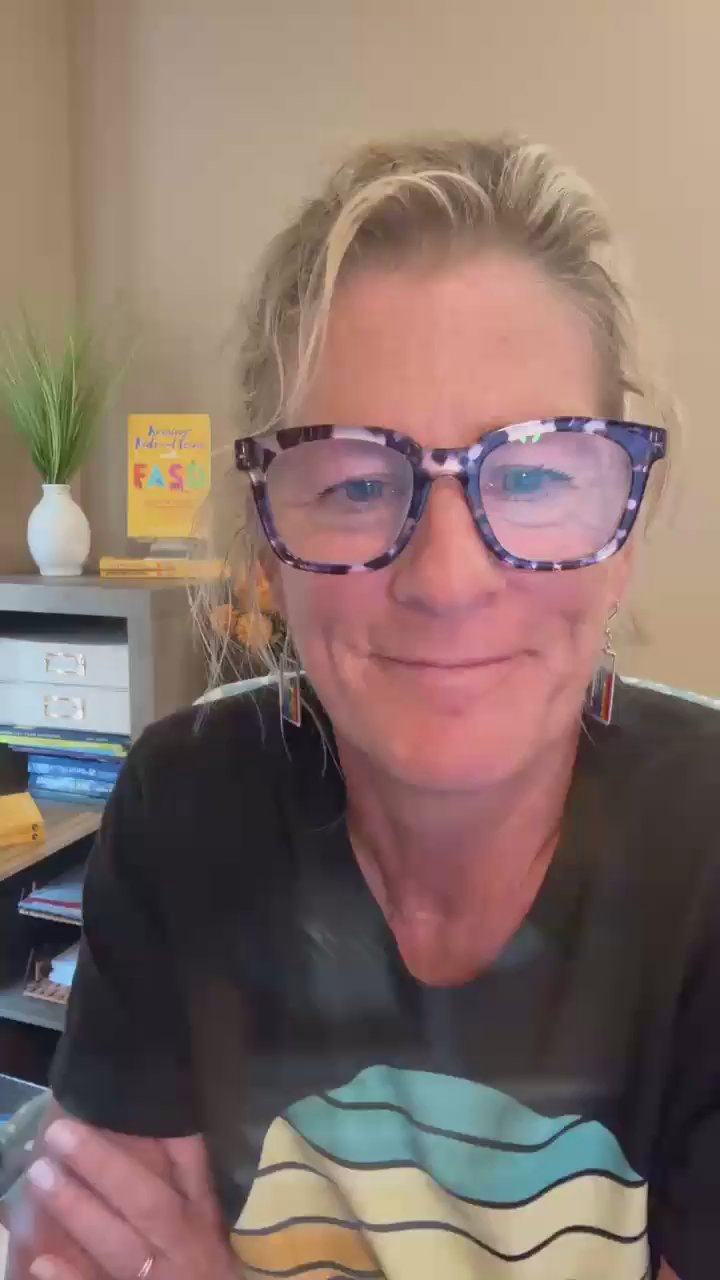
What if the behavior you’re struggling with isn’t defiance or poor choices, but the brain working differently? Join Barb Clark for FASD: Behind the Behavior. We’ll tackle lying, raging, impulsivity, anxiety, repeated mistakes, and “knowing better but not doing better.” You may walk away seeing behavior very differently. 1 out of 20 kids have a Fetal Alcohol Spectrum Disorder. Let’s dig in!
Barb opens the livestream, explains this is her first CADRE session, and introduces Fetal Alcohol Spectrum Disorders (FASD). She highlights repeated problematic behaviors as a common red flag and sets the episode's focus.
Barb describes being a parent, her children's ages, her daughter's early FASD diagnosis and her own later diagnosis, then reviews statistics showing FASD is common but often missed or misdiagnosed. This section establishes lived experience alongside epidemiology.
The speaker emphasizes that FASD affects people along a broad spectrum and can produce many types of challenging behaviors. She notes that impact varies widely, with some family members more affected than others.
Barb explains reasons prenatal alcohol exposure occurs — addiction, unplanned pregnancies, and bad medical advice — and pushes back strongly against shaming pregnant parents. She shares an anecdote about a friend whose son was diagnosed after a long wait, illustrating how exposure can be unintentional.
Barb describes her business FASD Mosaic, the book she wrote about raising kids with FASD, and her global training and speaking work. She gives viewers ways to follow her and signals ongoing public engagement.
Using personal stories — like throwing away her daughter's blanket and trying sticker charts — Barb explains how traditional punishment failed and ultimately led to the FASD diagnosis. She says reducing stress, shame, and lecturing helped support brain development more effectively than trying to 'fix' the child.
Barb mentions recent advocacy work and FASD Awareness Month, previews future content on symptoms and practical strategies (including her focus areas like lying and stealing), and closes by sharing her mission to help others avoid the mistakes she made.
Hi everybody. I'm so excited to be doing this today. This is my first live stream with CADRE ever. Ever, isn't that cool? So my name is Barb Clark and I am here to talk with you guys. I'm gonna be talking a lot about behaviors and in particular around, sometimes around parenting and behaviors. But the kind of the focus that I'm gonna be talking about often with behaviors is around FASD, which stands for Fetal Alcohol Spectrum Disorders. And so this is a very, very common diagnosis in the United States and actually around the world when diagnosed properly, but the majority of the time it's a diagnosis that is missed.
So what I'm going to talk about a little bit here today is when we have kids who are adults, anybody of any age, basically, who keeps doing things that is getting them in trouble, things that they shouldn't be doing and they're not learning a lesson, but they keep doing and repeating the same behavior over and over. That is one of the kind of common red flags or hallmark symptoms that we see with fetal alcohol spectrum disorder. I am a parent. A little bit about myself here. I have five young adult kids.
They are basically 25. Wait, 24, 25, 26, 27, and 27. And my oldest daughter, whose name is Akilah, who, by the way, gives me permission to share stories and to talk about her. She was diagnosed, what, 21 years ago? I'm not a good math She's 27. She was diagnosed at age six with an FASD. I also was diagnosed with an FASD, a fetal alcohol spectrum disorder, about a year and a half ago when I was 56 years of age. And so this is one of the most common disabilities out there in the world. It's much more common than autism even.
Autism currently is about one out of 31 in our population here in the US and FASD when diagnosed properly is one out of 20. But most of the time the diagnosis is missed and most individuals with an FASD are misdiagnosed with things like ADHD. Sometimes autism is the misdiagnosis for that. Sometimes it's oppositional defiance disorder, sometimes it's disruptive mood disorder. We can see a lot of kind of unique behaviors that can come along with FASD. Now that's the bizarre thing about it though, is it is a huge spectrum in how it impacts people.
So there are kiddos like my daughter who was impacted in a more kind of profound way than I was. I have, I'll be, you know, As I'm doing all of these lives and streaming on this, I'll be sharing both of our journey and how it impacts us differently. But one of the things I do want to say about this, first of all, is one of the things we love to do is throw shame on the pregnant parent. And we don't want to do that. Let's please stop doing that. I owe people say that stuff to me all the time. No pregnant parent ever does this intentionally.
Did you hear me? It's never intentional. It is either somebody struggling with a substance use disorder and being pregnant is not going to be enough to stop that addiction for everybody. Or it's somebody that had an unplanned pregnancy. In the US, about 50% of pregnancies are unplanned. And so that happens quite often. I have a good friend I've just become friends with here in the last year and a half or so. And I kind of met her through an appointment I was at here in the town I live in Florida.
I'm A Minnesotan. Don't you know who moved to Florida four years ago? I got really sick of the winters. But I still work full time, as does my husband. Anyways, I met this woman and she had a nine year old son who's having some really hard behaviors, behaviors that I have dealt with in my own family. And I was like, you know, I kind of specialize in this, right? So we had lunch and, you know, as I'm talking with her and telling her about my journey, she says, you know, I said to her, well, how far along were you when you knew that you were pregnant?
She's a single parent. And she said, oh, I was five months before I knew I was pregnant and I was living in a different country and I was partying hard. And I was like, okay, so I think I might know what's going on with your kiddo. I am not a diagnostic person, but let's, you know. And she just went through the diagnostics. Well, her son did. I went with her. to a diagnostic clinic. We had to wait on a wait list for quite a while and he was diagnosed with it. Now, she didn't do this intentionally, right?
It was completely unintentional, but we love to look at people like her and just throw shame on them. The other time that this can happen is when people have the wrong information that it's okay to use alcohol during pregnancy, which it is not. There are still OBGYNs and other professionals out there saying that light or moderate drinking is not going to have an impact and they are dead wrong, dead wrong. Do not listen to those people. They are looking at old faulty research. And so anyways, we're just going to be diving into FASD on all of these different streams that I'm going to be doing.
I'm really, really excited about this opportunity because I one of the so what I do now professionally, by the way, I forgot to say that. is I have my own business called FASD Mosaic. And I wrote a book. You can see it over my shoulder here, right? But I wrote a book called Raising Kids and Teens with FASD. And what I do now is I train, I speak, I present, and I coach on FASD all around the world. Actually, I get to go to Germany in June. I'm going to be probably going to Ireland, I think, and I'm going to Canada next month.
That's pretty exciting, right? Good old Canada. I love Canadians. Anyway, so this is what I do full time now. I train, speak. I do it in person. I do it virtually. You can follow me on my socials that are listed in the bio and stuff like that. But I just realized in our journey with our daughter, when my husband and I were screwing up everything. We sucked really bad. We were not parenting her the way that we really needed to be. And we were using traditional parenting strategies, right? Almost everybody that's maybe watching this, whether live or on recording, were parented with typical punitive consequence logic-based strategies.
That is how the world, almost everybody in the world parents. And that did not work for our daughter. We could punish her. We could take everything we wanted away from her. And I always share this story of how when she was six, we threw her blankie away trying to teach her to stop stealing. Our first memory of her stealing was when she was two in our church nursery, typical developmental stage for a toddler. Anyways, we punished her. It didn't work. Four years later, she's stealing up the wazoo everywhere all the time.
but it was you know and nothing was working and we had tried everything every version of sticker charts which make me want to puke by the way not a huge fan of the token economy system not a big fan of that so anyways which is what a sticker chart is so That was how we finally realized after we threw her blankie away and the fact that did not get her to stop stealing, that's when we realized, oh, something's different here. There's something really off. And that was what led us to an FASD diagnosis for her.
But even after she was diagnosed, we kept trying to punish and shame. We were really good at shaming too. We kept trying to do all of these different things like that to get her to stop some of these challenging behaviors that we were dealing with. And so after many more years of frustration and challenging behaviors, we finally realized that we were the problem, my husband and I, and that we weren't going to be able to change her brain by using a medication or by a specific therapy. And I am not anti-meds.
I am not anti-therapy. I'm just saying we were hyper focused on fixing her instead of realizing that her brain would actually start to grow better and develop better if we could reduce the stress and the anxiety and the shaming and all of the fighting and lecturing and all the ridiculous BS that we started to deal with all the time. So anyways, that's the kind of stuff that we're going to be diving into. I just actually, I just got back from Washington DC last week. It was FASD United, the national org.
It was their national impact week because September is FASD Awareness Month. and I'm just catching a breath from that's a really busy month. But this woman who I was there with, who I even shared a hotel room with, I've known her for several years, and she just texted me this morning. She's like, I just spent the weekend with my siblings and my mother, and I learned that I was prenatally exposed to alcohol. And I'm like, oh, it all makes so much sense now. And she's talking about her various siblings and the different impact, and I can see the same thing with my own siblings too.
So anyways, it's just that we're going to be talking. We're going to be talking symptomology. We're going to be talking about the biggest thing that I love to focus on is strategies. It's going to take me a little bit of time to dive too deeply into that. But one of the biggest things we have to remember with if you've got anybody in your life who just keeps having these really hard behaviors and keeps repeating behaviors or things that were getting them in trouble and haven't really learned from the consequences they've experienced in life, there's probably a brain difference going on.
It's not neurotypical to keep doing the same thing over and over that gets you into trouble. And so that's the stuff we're going to be diving into. Some of my specialty areas, I joke about this when I was just doing a keynote a few weeks ago and it was the big joke. I'm like, I'm a specialist in raging lying and stealing. And I was like, not that I do those behaviors anymore at least. No, I didn't have huge behaviors with some of those kind of things, but my daughter sure does. And so yeah, I'm really excited to be joining the CADRE Network and to be sharing what I've learned the hard way.
My goal in life, my professional goal and personal goal is to help everybody not screw up as much as I did and my husband even more. He probably screwed up more than me. I'm kidding. No, it's probably both of us. He was pretty equal. So thanks for watching. Thanks for joining today. And I look forward to hanging out with you guys more in the future. Take care.