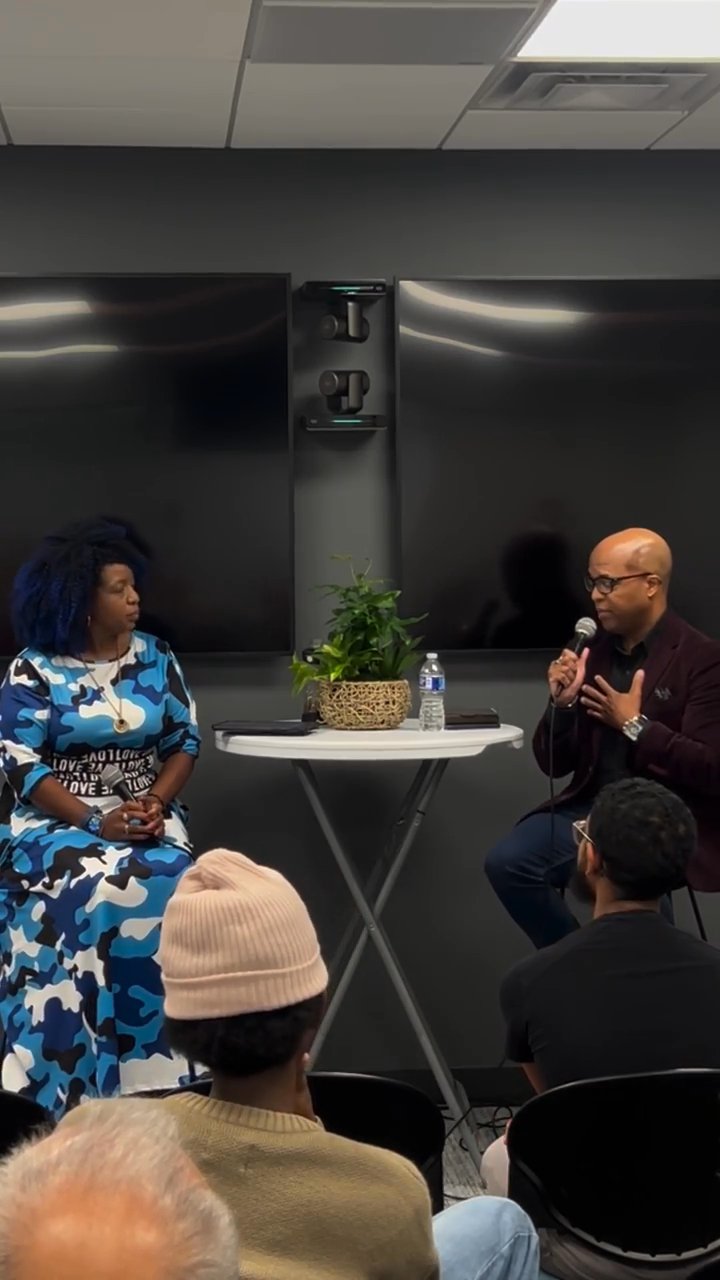
Join Miss Shannan Paul and former Minneapolis Chief of Police Medaria Arredondo for a conversation on creating employee safety at work and everywhere in between. From the Cadre Live Event 'Cracking the Code: Why Emotional Safety is the Crux of Employee Wellbeing' on 10/24/24, presented by TurnSignl and hosted by Holmes Murphy.
Chief: I feel like some of that has been lost. We have to continue to make sure that we're having that consistent relationship. Particularly at young age, our young people are so important. How do we continue that educational process?
Chief: How do we attract the right people for these positions and understand that as well? I sat in on every individual interview. Everyone that wanted to come through that door to wear a uniform, I interviewed. It's important again as leaders to make sure that you're there.
As you talked about systemic, and we brought this up in a previous Cadre event that was talking about neurodiversity. How are they still impacted by some of those systemic problems that we've had for so long? And how can we, once we see them, address them?
Cadre: It's about being able to social, emotionally, socially, emotionally meet in a place to get to a conversation about a positive outcome. How do you get organizations to pay for that? Cadre: There's a stigma associated with people with trauma and depression.
But one of the things I would implement right away is a. The checkup for the neck up. The other thing I would look at is, you know, making sure our people and their families have access to therapists and counselors. And then lastly, when anybody asks me who's the best chief, I would say the next one.
So, Chief, I remember. Did you say Rondo? Okay, sorry. Rondo. Rondo. I do want to go back about a decade and I remember I used to be on the board for the Minneapolis Police Activities League. And one of the things that I enjoyed about being on that board is that conversation of encouraging the community to get to know law enforcement, but also getting law enforcement to understand the community for from a very young age and providing that as an opportunity to grow together. And unfortunately, I feel like some of that has been lost.
You know, and the conversation that we're having today about figuring out a way that we can work together to provide that idea of safety through your experience, and I know you spoke about this a lot and I will see you on the news all the time talking about how can we continue to get the communities to work together. Can you give us a little idea of why you think there may be a disconnect right now so we can start addressing how to bring that connection back? Well, that's a great question. And so one of the things I think that historically happens, and you mentioned this when you were having your comments about, oftentimes we're reactionary.
As communities, we show up any moment. As a matter of fact, sometimes we have issues that come up. We oftentimes ask ourselves, you know, is this a movement or a moment? Yes. And so we have to continue to make sure that we're having that consistent relationship. Organizations such as police departments, we have to make sure that we're meeting our communities in those spaces. But it has to be consistent and the leadership has to make that very consistent. In my, in my previous role, communities often ask me, don't tell me who you are, show me your budget.
The things that we value is important, those relationships, whether it's police activities, league or other things, we have to really make that commitment in terms of making sure. Particularly at young age. I just met this Hamza. I mean, our young people are so important. It was not lost on me. When bad incidents happen. I was never worried about 70 year olds taken to the streets. It's our young people who are looking at their future. If they're seeing that hope is robbed from them, they're going to express in some way.
And so those relationships are going to be very important for leadership to do. Well. How did we get to the point? I mean, as someone who works in a variety of communities that have a great deal of anxiety with their interactions with law enforcement, and for a variety of reasons, it might be a direct connection that they've had, but it also Might be a third or second connection that they've had where somebody that they knew happened or something happened to somebody in their family. How do we continue that educational process?
Not, you know, on both sides of the conversation so that people do feel more safe. Like, I, you know, I, you know, I'll be fully transparent. And I've mentioned this to Sheriff Witt, too, that there's been situations where I've gone, you know, the last person I'm gonna call is law enforcement kind of thing. I'll call my cousin. I'll call, you know, somebody else in my system because I'm worried about infusing that into the situation. How do we help our communities go. Law enforcement is there to protect and serve all people.
Yeah. So one of the things that I'm a big believer in history, both from a personal standpoint and a professional standpoint. So when I was chief, I didn't keep a whole lot of trinkets in my office. But the one portrait I had right behind my desk was a portrait that had 12 Minneapolis police officers, circa 1898. And there were 16 officers, eight standing and eight seated. The only person who was African American was a gentleman who was seated at the right, and his name was Henry G. Thompson. When Henry G.
Thompson served on the Minneapolis Police Department, he was not allowed to arrest white people. When Henry G. Thompson served as a Minneapolis police officer back in 1898, he was probably not even allowed to go through City Hall. And I kept his portrait there. And I would. Anytime I felt that I was challenged or had a bad day, I would turn around and go, you know what? It ain't that bad. It ain't that bad. But Henry G. Thompson, and I believe, my ancestors believe that one day someone who looks like me is going to be occupied City hall in that seat.
That's one piece of the history. Now, I also there. There was a time when I had my command team in an office, and I reminded them about another piece of history. Anyone know about Arthur and Edith Lee of Minneapolis? So my command team didn't either. In the summer, June of 1931, Arthur Lee was a black man. He had served in World War I, served over in Europe. He comes back to Minneapolis. He gets a postal job. He marries his sweetheart Edith, and they have a little girl named Mary. Arthur had the audacity to decide he wanted to buy a house at the corner of 4600 Columbus after himself.
And he did buy it. And for three days and nights, a white mob of hundreds confronted him and his family. There was Even a person who sold ice cream to the mob. It was an Irish immigrant, Chief of Police White, who directed his officers to protect the leaves. White officers were actually attacked by that mob. My command team didn't know that history is later, just like all of us are. Right. And so I tried to remind that we have to accept all of it. You know, we're all imperfect. We all are broken in certain areas.
But that history is important because we need to move forward, but we need to remember where we were. I often would tell our officers, sometimes people will confront you and say things about you, but they're doing it from the neck down. They don't know you here, but that uniform has represented, unfortunately, something negative to them. A relative or what have you. But we have to build those relationships. We have to meet people where they are. We have to have thick skin too. We have to hear that.
Right. We can't. We can't dismiss the history. But I believe there's space for us to build those relationships. And you gotta work hard. And again, that can't be momentary either. Right. You have to continue to work with that. Right. And I know that there were a variety of conversations on how do we again, appropriately fund any of these conversations. I think we have, it's about funding good people in good positions, but then having enough power that if somebody sucks, we get to fire them like in every other job.
So how do we continue to have those conversations in all of these spaces? Because it seems like we have such a lack of diversity that sometimes if it's the wrong person in the job, we kind of can't fire them. You can't fire them something because there's not a coalition. There's not that. How do we attract the right people for these positions and understand that as well? Yeah. So two things I did. That's a very great question. So two things I did when I was in my role as chief. One is the first thing I did when I came in, our HR team came to me and they said, rondo, the RFP for the pre employment psychologist contract is up.
Don't worry about it. We've handled it for all the other chiefs. We're going to take care of it. I said, no, no, that's very critical to the type of individuals. I believe. I believe it's a service, and I believe service is love. And I was so proud to serve the community as a kid growing up in Minneapolis. That gave so much to me that pre employment psychologist has said, no, I'm going to be a part of that. Process. I said, I also want that pre employment, the folks who are going to be putting in their request, they need to know about what procedural justice is.
They need to know about cultural competency, they need to know these things. And so I sat in on those and ultimately ended up hiring our current pre employment psychologist now, Dr. Jan Tyson Roberts. Also, I sat in on every individual interview. So everyone that wanted to come through that door to wear a uniform, I interviewed. I cleared my calendar. That was so critically important. I will also say what that also did for me. I remember one gentleman came in and we had a nice interview and he said, the chief, I want you to just know this here.
Every other time I tried to apply the background people, they dismiss me. And I said, can you explain more about that? He says, well, I'm originally from Philadelphia. And he says, I've got an older brother who lives with my mom. We were living in Philadelphia. He's not into some good things. So every time he'd call 911, the police would come there, but they would just flag the address and they saw that I lived there and they would ask me out. Had I not been in that conversation to ask that follow up question, I would have lost a good candidate.
Right. And so it's important again, as leaders to make sure that you're there, that that means something to you because it's your organization. Right. As you talked about systemic, and we brought this up in a previous Cadre event that we had that was talking about neurodiversity. And I appreciate what you brought up about how is the process still being the process of hiring and finding how these positions are, you know, in these cultures are built, how are they still impacted by some of those systemic problems that we've had for so long?
And how can we, once we see them, address them. And then I'll come to you, Shannon. Yeah, they're there. And I will just tell you from my experience, you have to, you have to put up the fight. And you know, I had a, and I'm four unions, but I had a very difficult union agree to deal with. But I would rather on principle bring the fight and let a judge tell me, no, Rondo, you got to bring that person back. I'd rather do that, but I've got to have the fight. Because every organization's culture is shaped by the worst behaviors.
Its leaders got intolerant. Fair enough. It's true, it's true. So you have to bring that fight because if you don't, people are watching you. Yes, people are watching You. And if your word doesn't mean anything, it's done. Right. Thank you. Yes, Shannon. And back to the. Can we please just stand up and project a little bit? Yeah, yeah. Okay. So in everything you shared Bugatti, and then when you're sharing that Rondo, there is sort of this piece like, when we get to institutions, there's a lot of us versus them.
And that's not what you all are saying. And that. But that's like, the truth, I feel, is like, there is that, right? There's people on two sides. So when you think about access to resources. And I think. And I already forgot the thing that I was going to point to as the example, but we talked about, like, at the end of the day, it's about being able to social, emotionally, socially, emotionally meet in a place to get to a conversation about a positive outcome, Right? So a lot of it comes down to the ability to clearly communicate with one another to improve whatever you're seeking to improve.
So how do you get an organization to, like, in my mind, I'm like, everyone just got some social, emotional training on both sides, right? Like, it is just like, hey, how can we communicate? So how do you get organizations to pay for that? How do you get governments to stop down for that? Like you just said, it took you in that interview process to like, hey, I'm going to raise my hand and sit in every single one of these interviews. How can we systematically build that in? And is there a spot for that that you see?
Yeah, that's a great. That's a great question. So one of the things that I found to be true in my space in leading the organization, it's not something that I like, but it's reality. It's the bottom line. So, for example, the number of shootings in the city is also a public health crisis. And. But that was falling on deaf ears. But one day I went to the people that see it firsthand up in close, and I went to our HCMC trauma center and I spoke to the ER nurses and those folks that are going to deal with that patient the first time they walked through that lobby.
And by the way, one of the best pieces of advice I got was from a CEO at one of our local hospitals. And she told me, ron, if you ever want to get snapshot of our community, our city, spend an hour in ER lobby. Truly. But I was able to get from them what the cost is for treating a gunshot wound victim. It's astronomical. That's if they survive. It's astronomical. And when we started to look at what that cost taxpayers, what that looks to cost city governments and legisl. Then they listened. Then they listen.
And so sometimes you have to direct your. You know, there's a cost to things. And sometimes that's the only thing people recognize and see. So that was one lane that I tried to move that in. Do you think follow up. Do you think social, emotional, in quotes and putting it in quotes? Because a lot of people put it in quotes. Do you think people want to pay for that, though? I feel like companies don't want to pay for that. Like it's soft. Yeah. So the other thing is you have to also be very creative in terms of making sure that it lands on their doorstep.
Oftentimes, people, we live territorial. If I don't think I'm experiencing it or I'm not seeing it, but when I was able to bring what that cost in terms of taxpayer dollars, well, people. People woke up. Yeah. So when we're trying to support people in general, a lot of the country conversation we had Cadre is about mental wellness, mental health, mental illness, those things. How do we continue to support not only our community members, but our staff? Because that seems like something that would be a very big component of being able to appropriately be law enforcement and work on those things.
Do you feel like you get enough support in general for that as well? I think it's getting better. I will tell you that. In my industry, it was not good at all. The number of. We called it invisible injuries, but the number of people, men and women, that took their own lives, it's not talked about. The other thing is there's a stigma associated, particularly with people in service, with trauma, with depression. Which stigma do you mean? A stigma that it's there or a stigma that you don't talk about if you don't address it?
Okay, both. The stigma that. That you don't talk about. And so I remember there was two incidents that occurred, and one of those involved, we lost an officer who took his own life. But I remember going before the city council and saying, we have to do something different. We need resources. First of all, it took me as a leader to say the words trauma. The first time I ever spoke with a psychologist was getting hired. Yes. That was the only time I spoke with. And to think that you can go through a career experiencing the things you see when you're meeting people at the worst moments and that doesn't impact you.
You're kidding yourself. And so we talked about having mindfulness training. We talked about people Coming in, talking about things such as your nutrition, a big one is sleep deprivation. Sleep deprivation is huge and all of us are victims to that. So we have to talk about, we have to name it. And that's why I'm so happy that Cadre is doing the work that they're doing. But I also say too, our families go on this journey with us too. Right. And they're also impacted by that residual trauma as well.
Because my experience when I, you know, again, talking to the officers on, when we were working on the police Activities League is that seen people seem so tightly struck and so taught that it was visible, very difficult to go well, how do you have time to protect and serve when you really have, you barely have enough time to react. So you get in that, that, that response. So how would you remantle your industry to be able to support them better? And do you think that that would make it be a more sought after position and people knew that they were supported in that way.
Is that something that in addition to giving just higher salaries and was, yes, we'll pay you a wage, that makes sense, but we'll also supply these supports that might make you be a better, fully functioning human being so that you're not so emotionally stressed out. Do you think that that would be a value for your industry? Absolutely. Value. And I want to be very clear. There is going to be inherent challenges that come with that profession, with any service response profession. But one of the things I would implement right away is a.
The checkup for the neck up. Yeah, that should be regular. The other thing I would look at is, you know, making sure our people and their families have access to therapists and counselors, those types of things. The other thing is as a leader, making sure that their time is limited, meaning that they need, okay, you've got a 10 hour shift, that's it. We, we can't have you working extra, extra, extra, extra. That's a recipe for bad things to happen as well. Because I don't want your officers taking this home to their families.
Absolutely. So those are some of the things. And just again talking about it, making sure that there's no stigma attached to it, none of us have an S on our chest and these things occur. And when we suffer from trauma or mental health issues, that, that doesn't mean we're defective. Right. We can all experience that, but we've got to make sure we provide the best tools and resources for our folks as we can. Right. Well, I know that you've transitioned into this wonderful consulting world but do they still call you every once in a while?
And you go, and you go, here's how I would suggest that you handle this. And they left them to their own device. So when the current, you know, like, I did enough press conferences. 60 minutes, I'm done. So. So two things I told the current Chief, Chief Brian O'Hara, when he got into town. The first thing I told him when I met with him, I said to him and Shannon, I said, one, I said, I apologize. And he looked at me, he said, why are you saying you're sorry? I said, because inevitably you were going to go home to your significant other and you are going to cuss me out to knowing all the things you had to inherit from me.
And that happens in leadership transitions. But the second thing I told him, as I said, you will never hear me comment publicly about any decision you make, because I've sat in that chair and I understand the gravity of the situation, particularly if you don't have all the information. So that's kind of an unwritten rule. But. And then lastly, when anybody asks me who's the best chief, I would say the next one, thank you.