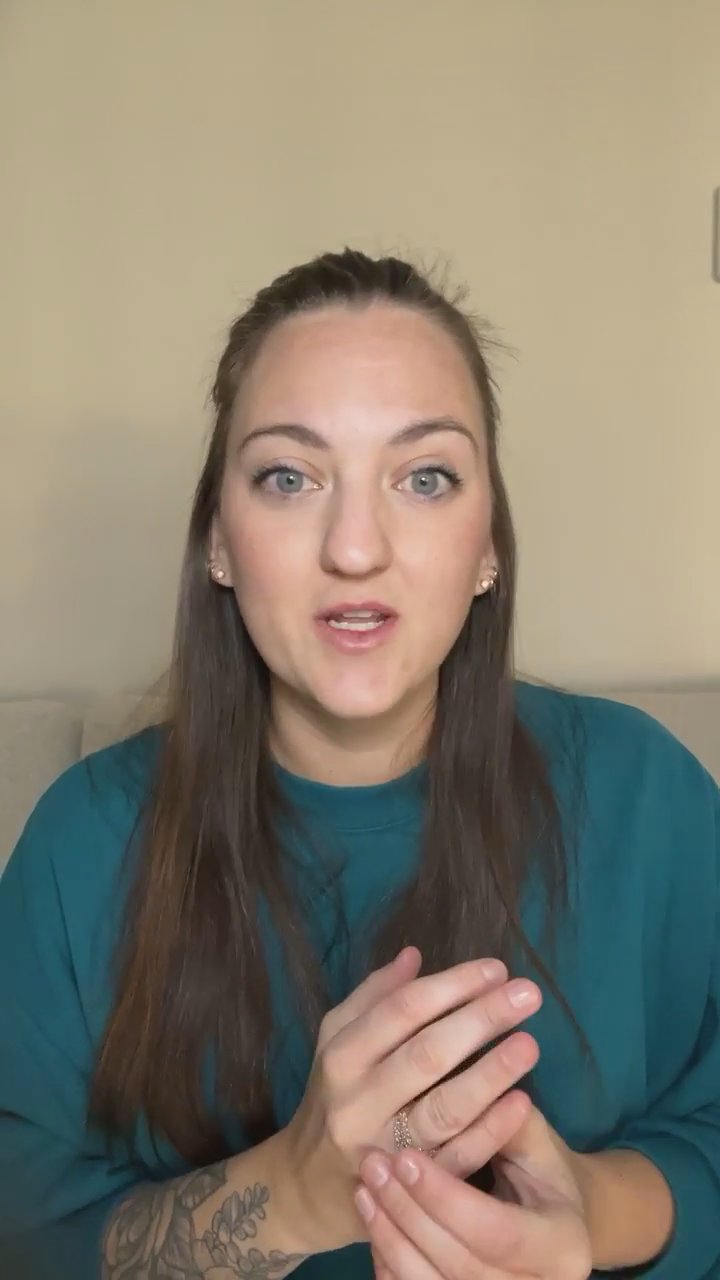
This can cause rapid eating, overeating, eating past comfort eating. She says learning to differentiate between physical and emotional hunger can be helpful.
Today we are going to be talking about principle two of intuitive eating, which is honoring your hunger. My question for you all this morning is what is your favorite warm beverage now that it's getting colder outside? Mine is homemade hot chocolate.
Last week we talked about rejecting the diet mentality. This week we'll dive into honoring your hunger. Hunger is a biological signal that our bodies have. When we ignore hunger for too long, it turns into primal hunger. This can cause rapid eating, overeating, eating past comfort eating.
Jules: The third thing I usually recommend is learning about the different types of hunger. She says learning to differentiate between physical and emotional hunger can be helpful. Next week I'll be back with Principle three, and we'll just keep on grinding through them.
Good morning, Cadre. Happy Saturday. Happy six weeks to the new year. I hope everyone's doing well. Today we are going to be talking about principle two of intuitive eating, which is honoring your hunger. And I've briefly touched on this before, but in the spirit of going through all 10 principles of intuitive eating, we're back at it. So let's see. Good morning. Morning, Jules. Hello. Hello. Okay, cool. Trying to think of what I want my fun question to be today. I haven't been doing them, but I think it's.
I really enjoy it. I enjoy getting to know you guys a little bit more. Oh, my dog is joining me. My question for you all this morning is what is your favorite warm beverage now that it's getting colder outside? Mine is homemade hot chocolate for sure. Yeah, share that with me because I'm curious and I love inspiration, and I'm going to dive into honoring your hunger. What does that mean? Why does it matter? All the things. So if you're new here, we've been talking about the principles of intuitive eating, which is a framework to disconnect from external in external pressures and instead reconnect back with your body when it comes to eating.
And so last week we talked about principle one, which is rejecting the diet mentality, because diet culture plays a big role in kind of disrupting intuition and self trust. And that theme will carry on this week. Good morning. Good morning. Homemade hot chocolate. See, Jules, it's a great, great option. So honor your hunger. And if you see me looking down, I have my notes. I don't want to miss anything. Hunger is a biological signal that our bodies have because we need food to function, we need fuel to survive.
And when it comes to the sensation of hunger, oftentimes in our culture, it's looked at as a bad thing. That hunger should either be ignored or that we should be hungry all the time. And that in addition to what I mentioned last week about diet culture really plays a role in disconnecting us from our bodies and our hunger and disrupting that self trust both around food and also our bodies. When we ignore hunger for too long, it's. It turns into what the creators of this framework call primal hunger.
And that is really that biological drive to eat again, biological process. And it almost always will cause really rapid eating, overeating, eating past comfort eating, even in people who are not dieting or not trying to restrict. And a lot of times, our food choices will look a little bit differently when we're in that primal hunger state, because we need fuel that is easy and accessible Right. So you think about, like, more sugary items. Glucose is our body's preferred source of fuel. It's when we're eating something that's as close to that as possible, we're gonna get the energy quicker versus eating something with, you know, a plate of a balanced meal that's got protein and fiber, that's gonna slow all of that down.
Your body's just looking for fuel. So even when we don't try to restrict, if we let ourselves get too hungry, that can happen. One of the. I guess the landmark study that a lot of our research on this is based around is something called the Minnesota Starvation Experiment. And if you're not familiar with it, it's a very interesting study. It was done on conscientious objectors of World War II, and they were studying how famine would affect the people affected by this war. So they implemented a calorie deficit, studied them for six months, and then re upped calorie intake into different categories and basically studied what happened.
And what they found was metabolic rate decreased by 40%. There was an increase in food obsession, increase in GI distress. That's something I hear a lot from clients that I work with, and I work with eating disorders and disordered eating, because when we're not eating enough, those processes don't have enough energy to be functioning right. We don't produce as many enzymes. We just don't digest as well. So you have an increase in GI Distress, increase in apathy, irritability, depression, isolation, and social withdrawal.
So all of those things were things that were observed in these men even months after the refeeding process had occurred. The reason I bring this up is because this really illustrates the biological effects of consistent under eating and restriction and not honoring your hunger. Another way that I like to kind of help people visualize this is like going to the bathroom, right? If you really have to go to the bathroom and you're trying to hold it, hold it, hold it. Like, eventually that's not gonna work.
Like, your mental willpower is not going to outweigh the biological drive and need. And most people honor that. So it's a. I think a good parallel to eating. Your mental willpower is not going to outweigh the biological drive and those effects on your body. Another experience I see often with chronic dieting is ignoring hunger cues consistently and over time leads to. Can lead to equating any amount of hunger with being ravenous. So any inkling of the stomach growl or, you know, food, even food just looking good, is equated to Being ravenous and eating anything then becomes eating too much.
And this just can again continue to kind of perpetuate the distrust around food and your body, because then hunger can't be trusted and your body that's producing hunger can't be trusted. And so we continue to kind of break down that relationship we have with our physical self. So what does all of that mean? What does that actually look like in practice? For the people that I work with, the most helpful tip to start with that I found is starting by exploring how hunger shows up for you. Because we all notice it a little bit differently and, and doing this in a very non judgmental way, right?
So for some people, it's that classic stomach growling, and that is the first sign or maybe like the most distinct sign. But hunger shows up in many different ways. It can be irritability, that hangry that, that we all joke about. It can be sleepiness. It could be even like apathy, right? Just like no motivation to do anything, struggling to focus on work, brain fog, which is thrown out there a lot as well, or just like cloudy thinking, lightheadedness, dizziness, difficulty concentrating, all of those things.
So starting with exploring how hunger shows up for you personally and then beginning to notice when those things are happening. You know, maybe you're experiencing that afternoon slump every Single day at 3pm could be hunger. Especially if maybe your lunch is at 11, that's four hours, your energy is dwindling. So what might it look like if then we honor that hunger and add in a snack, how does that affect your productivity or focus the rest of the day at work? Second, beginning to notice how. And this kind of goes along with what I'm saying.
Certain meals or foods impact your hunger. So if you eat lunch and notice one day you're not hungry for three or four hours, but the next day you're hungry after an hour, what might you do differently? Would you do anything differently? Again, really just exploring and being curious with yourself and noticing, putting, you know, phone down, laptop away for a second, and just checking in with your body, seeing what you notice. The third thing that falls under this, and then also one of the other principles later on, is beginning to identify the different types of hunger.
Jules? I find my tummy growls a lot in the afternoon, but I physically don't feel hungry. Is it like pain, like hunger pains, or is it like small intestine digestion, like gurgly? I think that can sometimes be helpful. And also, you know, I would ask Jules, what does it feel like if you do incorporate a Snack in the afternoon, you know, does that go away? Is it maybe hungry and it's just not registering as hunger and maybe it is just digestion. That happens too. But I think that's a really great example of leaning in and being curious with is it hunger?
What, what does it feel like if I do make a different choice one day? Maybe one day I have an apple and peanut butter as a snack. Maybe one day I move dinner a little bit earlier and just playing around with, is this actually hunger? Is this something that my body's needing? Or I can hear and feel it growling? Yeah. So I would get curious and maybe have a little snack and see does that go away? And if it doesn't, it doesn't. I think the, my number one tip through all of this is curiosity without judgment.
And for some people, it can be really helpful to think about it as data too, of just like, we try something, we see the outcome, we try something else, we see that outcome and we look at that data and begin to keep applying it and seeing if the outcome changes. So I would get curious. Jules, the third thing I usually recommend is, and this is what I was saying, learning about the different types of hunger. And I've touched on this before and I think I have a community post somewhere in the tab. I don't know if you can search, but there is physical hunger.
So that's that growling, all of those things I just mentioned before. Irritability, brain fog. And then there is emotional hunger, which typically tied to an emotion. Physical hunger is usual, usually a more gradual onset. It is satisfied by any food. Separating hunger from appetite because those are also different. Versus emotional hunger typically has a rapid onset. It's usually associated with a change in emotion. And that is oftentimes where we see a lot of specific cravings coming in. Like, I just need this one very specific food.
There's also practical hunger. And this one is, I would say I work on later in the process of intuitive eating because it can be a challenging one. And that is really like planning for not being able to eat. So if you know you're going into a meeting from 10 to 2 over lunch, making sure if you can't bring a lunch, maybe we have a snack right before we go into it so we can make it through the meeting before we're able to have our lunch, or if you know you're gonna be in the car running around with your kids all over the place, having your snacks on hand or having a little bit bigger of a meal beforehand, eating a little bit past Comfortable fullness so that you can get through the afternoon running all over.
And then the fourth one is mouth or taste hunger. And that is really just eating because something looks good. And that is a skill that is learned and practiced in intuitive eating because that can be really scary for a lot of people. But being able to enjoy food regardless of hunger and do so with intention, that's a big piece of it. Those two, I would say, tend to come a little later, but learning to differentiate between physical and emotional hunger can be really helpful as well. Overall, the main goal of honoring your hunger is to just be less afraid of hunger and understand that it's normal.
Our bodies do it for a reason. We need the fuel. And practicing honoring that and continuing continually respecting it can help to reduce or prevent unwanted eating behaviors. You know, those behaviors that cause distress in a lot of people. So that's what I have for you all today. Next week I'll be back with Principle three, and we'll just keep on grinding through them. If there's any other questions that you guys have for me about any of this, you can throw it in the community tab. I'll try see if I can find that types of hunger graphic and maybe repost so that you can have it.
Another thing that goes along with this that I've touched on before but didn't today was the hungerfulness scale. That's somewhere in the community tab as well. I think you can maybe just search by my name and find all the things I posted, but that's what I've got for you. I hope you all have a wonderful week until I see you again. I wish I could like see your faces while I was doing while I'm doing this. It'd be fun to actually see everyone. But have a wonderful rest of your week and I'll see you next time.