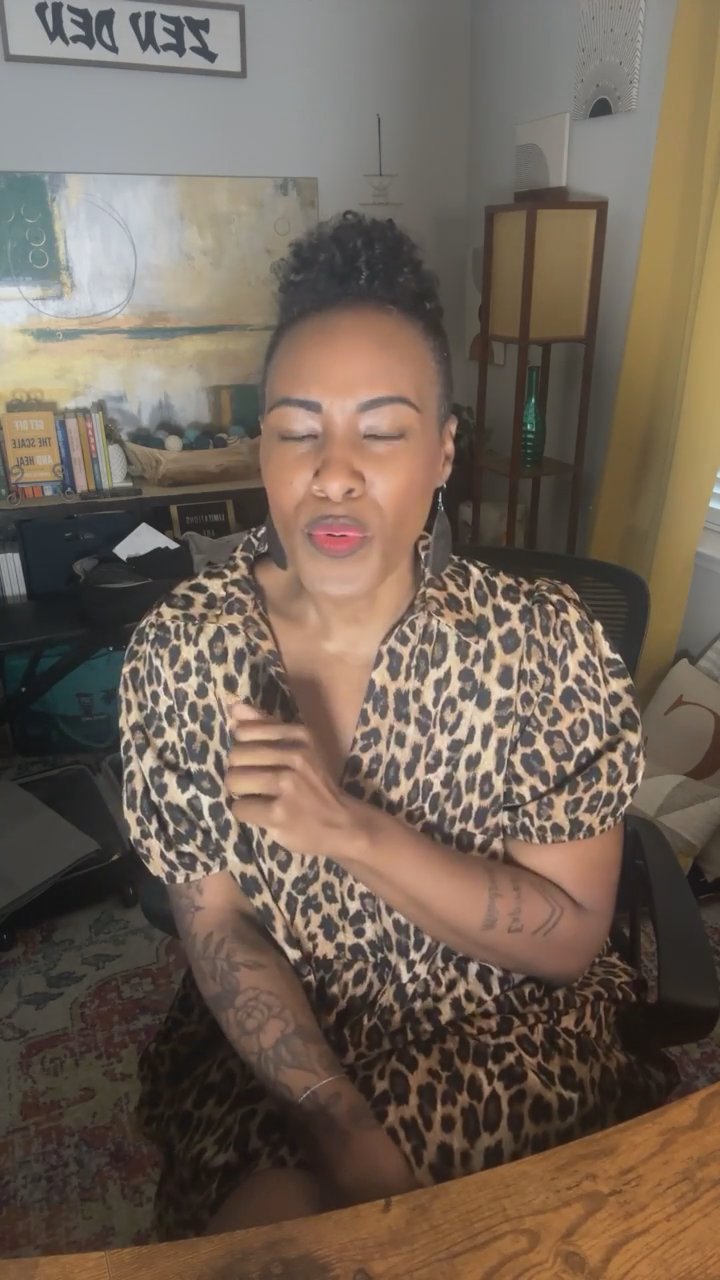
Dr. Charisse Johnson is a licensed clinical mental health therapist, mindfulness practitioner, and author. It's a reminder that you're not alone and that there are people all across the world and the nation who are here and showing up. 1 to 10, 1 meaning you're ready for this week to be over.
Dr. Charisse Johnson is a licensed clinical mental health therapist, mindfulness practitioner, and author. We focus on what's on your plate, metaphorically and tangibly. It's a reminder that you're not alone and that there are people all across the world and the nation who are here and showing up.
Let's rate your week. 1 to 10, 1 meaning you're ready for this week to be over. 10 meaning it has been fabulous, fantastic, best week of your life. How we rate ourselves could actually look different from day to day.
Are you living well, loving well, and playing well? Take a moment and ask yourself these questions in the chat. Are you engaging in things that bring you joy? If there is one area where I personally want to do more, it would be on the playing well.
Today I want to focus on five ways to prioritize your well being. Set and adjust boundaries as needed. Love well and play well. Consider these as you head into the November December season.
Keep a good sleep routine is huge. Our sleep is at the foundation of well being. Ideally, you want to be getting seven plus hours of sleep every night. Here are five ways right to support your wellbeing.
If this is accessible to you, lean on the love of pets. Identify activities that give you energy. Get out of your house at least once a day and engaging in some activity.
Where would you benefit from asking for help? What's standing in the way? Five ways to support your wellbeing. Outsource work. Create a list or identify activities that give you energy.
Kaija Sphere. It's Friday, or at least it's Friday for me. It might be a different day by the time you listen to this, but nonetheless, I'm glad that you chose to come and to show up in this space for us to get together and discuss. If your plate could talk. I'm Dr. Charisse Johnson, a licensed clinical mental health therapist, mindfulness practitioner, and author. And I come into this space a couple times a week, other than when I'm traveling in crazy zones. And we focus on what's on your plate, metaphorically, all the things that are in your life, in your air, that you're responsible for, and tangibly, because there's often a connection between what's on your plate in life and what you put on your plate in health.
Good morning from Buffalo. Yes, you got it down. Hello, Philly. Typically, when we come into this space, we do two things. One, we say, where are you in the world? I'm back in Charlotte. I missed you all last week. I don't even remember where I was. It's all run together. Hello, South Jersey. But it's just a beautiful and collective way that I love to see where everybody is located. And then as we go through things and we talk, Hello, Northern Minnesota. Good morning, Marilyn. It's a reminder that you're not alone and that there are people all across the world and the nation who are here and showing up.
Hello, Charleston. And navigating some of the same challenges that you are because I've also not seen you for a while. Let's rate your week. So 1 to 10, 1 meaning you're ready for this week to be over, and 10 meaning it has been fabulous, fantastic, best week of your life. Let me rate myself as well. 5, which is great because the week before that was not. Not as great. Right. And every week it's going to be different. And that's the other thing, too. We got a 10 in the house. Is that it is a helpful reminder that moments change and how we rate ourselves could actually look different from day to day.
So let's get into the focus of today. But before we get into the focus, I do want to ask you one question. Are you living well, loving well, and playing well? I want you to really consider that if you're comfortable, you can put your information in the chat. Congratulations to those of you who are also putting in the chat things that you have done that you're proud of yourself for. I always want you to Find that space. Cause we love activating that part of your brain. But take a moment and in the chat or using emojis however you want to in reactions, I want you to ask yourself, am I living well?
Does my wellbeing feel decent in life? Am I loving well? Are you finding good connection in interpersonal relationship with the people in your life? And are you playing well? That one often gets left out, but it's a huge part of wellbeing. Are you engaging in things that bring you joy? That is so crucial, especially if you're listening to this in the moment. This time of year, November, December, we're getting tired, things are getting busy, holidays are coming, we're ramping up in different ways.
Taking time to make sure that you're playing well means that you are engaging in things that bring you joy or engaging with people which we'll talk about here in a moment that are bringing you joy. So let me know what that looks like for you. Let me answer these questions for myself because this is a space where even as a clinician I still always want to share myself with you, just as I'm asking you to share yourself with me. This is our right collective reflection and accountability. Living well, I would say for the most part, yes.
I didn't do as well as I wanted to on some recent travel and how I focus and prioritize my health. Noted. Will make adjustments for the future. Loving well. Yeah, I think that is a good, solid, solid area in my life right now. And playing well, I need to do more. I because of how I grew up, because of different experiences in my life, it takes me getting into a certain brain space before I am really carefree. Like that's something I have to work towards. So it's great for me to be around other people who are naturally carefree.
But if I had to give myself an area where I personally want to do more, it would be on the playing well. And I'm going to make a plan for that. Today I want to focus on five ways to prioritize your well being. And keep in mind that even if you feel like your well being is a priority, we always want to be looking at how can I stay aware? Because being well is something that takes our effort, it takes intention and it is something that if we don't pay attention, it can really get off course. And then we're like, man, things fell off.
How did I get here? And typically we got there because we stopped paying attention and really thinking about what are the specific things that help you live well. Love well and play well. I'm going to focus on five things. Some of these may be helpful to you, but you might also want to go, here's what you want to add to the list. So I always encourage you to do that more. And yeah, thank you to all the people that are agreeing. Yes, my mind and my brain goes towards work and home and taking care of tasks and it really takes a lot of work for me to go, all right, Charisse, loosen up, have fun, laugh and don't just do it when you're on vacation or away.
Like how do you do that on a consistent basis in daily life? So five ways to cultivate, prioritize your well being. Number one, set and adjust boundaries as needed. How are you doing with boundaries right now? I would love to know to the degree that you're comfortable. Sharing boundaries are a crucial part of our well being. Boundaries are not bad. Boundaries are not selfish. Boundaries are necessary. They create this amazing guardrail. Guardrails. Think about it as something where you can still see through them.
Everyone on other each side can see see it, but they're also fully aware of this is where I end and you begin. And this is the space that I need and the space that you need. But notice that I said set them and adjust them. And part of why adjusting is going to be important is because life changes. You may need a different set of boundaries right now than you needed two or three months ago. When we are in need of repair or feeling overwhelmed or work responsibilities have increased, then our boundaries may need to change at home.
And yeah, boundaries are hard, especially if it's not something that you're used to putting in place. They can be difficult when you have to put in a boundary with someone that you love and care about that is not respecting your boundaries. It's. It's tough but it is so important to you having the space and think about this. Boundaries also allow you to be treated the way you need to. And Gwen, Yes. Not over committing to the holidays and really asking yourself does this have to be done? Is it necessary?
And does it have to be done by me? Right. So I want you to consider as you head into the November December season, which looks different for everybody. But just think about this time of year based on everything that you've been through so far this year, based on everything that you're caring and everyone you're caring for. Where do you need to shift your boundaries, adjust your boundaries or put some boundaries in place. That great kind of thought to action application piece that you could really Write down, here's where I need to shift my boundaries, here's where I need to adjust my boundaries, here's where I need to create some boundaries.
And then write it down and work on implementing it. Number two, five ways right to support your wellbeing. Keep a good sleep routine. Everyone heart this so that all the people who watch pay attention and go. Something important was said here. Keeping a good sleep routine is huge. Our sleep is at the foundation of well being. It is one of the most primary pillars to our well being. Our sleep metabolism parallels our hunger cycle which is going to then parallel our digestive metabolism, which is also going to impact our brain functioning because of the level of sleep that we need in order for our brain to repair as it is needed to do or as necessary each night.
And sleep also impacts your emotional well being, so it often is overlooked as a crucial part of being well. Ideally, you want to be getting seven plus hours of sleep every night. If you are someone that might work shift work that might look different for you, you might be sleeping during the day, but either way, seven plus quality uninterrupted hours is very helpful. If you have access to a watch of some kind, it can be very helpful to track your sleep to get a really good gauge of are you actually sleeping the way that you can.
Let me also say this as a caveat and I'll try not to go too far on this and maybe I'll do a whole thing about sleep. The most important thing that you can do, the most effective thing that you can do based on research and neuroscience to impact your sleep is to have a sleep routine is to do things consistently each evening or morning, depending upon when you're falling asleep, that signals the body we are now winding down in to rest. So if you feel like you're struggling with that, I want you to consider what are the moments before you lay down like if they're inconsistent, if you're ramping up, if you're working very late hours and then trying to fall straight asleep, you're going to find that that's difficult because your mind is still so activated that it needs a couple of hours to come down.
Here's one quick hack that I'll give you as well. Let's say that you are individual and you're like, hey, I'm just in a season where there is a little bit of work that I'm going to need to do a little bit later into the evening. It's not going to be forever, but it's necessary at a certain Point in the day, maybe around three or four, put some blue light glasses on. Because what you're getting in terms of the light that's emitting from your phone and your computer is kind of waking you up instead of helping you dial down.
So even just getting some blue light glasses off of Amazon and putting those on will be extremely helpful to kind of backing you away. Dream scenario. Two hours before it's time for you to go to sleep is when we would recommend that you get off of major devices or start to dial down the amount of time that you're spending on emitting light. I know that that's a big ask, but that's what science says. All right, number three, if this is accessible to you, lean on the love of pets. That's not something that's often talked about.
We, those of you who are pet lovers know how important your animals are to you. You're going to even notice that your animals know when you're not doing good. They know without you saying one word when you could use some extra snuggles when they need to come closer to you and start following you around. But pet therapy is a real thing. So if you have an animal and you're not allergic, then I definitely would encourage you to spend some intentional time, whether that animal is coming to you or not, just interacting and engaging with the love that a pet gives.
Because it's a very soothing way to co regulate. And it's also really great to be in connection with something they cannot talk back. Like let's, let's just be honest, right? Animals are great and loving and they're not smart mouths or they're not going to say something that's hurtful. That sounds funny, but it's very true with just knowing, you know, the exchange, you know what you're going to get. If that's something that you ascribe to and you have available Number four. This is a big one. Identify activities that give you energy.
And I don't want you to think about just exercise. We know exercise gives you energy, hands down, gives you energy, gives you endorphins. This is in addition to your daily exercise. What activities? Activities energetically lift you. When I look at a lot of people who are struggling with seasonal affect lows or seasonal affect disorders, or feeling low and sad and down, specifically during these winter months. One big kind of indicator that isn't being addressed is activities that they're engaging in that lift them.
They're spending too much time by themselves indoors and they don't have anything to engage in that brings them energy. Now, there's likely some of you who are like, I have no idea what brings me energy. Try some things, right? Number one, get out of your house. I cannot say that enough. It is so important for you to spend time out of your house at least once a day and engaging in some activity. Take a walk, look and see what kind of events are happening in your area that are free. Doesn't always have to be cost, but you really need to be up and out as a part of lifting your spirits.
Otherwise you will sink down and get caught up in a spiral of your thoughts. In this time of year, our thoughts tend to be ruminating and take us to a place that isn't ideal to go. The other thing that would be very, very helpful when it comes to activities that give you energy is to also consider who are the people that you have access to that you can be around and you energetically exchange good energy. So these are the people that if you decided to go out with them for coffee or for lunch, or go hang at their house or whatever it is that you want to do, you're like, man, I always feel really good when I spend time with them.
That's another example of engaging or identifying an activity that gives you energy. And then number five, five ways to support your wellbeing. Outsource work. Ask for help. Today's tough question, where would you benefit from asking for help? And probably the two part to that question is, what's standing in the way? Why are you resistant to asking for help? Is it that you don't trust that other people can help you or will help you? Is it that you feel like you shouldn't need help and you're putting pressure on yourself to do everything?
Do you find it as a sign of weakness or embarrassing, really, even flesh through, how do I feel about asking for help? Right. I will say as a caveat, a lot of times, if we've grown up in situations where there wasn't a lot of help available to us in life, we just didn't have anyone there who could help us. Then we create this hyper independence where we just don't even consider, oh, I didn't even think about the fact that I could ask for help. But usually there's also people in your life that if you think about it along the way, who have said, if you need my help, let me know.
Or you have people around you that work with you that were hired to help you and you might be telling yourself, oh, they have enough to do, but how do you know, unless you ask. So, as a application piece, I would encourage you to do a few things. Number one, really assess your sleep routine and if it is consistent and adequate in terms of the number of hours that your brain and your body needs in order to feel its best. Number two, create a list or identify activities that give you energy and make a plan that at least, at least once a week you commit to engaging in some activity or some connection that brings you energy, that brings you joy outside of exercise.
And number three, where can you outsource? Where can you take something off of your plate and ask for help to someone who may not have as much on their plate or someone who just is better at it? There are times that we put things or keep things on our plate that someone else could do in five minutes, where it would take us 50 minutes. So also just think about, is there someone that can do this, that's familiar with it, that's better at it, doesn't say anything about what you're not good at, but that they could do it and it would get done and allow yourself the permission to do that.
I always encourage you, when we have these moments to make two circles. What's on my plate, metaphorically, and what am I noticing about how I'm eating? And see if there are any correlations between the two. Because what's on your plate on both sides will give you a really great indicator of what you need and how you can kind of create a better sense of harmony between what you're putting in and the energy that's going out. Okay, as always, I'm glad that you came. Don't want to overload you with too much, but give you just enough to kind of walk on and work on over the weekend.
Thank you for being here. Continue to come and show up for yourself. I will be out next Friday, which is November, the something. Hold on, let me look. Because otherwise I'm not going to tell you the truth. The 8th, I'll be traveling in a time zone that will make it crazy. But then after that, we're locking in and we're back. All that being said, have a beautiful rest of the week. Come back to this space as much as you need to, and I'll see you soon.