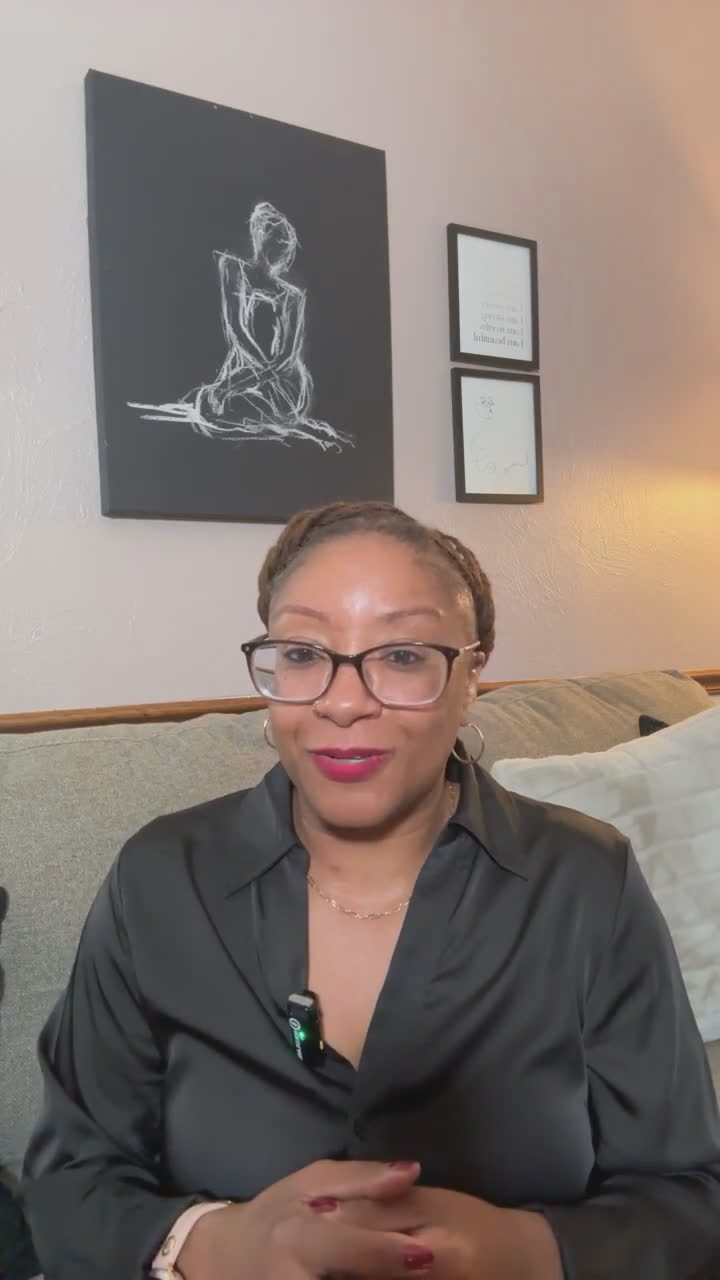
This is Domestic Violence Awareness Month. There is a difference between domestic violence and intimate partner violence. Be mindful if this is triggering information or triggering conversation. There can be increased depression. Post traumatic stress disorder.
Do you prefer Keurig or Nespresso? And if you do, tell me why. I'm actually contemplating getting an espresso. I'll let y'all know if that happens.
This is Domestic Violence Awareness Month. There is a difference between domestic violence and intimate partner violence. The first part of us that can get impacted with our mental health is increased anxiety. Be mindful if this is triggering information or triggering conversation.
The next part of our mental health that gets impacted when we're in an intimate partner violence or that type of relationship is. There can be increased depression. Post traumatic stress disorder. If any of this is triggering, I apologize. But I do think it is information that needs to be shared.
Mental health is impacted by intimate partner violence. The isolation can happen by choice or when it's a forced thing. It can lead to increased anxiety, depression, with the ptsd. Sometimes it can also lead to actual attempts to escape the situation.
When you introduce domestic violence and intimate partner violence with the experience of loneliness, it just makes things so much worse for the victim. I do want to encourage you to find at least one connection. There are many resources that you can use as a victim.
Hello, Cadre. Please forgive me for being late. I was trying to make my coffee, and the Keurig that I have in my office is not the best. I probably need to update it. And I'm actually contemplating getting an espresso. So if any of you have a Nespresso, please comment and let me know. Do you prefer Keurig or Nespresso? And if you do like Nespresso, tell me why, Because I think that would be a great investment for me. But, yeah, I'll let y'all know if that happens. But. Hey, Ana. So I am Dr. Leslie Davis.
I'm a relationship therapist located in Illinois, and I serve Illinois and Missouri clients. And today I'm just going to not really wrap up, but I'm going to dig a little deeper into domestic violence because this is Domestic Violence Awareness Month. And I do want to share. This is something I didn't necessarily think about. I believe it's also Breast Cancer Awareness Month, and I've been talking to a few domestic violence victims that share that. Domestic Violence Awareness Month often gets overshadowed by Breast Cancer Awareness Month.
So I feel like I'm on point with talking about this here today. Hi, Speak Wonder. And as you guys are joining, I do want to give you that trigger warning, too. If you have been a victim of domestic violence or intimate partner violence. You got your coffee, Essie. Please be mindful if this is triggering information or triggering conversation. But it is so important that we talk about this because there are so many victims whose lives have been completely changed because they can't talk about what they're going through, and they've been completely silenced.
And so I want to break that. And I can't do it alone. I need your help. Okay? So today I'm going to talk to you about domestic violence and mental health and being a little bit more specific about how all that works, I do want to kind of backtrack a little bit and just clarify. There is a difference between domestic violence and the term intimate partner violence. Ipv. So IPV is specifically about violence between intimate partners. Okay. And that can be male, female dynamics. It can also be same sex couples.
So keep that in mind. Or there could be transgender couples that engage in violence, and that is considered intimate partner violence. Now, domestic violence, that includes people who are in the home. So it doesn't necessarily have to be a romantic relationship. And so domestic violence can impact children, it can impact spouses, it can impact parent and child relationships, and also just impacts someone who's in the home that's sleeping on your Couch that might engage in violence with you. Okay, that's domestic violence.
But today I'm going to more specifically talk about intimate partner violence and how that impacts our mental health. And I'm going to take a sip of coffee real quick. So give me a second and it's good. I got good creamer today. But the first part of us that can get impacted with our mental health if we are experiencing intimate partner violence is increased anxiety. Now, people who already have anxiety that struggle with it, they may begin to notice that their anxiety is increasing when they're in a violent relationship.
They might feel like they're. You might hear this term walking on eggshells. People who are experiencing intimate partner violence might notice that they are always anxious, not just with their partner, but even when they're away from their partner. And there's good reason. So sometimes their partner who is abusive might be doing things like tracking their behavior. Maybe they're tracking them on their phones or even tracking their movement. I have heard stories from victims where their mileage is checked on their car to see how far they've gone, and their partner will ask them questions.
Well, where did you go? You know, it takes so many miles for you to get from home to work. I see that there's an extra mile on here. Where were you? And now with all the technology we have, unfortunately, I guess it's good and bad at the same time. People are starting to use air tags, the Apple air tags, to track their partners and tracking their location and tracking their behavior. So keep that in mind. I will say this is something that I didn't necessarily think about. So for all you Android users out there, I'm Apple girl.
But for those who use Android, if you have a partner who has an airtag with an Apple product, you may not even know that someone has put an air tag on your car or in your bag because you won't have a way to get it notified to your phone that it's being used. Okay, something new. I came across the next part of our mental health that gets impacted when we're in an intimate partner violence or that type of relationship is. There can be increased depression. Now, dealing with violence in general can be depressing.
But living in a home with someone who's always abusing you can cause more depression. There can be depression because a loss of relationships. There can be depression because the relationship that you thought you had did not turn out to be that way. Maybe the person that you fell in love with has changed and has become more violent towards you. And that can be depressing. And depression leads into isolation, which I'll get into in a little bit. But I think one of the more prevalent diagnoses that I see with victims who have experienced intimate partner violence or domestic violence is ptsd.
Post traumatic stress disorder. And with that diagnosis, there might be nightmares that occur. So maybe you're dreaming about wanting to escape and you can't, or feeling trapped. There are also times when you might have flashbacks. Maybe you hear something. Because when there's violence, there's a lot of noise. Violence isn't always quiet. It can be quiet, it can be subtle, like someone can pinch someone, and there's no noise with that. But there's also intimidation used with loud noises when there's violence.
So throwing things, slamming doors, slamming cabinets, breaking things in the home, breaking phones, hitting tables. Right. Just to intimidate the victim. And with ptsd, you might hear similar noises out in public or in other settings. That can be very triggering for you because it reminds you of the time that you were abused. Even if you are out of that relationship and it's been years. Sometimes people who are victims of violence, they are still triggered by some of those sounds. Even the smell.
Maybe there's cologne that their partner used and that's triggering for them. If they smell it again on someone else, it could be the smell of, unfortunately, blood or the sight of blood. That can be triggering. Maybe they remember their own bruises or maybe they remember the times that they were bleeding. And I do want to just kind of check in with everyone. If any of this is triggering, I apologize. But I do think it is information that needs to be shared. So. So please bear with me, but take care of yourself.
Now, I mentioned isolation. That is another way that our mental health is impacted with intimate partner violence. So the isolation can happen by choice. So I talked about this before, where you may choose to remove yourself from other relationships with friends, with family, with coworkers, with your children. You might choose to isolate and stay in room for safety. Or maybe you choose not to go around different people because you're embarrassed by your relationship or you're embarrassed by the bruises that you have.
But isolation also happens when it's a forced thing. So usually victims who are in the situation, their abuser will keep them isolated intentionally. And that can look a multiple ways. So, for example, someone that is abusive may take that person's key so they can't use the car to get away, or they take their phone so they won't leave because they don't have any way to access Anyone. It can also look like maybe you are at a party and you are told you have to leave at a certain time so you don't get to really spend quality time with the people that are in your life that love you.
That is isolation as well. Then I'll move on to. Unfortunately, there are people who struggle with this situation, and that leads them, you know, with the increased anxiety, the depression, with the ptsd, and isolation can lead to thoughts of suicide. Wanting to end your life by suicide. And it can also lead to actual attempts just to escape the situation. Domestic violence and intimate partner violence is not easy to deal with, especially if you're dealing with this for a long period of time, for years, you might want to do whatever it takes to escape that situation.
And sometimes for some people, that looks like suicide. But on the flip side, it can also look like thoughts of homicide. Now, I have had numerous conversations with women who are in jail or in prison because they were actually victims of violence. They were victims of. Of intimate partner violence, but they became the abuser in the situation by the court labeled the abuser or the murderer because they turned and they protected themselves, which led to homicide. It's unfortunate, but there are so many women that are in prisons that are truly in there.
I. I don't know how to word this, but they're in there for reasons that they should have had help. And I know there are so many women who reach out to police for help, and the police don't help them. There's so many victims that turn to the law, like, trying to get orders of protection, and maybe they're not granted because they didn't know how to verbalize all the things that they were going through because there was shame, because there was fear. If I do tell the whole truth, I don't know what's going to happen to me when I leave this courtroom.
I don't know if y'all have ever been to a courtroom with domestic violence cases, but it is very intimidating. Your abuser is in the room with you. Your abuser has to hear what you're telling the judge. Your abuser has access to you in the courthouse, in the parking lot. So sometimes victims who actually have enough courage to come forth and request help of the law are not granted what they need because they're afraid even in the courtroom to say what actually happened. Okay? And so sometimes that leads to moments where they have to protect themselves.
They have no other choice, or they feel that way. And so they end up hurting their abuser and they end up going to prison for that. There's so many stories I can tell with that. But the next thing that I think about with domestic violence and mental health is that sometimes, at least a substance abuse. So increased alcohol use or the introduction of illegal drugs like cocaine, heroin, all these other things that are out there, and sometimes that happens because the abuser gives that to them as a form of power and control, and they end up getting hooked on a drug that they never intended to get hooked on.
Sometimes it happens. They don't even know if things are being laced. But sometimes people end up using drugs. Maybe they already have a history of substance use and substance abuse, and they're now in this violent relationship and they don't know how else to escape other than using drugs. So it goes. It's kind of two things. There's one where they're being introduced to this drug and they get hooked because it's a form of control. And then the other side is, I need to escape. This is the only way I know how to escape.
I'm going to at least escape in my mind for a moment, and I'm going to engage in substance use. And if the violence is happening pretty quickly and rapidly, that substance abuse also increases with that. So you might see statistics if you ever look this up. There is a parallel there with substance use and violence. I actually, now that I think about it, I did some research on that during my PhD journey because I was working with youth and I had a. Well, I still have a violence prevention program for youth, for teenagers.
And we were talking about the use of marijuana and how there are statistics that correlate the use of marijuana, which we think is something that will calm us down. But there's increased violence when you pair marijuana in situations. And that was something that I didn't think would ever happen. But I'm glad I came across the information to share that because it does happen. And if you think about it, the use of marijuana, which we think is a downer sometimes, it will change the way your perception of situations.
And you might engage in conflict and engage in violent behavior and not even understand that you're doing that because you're under the influence of a substance. All right? And the last thing, you guys, if you've been following me for a while, you will know that there is an epidemic of loneliness. And this is. It's very sad. But when you introduce domestic violence and intimate partner violence with the experience of loneliness and this isolation that I mentioned before, it just makes things so much worse for the victim that is needing Support that needs love, that needs connection.
And they are continuing to be isolated, either by choice or by the abuser. But what happens when that person gets out of that relationship that is so toxic? Sometimes the loneliness doesn't stop because the fear of developing another relationship creeps in. So the victim who was able to escape the violence and escape that toxic relationship fears getting into new relationships because of what they've experienced experience. So that just keeps them trapped in this experience of loneliness. Now, if that's you, I do want to encourage you to find at least one connection.
Maybe that connection is a old friend. Maybe you stopped talking to people because of the experiences that you were having with a partner. Maybe that person stopped talking to you. Maybe they pulled away because they tried to help and then you didn't want the help. Maybe you pushed them away at some point while you're in that relationship. And if you're out of that situation and it is safe, I want to encourage you to reach out to some of those people. You never know. Sometimes people are just waiting for you to come back around.
There are people that might still love you but didn't know how to reach out to you because of what was going on. Or maybe they were afraid of your abuser and they may not even know that you're over that relationship. So that is my encouragement for you guys today. I do want to also encourage everyone, if you could just please leave a comment of if there's someone that you know, and I guarantee there's someone you know who might be dealing with intimate partner violence, maybe you're fully aware because they told you.
Maybe if you look back at some of the videos I've shared earlier this month, if you can see some of the signs of violence in their relationship that you're able to identify, hey, this is not good. This is toxic. I know how you can get some help. There are, there are so many organizations that are local. So look up local organizations for your own community. But even nationally there are websites available, and I think I mentioned this before in previous videos, that you can access these videos and websites in a safe way.
Most of them have a built in button that you can click if you are being tracked. So it doesn't show any history of you viewing that website or if you need to quickly exit the website. Maybe your abuser is still around you or just walks in the room. You can easily do that. But those are some resources that you can use as a victim. You can use those resources to gain information as a loved one or a friend where you can learn how to help someone in this situation. So I know this is heavy stuff, but I want to thank you all for joining me live.
And for those who are watching the replay, let me know where you're tuning in from, because I love to see where everybody's coming from. But if there's something that stuck out to you or maybe there's an experience you want to share, please leave it in the chat. But I hope you all have a wonderful day and don't forget your coffee.