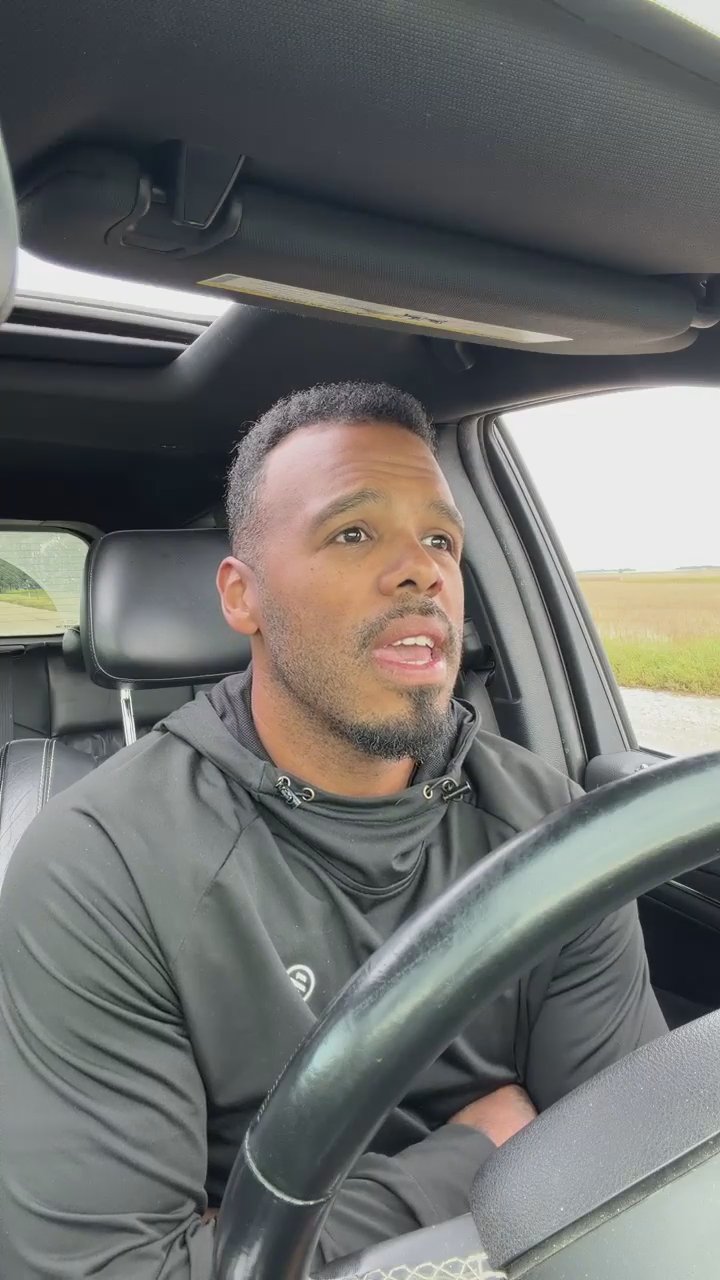
The speaker opens with energetic greetings, introduces himself, describes his peaceful setting, and prompts viewers to rate how they're feeling from 1–10. He shares his own rating and invites the audience to drop theirs in the chat.
He introduces the core question—whether to be right or to have the situation resolved—then recounts experiences with workplace and family confrontations. He explains the cultural habits of winning arguments through toughness or logic and how that shaped his behavior.
The speaker describes how moving into professional roles forced him to change, struggle with pride, and consciously choose whether to be right now or resolve issues later. He discusses avoiding heated arenas and choosing when and where to address conflicts.
He demonstrates practical steps: ask what's really behind the anger, create trust, listen without trying to fix, and then bring the conversation back to accountability. This section explains how empathy creates space to resolve issues effectively.
He asks viewers to reflect on whether they want to be right or to resolve heated arguments, admits it takes practice (and deep breaths), then wraps up with a light sign-off about his day and responsibilities.
Cadre, Cadre, Cadre fam. Good morning, good morning, good morning. Good morning, one more time. It's Tuesday and it's 915. For those of you guys, for those of you who don't know me, my name is Rolando. I go by Ro for short, Coach Rose, Rose 612 on social media, all the things, right? And I'm grateful to be here this morning. I am currently, if I can show you out in the middle of nowhere, And it's actually nice. It's peaceful, it's quiet. I'm enjoying it. So I always like to start the day off with a question, a check-in.
How are you doing today? From 1 through 10, 10 being it's the best day ever, I should go frolicking through the cornfields, if that's your thing. And 1 being it's, you know, you probably need some support and it's not the greatest day. I challenge you, where are you today? For me, myself, I am at, I'm at an 8. I got some good sleep last night, got some food in my stomach this morning, got a little coffee in, and we're doing it. We're doing the thing. So I'm at about an 8. I challenge you, where are you at?
Drop it in the chat and let me know. Today I've been struggling and thinking about the question of do I want to be right or do I want the situation to be resolved? Right. Lately I've come across a few different situations, I don't know if you can relate, of confrontation in the workplace and with friends and family, right? There's been a couple incidents that happened that made me stop and think about how I approach confrontation disagreements in the professional setting, in the corporate space, in the workspace, right?
I don't know about you guys. I come from a background, right, of whoever is the toughest tends to be right. Whoever can yell the loudest tends to be right. Or whoever can come up with the best logical bullshit is usually the one who is right. And when I say that, I mean that it doesn't necessarily mean that they are right, but these individuals, including myself at times, would have the demeanor, the approach, the delivery and say the right words or leverage my influence to be right in a room where I probably wasn't right.
But because I was in an argument, I refused to be wrong. So I would use what was in front of me in order to be right. That's the culture I grew up in. If the family was arguing and one of my uncles who were tougher and all this and that, they would start yelling and all of a sudden, you know what? We think you're right. Or I'd always have a smart cousin that would try to outsmart everyone, think of some very intelligent, logical ways to make something sound good, but he was still wrong. But because of the way he delivered it, seemed right.
And you're like, you know what? We don't want to argue with this. You're right. And I grew up with that demeanor, right? I would leverage my influence. I would leverage my intelligence. I would leverage my relationship equity or my St. credibility or, just my physical demeanor. And be like, you know what? You probably don't want to fight and argue with me. So I'm going to say this and you're just going to go along with it, right? And that's what I grew up in. So in the streets that transferred over, even in a lot of job sites, right?
I've worked in construction, I've worked in manual labor, and there's always that one guy that you just don't want to argue with, or that one girl, or it was probably you at some times, right? Because of these reasons, it's like, you know, I don't even want to argue with this person, right? And these are all learned behaviors. These are things that I've had to struggle with, and I still struggle, if I'm being honest, especially with family, right? These things worked for a very long time. And then I started moving into, I started leveling up different jobs around different types of people.
And I started learning new versions of myself. Versions of myself that didn't always need to be right and didn't need to prove that I was right. And that was a struggle. And it's still a struggle. I have to check my pride and ego sometimes. So when I got into the professional setting and I came into these situations, I had to ask myself, do I want to be right now or do I want to resolve this situation? And this is very hard, especially with my family, because some of them are very intelligent. They're very, they're stronger than me.
And it's like, you know what, I don't want to argue. So what I did was, okay, I could be right now, but because there's a heightened emotion, there's heightened emotions, heightened feelings, Everybody wants to be right now based on how they feel, but we're arguing about different things, right? So I had to learn how to put that aside and I had to seek understanding. And I had to ask specifically some of my family, it's like, you know what, am I not seeing right now? I see that you're frustrated.
This topic, this disagreement, whether I dropped the ball on something or I screwed something up or I didn't hit my numbers or I forgot to bring the potato salad to the BBQ, whatever it was, it's like I could see that this is a heightened situation, but I know you enough to know that this isn't the thing that's making you angry. What's behind this? I want to help me understand. So what I'm doing when I do this, I'm setting being right aside, because I might be right, but I don't have to be right now, right?
And what I do is I like to choose my arena. to resolve this conflict. My arena doesn't, I don't want it to be in a situation where everyone's high on emotions. Everybody wants to be right. Nobody wants to be wrong. There's anger, there's pride, there's ego. All these things are all on fire right now. It's like, you know what? We're gonna choose a different arena. And to get to that mental arena, I want to understand what's going on with you. I want you to feel in a space of trust. I want you to feel understood.
I want you to know that I still value you. I want you to know that I'm not just trying to argue with you. I'm trying to understand what's wrong. Because a lot of the times it's not this topic surface. So it's like, okay, let me put that stuff aside, understand what's going on with you, with the other individual. And I get to seek understanding. It's like, oh, like you had a bad day or you might have lost a job or you might have been arguing with someone or this person, you might have lost a bet on DraftKings.
We might all, we all had situations, but I'm seeking to understand what the individuals are going through. And I listen, not to try to fix, I listen to understand. And then once I understand like, okay, there's things that were going on below the surface, it's like, you know what? Now let's bring this thing back around. It's like, okay, I want you to feel understood, but now we're going to talk about accountability and still come back to the situation. So them situations when I come back around, that's where we can get things done.
And I've had to learn how to do that with family and it's been very hard. So that's what I have to ask for you guys today is When you're in these situations, is it more important to be right or to get things resolved? Because you might be right, but it just might not be the right time to be right now. We might have to come back to it later. And that's what I've had to learn, especially with my family. It's very challenging. So ask yourself, when you're in a heated argument, what do we want to do right now?
Do we want to be right or we do want this resolved? Sometimes it takes me giving a deep breath. And I've had to learn this a lot, especially with family, that we've been going through it lately. But that's what I got for you today. My coffee's kicking in. I got 40 students behind me for this youth walk. They're looking at me right now, so I have to go. See you guys later.