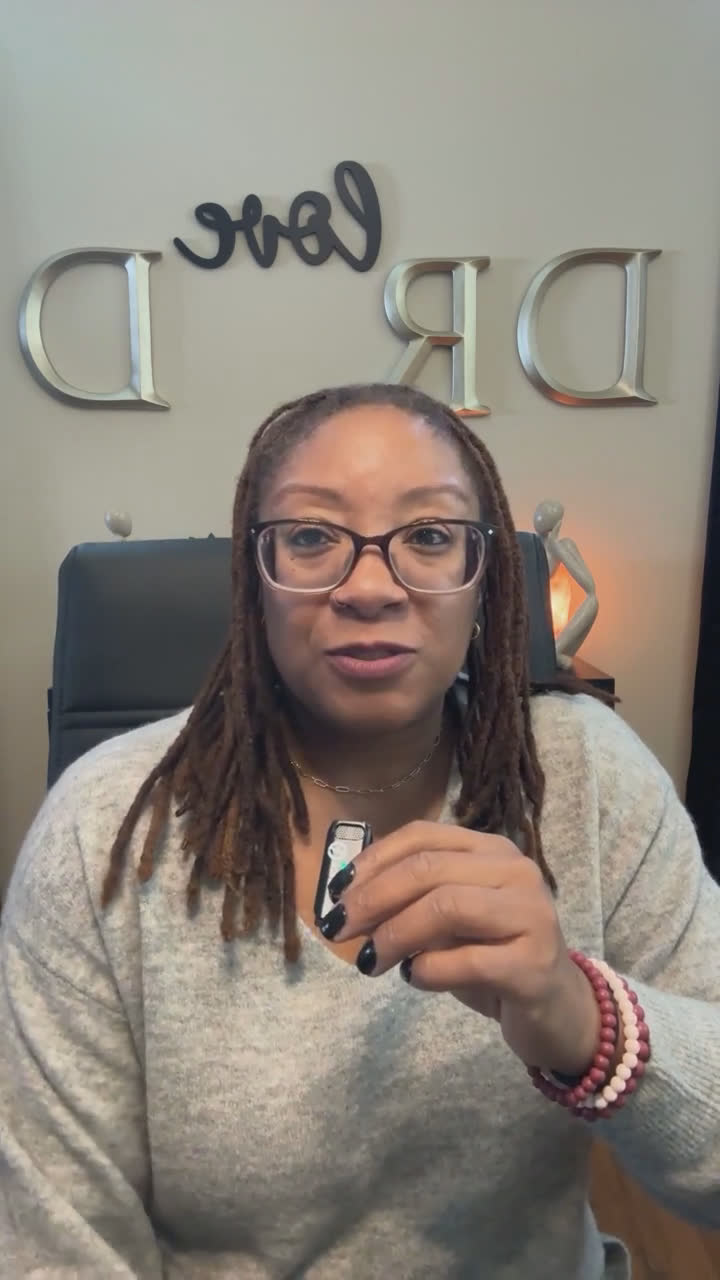
Dr. Leslie Davis takes a sip of her coffee because her throat is a little dry. She puts some cinnamon Dolce coffee creamer in there, so that hit the spot. Domestic Violence Awareness Month. Most teens don't talk about their experiences when they're going through intimate partner violence.
Dr. Leslie Davis takes a sip of her coffee because her throat is a little dry. She puts some cinnamon Dolce coffee creamer in there, so that hit the spot.
Domestic Violence Awareness Month. Most teens don't talk about their experiences when they're going through intimate partner violence. Intimate partner violence starts as early as age 12. Be aware of your own red flags and the red flags for your teen and help them identify those things.
I would also encourage you to talk about healthy dynamics in a relationship. Have those healthy conversations about what is healthy, what's not. You have to surround yourself with healthy people when you have a team. When we plant seeds of hope, those things will grow.
Okay, I hope this was helpful. If you are watching the replay, please leave a comment. Please leave me a coffee mug in the comment section. I hope you guys have a wonderful day.
Hey, y'all. What's going on? It's Dr. Leslie Davis here. And my coffee, I am going to take a sip because my throat is a little dry right now. It's cold where I am. Finally. I'm so grateful. And that's a good cup right there. I put some cinnamon Dolce coffee creamer in there, so that hit the spot. But today I want to continue on discussing Domestic Violence Awareness Month. And today I'm actually going to talk about teens and domestic violence. And if any of you have any teens or any young ones in the house that you are trying to mold and help them develop healthy relationships, I'm going to give you some insights to teens and what they're dealing with when it comes to intimate partner violence.
Give me one second, y'all. My refrigerator is beeping at me. Hold on. Okay, I'm back. So if you didn't know I was really live, I'm really live. So anyway, I'm back. I'm going to talk to you about intimate partner violence with teens. I have worked with teens in a program that I developed called Heartbeats. And talking about healthy relationships and healthy dynamics is one of our hot topics. Usually, I don't know why, but the guys get more interested in that topic than the female sometimes. But I do want to just talk about, just to bring awareness to how intimate partner violence starts.
We might assume that someone may not experience domestic violence or intimate partner violence until adult life, and that is absolutely false. Intimate partner violence starts as early as age 12, according to statistics. Statistics. That's hard word to say. And statistics. Just to remind you, we only have those facts because there have been reports made. Okay? So just imagine all the people who are going through intimate partner violence that do not report their experiences. So keep that in mind.
Now, you might wonder, well, how do I know if my teen is dealing with this? Well, you may never know. Most teens don't talk about their experiences when they're going through intimate partner violence, just like adults don't talk about their experiences of being abused by their partner. But why do you think that is? Well, we talked last week about the shame that's attached to it. The shame from themselves, their family members, the judgment that comes with it of being in a relationship like that.
And so for teens, they're already dealing with so much, trying to figure out who they are, trying to navigate life in general and to add another layer of having a relationship that is violent or abusive. That's something that they may not even understand as what's happening to them. They may not know how to talk about it, or they may not want to talk about it, just like they don't want to talk about anything. So if you have a teen, you know exactly what I'm talking about. There's a lot of secrecy there.
And according to some of the recent statistics, about 80% of teens don't talk about their experiences with intimate partner violence. Most of the times it's because they don't feel like they'll be believed. That's, again, the cycle of abuse. So their abuser may tell them, no one's going to believe you. Your family's not going to believe you. They may present themselves as such a nice person where if your child is talking to you about what they're experiencing, you may not necessarily believe it right away because it just doesn't make any sense.
It doesn't seem like the person they're dating would do something like that. So keep that in mind and be aware. Be aware of your own red flags and the red flags for your teen and help them identify those things. So with teens and intimate partner violence, again I mentioned, it can start as young as 12, and that's sad. 12 years old, that's probably sixth grade, seventh grade. So that middle school time where they're, you know, developing friendships, they might have their first boyfriend or girlfriend, and if they're not aware of the signs of abuse, they can easily fall into that trap and they can easily get sucked into isolation by their partner.
And that's scary when they get isolated even within their own home, where you may not even recognize that that's what's happening to them. We assume teens are just secluding themselves. We assume that teens are just going to be in their room doing their own thing, because maybe that's what we did growing up. And we assume that that's normal behavior. And some of it is. Some of it is normal behavior. But if you start to see other signs that maybe they are in a relationship and they haven't told you, maybe they're always on their phone and you don't know who they're talking to.
And I'm just going to put this out there, y'all, the things that kids are dealing with now, we have to be mindful of the chat rooms that they're a part of, their Instagram accounts, they have secret accounts, y'all. Discord. All of these apps are available to teens where they can develop connections with people. And sometimes they don't even know who they're talking to, but they can have developed relationships with people that are not even in this country and they don't even know that. Right. We have to talk about social media safety with our teens because that also impacts the relationship with intimate partner violence.
Okay, Again, abuse is not always physical abuse. Abuse happens mentally. It can be psychological abuse. It could be financial abuse. And if a teen is getting involved in a relationship with someone in a different state or a different country, it's, I guess it's likely or easy that they could get sucked into financial abuse. They can get sucked into the psychological abuse. Like, oh, if you tell your parents, I'm going to kill myself. That is a very common statement, unfortunately, that teens hear from the people that they're dating because they want to be controlled, that their abuser is controlling them in that way.
And what's the teen going to do? Oh, my gosh, I'm not going to leave you. I will never tell on you. You know, I'm not going to tell anyone what's going on because I don't want you to die. They don't want to take that responsibility and burden, which is not theirs anyway. But. But I just want you guys to be mindful. If you have teens, you know, I want to encourage you to have open conversations. Be open to listening to them. Be open to hearing their experiences and not judging them, because remember the stuff that they're dealing with.
There are kids on, on dating sites, okay? This is happening. It's real. And they will lie about their ages on apps just because they want to have a relationship or they want to date someone that's older. I know that there are some young girls and I even remember, you know, when I was younger, it was cool to date someone that was older than you. It made you look better. But that is so dangerous, especially for the things that are happening online. So a couple of things you can do if you are, if you have a teen or if you know someone with a teen, maybe pass these tips along.
And this is really random. I don't have anything written down. This is really just off the top of my head. So one thing I want you to, like I said, be open to having conversations, be open to hearing their experience without judgment, and be open to the shock that you might experience for the things that they're going to tell you. There are experiences that our teens are having that we never had, that we never wanted for them. And so we have to be ready that we might get hit real hard with some of the stuff that they're going to share.
Another thing you can do is get Your teens connected in a group, if they are secluded or if they don't have a lot of friends or they're having a hard time making friends, help them find a group that they connect to, because that group is going to help them find connection in a healthy way. It's going to help them have accountability outside of the family and outside of the household. And it's likely, it's probably more likely that a teen is going to tell their friend about what's going on with them before they tell you.
Okay. I would also encourage you to talk about healthy dynamics in a relationship. And even if you didn't have that yourself, if you didn't experience a healthy relationship as a teen or even in your current situation, it's good to talk about what goes wrong in relationships, what some of the red flags are that you've noticed or you've experienced and help your team become aware of those things for themselves. And I'll tell you this. I believe that teens are very. And kids in general are just very observant.
They probably have seen the red flags that we experience in relationships, that they probably caught it before we did because they're on the outside. But because they maybe have seen our behavior and our bad choices in relationships, they may determine that, you know what, I saw my mom do this or I saw my dad do this. This must be okay. Maybe this is the way it's supposed to be if it's happening to me too. Okay? So have those healthy conversations about what is healthy, what's not, what's a red flag, what's a green flag.
Right? What are some stop signs that we need to put up in relationships so they can identify those things for themselves or at least recognize it when it's happening and call it out and stop it in the moment. The last tip I'm going to give you is you have to surround yourself with healthy people when you have a team, because there might be some things that you don't pick up on with your teen when they're going through some things that are dark or you may not want to believe it, but other people can see it for you.
And other people can either help you call it out or talk to your team too, because they might have already developed a relationship with them. So your team needs to be surrounded with love and connection, and you also need to be surrounded with connections that are healthy to really facilitate healthy conversations. Healthy connections as a family unit. Okay. You're gonna get some resistance. Just expect it. And that's okay, because I'm a believer that when we plant seeds of hope and we plant seeds of good connection, that those things will grow when your teen is ready to accept those things.
Okay, I hope this was helpful. I don't see any comments, so I'm not sure who all is here. If you are watching the replay, please leave a comment. Please leave me a coffee mug in the. In the comment section so I know that you were here and listening and I do want to thank you guys. I hope you guys have a wonderful day. Bye.