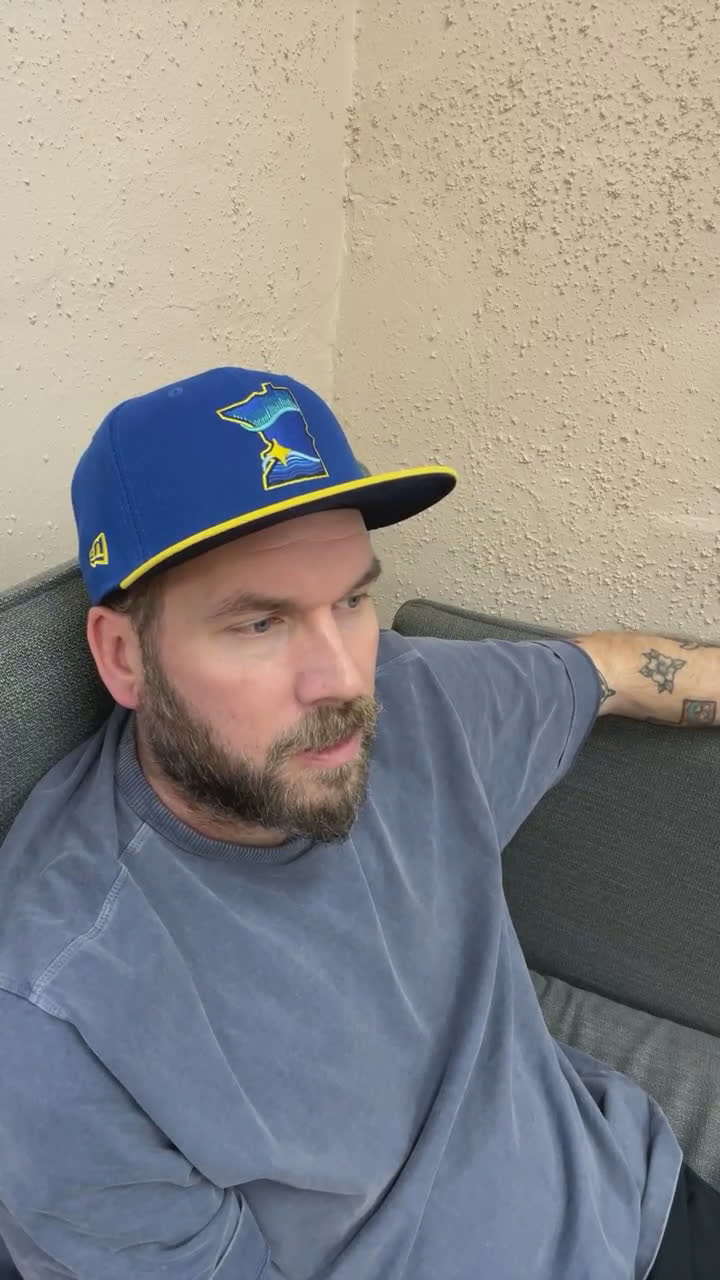
Pastor Seth Perry talks about the stigma of mental health in spiritual communities. He also talks about his journey as a recovering addict. Perry has bipolar disorder and has been clean and sober since 2010.
Pastor Seth Perry talks about the stigma of mental health in spiritual communities. He also talks about his journey as a recovering addict. Perry has bipolar disorder and has been clean and sober since 2010.
Cadre: What are some things that religion, institutions, laws, rules that have been imposed upon us that are just not good. The audacity of an institution like a church to make a prediction about the afterlife of an individual. That condemnation kind of ideology is ultimately not good for communities and for individuals.
Many religious communities share that there is an importance to look out for the vulnerable. In with that, are people who care for individuals that are in a mental health crisis or an addiction crisis. I truly believe that if more people slowed things down and turned to the vulnerable, that we could find common ground.
Hello, everyone in the Cadre sphere. Hi, I'm Pastor Seth Perry. Like I said, I'm a pastor. It's Sunday. It's time for Talk Stigma where I talk about the stigma of mental health in spiritual communities. I also talk about my own stigma, the self imposed stigma that I deal with with myself. And welcome to whoever who's joined. Let me know that you're here and say hi. It'd be good to hear from you. I also talk a lot about my journey as a recovering addict. So I'm in recovery. I've been clean and sober since 2010.
April 12, 2010 is my clean date. And also I have bipolar disorder. And I live well with bipolar disorder. And I'm here in my office as I normally am on Sundays. I'm here after I've done a church service and I'm here after I've kind of gathered myself after a busy Sunday morning. I do an 8am service and I do a 9:30am service. And thank you for the heart, whoever, whoever hit the heart there. Appreciate that. So I want to talk a little bit about, a little bit about history. I've been, I was talking today a little bit about the history of marriage and how it's been the church's business to kind of monkey around in that and impose a lot of restrictions on that.
And it got me thinking about all the various other restrictions and laws that were ultimately not good for us, that religion has imposed on us. So for you right now, if you're watching or if you're just watching the replay, think about for yourself, what are some things that religion, institutions, laws, rules that have been imposed upon us that are just not good. And so today I was talking a little bit about the church saying, who you can and cannot marry, that is ultimately not good for us, not the church's business, that kind of imposition, really bad.
Also where you are going after you die. The audacity of an institution like a church to make a prediction about the afterlife of an individual based on their actions in this life. Ultimately not good for the other person, not good for people, not good for communities, not good for in any way. And that's really one thing I'm really encouraged to talk about here in the Cadre sphere is religious trauma. And that's a really excellent source to bring up for religious trauma. And that condemnation kind of ideology is ultimately not good for communities and for individuals.
Another thing that came out of religious communities that I thought about the whole concept of manifest destiny, the fact that ultimately governments and churches believe that North America was for a particular culture and religion, where in fact it had already been settled a very long time ago by the indigenous people of North America. So there again, another way that religion has been used, ultimately not serving or helping people. So where does this all lead, really? Like, what am I talking about?
Well, ultimately, today, and as I reflected this week and wrote and prepared for what I was sharing today, is one thing that many religious communities share across the world is that there is an importance to teach other people to look out for the vulnerable. That seems to just be universal. You go from religious community to religious community in different countries, in different cultures. That just seems to be a tenant of so many different religious communities. Look out for the vulnerable. That seems to be.
Even where religious communities have laws that conflict with each other, there's still, you know, that common foundation of looking out for the vulnerable. Why is that important? I think that many, in many ways, that's work that will always need to be done. I think that also it's better if we start looking through life in that lens, that we look for the vulnerable in situations of oppression and look for the vulnerable in situations where we see individuals that have been outcast, individuals that have been shunned, that we.
We certainly can speak out against the oppressors and those who outcast. But I think where I see a lot of my work, you know, where I feel led most in my work is to work in the affirmative, to really reach out to the outcast and to the vulnerable. So who are the vulnerable really, that I see the most right now? And it comes down to a lot of what other caregivers on this platform, in the Cadre sphere and other thinkers and contributors on this platform talk about regularly. And that is that I believe, and I think a lot of people do, that we're in a mental health crisis.
We're in an epidemic as well, the opioid epidemic. And I see so many people in my work, and I don't have metrics or I don't have. I don't have statistics, but all I can say is from my own experience as a pastor, as someone who is available for people to reach out to, I see a lot of people a dealing with mental health crises at a level that I have not experienced in my adult life before. So it very much makes me believe, believe deeply in my heart, that there are. That there are people out there that are severely challenged with this mental health crisis that we're in, that there.
There's a need for that. So there's vulnerable people there. And then again, I see addiction with my own eyes. In the work that I do. I see more than ever in my life, folks that are dealing with addiction. And so I want to turn my focus to those groups right now. And in with that, you know, are people who care for individuals that are in a mental health crisis or an addiction crisis. I truly believe that if more people slowed things down and turned to the vulnerable, that we would be able to find common ground with people that we might think are completely different than us.
We might be able to find common ground with people who we think may have broken those rules that we think are unbreakable, that we might find common ground with people from another community, from another neighborhood, from another culture. And why? Because I've seen it work in my own life. I've seen borders get torn down, the invisible borders that separate us. Because we're looking at things like the needy, those who need our support and may not know it. And so that's my thought for today. Look for the vulnerable.
Maybe team up with someone you may have not thought was a good person to team up with or is even possible for someone to team up with. And yeah, that's my thought. And so I'm gonna have another great week here on the Cadre sphere. I'll be sending in comments. I think that, yeah, I've. I've had. I've had a good. A good week where I've just had a few coffee breaks, where I've just thrown on Cadre and, and just tuned in and listened. And I hope you do the same with some other creators contributors here on Cadre.
And until next week, next Sunday. I'll see you then. I really appreciate.