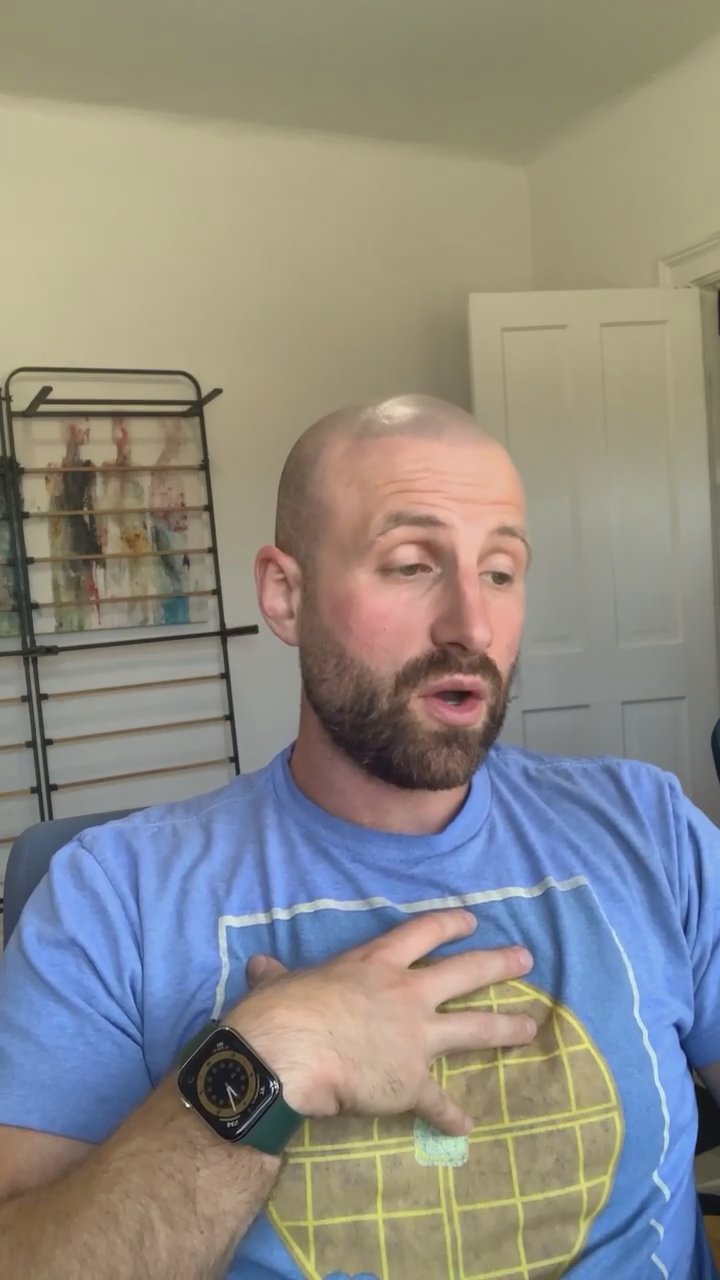
In this livestream I will be discussing the lifecycle of the impacts of trauma. From adverse childhood experiences weaving into how we live our everyday lives, sometimes those experiences we wish to forget remain in both obvious and subtle ways.
Mental Health Matters airs every other week. Today's topic is the Threads of Trauma, about how trauma weaves through your life. Often adverse childhood experiences are more impactful because it shifts the way your brain develops. The number one goal here is to answer any questions about mental health or addiction.
Stress begins stress and we still have that where the, we gotta remember to read really quickly. We have those negative coping cycles and those get deeper and deeper. They're harder to break out of and they do lead to more stress and potentially more trauma. What happens on a deeper psychological level, what happens?
What up, folks? Welcome to another episode of Mental Health Matters. I'm Evan, your resident mental health and addiction therapist. Today we have a special episode. Well, every day I'd like to think is special. However, today we do have a topic episode, which I do every other week. So I prepared a topic as you may be able to see, so we could see folks start rolling in. But the number one goal here is to answer any questions to facilitate conversations in regard to mental health or addiction. That's what I'm here for.
However, often I do bring a topic, so people could check that out even if they're not joining live, if they want to, I don't know, learn something or whatever you want to, however you want to put it. So the topic I brought today is I'm calling this the Threads of Trauma. So I've been doing a lot of content and reading about the impacts of trauma. And I mean, this is something that probably is one of the more, let's just say, fascinating things that people like to learn about in mental health. So many people have experienced these types of adverse experiences and they want to learn more about it.
What's happening? Welcome to the Live. So again, we're going to be talking about. So I'm going to talk about something I call the threads of trauma because of how, let's say that initial impact then weaves throughout your life into adulthood, or starting in adulthood, that continues to weave through. So it's not just the singular experience or just a singular reaction. It really threads through all these different areas of your life, sometimes in obvious ways, but sometimes in much more subtle ways.
So in some ways this is almost like a life cycle. There's different ways of looking at it. And some of these threads, some of these connections or whatever you want to call it along the way are cycles that happen. So you could think of it like one giant cycle with cycles within it. So I'm going to talk about it from start to finish. And we could start off with adverse childhood experiences, and these could be the traumatic experiences in and of themselves, or they could be experiences that, well, make you more susceptible to trauma.
Meaning. So when we think of trauma, we could think of, let's say a physical trauma where you have an injury. When you have an injury, most of the time, it could heal on its own. It'll be sore, maybe you won't be able to walk. But then over time, even sometimes with minimal intervention besides elevating your leg, putting ice and resting it, it'll eventually get better its own. Sometimes an injury is more Serious, and it'll get better certainly than day one. But it may not fully be the same unless you do some serious or, you know, moderate, whatever medical intervention to get it back to where it is.
And sometimes an injury can be so intense that it may never go back fully to how it was. And the same thing goes for psychological trauma. However, I would argue that even in the more severe cases, you may have more of a potential to have ongoing healing than you would if you, let's say, lost your leg or something. There's no hope of getting your leg back or something like that, or a terminal illness. But it does fall on a similar spectrum. So when we look at an injury, let's say, that happens in childhood, often having these adverse childhood experiences are more impactful because it shifts the way your brain develops.
Now, we can imagine, over time, our brains almost sort of harden. Right? That's why we can't learn to the same degree. It's called, like, you're less neuroplastic. Sometimes they call it eventually like pruning, where by the time you're an adult, you kind of. You. You could always learn, but you kind of know what you know. Yet as a kid, you're much more moldable, and that includes your outlook on the world emotionally. That's why some of the things we learned in childhood are so deep and pervasive.
These beliefs that we're taught are so important. So when you experience things that are adverse, whether that's like discord in the home, witnessing domestic violence, divorce, you know, there's like 12 that they study and identify as adverse childhood experiences, though it's not limited to. Right. Having a parent with substance abuse issues, having a parent that's incarcerated, malnourishment, or not having enough food in the house, poverty, experiencing physical violence, sexual violence, all these different things that really add up.
And we know that the more of these that you have, especially in childhood, the poorer your outcomes are as far as, like, mental health, physical health, economic mobility, and all these different factors. So this really is a really direct causation and correlation with some of these things. Now, not everybody maybe correlation, because not everyone who has these are necessarily going to have those less desirable outcomes. But there's a very strong connection here. So, I mean, that is the beginning of it.
You know, people can experience trauma later in life. Teenager. A lot of times I've worked with folks with women and who had a sexual assault in college, and that really was an injury in a way that impacted them on a much deeper level and really changed the course of the way in which they were going, hey, Jules, how's it going? What's new? So these adverse experiences could be in childhood, they could be later in life. However, these things often compound on each other, and that's what's important to note here, is that actually if you've had more of these adverse experiences, you can almost think of them like they soften you up so that when another impact happens, it is going to have more of an overall impact.
So like for example, if you're a soldier who goes into a combat zone, not everyone necessarily develops PTSD who goes through that. But often individuals who have experienced more of these childhood adverse childhood experiences are more likely to develop PTSD later on. So that's one way that the thread continues to weave. And so what happens then in these experiences, in these moments and then thereafter, you may experience more stress. So in that case, your body releases cortisol, a stress hormone that makes you more alert, that helps you in the short term get through that dangerous experience.
However, over time, that cortisol does have negative impacts on your mind and body. It can impact your learning, your emotional, emotional reactions, your mental health, your physical health. I mean, stress is one of the worst things over time. That's why individuals who experience more chronic stress are much more likely to develop poor physical health outcomes. And that's probably a direct causation there as to why that is, that the more aces adverse childhood experiences you have, the more those negative outcomes are likely to occur.
So stress impacts the mind, the body, and then as I said, as the thread weaves, you have these cycles within it. So the more stress that you have on your mind and your body, the more again, the more likely you are to be vulnerable to experiencing trauma reactions in the future. But stress begates more stress. What's up? Speak, wonder. So stress brings on more stress. Like for example, like let's say you have financial stress and that makes you less likely, maybe it makes you more anxious and less likely to do the things that you need to do to get out of the situation.
Therefore, the situation gets worse. So leading to these cycles of stress, which also then we got to look at negative coping cycles. So when you have that chronic stress on your mind and your body, often people try to find ways to not feel that, to avoid the pain of that naturally. Therefore, what do they do? Maybe self soothing. It could be overeating, it could be. Substance abuse is a very common one. There's just a lot of different ways that people find coping. It could be a little bit more Subtle too.
It could be like sleeping too much. Right. We all have these, but it can be to a much more severe degree. So what happens then? If I'm abusing substances, then I, I'm actually setting myself up for more trauma. Just like I was like in the other cycle I was saying to all these cycles can lead to more trauma or being vulnerable to more trauma. So that's how these become reinforcing. Yep. Stress begins stress and we still have that where the, we gotta remember to read really quickly. So we have those negative coping cycles and those get deeper and deeper, they get more ingrained, they're harder to break out of and they do lead to more stress and potentially more trauma.
Now on a deeper psychological level, what happens? Yeah, so that's another thing too. And actually I'm going to talk about that one at the end. Avoidance. So when we experience any especially negative adverse childhood experience or adverse experience that tells us something, it gets logged into our memory because anything with our memory is important for survival. I need to remember where the, you know, where the apple tree is so I could eat. But also I need to remember where the danger is to stay safe.
And so like let's say you have experiences, this is a big one where you know the messages you get from your parents, it could be about your weight, appearances, it could be about your intelligence. It could be like, let's say persecutory, religious. Right. Like you're a bad person. It could be things not just your parents say, but your peers, your teachers. I mean these are all very common ones. And you could develop these negative core beliefs about yourself, call it like a complex or something.
But these are like, can be very activating. Okay, that's a good question. Speak. Wonder. So yeah, we'll talk about avoidance and procrastination as my last pillar or my last, what do you call it, like a point. Right. So if I say it's a thread that weaves throughout your life, the last stitch, we'll say it's the last stitch. So again you can see how that cycle happens because if you believe these negative things about yourself, it becomes a self fulfilling prophecy. And maybe you're more likely to act in those ways.
So like kids who are, let's say, told that they're dumb, even if they're objectively not, they may end up doing more dumb things, quote, you know, whatever you want to call it, or a kid that's told that they're bad, you know, they may be more likely to act out in certain ways. Right. Because they're being told who they are, you're almost pigeonholing them. So then therefore these things begin to reinforce themselves and these negative belief cycles. So that has a negative impact and more likely to lead to more trauma and stress.
Then two, the impacts on relationships. Relationships are so important. And when we carry these negative core beliefs that impacts our relationships and may lead to avoidance of them, which we'll talk about in a second, it may lead to different types of insecure attachment, meaning you may pull away in relationships. You may overly push and become, let's just say overly attached or codependent or really fearful. I call that being fearful in relationships. Whereas others avoid, pull away. These folks push.
And then sometimes when it's really bad, people have that a combination of both where they push and pull. They push out of fear, but they pull out of fear too. So they avoid because they're afraid and they push because they're afraid. Afraid of getting close and afraid of detaching, not being close. So one of the key parts of let's say PTSD or trauma is avoidance. So just like the injury, if I hurt my leg or my knee, I'm going to probably avoid using that at least till I heal, if I heal. And if I have that as like an injury and maybe long term I have to like not run anymore and have to swim or I have to do something because I got a bad knee, as they say.
Luckily I don't at this time. But you know, we all got our bad body parts we got to be careful with. Right. And so in the same way, we may avoid people, places, situations that remind us of the trauma that happened before. And that makes a lot of sense because we don't want it to happen again or we don't want to re injure it. And then. So the avoidance can be in two ways. One of the trauma. But as you were saying before, that can become a negative coping mechanism. To avoid doing those things you have to do, it feels good in the moment or yeah, I mean, that's why you do it.
It probably feels better in the moment than doing the thing you're trying to avoid. However, the problem avoided is a problem that doubles, right? So eventually it becomes worse and worse. And that can lead to more stress than you would otherwise if you just did the thing and creates more stress. And maybe you have negative consequences from that avoidance, right? Of the procrastination. That's kind of like procrastination avoidance, you have more consequences. So I don't pay my bill, then I get fees and then this and consequences and my wages garnished.
And then I don't, you know, you know, then it could be addressing issues in relationships that make it worse, right? This, it creates a corrosive thread. But then also the avoidance is kind of the missed opportunities of not doing things you otherwise would have loved or enjoyed. Out of fear, right? Out of anxiety. So it's really like an anxiety cycle that comes from it as well. So, you know, when you think of something like trauma and trauma cycles, it isn't just this one thing or two things, right?
It is all of these different impacts. It's a cycle with cycles within the cycle. And then the more any cycle goes, the harder that is to break. And that's why it's important to address these things in therapy, to gain a better understanding of what has happened, how it's impacted you, and looking at some, you know, good ways of moving forward, addressing it, addressing the impact on your mind, your body, your beliefs, approaching relationships in a different way, trying to avoid avoidance. So reengaging in life to participate in life, that's really the name of the game of what I do with my clients.
So hope you got something out of that. Maybe I can make a video out of this, Find a way to do it. Yeah, I'll do that. Anyways, thanks for those who participated. I hope you have a good Friday, hope you have a good weekend, and I'll catch you next week. Take care.