This week has been a good week for Stefan to think about his mindfulness practice. mindfulness is about being aware of what's happening in the present moment. Thankfully, you're changing the long history of your male generational story to being a new generational story.
This week has been a good week for Stefan to think about his mindfulness practice. mindfulness is about being aware of what's happening in the present moment. As we practice and develop our practice, it becomes more accessible. Do you think it takes more energy or less to be mindful?
Jungfu: I try to be especially mindful around my grandchildren by intentionally not being on my phone except when absolutely necessary. Screen time is such a complex subject, and I have really been exploring my relationship to technology. Thankfully, you're changing the long history of your male generational story to being a new generational story.
There's so much science and so much research about how mindfulness practices changed our structure of our brains. Having a standardized mindfulness program allowed scientists and researchers to study the efficacy of mindfulness practice against other practices. That was important to me to know that I was signing up for something that had been researched.
The first mechanism of mindfulness is intention. Connecting back with our intentions for practice is a really important mechanism. Mindfulness practice in many different ways is about taking our attention and directing it somewhere to an anchor.
So that's all for me today, Cadre. I'm going to share the puppy before I go. Hope you have a great rest of your week, and I'll see you next Wednesday.
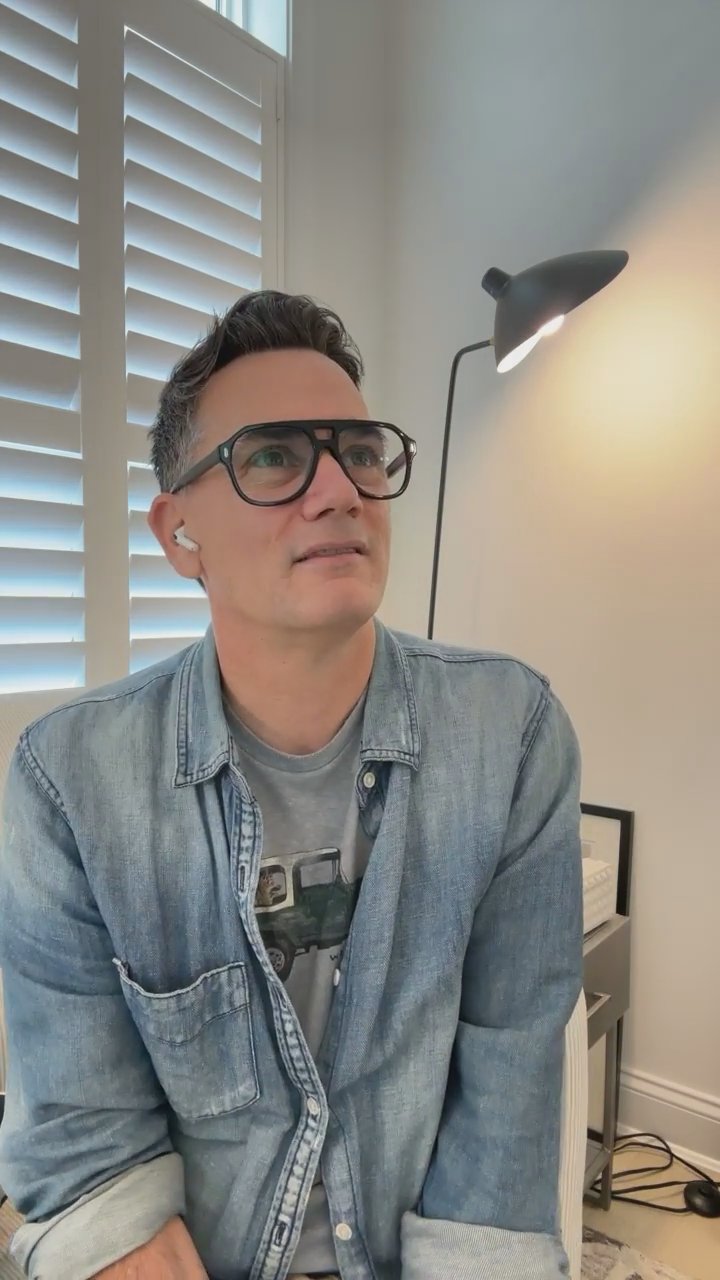
Hey, Cadre, it's Stefan. It's 11:00 on Wednesday. That means it's time for us to chat about mindfulness. And this week has been a really good week for me to think about my mindfulness practice because we have house guests, so we have my mother in law visiting for the week. We also don't have a nanny anymore. The nanny is done for the summer. She's about to return to college. So we are juggling two boys and keeping them occupied for the next three weeks until summer ends, which has proven to. Hey, Carissa.
And having a mother in law visit and two boys, young kids, five and seven, out of school provides so many opportunities to kind of consider mindfulness throughout the day. And I want to talk a little bit. Hey, speed pointer. I want to talk a little bit about the mechanisms of mindfulness. Hello, Anila. Welcome. But first, let me say mindfulness practice. People sometimes think that they can be more mindful in their day to day life without doing Erie, Pennsylvania, while I'm in Delaware. So we're not far.
I can. Maybe you can come visit us at the beach here one day. Speak, wonder. Oftentimes, what I hear from people who have practiced a little bit is that they understand that mindfulness is about being tuning into what's happening in the present moment without any kind of judgment or expectations, no bias, and seeing what arises. And this means if you are brushing your teeth mindfully, you are, hey, junk food junkie. Yeah. And rehoboth peach. So that means if you're brushing your teeth mindfully, it's like you're actually paying attention to the sensations of brushing your teeth.
Right. And you can have these mindful activities throughout the day. I, you know, you can eat mindfully, you can use technology mindfully. You can go for a mindful walk where you're really paying attention to all the sensations of the walk, what's happening around you, and that moment, versus just kind of spacing out and allowing stories and narration to happen in your mind on autopilot. So mindfulness is about kind of intentionally shifting to being aware of what's happening in the present moment.
And it's a really powerful capacity and a powerful skill. Hi, Jules. Good morning. Oh, I was just in Annapolis. We went to King's Dominion and Busch Gardens with my young boys and stopped in Annapolis on the way back. So I was just there. So you can do these kind of mindful activities, right? You can. And if you have one and something that you do and are practicing, I'd love to hear about it. Pop it into the chat. But we can do these mindful activities, and that's awesome. In fact, I think that as we practice and develop our practice, it becomes more accessible for us to be mindful in day to day activities.
However, we still need to do a formal practice. We still need to sit. We still need to spend some time sitting in meditation. Do I think it takes more energy or less to be mindful? That's an interesting question. I don't think that it takes more energy to be mindful. I think over time, what we do is we cultivate the capacity to be more mindful naturally, and therefore there's not some extra effort there. It's about being able to stay focused and keep your attention where you choose to place it. So being intentional about where your focus is and practice certainly helps us cultivate that skill, that ability to be more mindful in all activities.
But I don't think that question around do you think it takes more energy or less? I don't know. It's an interesting question. I'll give that a little thought. I get distracted so easily that this is something I hear so often from people who are practicing, particularly people who are just starting to practice, is that they keep on thinking thoughts. And it is a bit of a misconception that our minds are going to stop or that the intention or the goal of the practice is to have no thoughts. That is exactly.
Having thoughts come up is natural and is exactly what you should expect in practice. A long time ago, before I had kids, I used to own a yoga studio. And every now and then I would talk to someone who would say, oh, I would love to practice yoga, but I'm not very flexible. And that's kind of putting the cart before the horse, right. The reason that we practice yoga is to become more flexible. So if you're not flexible now, that's not a reason not to practice. And if we are easily distracted now, that is also a great reason to practice.
Jules says, I feel like I'm always chaotic because I'm always getting pulled in different directions or interrupted and speak. Wonder says, as a creative who is compelled to bend everything into poetry, wow, that's cool. I find myself snatching new ideas out of the air in the middle of a meeting or an event. Yeah, I can sense that. And I don't know that that's a problem. You know, the fact that we have a thought that pops up, that is not necessarily what we're intentionally focusing on. That's okay, because we can be mindful of how we interact with that thought.
There may be a time to kind of let that thought run its course and let that creativity happen. Or we may say, okay, I need to back burner this thought because I'm in the middle of something else and I want to keep my focus where it is. And, yeah, being mindful around children by watching how we speak and our actions, I'm going to come back to that in just a second. Junk food junkie. Because that's part of why I started really diving into mindfulness practice. In fact, I'll say that as a new dad, I was.
As a new father, I became a dad at the same time that I lost my father. He passed away. He had multiple melanoma. He died very quickly after being diagnosed. And that kind of set me on this little inner work journey. And part of it was my father and I didn't have a great relationship, and I wanted to have a better relationship with my sons than I had with my father. I wanted to repair that kind of intergenerational pattern that kept repeating in my family. And being able to mindfully choose how I show up around the kids was a big part of what drew me to practice and helped me to deepen my practice is I had a sense of how I wanted to show up for my kids and also knew that there were gaps, places where I wasn't showing up in the way that I intended to.
So mindfulness practice was a really a big part of me being able to step in to the experience of being a father, of being around my children in the way that I chose instead of in the way that my conditioning and story and all of those things kind of were autopilot and subliminally, subliminally directing me to do. I can remember Jungfu junky. I lived in Boston up until about two years ago when we moved here to the beach. And we lived in this community called Lincoln, which is just west of the city of Boston.
And we backed up to conservation land so we could walk out our backyard and kind of connect to the trails and walk through the trails in this conservation area. And that was a habit that I had with my older son, who's going to be eight soon, was after dinner, and he was probably two at the time. We would decide to take a walk through the trails, and we would walk to the waterfall, and there was a little waterfall there. And he loved going to the waterfall and throwing rocks in the waterfall. So what I noticed was after dinner, we would go on this little walk, and I was in this mode of getting things done and doing things, accomplishing something.
And what that meant in that terms of that walk is that I was really focused on getting us to the waterfall, the destination, kind of checking off the to do list item of getting us to the waterfall so he could throw rocks. And I wasn't necessarily aware of the fact that that meant that I wasn't present for the actual experience that he wanted to have, which was walking in the woods and exploring what he found. Because I was so focused on getting us to the waterfall, I was kind of pushing him along.
And mindfulness practice and being mindful, I would say, allowed me to kind of identify that pattern and realize that it didn't matter whether we got to the waterfall. He didn't care. Like, if we got there some days, great. And if we didn't some days, that was great, too. That it was just about spending the time with him on the walk. And sometimes we would spend a lot of time, like looking under a rock at bugs that were crawling around under there, or he would find a stick, or there'd be something other than getting to the waterfall on his mind that day.
And I don't know that I would have noticed that had I not, had I not been more mindful. So this practice, and going back to your comment, Jungfu junkie, was what helped me shift out of kind of the automatic mode of getting us to a destination and completing a task and into the mode of just being with him during that time. And of course, the walks became much more fun. We had a great time, and it became a really wonderful habit that we and a great part of our daily routine. So let's see what Jungfu speakwonder says.
I try to be especially mindful around my grandchildren by intentionally not being on my phone except when absolutely necessary. Yeah, this is a big one. Screen time. In fact, I just saw an article yesterday talking about how kids who are exposed to more time on their tablet, how much more frequently they are prone towards angry outbursts and how it increases their reactivity. Screen time is such a complex subject, and I have really been spending maybe the past several months exploring my relationship to technology and things like my phone that I'm staring at now.
This is a great use of it, right? I get to connect and share what's happening with people, hear what's happening in your practices and in your lives. And this is the way that I want to use technology. But that mindlessness that can come from just scrolling through the feed is something that I really am trying to avoid. So I'm with you there, speak wonder. Thankfully, you're changing the long history of your male generational story to being a new generational story to pass it for future. Yeah, that's what this practice is about for me.
This is great. I appreciate all the comments. Thank you. I've used a word a couple times already today. I've said intention. So what is our intention? How do we show up intentionally? And, you know, that word has a. It's a little bit loaded for me because I feel like there's a little bit of this woo woo quality around the word intention. And some people think of it as like, intentions are connected to manifestation and are connected to spiritual practice, which I think is wonderful if you have a spiritual practice.
But I'm thinking in the moment now, one of the things that made mindfulness practice accessible for me was that there was so much science and so much research about how mindfulness practices changed our structure of our brains, changed the ways that our mind works, can increase our sense of stability, resilience, our sense of equanimity, being able to kind of keep an even keel regardless of what life is throwing at us, our ability to decrease reactivity. So when our kids are pushing button or spouse or whoever is pushing buttons, not necessarily reacting, being able to choose how to respond to that.
So there's so much science and so much research. Thankfully, a teacher named John Kabat Zinn, western meditation teacher, kind of one of the main voices in the meditation movement, early on created a program called MBSR, which was a standardized mindfulness program. And having a standardized mindfulness program that was delivered in healthcare settings, in educational settings, what that allowed, is it allowed for scientists and researchers to study the efficacy of mindfulness practice against other practices.
Right. And other treatments. So people were dealing with pain, or people were dealing with stress or anxiety or sleeplessness. And now we have decades of research comparing mindfulness practice to all of the kind of more traditional medical solutions to these issues. Anxiety, depression, stress management, pain management, sleeplessness and insomnia, and the fact that it's been studied and that we have really strong pointers telling us what makes the practices work, what's effective and what's not effective, in what use cases are they effective?
And maybe when they're not as effective. That was important to me, to know that I was signing up for something that had been researched. And this shift happened because I had practiced meditation and started maybe 25 years ago. It was the thing that we did at the end of a yoga class, as you would have a body scan or do some MetSa practice of some sort. And generally, for me, I thought of meditation as relaxation. And it wasn't until I was exposed to mindfulness meditation that I realized how transformative the practices could be for me.
So I want to talk just a little bit more about one of these research studies that I'm mentioning. So there's a researcher named Berta Holtzl, and she's done a ton of research in the mindfulness space. And one of her most well known academic papers that speaks to mindfulness or relates to mindfulness was about the mechanisms of mindfulness. And what Britta said was, look, we see mindfulness having an impact in all of these different ways, in the ways that people are managing pain and stress and anxiety, sleeplessness and addiction, et cetera, et cetera.
But why does it work? And what are the mechanisms of mindfulness based interventions? Mindfulness based programs that are important in order for mindfulness to be effective as an option for people. And in this paper, she outlined three different important mechanisms of mindfulness, programs that need to be present in order for us, for those programs to be effective. And the first of those three mechanisms is intention. So it is participants ability to connect with why they are here to practice. In fact, in MBSR, when I teach MBSR curriculum, and it's not just me, it's all MBSR teachers teach it this way.
One of the first things that happens in a MBSR course is that the teacher will ask the group of students who are here, you know, what brings you here? And that question about what brings you here is really leaning in to this idea of what is your intention for this time? So why have you decided to go on this journey towards exploring a mindfulness practice and connecting with that intention, making it concrete in our minds, can become a really strong ally, particularly in those times when we don't want to sit and practice, when those times that we have doubt creep in, which all happens to all of us and still happens to me still today.
Connecting back with our intentions for practice is a really important mechanism, something sometimes people skip and I know a process of exploring the question, what brings you here? What are you hoping to get out of this? And getting people to connect into that? And the on those days when things are. When you're not feeling mindful, you're not feeling like you're ready to sit and practice, connecting back with our intention can be a really powerful tool. Something I guess I should say about intention is intentions shift over time, and I work often with students one on one, and I can, I'm thinking of this executive that I worked with, and he came to me because he was just stressed out, right.
So his intention was to kind of be able to manage his stress better. And we worked on practice and we practiced together, and he would practice on his own. And over time, he was, in fact, able to manage his stress more effectively. And therefore, that intention wasn't as strong for him because he had developed the skills in order to do that. It didn't mean that he wanted to stop practicing, though. What ultimately happened is he realized, hey, I'm not showing up as a boss in the way that I want to show up.
I'm not supporting my team members as fully as I could. I'm not showing up at home and able to be present, putting his phone down during dinner in the way that I want. So his intention initially was stress management, and over time it shifted into how he was being in all of these different relationships that he was having. And I imagine that that intention will shift over time. So intentions can shift. So first mechanism of mindfulness, intention. The second mechanism of mindfulness is attention.
So shifting from intention to attention. Now, mindfulness practice in many different ways is about taking our attention and directing it somewhere to an anchor or to a practice that we choose. And that could be, I'm going to sit and focus my attention on my breath for the next 15 minutes and knowing that you will get distracted, and we're going to get to that in a moment. It could be an MBSR. One of the very common practices is a body scan, where we start by focusing our attention in our feet and then moving it up our body, moving it from our feet to our legs, to our knees, to our chest, to our heads and hands.
And it's about moving our attention around intentionally. Right, directing our attention, choosing where we're placing it. There can be practices where we are allowing our attention to focus on the sounds in the environment, not necessarily identifying what they are, but just allowing them to come in. There can be practices where we put all of our attention into our hands and the sensations in our hands. The body is a really strong anchor for many people. The breath, I think, is probably the most popular or common anchor, although for some people, the breath isn't a great anchor for them to choose and they should work with something else.
I can remember when I was on retreat, I was at a ten day silent retreat, and I started to become very aware of the sensations of my heart beating. And I was able to anchor in to that actual physical sensation of my heart beating, which was an incredibly subtle sensation. And because it was so subtle, I really had to focus in order to stay with that feeling. And by the end of that retreat, I was feeling kind of heartbeat in my chest, but I was also feeling it at my temples, in my hands, in my feet.
And I was able to feel all of these sensations of my heartbeat. And that was about directing attention. Right, attention. Then there's a third mechanism of mindfulness that's incredibly important and oftentimes overlooked, which is our attitude about practice. So we can sit and I can scroll back up. I don't know. I'm not going to touch the screen, because I could. I'll probably break it. We can sit for practice, and thoughts are going to come up. And some people say they get distracted too easily.
People feel that is a sign that they're not doing the practice correctly, which is not true. But we can have the kind of constricting feeling that, oh, I'm not doing this right. Oh, another thought popped up. And you can kind of, like, try to force your way or muscle your way through the practice, which isn't terribly helpful, to be honest. It's better. And I think it's more supportive of practice to be able to have a kind, open, kind of curious mind as we're practicing and knowing that whatever comes up is okay, allowing whatever is here today to be here.
So, following onto the story about my heartbeat at retreat, you know, I had spent six or seven days in silence meditating, and then this heartbeat thing became very apparent for me. And the next three days were incredibly deep meditation experiences for me. My presence and focus and concentration kind of went to a place that it had never gone to before. And the spaciousness that came from that was really beautiful. And then I came home, and I have two kids. I have this little puppy sitting here, Rosie, she couldn't care less about my mindfulness lecture, and I have obligations, and I have all those things happening.
And I sat to practice, and I couldn't feel it anymore. And I sensed frustration. I kept trying to kind of force myself to reconnect with that sensations of the heartbeat, and I just couldn't feel it anymore. Occasionally still, I can kind of get there a little bit, but not in the way I did in that retreat. And I can imagine that for people who have thoughts coming up a lot and have this orientation around trying to have no thoughts and have just calmness, and it's always serene that that can be frustrating, and we can have the attitude that something's not going right, something's not.
I'm not doing this correctly, things aren't. I'm not practicing in the right way. But if we can stay open and curious and kind and just have that beginner's mind about our practice and know that every day we can begin again. Every time we sit, we can begin again. Every time that a thought comes up and we're carried away by that thought, we can notice and begin again. That attitude of being open and receptive and gentle with ourselves is much more supportive of practice. So those are the three things I'm going to leave you with today.
Thinking about your intention for practice. Jungfu junkies says he's been getting into practicing Zen recently and it's a big mindfulness thing for you. Yeah. So as you're sitting for practice, as you're contemplating practice, thinking about what your intentions are for practice, thinking about your attention and thinking about the attitude that you're bringing to your seat, to your cushion, to your chair, to the floor that day. As you practice. Keeping those three things in mind has been really supportive for me and I hope that it serves you.
So that's all for me today, Cadre. It's been wonderful to chat with all of you. Hope you have a great rest of your week, and I'll see you next Wednesday. Thanks. Bye all. I'm going to share the puppy before I go. There she is. One more time. There she is.