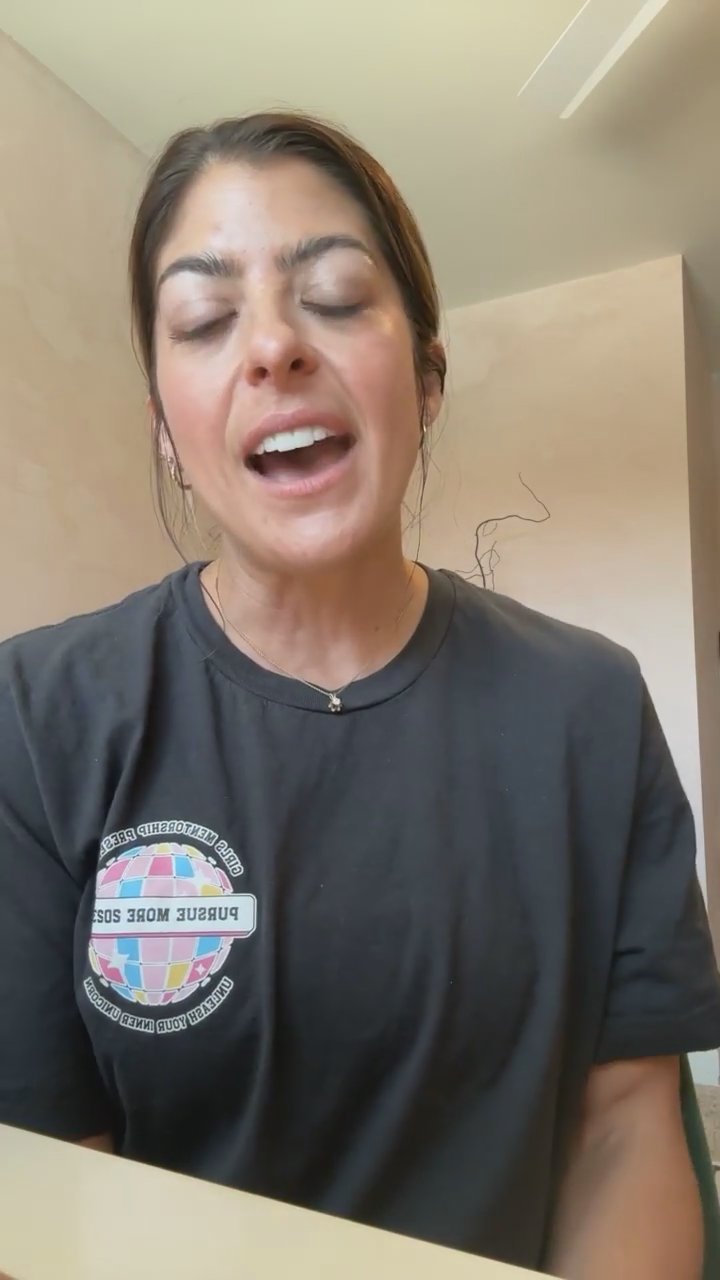
Join us every Thursday for insights and strategies focused on you, the caregiver as we dive into our toolbox discussion for practical tips on nurturing, resilience, and empowerment. A day to connect, share, and strengthen our support network.
You don't need to be a tween or a teen to tune into today's caretaker Thursday conversation. Anyone who loves kiddos is welcome to be part of this conversation. If you're popping on or watching this later, I hope video.
Last Saturday, we were at an unbelievable youth development convention. It was called rise to be an upstander. There we met an author who wrote the book self discipline. How do we do better as community members, as parents, as caretakers?
The root of discipline is not to punish, it is to teach. What Mary and I have seen in our business is the millennial generation of parents are adopting more of this soft behavior in terms of parenting. How do we find a balance of both?
How do we discipline without looking at it as punishment, but discipline is as teaching? This showed up for me in how I look at my kiddos doing homework. As a parent, I get to come in as a consultant and course correct and teach and guide.
discipline by just using your words wisely teaches them respect. Man, is it confronting as a parent myself because I fall short? Teaching them when I get hotheaded and then it shows up in situations where they then get hot headed. It's practicing.
Cadre: Where did I leave off with that baseball story? It was a whole little league drama. What I want you to take away is that the root of discipline is to not punish. It is to teach and practicing in your own way with the kiddos in your life.
Hello, Cadre fam. Happy, happy Thursday. My name is Jill and I am part of the dynamic duo called girls mentorship, and we work with tween and teen girls. However, you don't need to be a tween or a teen to tune into today's caretaker Thursday conversation because if there's parents out there, guess what, my friends, you are a caretaker. So welcome, welcome, welcome. Junk food. Junk food junkie. I love seeing your name pop up. Hi, friend, welcome. Hi, everyone. We have some new friends popping on.
Hello, hello. As you're coming in because welcome to my office, I need you to share with me where are you tuning in from? Let me know in the chat if you are local to Arizona, where I am because maybe we are neighbors. Maybe you're coming from Nebraska. Maybe you're heading from Cadre HQ in Minnesota. Let me know where you're residing from because I would love to learn a little bit more about you, jungfu junky. You're right. And good afternoon to you, too, uncles and aunts and grandparents, too. You're so right.
You do not have to be a parent to be tuning into this conversation. Anyone who loves kiddos is welcome to be a part of this conversation. Hi, Jules. Oh, northern Minnesota. Welcome, welcome. This is so exciting. It's fun as a content creator to jump on these lives because when you do pre recorded content, there's no engagement. So this feels like, you know, we're all hanging out at a coffee shop, chatting with one another. So thank you for the engagement because it gives me the energy, too, just to pay attention to you guys and not feel like I'm just talking at a camera.
So thank you for that. If you're popping on or watching this later, I hope video, you all are having a fantastic day. Today's conversation, so Mary is. We're dividing and conquering today. I have a business partner, best friend, Mary, and we talk a lot with parents. So we were at last Saturday, we were at an unbelievable youth development convention, and it was called rise to be an upstander. So here in the outer Phoenix area, there's a city called Gilbert. And there was about, let's see here, probably about six months ago now, last October, there was a lot of teen violence that actually went under the radar for about a year until they happened to go to a Halloween party that ended in, unfortunately, a child dying by violence.
So there was a group of kids who fought this child. There was really no reason why, and unfortunately, his life ended. And the kiddos who were a part of this all fled so the community has come together to. The community has come together to say, like, how do we do better? How do we do better as community members, as parents, as caretakers, as grandparents, aunts, uncles. So Mary and I went to this incredible event to learn how to be better upstanders, not bystanders, upstanders. And the cool part about it, too, was kids were welcome.
So kids from fourth to 8th grade, so the parents stayed to do a conversation with incredible speakers. And then the kiddos went somewhere else to do their own type of work and workshop type of conversations, which was really cool. So there we met this awesome author. He's an incredible speaker. He actually owns his own business as well. His name is Ned Johnson, and he wrote the book self discipline. Wait, I'm going to say that wrong. The self disciplined child. And for those of you who have read it, let me know if you've read it or heard of him before.
This was the first time that we actually heard him speak, but we do follow him on social media, and his podcasts are fantastic as well. So we heard him speak, and there was a quote that I wanted to bring into today's conversation and kind of workshop what it was, because it was really profound and left an impression on me. And I felt like this was a great conversation to bring to you guys today. And the quote was, the root of discipline is not to punish, it is to teach. And I'll say that again, the root of discipline is not to punish, it is to teach.
And for me, as a parent, I took this as, wow. Sometimes we hear the word discipline and we think, like, you know, we have to. It's like the iron fist where we come down on our kids and it's, you know, like, we, like, kind of like, we have to put them in check or put them in place, when in reality, what it is is us teaching them for them to do better. So what Mary and I have seen in our business is the millennial generation of parents are adopting more of this soft behavior in terms of parenting, which isn't a bad thing, because how we were raised, right, it really was like a.
Like, you do as I say, you get in line, you don't express yourself. You push down and shove down your emotions, where we millennials are like, oh, my gosh, we're never going to parent like that because we didn't like how that made us feel. And then, you know, as we have grown into adults, we've carried these patterns, these thoughts, these behaviors into our adulthood. So we said, we're not going to do this as parents when we raise the next generation. So what we're seeing now is the helicopter parents, the snow plow parents, where they're jumping in to really solve our kids problems when that's not working either.
So how do we find a balance of both? And discipline isn't a bad term, it's how we use it. So what does that mean to us? If you're like, okay, this is kind of a cool conversation, realizing that discipline is needed. It's needed for structure, it's needed for correction, it's needed for guidance. And what Ned said was, we have to do it in three different ways. And the acronym is SCP T. So it's supported, capable, and trusted. So supported is you being unconditional, like you love your kids unconditionally through their failures, through their mistakes, and supporting them through the highs and the lows.
We understand that the c is capable, so solving their own problems. This is really challenging for parents, because as parents, we love our babies. As grandparents, we love our grandkids, as aunts and uncles, or just even upstanders in the community, we love children and we want them to be successful. And when we see conflict happening, we want to jump in and solve the problem. But what we're doing is robbing them of the experience, of having them figure it out on their own, to feel the discomfort, to feel all of those feelings and then being able to say, I'm going to listen to you, I'm going to empathize and then validate what you experience versus you jumping in and doing it for them because you're not teaching them anything.
So that piece, for me personally, too, is a struggle. It's definitely a challenge. And then the t is trusted. So we have to trust their abilities. And if we don't, then we get to support them with conversations, with new skills and new strategies. And this showed up for me. And then junk food junkie, thanks for that call out. I know I brought a conversation a couple weeks ago about, he said, did I resolve the situation on your son's baseball team? So I'll get back to that because I do have an update for you.
Thanks for checking back in. So an example of SCT. How do we discipline without looking at it as punishment, but discipline is as teaching? This showed up for me in how I look at my kiddos doing homework. So what Ned taught us this last week that I'm like, okay, I'm going to adopt this, and I want to share this and gift this with you guys because this is really helpful. This is really helpful in terms of not jumping in and solving problems and teaching your children or your. Your, you know, fill in the blank how to be responsible, how to take accountability for their actions.
And it is. It's under these three terms, so. And use it. Mine is. My example is through homework, but, you know, find yourself in this example. So he said, homework. Homework is. Okay, cool. You know me. I'm like, all right, son, it is okay. It's time for homework. And I'm constantly just like, reminder, reminder, reminder. And then I'm getting frustrated because it's not happening. And it's a whole. You can imagine it's a tornado around here. Then he's heated. I'm heated. So what am I teaching him in that?
And what he said was, so there's three things you can say, okay, buddy, we're doing homework. Now, what's your plan? Tell me your plan to finish your homework. Because my plan might be like, hey, after school, I just want you to do it. But his plan might be, I'm gonna come home, and I need, like, 30 minutes of me just playing basketball outside. Like, I just had a full day of school. For me, my plan is 30 minutes of basketball outside, and then I'm going to come in and do my homework. So that's his plan.
So asking your child, what is your plan? And then you say, you're going to bring in that s piece. How can I. Do you need any support from me? Do you need support from me in doing any of these things? Most likely, they're going to say no, or they might say, hey, yeah, when I come in and do homework, I need you to help me with my grammar. Awesome. Cool. So in 30 minutes, I'll come back, and then I'll meet you at the kitchen table. So that support. And then here's the piece. Okay, cool. So you have your plan.
I know where to support you. And then I'm gonna be following up the follow up piece. I'm gonna follow up with you. So then I tried this because I learned this on Saturday. I tried it this week, and you guys, the fighting diminished, and one of the days, he didn't do it, and that's where I got to hold him accountable. Hey, buddy, you said that you were going to do this, and it's okay that you didn't, but we want to make sure that we're timely in what we say we do with our plan. Do we need to now kind of just change the plan a little bit?
Because if you don't do your homework, that's on you. And it takes the pressure away from me having to manage and micromanage and manage some more. Because at the end of the day, if the homework doesn't get done, that's on him. And he needs to take responsibility for his actions. And he needs to learn several different ways. He needs to learn the follow through piece of doing what he says he's going to do and then on the flip side of not doing what he says he's going to do. And then as a parent, I get to come in as a consultant and course correct and teach and guide.
So this, you guys, has helped me so much this week that I was like, I have to talk about this today on Caretaker Thursday. Because this is as us as adults, our responsibility is to help guide and support and love our children because we're raising the next generation. So to wrap up everything, I'm going to kind of go through the chat here. Jungfu junkie, you said discipline by just using your words wisely teaches them respect. You are so right. And thank you for saying that because I catch myself a lot.
I am not. Even though I do this work all the time for other people. Man, is it confronting as a parent myself because I fall short and I have learned these skills and tactics as a parent to not lose my cool? Because you're right. What is that? Teaching them when I get hotheaded and then it shows up in situations where they then get hot headed, whether it's in sports or at school or around friends. So it is. It's practicing. It's practicing using your words wisely. But if you're not aware of that yourself, you know that that's the first piece is being aware yourself as a parent to then be able to take these strategies and put them into practice.
So thank you for calling. Calling that out. And then I'll circle back around because you made mention of the baseball team and Jungfu junkie, you're actually gonna have to remind me, was it. Where did I leave off with that baseball story? Because we're gonna have to bring people up to speed. Was it the parents getting heated and then the kids and how that went about? Because it was a whole little league drama. Is that what you're asking is just like how it resolved? So for those of you tuning in around this baseball drama, I brought how sad I was around the little league that my son is in.
And the parents got really heated because a certain team kind of capitalized on the best players. So this team is like bulldozing all of these other teams and parents are complaining to the board members, which my husband is a board member, and what's happening is their frustration is spilling onto our children. And now the teams and the kids are acting and conflicting in such an unhealthy, nasty, negative way that it was gross. So I brought this to a caretaker called to talk about it because how we act, just like Jungkook Junkie said, choosing our words and knowing who's around is so important because things are caught, not taught.
So, yeah, junk food junkie. Thank you. Bullying on the baseball team and by parents. It's crazy. So, needless to say, how it resolved, there's really no resolution. Besides, the board members went and had a parent meeting on every single team to just hear and have everybody air their grievances. But the season's almost over. There's four weeks left, and basically, they just wanted to be heard, which we can all relate to that, but there was no resolution. Besides, everybody needs to just be done as parents and then communicating with your kids how important it is to be kind and to treat others the way that you would want to treat yourself, your parents, your siblings.
Like, we got to, like, unite based off of skill level or what's going on. Like, we got to squash it and move forward. So, that was how it was resolved. And this week has been better. You know, you can still get, like, the glances of, like, the side eyes, and I'm just like, I don't want to even entertain that. So that's the best resolution that that happened. But to land the plane here on this conversation today, what I want you guys to take away is that, quote, noticing that the root of discipline is to not punish.
It is to teach and practicing in your own way with the kiddos in your life, whether they are your children or not, is that ScT support capable, knowing that they're capable and then trusting their abilities to. To get it done, and. And then let us know how that works for you, whether you go into the community feed and share how that was or next week, join me again. Mary will be with me, hopefully, and we can continue this conversation, because why I love Cadre so much is because this is a platform to get filled up, and we meet you where you are in your journey.
And we are no different than you. There might be. Yes, we are experienced in different ways, but at the end of the day, we're here to share our lived experiences with you, to say, hey, let's be upstanders. Right? That. That word that I learned this past weekend to say, how do we be upstanders in our life? It starts with us in order for the ripple to really go past, beyond, just beyond us. So thank you for being here, truly. And you have one more person behind me at 01:00, Miss Shannon, who's going to round out this incredible day of caretaker Thursday.
So tune back in and continue to feed yourself with really good messages because the more we know, the better we do. And with that, y'all have a fantastic Thursday and wonderful weekend. We'll catch you next week. Bye, everyone.