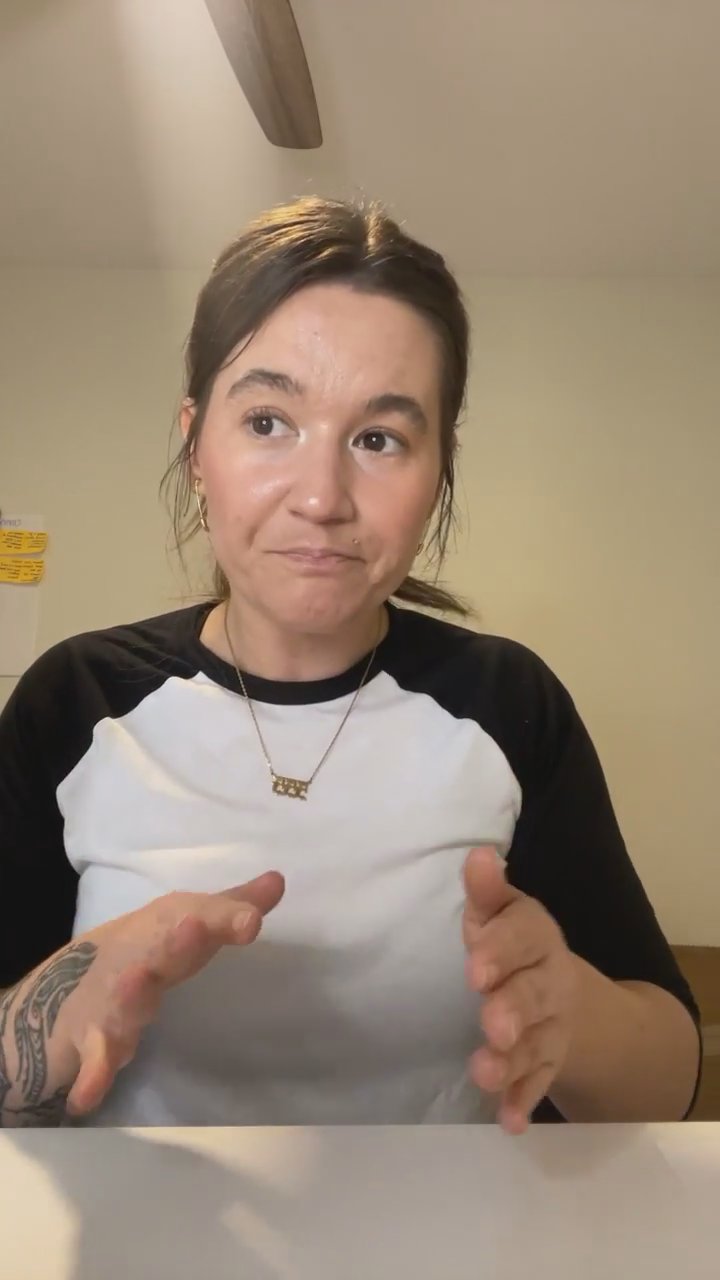
Join us every Thursday for insights and strategies focused on you, the caregiver as we dive into our toolbox discussion for practical tips on nurturing, resilience, and empowerment. A day to connect, share, and strengthen our support network.
We are on caregiver, caregiver Thursday. Jill and I own a company called Girls Mentorship. We teach life and personal development skills to teen and tween girls. On Thursdays, cadres livestreams are all about supporting those who support others.
Jill: My neighbors kids were on spring break. She says the dad needed to level set expectations with his kids. Jill: Kids thrive when there is routine and boundaries. This is one big communication strategy.
When you can simplify what's going on in the household with basic standards of communication, that makes for harmony. The root of all butting heads can be boiled down to miscommunication. Have a fun family meeting. Go out, have a fun dinner. Make it a fun experience.
Coming up, I think, at noon, is Shannon Paul. And then we've got live streams throughout the weekend. So don't forget to tune in Friday, Saturday, Sunday for these lived experiences. And you can catch Jill and I again on Tuesday with what is trending.
What's going on, party people? Happy, happy, happy Thursday. We are on caregiver, caregiver Thursday. And if you guys don't know me, I am half the duo that makes up girls mentorship. So last Thursday, you got a taste of Jill by herself, and this Thursday, you get me by myself. So again, happy Thursday. On Thursdays, cadres livestreams are all about supporting those who support others. And at girls mentorship, we help inform, empower and support people as they support the younger generation. And what does that look like at girls mentorship?
So Jill and I own a company called Girls Mentorship. We teach life and personal development skills to teen and tween girls. So please don't hop off if you're not a teen girl, because these strategies will be directly focused on you, the caregiver, and how you can support the teen and tween girls in your life. And realistically, these skills and tools aren't specifically aimed at girls. They are very applicable to boys as well. Jill and I just happen to be girls and teenage girls at heart. So that is the demographic that we tend to focus on.
And we know that the work we do. Hi, Shannon. We know that the work we do with girls does not get fully expressed if they don't have the support from their parents at home. So it is important for Jill and I to be a part of Cadre and the Cadre sphere as much as possible because we need community members to link arms. I bet a lot of you feel like we do in the fact that community feels really isolated in this current day and age, the problems seem really, really big. And therefore, individuals aren't necessarily taking the problems on because the thought process is, what kind of difference am I going to make?
And that's what's so unique and special about Cadre is we are all coming together and linking arms. So whether it's mental health and wellness, whether it's what's trending in the world that you need to be in the know around, whether it's supporting caregivers on a day like today, we're all coming together for the greater good of our planet. And that feels like a really incredible mission to be a part of. So thank you, Shannon. Hi. Speak wonder. Everyone who pops on these lives, not just ours, but the four prior to ours, Miss Shannon Paul will be after one.
It's been really, really cool to be part of this community that is caring and giving back to the people who need it most. So today I want to talk about communication. And because this app is so good at sharing our lived experience. I want to share some of my own lived experience. I am 36 years old. I am single. I am a dog mom of three. But I love kids, obviously own a business that is very specific. Teens and tweens. And with my love of kids and being a community, community advocate, I do my best to help out my community.
And what that looked like last week while my neighbors kids were on spring break was opening my door for them to come over. Right? He was at work. He had babysitters. He's a single dad. I had an open door policy for them to come over throughout the week. They're little kids. I have little dogs. They loved to come over and hang out with me. So I think it was later in the week. Obviously, they had spent a lot of time with one another. Dad had them all week. So that was a lot of time for him as opposed to what he was used to and let's just say, like, energies were high, attitudes were high, and some things came to a head, and they came to a head while we were all outside kind of playing.
I live on a golf course, so I was running with the dogs, the kids were outside running with the dogs with me, and one of the girls threw a little bit of a tenter tantrum. And you could tell that the dad was really, really frustrated and he was trying to keep his cool. So he basically corralled his kids and they went home. Well, he called me a couple minutes later, and he said very openly and honestly, that was really embarrassing for me. And this is a really hard question to answer, but I need your advice.
So he was not coming to me as a neighbor. He was coming to me for my expertise. And the one really important piece of advice that I gave him was the continuity, the continuation, the foundation needed to be set for his children to understand expectations. In a divorced household, it can be really hard to level set with your kids and for them to feel any sort of steadiness between households, especially if parents between those households are non communicative, if the relationship was volatile to where they really are, running two different households and they're not on the same page with one another, it can be really hard on the kids understanding how they show up this way versus how they show up that way at two different households.
So for him, the one piece of advice that I gave him was that he really needed to level set with his kids. It is great to be a team manager and bark orders and tell them what to do. Sometimes they need that. However, it's really nice when they feel like they're teammates with you. So I told him that they needed to have a family meeting. They needed to sit down around the table and level set expectations. A what were the family values? What was important to his family unit? And they could all throw things in the bucket.
This is important to me. This is important to me. And then really niche it down from there. What are the three to five things that are really important to his family unit? So they get the values out of the way. The next thing that they needed to discuss were expectations. As much as kids will roll their eyes at you when you are telling them what you want from them, kids thrive when there is routine and boundaries. They cannot run amok. Their brains are not developed enough for them to be able to have zero boundaries.
So I told them that after values, you needed to have a conversation about expectations. That is when you are at dads, this is what I expect from you. And that is all well and good when you can speak it out. It is really hard to make sure that you stick with those expectations, right? Because at the end of a long day, it's really easy to hand over an iPad because you need your alone time. So if the expectations are we're only going to be on screens for 1 hour a day, then you have to stick with those expectations, right?
And those expectations can't just be spoken out to your kids one time. Those expectations need to be said in multiple different ways, multiple different times. And they need to be heard from multiple different people. And this is where I reiterated to him, this is why it was important to have community members who were involved with his family as well. So whether it was me or a friend's house that they go to, it's important to share with your community what your values are and what your expectations are.
So other people are aware of how to treat your children. This is all one big communication strategy. And where Jill and I see breakdowns happening is all around communications. We have unspoken expectations of our children. And when they don't meet those expectations, they get in trouble or there are consequences. But we tend to forget that their frontal lobe, what's going on in their brain, their frontal lobe isn't fully developed until really the age of 25. And let me pull up a graphic that I have around what the frontal lobe is responsible for.
Planning, problem solving, motivation, judgment, decision making, impulse control, social behavior, personality, memory, learning, rewards and attention. So if this big piece of your kids brain isn't fully developed and you're expecting them to act a certain way without actually telling them that those are your expectations. They're going to be all over the place. Their decision making is based on God knows what. Their problem solving skills are inadequate. They don't know how to plan. They're just starting to learn their social behavior and their personality.
So let's recap. Set some values for your family. Be clear in the communication with your family. Then level set on expectations. How do you expect your children to act when they are home versus when they are at school versus when they are here? The communication piece is literally the red thread that brings everything else together. And when you are misaligned in your communication, you're going to be misaligned in your family unit. Speakwonder said, fractured communication is like tripping over what we don't say, right?
It's exactly that. If you're not verbalizing what you expect somebody else to do for you or how to behave, they're going to have zero idea. We don't have telepathy. As many, as many people think they have telepathy and can read other people's minds. We can't read what's going on in other people's minds. So for him, my neighbor, I kind of fire hosed him. I didn't feel bad about it because I knew that he was going to take what he needed to take and leave the rest for a later date. But it really got his wheels turning.
So he said to me the next day, I realized I was angry at something where my kids didn't understand why I was angry. I hadn't ever spoke those expectations, and I hadn't ever really thought about the fact that we needed family values in order to build our foundation off of. Now, his kids, he's got three under the age of ten. Are they going to get it right away? No, they're absolutely not going to get it right away. Are there going to be frustrations within them not getting it right away? Absolutely there are.
But when you have a deeper understanding of why something is happening the way it's happening, and how to really unite everyone, a shared language, things get simpler. Simple does not mean easy. But when you can simplify what's going on in the household with basic standards of communication that everyone understands, that makes for harmony in the household. So for you caregivers out there who might be frustrated with the ways that whomever you're caring for, whether it's your kids or maybe it's elderly parents, try to get on the same page by simplifying the communication level set with one another.
Have a family meeting about how you all want to be communicated with and what works for the family unit. Things will feel a lot less pressure and a lot less stressed if you're all able to get on the same page in that way. Because if you're speaking this up here and they're understanding this down here, it's like you're speaking French while they're trying to understand English. It's never going to work and you're going to continue to b*** heads. So what is your communication style? What are the communication styles of the people you are trying to communicate with?
And how do we get on the same page with one another? That has been one of my biggest takeaways with working with as many families as Jill and I have worked with is, generally speaking, the root of all butting heads can be boiled down to miscommunication. So let's work this week specifically on getting on the same page. Have a fun family meeting. It doesn't have to be drab. It doesn't have to be you're in trouble. Go out, have a fun dinner. Make it a fun experience. So people want to have these conversations again in the future and remanage expectations at different times throughout your guys relationships together.
So with that, y'all, I'm going to leave you to your Thursday. This was a Thursday toolbox talk. Coming up, I think, at noon, is Shannon Paul. She is incredible. She is vibrant. She is so fun to tune into, let alone the four other live streams that are available for playback. That happened prior to today. And then we've got live streams throughout the weekend, y'all. So don't forget to tune in Friday, Saturday, Sunday for these lived experiences and these incredible creators that we have coming on to pour directly back into the community that we are quickly building here at Cadre.
So thank you for your time. I know it is one of your most valuable resources. I appreciate it so much. And you can catch Jill and I again on Tuesday with what is trending. So I hope you guys have a great start to your weekend. Obviously, today is pre Friday, and we will see you again next week. Bye, everyone.