Tune in every Tuesday for a vibrant discussion on the pulse of our communities, bridging online trends with real-world happenings. Let’s explore the latest insights & share in a day dedicated to connecting & learning together.
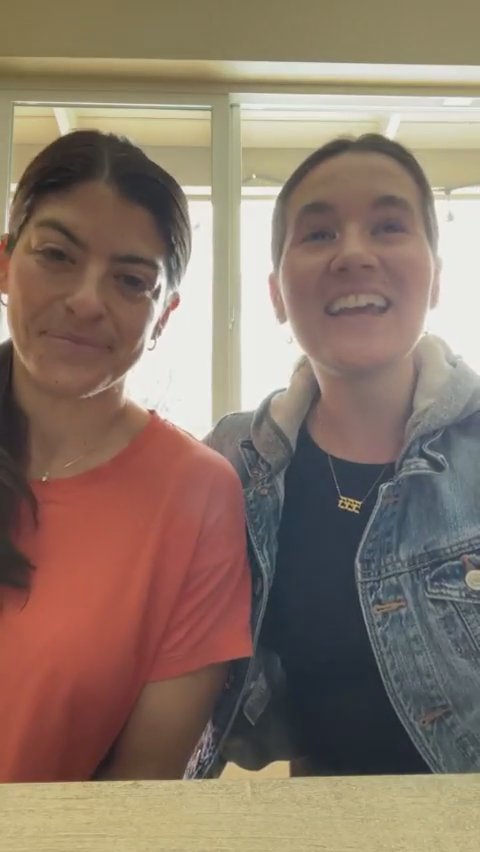
Tuesday is a blessed, blessed Tuesday. Jill and Mary are the dangerous duo that makes up girls mentorship. We are a personal growth and development company for teen and tween girls. Please stay on because what we talk about is relevant to you.
Our segment for the cadres, fear is trending. Tuesdays. Trending Tuesday. What is trending? What's going on throughout, the World wide Web? What is going on in Carmen Sandiego? We have loved aging.
We are having an incredible fear dance with imposter syndrome. We work with tweens and teens, that beautiful adolescent stage. Our presentation is all around increased screen time and what it does to the frontal lobe. Without your brain, you can't really do much more.
We know that screen time is at an all time high. Kids between the ages of eight to 18 spend about seven and a half hours on a screen a day. How do we as a society stop this trend?
A family contract is really important when we're talking about usage of screen time and social media. Eating right, moving your body, and the proper amount of sleep are all important. Addiction is difficult however you slice it.
Spend some time putting your phone away and connecting with the people you love the most. Thursday is a caretaker day where we're pouring all back into the caretakers of the world. We'll see you again on Thursday.
Hello, Tuesday. It's Tuesday. A blessed, blessed Tuesday. Today is Tuesday. How's your Tuesday for you? Well, if you don't know us, that was the perfect introduction. This is Jill. She's the musical portion of girls mentorship. I am a singer in my free time. In her dreams. In my dreams. Not a good one, Mary. We are the dangerous duo that makes up girls mentorship. What is girls mentorship, you ask? We are a personal growth and development company for teen and tween girls. If you are not a teen and tween girl, that is a okay.
Please stay on because what we talk about is relevant to you. Because we're talking on this Tuesday. Our segment for the cadres, fear is trending. Tuesdays. Trending Tuesday. What is trending? What's going on throughout, I want to say the World wide Web. What's going on in the world wide web? What's going on in Carmen Sandiego? Oh, wow. What a poll. I loved finding Carmen San Diego. What a game. Yeah, we just aged ourselves, which is fine. We have loved aging. It's been such a gift. Anywho, we are experimenting this week with imposter syndrome.
Definitely. We are having an incredible fear dance with imposter syndrome. So let me tell you why we have the great privilege of getting to rub elbows with several people in the youth development space. So whether it be on the clinical side, things like behavioral, short term behavioral clinics, long term behavioral clinics, mental health clinics, or on the other end of that spectrum is like school counselors, therapists, and then there's us. We fall somewhere in the middle because we work on the life skills, personal growth and development.
What does that include? That includes how do you teach kiddos? Because we work with tweens and teens, that beautiful adolescent stage, preteen adolescent stage. And it's teaching them the things that we so desperately wanted and needed at their age. So confidence, self esteem, self awareness. How do you deal with relationships, friendships, sibling relationships? Conflict in those things, conflict, decision making. So the things that make you a well rounded person. And we're not looking for a perfect person, but a person with character and integrity.
We need more people to pour into our kiddos and we get the honor and privilege to do that. So that's what life skills looks like in the work that we get to do. And we were asked to speak at the Amen clinics here in Scottsdale, Arizona, for a little lunch and learn tomorrow. And if you don't happen to know what the Amen clinics is, it is the no pun intended brainchild of Doctor Daniel Amen, who is an incredible brain scientist. He has, I think, twelve clinics across the United States that really look into what's going on here.
His main thing is we've been able to diagnose a broken arm because we were able to actually look at it right. We were able to get the x ray and see where it was broken. His whole spiel, where he started, why he started, was because generally speaking, for a long, long time, you would go to your doctor and say, hi, I'm anxious. And they would say, you have anxiety, hi, I'm depressed. You have depression. But we actually didn't get to look at the brain that is the organ inside your head, to actually understand what was going on inside it.
But at his clinics, they do brain scans and they can see if you have early onset Alzheimer's or dementia, adding, it's incredible how far we've come in terms of being able to look at our brain to give us answers to questions that we didn't have answers to prior and a path to healing for that. So we got asked to do a talk at the Amen clinics tomorrow, which is why we're dancing with a little bit of imposter syndrome, because we're not doctors. We're not. Not therapists, we're not counselors. We're camp counselors.
We are camp counselors. So we're going to be sitting amongst a room full of doctors, psychologists, mental health professionals, and we're going to be delivering a conversation all around screen time and the impact that it has on the growing brain. So we know a lot of information about screen time. And as parents, I am one myself. It is a constant struggle juggle to balance. Our kids are growing up in a world full of technology. It's not going anywhere. So how do you do it in a balanced way? How do you do it in a healthy way?
And what do you share with your kids so that they understand that their brain health is the most important health that they get to nurture and honor, because truly, without your brain, you can't really do much more. So have we seen the wizard of Oz? That is true. Scarecrow didn't have a brain. Right. He functioned, but was it? Well, it wasn't functionable. Yep. So our presentation, like Jill said, is all around increased screen time and what it does to the frontal lobe. So the frontal lobe houses your prefrontal cortex.
It is responsible for decision making and how we feel in terms of. Let me just pull up this little graphic here. Planning, problem solving, motivation, judgment, decision making, impulse control, social behavior, personality, memory, learning rewards, attention. So if we take all of those things and we stick a cell phone in between them, and now the frontal lobe of a 15 year old is trying to plan based off of what his friends are doing on social media. He's trying to problem solve with 4 million of his closest friends.
The motivation might not be there because there's comparison towards what somebody else is doing. The judgment is increased because now everybody sees what's going on. When we were growing up, I often liken it to this, because I didn't get my first cell phone until I was a freshman in high school. And it was an Nokia or a flip phone, which didn't have the access to the information and the Internet that we do now. But when we got to leave school on a Friday, we got to disconnect from our friendship group.
We didn't know what anyone was doing until we heard about it the next week at school. That disconnection time is really, really important for a developing brain. The constant plugged in has huge, huge, huge ramifications on our social behavior, our personality, our memory, our ability to learn, our attention seeking behavior, and the reward systems in our brain, right? Because if you think about going to school, what did we read earlier? And hoping that your crush would complement your new pair of jeans.
It's worlds different than posting a video on TikTok and getting thousands of likes. So if you think about the dopamine and the oxytocin and the serotonin going crazy in a kidney brain, I need more of that. I just got validated by not only my friends, but new friends, friends that I don't even know, strangers that are ending up on my side of the Internet, right? So it is so different going to school and having that face to face human interaction, whether it's positive or negative, because sometimes, too, you know, your kiddo is going to experience some bullying and some.
Some conflict between friends or other groups of people. And that feels very different than getting bullied online, because the bullying online stays online. There is no getting out of it. And then once one person continues to hide behind a keyboard, more people jump on board, and that feels so different. So, so different than having a conflict face to face with somebody else. Well, that's interesting. A good point that you bring up there is people love to bandwagon. So when our frontal lobe is not fully functional, which, by the way, it does not become fully functional until the age of around 25.
So if you felt less than or like you were lacking skills in your twenties, you were your brain wasn't fully developed. Now, if you're an adult and you're brain feels lacking, then there's other things that we can do to address that. But that frontal lobe is fully functional, is kids love to bandwagon because they see that they're getting a result from something. So if somebody starts it off and is bullying, and then they're getting comments and arise out of somebody else, they want to jump on to get that same social reward.
So we're basically pre programming our kids to take these actions into their adulthood. Then really what happens is almost the calcification of those behaviors and attitudes within that frontal lobe. We had a conversation with a camp director in California who does camps that are called reset camps. So for four weeks, was it four weeks? Four. Four to six weeks in the summer, they take on teens and tweens who have phone addictions, which, if we're being honest, all of us have phone addictions at this point.
However, they take on campers with phone addictions and they completely detox them. There are no phones allowed throughout the entirety of his camp. And we asked him the final question of our podcast was, what happens if we continue along this pace as a society? And he said, I'm not a doctor. I do have clinicians and doctors on staff. I'm just a camp director. But what I've seen over the past ten years of me doing this, I think we're gonna be the generation of non functioning adults. Gen Z. Gen Alpha will be the generation of non functioning adults and early onset Alzheimer's.
Because we're making our brain do something. We're rewiring it completely. We're making it do something that it was never meant to do. And that was it. We ended the podcast there because it was a mic drop moment. And so terrifying. Oh, my gosh. It just. So if you're wondering why we're bringing this conversation, like, why we're so passionate about it, is because of that. That moment, that conversation, that mic drop of, like, well, how do we as a society, if this is trending, right? We know that screen time is at an all time high.
We just read a statistic from the CDC between kids between the ages of eight to 18 spend about seven and a half hours on a screen a day, and that doesn't even include. And that does not include anything related to school. So if they're on chromebooks at school, if they're doing homework on. On a device that doesn't include that, four and a half hours are spent watching tv and again, that, that's an average. That is, that is insane. Within, if that continues for an entire year, it's said that they're basically spending 114 days just watching a screen.
We have 365 days a year. That is insane. 114 of their entire day days is spent watching a screen. So how do we as parents, how do we as a society stop this trend? Well, it's going to take a lot of us, a lot of us, in order to see the change that we want to see. Knowing, knowing what we know. There's a lot of information at our fingertips. What do we do in order to kind of just put a pulse on? Okay. I am a parent. I am a caretaker. I am, I want to be a part of this. Even if it's for yourself, you need to check in with yourself first.
So how is your sleep? Excuse my spit. As I say that she's very, very passionate about it. How is your sleep? Are you getting the correct amount of sleep that you need to function every single day? Are you going to bed at night with your phone? Are you waking up to your phone? Is that the first thing that you grab? And is that the last thing that you put away before you go to bed? That is so, so, so important in your overall brain health and mental health? The second thing is, how is your nutrition?
Are you eating the proper things? Are you? Because, like, all of that is going to impact. Impact and it's going to be important for your overall brain health. Again, mental health. So sleep, your diet, and then most importantly, you need to get outside at least for 60 minutes a day to get some sun, to walk around, to move your body. Because if you are sitting still for hours on end, it is so important to sleep, move your body and eat properly in addition to checking in with your amount of screen time.
So if you are balanced, if you are on your phone, we're on our phone a lot because truly, that's how we run our business. However, if it's sacrificing or if it is, if something else is getting in the way of us being productive, then that is a sign for you to take note. So same with your kiddos. If they are spending a lot of time on their screen, if they're video, if they're, if they're gaming or whatever and their grades are sacrificing, if they're noticing, if you're noticing that they're not playing outside, that they're not imagining or they're not being imaginative, that is your indicator to do something about it.
And it's starting with those three things, eating right, moving their body, and the proper amount of sleep. If you can't get those in order, there's. You can't start looking at pulling back the amount of screen time that they're currently having to make a change. And I think that's a really good point in terms of how we like to make change. I worked at a gym for years and years and years. I owned a gym. We focused on nutrition. And it's funny, the amount of people that want to focus on things like nutrient timing.
m. In order for my muscle growth to have the best chance of growing when they're not even focused on getting the appropriate amount of water. So we like to make sure that the foundation is set for you. To then build off of that foundation, and make no mistake about it is going to be hard. Addiction is difficult however you slice it. We're just talking about a new form of addiction. Addiction has been around for a long, long time. This is a new form of addiction. So think about what we said earlier.
The pleasure centers in our brain are getting constant hits of dopamine, oxytocin, and serotonin. That's like gambling. So if you have a hard time getting your kids off of their video games to come eat dinner and they're yelling at you, it's because they have no regulation of what's going on in their brain, because they're getting comments and kills and likes and follows left and right, and they don't know how to disengage from that. So taking away the phone isn't necessarily the correct answer right out of the gate.
What Jill said was, those three things need to be honed in on first. Right. A family contract is really important when we're talking about usage of screen time and social media and where we see a lot of families faltering is the problem seems so big that they almost throw their hands up and say, well, we can't do anything about it. And that is the number one lie people are telling themselves about disconnecting from their phone. It's here. It's a problem. It's gonna stay because where's it gonna go?
Right. I have to give my child a phone because everyone else has a phone. That's not true. My daughter needs social media because everyone else has social media. She's gonna feel left out. Let her feel left out. And I know that is a really hard pill to swallow, but leave her out of seeing pornography. Leave her out of seeing people getting bullied, including herself, leave her out of seeing things that her brain cannot comprehend because her frontal lobe is not fully developed. She will thank you once she surpasses those teenage years.
We've seen that time and time and time again, late teens, early twenties, saying, thank you for withholding this from me. I feel like I got to experience childhood, right? There are workarounds, there are ways around. There are conversations that you can have to lose your kids in to this very important conversation. But I think the worst thing that we're doing to our kids brains right now is melting them because of the amount of screen time. So last week we talked about YouTube and the AI generated content that our kids were viewing on YouTube and how they are not able to tell fake from reality.
And this week, we're building off of that conversation by talking about just how much time they're spending on their stream screens. And the repercussions of this ungated ability to just have a supercomputer in the palm of our hands all day, every day are huge. We have so much to lose. And that's why we talk about this on trending Tuesdays. Because as much of work we're doing, we need the community to get involved as well. We can tell this to the kids that we work with until we're blue in the face.
But if they go home and their parents don't actually get on board with the concepts we're teaching, the messaging falls flat. We need to link arms as a community in order to help save the next generation of potential leaders. And we're not doing that right now. We're not. So let this be a reminder not only for us, because what we're saying, we also need to practice. So pay attention when you have that cell phone in your hand and you're trying to have a nice dinner with your family. Put the phone away.
Put it on do not disturb. Put it away airplanely. Practice you detaching from your phone and not panicking when you can't find it. When it doesn't travel with you from room to room, it starts with us because we're trying to hold an expectation with our kiddos, and if we can't even do it, why are we expecting them to do the same? We're all in this together. So with that, you guys, thanks for tuning in to this trending Tuesday, and let's go out and just feed our brains with good, good goodness. Spend some time putting your phone away and connecting with the people you love the most and showing them that they are.
They're seen, they're heard, they're valued and love by you connecting to them without distraction, in person. Dang straight. We will see you on Thursday. We will. But until then, you have a stacked full Wednesday of incredible creators on this app. So make sure that you check out the schedule on the instagram. It is directly in the stories for you to find so you can look and resonate with some of our other incredible creators on this app. But we'll be back Thursday. That is a caretaker day where we're pouring all back into the caretakers of the world.
That's right, go off and have a transform Tuesday. We'll see you again on Thursday. Bye everyone. Bye.