Join us every Thursday for insights and strategies focused on you, the caregiver as we dive into our toolbox discussion for practical tips on nurturing, resilience, and empowerment. A day to connect, share, and strengthen our support network.
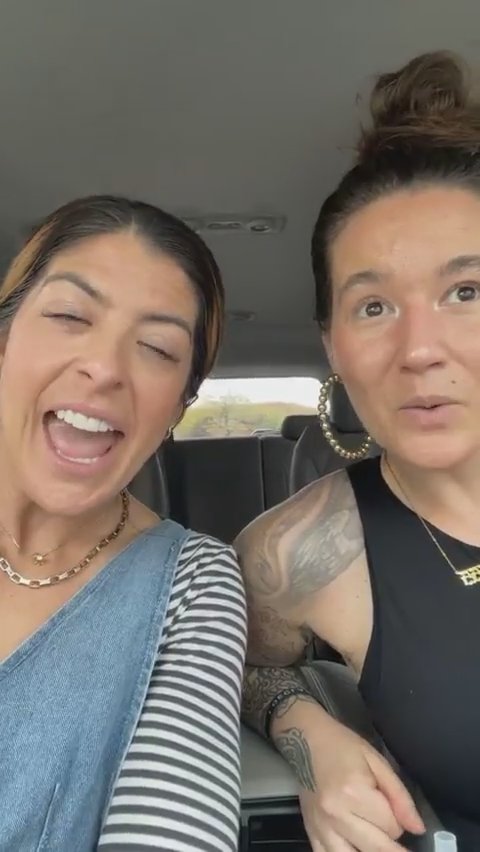
We refer to Jill's vehicle as the mobile headquarters. We go from point a to point b to c to d to e to g to f. Did you follow? That was good.
Mary and Jill own a company called Girls Mentorship. At Girls mentorship, we focus on teaching girls life and personal development skills. They recently came and read to children at a school to honor doctor Seuss's birthday. It was a perfect nod to the work they do.
Thursday happens to be all around caregivers, which is perfect because the work that we do can't just stop with teen and tween girls. If we don't loop in the parents, then the work we do falls on deaf ears. The village that it takes is vast.
The gap between generations is hugely vast, much bigger than it used to be. Being able to relate to kids in the language in which they speak is one of the easiest things for us to really break down walls. Make it fun and connect with them and use words that they're using.
The bridge to that is empathy, 100%. That is going to be our challenge to you this week. Today is to connect with people in your life, your children, other people's children, and see them for who they truly are. It's practice, and it's worth practicing.
There's five or six more lives happening today all around caregivers. We know how many caregivers that are out there that are in desperate need of people to support them. Go off and enjoy the rest of your day and your upcoming weekend, and we will see you on the next episode of Toolbox Thursday.
Hello. Hello. Oh, my gosh. This is so fun for us. Oh, yes, do that. How's that? Oh, great. We're in the mobile hq. We refer to Jill's vehicle as the mobile headquarters because we're always in it, going from point a to point b to c to d to e to g to f. Yeah. Did you follow? That was good. And that reference is perfect because we are leaving a school right now that we had the opportunity to come and read to children. So we are at a k, a pre k through 8th grade school. And today is, well, really, this whole entire week is to honor doctor Seuss's birthday.
So it's read across America. And they asked different authors within the valley to come and speak and read part of their own books. Well, we're not authors yet, so we got to stand in and read a few books that we chose. And if you don't know us, this is a perfect time to introduce who we are. My name is Mary. This is my best friend and business partner, Jill, and we own a company called Girls Mentorship. At Girls mentorship, we focus on teaching girls life and personal development skills. So it's perfect because if you're not a girl, I bet you need a little refinement in the life and personal development skills skills area.
So we got to come in and we got to pick a few books. Really surrounding the idea of one of them was kindness and the other one was rumors. So we got to talk about how to be kind to fourth, fifth, and 6th graders. And the subject of rumors was another one of the books that we picked. And it was perfect for us. It was very well received, and the teachers afterwards were like, oh, my gosh, these conversations are so needed, especially with these kids right now. So again, it's just a little nod to the work that we do and how important it is that we not only teach our kiddos these type of conversations, but we bring them to communities and talk about these conversations as well, because everybody has opportunity to practice.
And since today is Thursday, this is a new day for us to be live on the Cadre app and look at all these flippers joining. Hi, everyone. Shannon, Alec, what's going on? If you are new to Cadre or you're new this week, you have seen Cadre go through a little bit of an evolution. We have certain days of the week that are focused on certain subject matters. And Thursday happens to be all around caregivers, which is perfect because the work that we do can't just stop with teen and tween girls. If we don't loop in the parents, then the work we do falls on deaf ears.
So it's really, what do they say? It takes a village? The village that it takes is vast. And we need to make sure that we're having the same conversations with parents and caregivers that we're having with kids if we expect the life skills to stick. And today, we really, really, really want to talk about empathy. How many of you out there are looking at the next generation thinking, I don't know them. I don't understand them. What are they wearing? What are they listening to? How are they speaking?
They're so different than how I was raised. They're so unrelatable. And if you're raising your hand, so am I. It can be intimidating to speak to somebody in a different generation. But as much as things change, they stay the same, because I seem to remember my mother saying the same thing about me that I'm now saying to the next generation. What funny, what makes it so interesting is the Internet. The Internet didn't exist at the capacity that it exists now when I was growing up. And what that means is information gets spread so much quicker now.
So it seems like the gap between generations is hugely vast, much bigger than it used to be when I was growing up or when my mom was growing up or go up the line. It seems so much different now because of the access of information and the speed at which information now travels. Amen. Something that we saw today in working with these kids was being able to relate to them in the language in which they speak. It is one of the easiest things for us to really break down walls, because as two women coming into a classroom, a lot of times, you know, they're hesitant.
They're like, who are they? We don't know you. We don't know you. And the second that we really can make it fun and connect with them and use words that they're using, that they immediately drop their walls and start to participate. So what that tells us and what we want to offer you today, in tandem with empathy, is being able to connect with your kids in what they're into, what their language is, and checking yourself, stopping yourself with the judgment of, well, why do you say this? Or, you know, that makes you sound like this?
Because that is when our children are gonna stop talking to us. And if they shut down with the little things, they're never gonna open up about the big things. So something we do on our social media platforms, whether it's TikTok or Instagram, are breakdown. Vernacular words that kids are using because you've probably heard them used in some way, shape, or form. We like to make sure that you know that no words are ever new. They're generally just recycled and given new meaning. They are surely to come from another dialect, another culture, and kids are using them in their own way, shapes and forms now.
So things that we like to do on our social media are break down the words that kids are using and or phrases so you can be privy to the conversations they're having and understand how they're trying to communicate. We don't necessarily suggest that you go out and start using these words in everyday, average sentences because you know that your kids are probably gonna look at you and roll their eyes. But you can have a conversation with your kids about these words so they have an understanding that you see them, that you understand them, or you're putting in effort to at least try to understand them.
So one of the words that we broke down in a recent trend report that we laughed out loud at, because, honestly, kids are hilarious and they are so smart and so cunning, and half the time, we don't give them credit for how capable they are in coming up with things like this. So this word. We've done a lot of research. We've gone a lot of places. I've spent way too long on TikTok, looking up certain verbiage that kids use. This one made us laugh out loud. And it is sketchable or easy to draw. Jill, what is sketchable or easy to draw mean?
It makes me think of the. What's that? The Essa sketch or the etch a sketch. Etch a sketch. I knew it was something. Yep. That. Think of it that way. So it's kind of like a. It's a dig to someone's appearance in which, like, they would look at someone and be like, they're sketchable. Like, basically, we. Basic. They're basic. Yeah. They would be easy to sketch. You are so basic that you are easy to draw. You are sketchable. It's their way of insulting you. It's their way of throwing a dig your way, meaning there's nothing defining about who you are or how you look.
And yes. Is that mean? Absolutely it is. But take it with a grain of salt. Kids are learning to be themselves. They're toeing the line. This is where that empathy muscle really comes in. They're at a point where they're pushing back against authority. Parents, teachers, coaches, they're testing their limits. They're finding out who they are, because at a certain point, they let go of your hand when they're crossing the street, and they're trying to find their own autonomy. We see it as selfish, when really, if you dig down, you peel back layers of the onion.
It is self seeking. So they're trying on certain identities, they're trying on certain behaviors. Maybe they're the class clown, and they like to make people laugh, and they don't quite understand how to do it in a way that's respectful yet. So they're throwing things like that out there. You're sketchable, and the whole crowd goes wild. That's feedback for them. They're like, oh, I know that saying something like that makes people laugh makes. And that makes me feel good. And that's where you, as a parent or a caregiver, a guardrail, a safe adult like we are, get to guide them, to say, hey, that was funny.
I'm gonna give you that. But it wasn't done in the appropriate setting. It wasn't necessary in that type of setting. And if all of us, as parents, caregivers, safe adults, aunties, uncles, you name it, it is our responsibility to help raise this next generation because it is so easy to point the finger at them and to tell them what they're doing wrong. You guys can't hold jobs. You guys can't communicate effectively. You are so incredibly self absorbed. You have no idea from, you know, the difference between your head to your booty.
No difference. And if we continue to operate that way, one day they will be adults and they will be the people who are making decisions for all of us. And if we can have a hand in those small moments, I'm telling you, I'm telling you, we're telling you that it's going to make a massive difference in who they're becoming. And we have about 200 we got to see about. I would say maybe even more than that. We probably saw 250 students today. I need to put some hand sanitizer on for how many the germs, for how many high fives we doled out.
But we got to connect. And obviously, it's hard to connect with that many people, but if you're intentional about it, you can make a whole room of people feel like one person. And we absolutely. We have. We got to experience that today. So we're coming to you from a place of knowledge and personal experience with this. And we're imploring you, not just empowering you, we're imploring you to do the same. We need to connect the generations. There can't be a gap anymore because we've seen what division does to us, to our country, to how we feel and how we treat other people.
When really, when we reach out a hand and say, you might have a different opinion, you might like different things, those are the things that are going to ultimately connect us. The bridge to that is empathy, 100%. That is going to be our challenge to you this week. Today is to connect with people in your life, your children, other people's children, and see them for who they truly are. See them for who they truly are outside of the labels that we, that we place on them. And that takes flexing that empathy, muscle.
It's practice, and it's worth practicing because we can be the change that we see in the world. Amen. I got nothing else to add to that. That's it. We see you. We love you. Thank you for joining us on this incredible day. There's five or six more lives happening today all around caregivers. We know how many caregivers that are out there that are in desperate need of people to support them. So if you didn't catch our live, you can go back and replay the lives that happened this morning. There's a couple of more this afternoon, as well as just a stacked weekly live schedule.
And we just. We appreciate you guys hanging out with us today, and we can't wait to see you next week. We'll be back again Tuesday, Thursday, easy peasy. Thursday. Go off and enjoy the rest of your day and your upcoming weekend, and we will see you on the next episode of Toolbox Thursday. Bye, everyone.