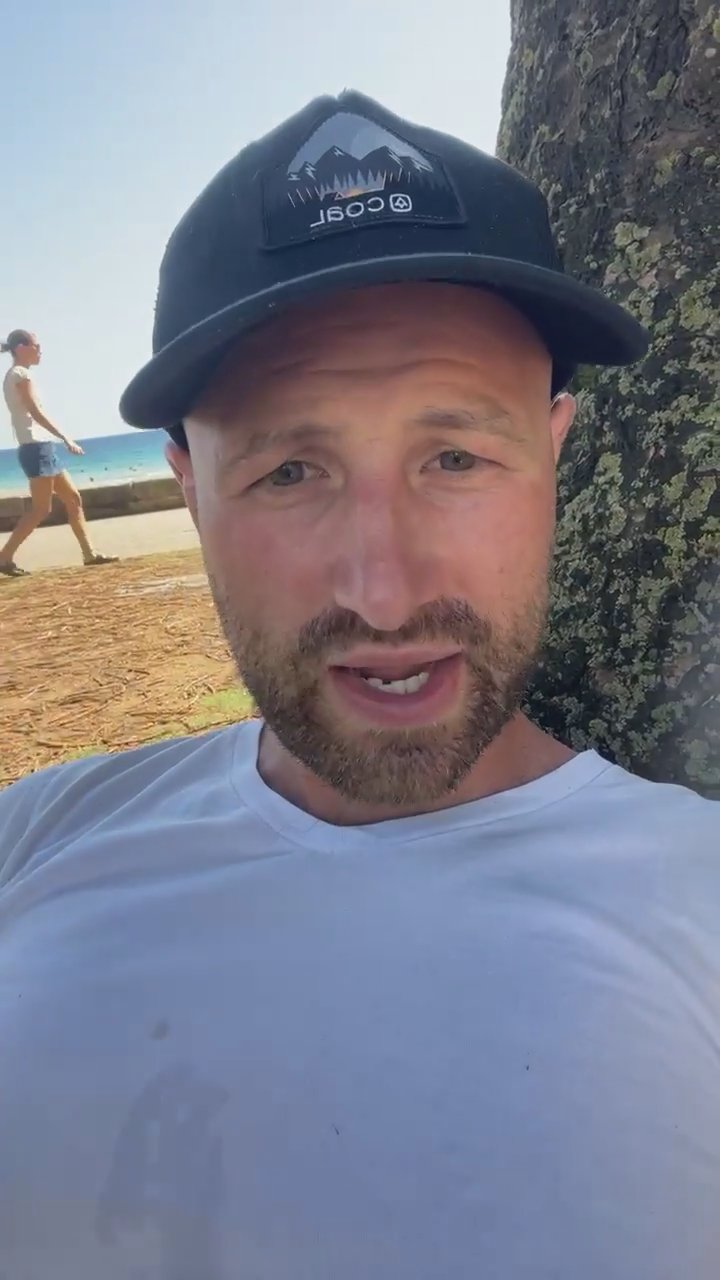
Today we are doing another episode of Mental Health Matters, except you bring the topics for me to answer. This usually makes for a lively and fun conversation, so come join and contribute your questions or experiences. Feel free to put any questions in advance on the community feed and tag me whether you are joining live or watching later.
Mental Health Matters is live from Manly beach outside of Sydney, Australia. We're talking about mental health and addiction. If you have any questions about anything related to both, feel free to ask.
Even though I'm jewish, I never celebrated Easter. I always liked painting the eggs. Maybe someone could explain where the egg thing came from. Got my cold brew coffee strong. Really strong.
There's no such thing as just depression. We have anxiety disorders. The key feature of an anxiety disorder is that it is persistent and it causes problems in your life. The duration, intensity and frequency are key.
The core of anxiety is fear. One feature of a generalized anxiety disorder is a panic attack. Other disorders include social anxiety disorder and performance anxiety. JFJ, you're doing better with your grieving.
Obsessive compulsive related disorders are characterized by both one obsessions and compulsions. The more you avoid the anxiety, the more it perpetuates it. Exposure therapy is where you slowly expose yourself to the triggers to no longer fear it.
Alright folks, here we are, another episode of Mental Health Matters. As you can see, I'm in a little bit different of a location today. Well, I'm just not in my apartment. I am outside here at Manly beach outside of Sydney, Australia. Some people know I am here, but it is a beautiful day. Just doing some work at the apartment I'm at so I figured I'd come outside. Wind's picking up a little bit so hopefully it doesn't sound too bad. I tested it anyway, thought it was a beautiful day. You can see that beautiful blue water, nice almost white sand at the beach.
What up, NB? Jules? You all are here joining me at the beach for another episode of Mental Health Matters. Hopefully you can hear me just fine. A little bit of wind that just started picking up. We got Anna here. I love it. We have way more people joining the livestream. We're talking about mental health, we're talking about addiction. So if you have any questions about anything related to both, feel free to ask me what's up? Speak wonder. Good to see you. So feel free to ask me anything about mental health.
Let's get a good conversation going. I brought a couple different questions that I've gotten over the past week. Couple weeks. So we'll be talking about those. Ana, what's up? So yeah, let's have a conversation. Beach, your favorite spot in the world. Jules, feel free to come join me. It's a quick flight here to Sydney, Australia. I promise it only takes somewhere between 15 and like 19 hours, but it's well worth it once you get here. But yeah. So please ask any questions and we could go ahead and jump in.
It is the day after Easter here. I believe it is Easter for everyone else. Hope you're celebrating that. Have a happy Easter. Go find you some Easter eggs. Paint them. Even though I'm jewish, I never celebrated Easter. I always liked painting the eggs. That was always fun as a kid. We go to a friend's house, paint the eggs and then eat those Cadbury eggs too. So I feel like maybe in some way I celebrate it. I don't know what the egg thing. Maybe someone could explain where the egg thing came from.
Like, how did that tradition start? I don't know if it dates back to the year. Like 20. Got my cold brew coffee strong. Really strong. Anyway, so one of the questions I got. I've been getting a lot of questions similar to this lately, which is talking about anxiety. Now there's different types of anxiety. So people have asked me about things like OCD, obsessive compulsive disorder. How does that relate to anxiety? Anxiety in and of itself? What makes something anxiety versus just something I happen to be anxious about?
We all have anxiety, so we could talk a little bit about that, and I'll break down the different types of anxiety disorders. So, first of all, like I just mentioned in the DSM, the diagnostic and statistic manual, when we diagnose mental health disorders, we have kind of these overarching umbrellas of disorders, right? Depressive disorders, where you have major, like, you know, depression. You have major depressive disorder. And all these different. Like, what other ones? Like, persistent depressive disorders.
There's no such thing as just, like, depression. That would just be a form of depressive disorder. So the same thing. We have anxiety disorders. When you have a category of disorders, there is typically what they would call kind of like, the central disorder, which is basically the core set of symptoms for somebody experiencing depression or anxiety. So a core set of symptoms, and then all the other disorders are roughly based on those. So you would have major depressive disorder, which is kind of the main core disorder for depression.
For anxiety, we have generalized anxiety disorder. Now, the key feature of an anxiety disorder versus other disorders, I shouldn't say other disorders. A key feature of an anxiety disorder. The key feature of a disorder. What makes something a disorder versus. I'm just feeling depressed. I'm just feeling a bit anxious, is that it is persistent and it causes problems in your life. So it has to be three things. The duration, the intensity. What was it? Duration, intensity and frequency. That's the other one.
So, basically, I have to be experiencing anxiety every day. It has to meet a certain intensity where it makes me unable to do the things that I want to do, essentially. And then when I have it, the difficulty of kind of getting rid of it. Right. So the duration of how long that lasts. So, and when that applies to anxiety, there's, like, a certain set of symptoms. Now, for example, that would be. Yeah, I mean, like, you know, they talk a lot about physical symptoms, so, you know, feeling, like, panicked, like your heart is racing, feeling tense.
They say keyed up on edge. Right? Again, how, you know, this is, like, happening just about every day, being, like, you know, afraid of things that you normally wouldn't be. And another key feature of anxiety that I like to think is, like, when you think about fear. So the core of anxiety is fear. Now, if I'm swimming in the ocean and I see a shark, that is, it's appropriate to have a fear response. JFJ, I haven't seen you in forever. How have you been? Happy Easter to you, too. For me, it's the day after Easter, but still a holiday here, not in the west.
So, yeah. So I'm swimming here in the ocean. I see a shark. That's a normal fear response. However, something like an anxiety disorder is saying that the fear is outsized to the actual potential for harm. So let's say I'm swimming in the ocean, I see a little fish, and it makes me anxious. Well, it's pretty, you know, clear, obvious, and maybe in my head, I realize that fear of that fish is inappropriate because there's absolutely no potential of harm from this little fish if it's a shark, that is.
So sometimes in our lives, we may be afraid. You know, we may have certain fears of people, places, things, situations. You know, it could be driving. And a lot of times, the anxiety. Anxiety may come from. Right. It could be like a trauma response. For example, if I get in a car accident, I may fear every time I drive, even if I'm in, like, a slow zone or something, like something bad is going to happen, where the odds of it happening are pretty low. So having the sense of outsized fear that is debilitating, causing issues in my life, is essentially the core features of anxiety.
Now, from this more generalized anxiety disorder having all these triggers, there are other disorders. Now, one feature of a generalized anxiety disorder, it's kind of like an add on, which is a panic attack, which is these short, typically short duration episodes of extreme anxiety, almost fearing for, like, typically, it's like people fearing for their lives. You could be, like, hyperventilating, you know, pet, like, you know, just being in a sheer state of panic, and so being in a sheer state of pain.
So it's these, like, intense episodes. A lot of times, it's associated with, you know, carbon dioxide levels in your blood. Some people are more prone to them. And so sometimes when they have this generalized anxiety, they also have panic attacks with it. Take a break here, junk food junkie. You're doing better with your grieving. Thanks to the hospice grieving therapist and grieving therapy. That's awesome to hear. I mean, that's the power of therapy right there. Therapy connection. So I'm very happy to hear that, JFJ.
We're all pulling for you there. And heck yeah, man. So people have. So panic attacks can go with the generalized anxiety disorder. Now, also, panic disorder is a diagnosis in and of itself. So what makes a panic disorder a panic disorder? Well, if the key feature is panic attacks, so some people just happen to have a lot of panic attacks, and then the primary fear that they have is of having the panic attack. So that's what makes a panic disorder. So I've worked with some people who. That is their primary concern is that panic, then you have what else you have?
Oh, social anxiety disorder. That is another big one. And with social anxiety disorder, it's actually also associated with performance. So the key feature of that is a performance anxiety and fear of how other people perceive you. Now, as part of generalized anxiety disorder, that can be a primary fear. But if that is your primary and basically only fear, if all your fears associated with fear of what they would say, negative evaluation from others, then that would be more of a social anxiety disorder.
So it could be being in large crowds. I had one person, he would, you know, when he would go to a coffee shop, he would be sure to sit close to the door. He would. He would never want to sit in a booth where someone was next to him that was blocking his way. He always needed, like, an escape. Even though he knew there was not a huge potential for harm, he would do that anyway. So that was one guy I remember with social anxiety. I had another guy who was a high level high school wrestler, and he would have this performance anxiety before going into matches.
I mean, he was really high level. And sometimes at his biggest matches, he would be extremely afraid. Yeah. So it says, speaking anxiety, I learned anxiety can bring on temporary condition with your eyes called kaleidoscope vision. I've never heard of that, exactly. But, yeah, I've had people who've had panic attacks, right, where, you know, that feeling where you get lightheaded and things start to, you know, blur. So that does make sense to me. I never heard of it phrased that way. But anyway, had this wrestler, and he would.
He even threw a match one time, meaning he lost purposely just to get it over with. You know, he had, you know, his parents were super intense. You know, they were. They pushed him really hard. If he didn't do well, they would kind of come down on him, you know, the pressure of going. So, actually, I've had this twice. I had two. Two guys who were high level wrestlers. One of the clinics I worked at at that time was in the south suburbs of Minneapolis. And a couple of the schools there were, like, the top, some of the top wrestling schools in the country.
Literally, people would move to that district just so their kids can wrestle at those schools. I mean, we're talking, you know, these guys who have done it since they were little kids, you know, to be at that high level of wrestling. I mean, one of the most intense sports you could do. Yeah. So, fear of negative evaluation. It could be public speaking, reading in front of other people. Right. Where it could be that debilitating, that fear of negative evaluation, fear of other people with that, too.
So there is a personality disorder, a separate type of disorder called avoidant personality disorder, where people chronically avoid these types of situations of negative evaluation from other people. They probably have an element of social anxiety, but also avoiding things that are overly difficult, avoiding things that can result in a sense of failure. Fear of failure. So it's like, if you don't try, you can't fail kind of thing. So that's another thing I maybe associate with that. So we basically covered the main anxiety disorders.
However, you have obsessive compulsive related disorders, which I usually call the tip of the spear of anxiety disorders. And these are, you know, characterized by both one obsessions and compulsions. Obsessions are the thoughts. It's having a fear, continual fear, that you need to do a behavior, the compulsion which eases the anxiety. So the anxiety is the obsession. And it's usually. There's almost like a delusional type element. You know, I don't want to maybe someone get mad. I use that harsher word, but it's kind of like, if I don't tap the counter, an even amount of time, something bad is going to happen.
If I step on the sidewalk, crack. You know, this fear of germs. I mean, so it's really intense. He's really intense. Obsessions. We have to wash your head. It's one of the most debilitating disorders out there, and it's primarily based in this fear and this obsession around the fear. And the compulsion is acting out on it. Right. So that would be avoiding the crack. That would be washing your hands. So that. So that's what that would look like. And that's what makes that different. Now, you know, we talked about the problem, but what's a solution?
Now, one of the best solutions, it can be very difficult, but one of them is exposure. So the more you avoid the anxiety, the more it perpetuates it. It perpetuates the fear. When you avoid the fear, it heightens the fear. It puts you in. It puts you in a negative cycle. So people do what's called exposure therapy, and it could be done a physical or of certain sorts, where you slowly, gradually expose yourself to the triggers to no longer fear it. You know, actually, it was funny. I had a friend here in Australia, and she's from Thailand, and she was never taught how to swim.
So she lives here by the beach and wants to swim. And I've seen how scary it is for her. Like, we went in the ocean after a class, a volleyball class, and she just, like, kind of got right out because of the waves. So I was like, hey, let's, you know, go to one of the calmer beaches, you know, and work on that exposure. And so I taught her how to do the back float. I used to teach kids how to swim. So it's kind of funny getting back into that mindset, but trying to slowly help her have less and less fear.
So she's starting in the bay where there's no waves, where she could stand, and then gradually, let's say I just continued doing this with her, where she would go into maybe a little bit of a deeper area than maybe into an area with wave, so you slowly, and it becomes less and less fearful and then don't have that anxiety anymore. So that'd be an example of exposure that a therapist may do with you. So anyway, there's the breakdown. Just so you all know, I'm coming out with a series here soon about trauma, about a 15 video series.
So go check that out when it comes out. I'll let you know when it drops. Please ask questions. Please go in the community feed. Please share. Please share your experience. Comment on my videos, and I'll answer it. Or just join. Ask questions here. You do, too. One friend avoids. Oh, you have a friend that avoids driving over bridges? One friend avoids walking across a bridge. Yeah, so there's bridges, tunnels, all those different types of things. I had one client who was afraid of driving on the highway would have panic attacks.
So, yeah, anyways, it's been real, folks. I'll catch you all soon. Have a good week. Happy Easter. Like.