What tools do you have in your toolbox? Are they the right tools? Do you know when it's appropriate to use one tool versus another? We want to make sure your toolbox is equipped with everything you need to handle whatever may come your way throughout the day.
Mary and Jill own a company called Girls Mentorship, where they teach life and personal development skills to teen and tween girls. Mary: We can give blame where blame is due, but we have to then take responsibility for it.
80% of people are walking around unaware or unaware that they're unaware. It is so powerful to know when you're in the wrong and then make amends with the kids that are underneath your roof. In my book, we love to tell girls that they are not only the main character, but also the director of their movie.
There are several other incredible creators with their lived experience showing up on this app. It's now your responsibility to make yourself better, despite who they are. Keep showing up, keep coming back. And we will see you on the next episode of Toolbox Talks Tuesday.
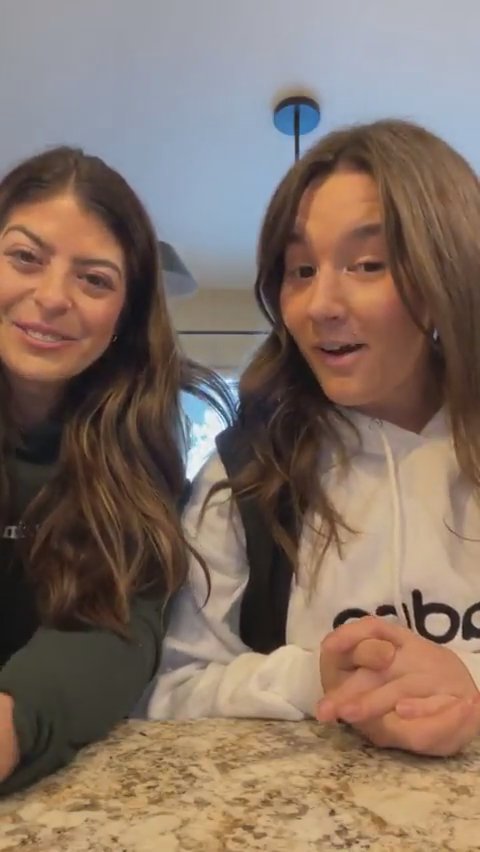
How is it already Tuesday again? It's us. Same time, same place. I'm pretty sure we were at the kitchen counter last week. Last week we were. We're repping that Cadre gear, though. Cadre. What do you have on? I have JC's. I am already comma, indeed enough. And on the back, if you're following behind, you get a nice little message that also says, you are already comma, indeed enough. And yes, you are so straight. Hi, everyone. How's everybody doing? If you don't happen to know who we are, other than by what the description says.
My name is Mary. This is my best friend and business partner, Jill, and we own a company called Girls Mentorship, where we teach life and personal development skills to teen and tween girls. And y'all, I just have to. I have to say, we're on a bit of a high right now because we host summer camps and we just opened up the doors for people to purchase tickets. If you don't have kids, you might be like, wow, that's a really large lead in. It's not. Summer camps are literally, people start booking summer camp plans early, like December before definitely before May.
So we have to get. We have to put our ducks in a row. And we had one person already buy their daughter a summer camp ticket. So what do we do at summer camp? Life and personal development skills. So if you're not a teen or tween girl junk food junkie, you know, you tune in every week, JC, you know, life and personal development skills are things that we all need, regardless of our gender, regardless of our age. They are literally life's cheat code. Your EQ, your emotional intelligence is literally one of the most important things that you could possess in order to get you further, faster in life.
Hi, Luke. Look at all of our. Look at all of our shows coming in. Yeah. We like to say that your emotional intelligence is the plate in which everything else sits on. So what? And I think that's even a cool question for you to ask yourself, like, hmm, where is that in my life? Is that really the plate? Is that really the foundation in which I then build my relationships or my connections or my growth or my learning from? Sometimes we have it backwards. So we like to teach kiddos at a very young age how important that is and why we come every single Tuesday to also inspire and to teach a little nugget for us to practice on this app together and ask you what tools you have in your toolbox or what tools you desperately need in your toolbox and I think today what would be a really good subject to talk about is a lesson that at 35 years old, has taken me the better part of 34 and a half years to learn.
And that is, someone else can certainly be to blame for your circumstances, but you can't hold them to it anymore, right? So I come from a divorced household, and a lot of my tendencies, like my dad, was not great at anger management. So lo and behold, I was not great for a long time at anger management. And I would always blame my dad for that. And I lacked taking personal responsibility for it. So I think a really important lesson that I've learned for myself is we can give blame where blame is due, but we have to then take responsibility for it.
Now I can no longer, at 35 years old, blame my dad for things that he did and not accept personal responsibility for it because I'm going nowhere if that's the case, if I continue to point the finger and say, well, it's your fault, you did this to me, I stay very, very stuck and small minded in the exact same spot in which I am. There's literally no opportunity for growth in that which is a really, really hard pill to swallow. Because if we look at something as if it's not our fault, then why does it become our responsibility to fix it?
Because we want to grow. We want to grow beyond the place that our caretakers or whoever, quote unquote, did us wrong, left us. And it is our responsibility to grow so we can positively impact the others who are around us and yearning for that same growth. Amen. Let's go. Well, and what we like to teach the kids that we work with. And this is such a good reminder because so many of us walk around unaware of how we're showing up. It's actually a very startling statistic. There is. It's said to be 80% of people are walking around unaware or unaware that they're unaware, which is very scary.
Those are the people leaving their grocery carts in the middle of the parking lot, not putting them away. 100%. So if we as adults are walking around unaware that we're unaware, what are actions then telling our kids? Because what we like to say are things are caught, they're not taught. Eventually they will be taught. Yes. But for the most part, if you're not having a dynamic conversation around how you're showing up, and parents, if there are parents tuning into this no fault. We are human beings as well.
But it is so powerful to know when you're in the wrong and then make amends with the kids that are underneath your roof to just to show them how human you are and how to resolve conflict in a healthy way. And we have kids that we work with, young girls that we work with, and they are so caught up in the, well, this is just kind of how life is for me. And we want to empower them just the way that we want to empower you. That that doesn't have to be your story. Right. And you have to be very aware of saying, well, okay, I'm done with the way that I've been living my life, or I've been living this story, and now I want to rewrite it as a new narrative with new characters.
In my book, we love to tell girls that they are not only the main character, but also the director of their movie. That's a really applicable way to put it, right? Because if you don't like the movie, you get to rewrite the script. If you have the power to rewrite the script, then you can change the trajectory of the story. And yes. Does it take a lot of consciousness? Does it take a lot of intentionality? Might it hurt because you're getting rid of relationships that no longer serve you or ways of being that no longer serve you?
Absolutely. Are habits really, really, really difficult to break, especially if they're generational? 1000% they are. But you are the director, the writer, and the main character of your movie. You get to make those hard decisions in order for your future self to look back and thank the current version of you for making those changes to be the best version of yourself. And if kids don't know that, they'll put their blinders on and blindly follow their parents lead. Jungfu junky, you said it beautifully.
Emotional feelings that kids have are learned from observing how their parents and other adults and their peers handle things by showing their emotions. That's the whole concept of things. Are caught, not taught monkey seed, not monkey do. You could say something to your kids until you're a blue in the face. And what they're going to do is what they see you doing, which, I don't know about you, but my dad wasn't a big apology guy. He didn't really take accountability for his actions. It was a more like a justification type of a thing, right?
So I learned to be angry, or I learned that maybe when you fight, that means you love one another, right? There's a whole other world of possibilities that I've really had to trudge through in order to undo that way of thinking. And it's been really painful it's taken a really, really long time. I've stumbled. I've reverted. But I can't thank myself more as the version I am now that my past self thought it important enough to put me through that work. So I wasn't spilling my dad's toxic waste combined with my toxic waste on friendships like I have with Jill or people like you guys looking to heal trauma in your life.
And I was just gonna say, kira, that was so good. I'm like, yes. And this, you guys, this happens on a daily basis. I mean, truly, we are flabbergasted with some conversations that we get to have with parents and, like, real adults sharing these traumatic events that occur in their family, and they're looking to us for support. And these kids are walking around every single day going to school, and we're asking them expectation. We're asking them to perform and do well. And if we don't teach them, they're going to walk around until they're 35 years old, 40 years old, 50 years old, and just live in the story of, well, I guess this is just my life.
Well, the worst part about that is they think it's their fault when they're at a younger age. It's their fault that they're this way, or they can't show up in a way that their parents want them to show up. They've been told that they're broken. They're not broken. You're not broken. But the unfortunate part about that story is, yes. Then you age and you become 30, 40, 50, 60. And you cement right the way you are becomes who you are. Literally. It's your mood turns into your personality, turns into your personal reality, which then makes it even harder to get rid of the tendencies that might really p*** you off about yourself.
So it's sad that we get to have conversations with parents where they're completely unaware of their actions impacting their children or why their children aren't showing up the way they expect them to show up when they're the ones not creating the space or giving them the Runway to actually flourish in life and seeing why this matters. Because, yes. Do we want to give our kids the world? Of course. But it starts with us 100%. So, for those of you today, that's the message. It starts with you. Where can you look in your life and say, you know what?
I'm done with that story. I'm done with it. I'm cutting off that character, and I'm starting a new chapter, and I'm going to take messy action I'm going to take small actions to be better every single day. And I know, JC, if you're still hanging on, I know you don't like the 1% better every single day, but it's progress. It doesn't even have to be the 1%. Are you making progress in the areas where you want to grow? Because here are two women talking to you on this screen across from you, saying that we know we've walked through fire and h*** and back, and it is possible to change and rewrite your story.
And it takes literally, and it takes one step at a time, literally. And for me, it might be your story. For me, it's been cutting off family members, right? That might not be your story. However, maybe what Jill just referenced, you might have to cut out a character or two, and it might be painful because they might be the ones closest to you. But you know what progress looks like. You downloaded this app and you're tuning into a live stream. Thanks. There are several other incredible creators with their lived experience showing up on this app, reaching their hand out or back to you to say, come along, because this work is hard and it cuts really deep, but it's worth it.
And you guys, it's so, so, so worth it to work on who you are. So you get to be that. Whether you are a parent, maybe you're a cool aunt or an uncle, a grandparent, appear to someone who, you know you can help, but you don't know how you're doing it right now. You're pouring back into yourself. You're making the progress that really counts to your future self. So regardless of what's happened, regardless of who you might want to point the finger to, it's now your responsibility to make yourself better, despite who they are.
So we implore you to take a little bit of progress today. And honestly, you guys, some of that progress might mean taking two steps back. That doesn't make you bad or wrong. Okay. Yep. And I was just gonna say, don't forget, you are indeed, indeed. Enough. Enough. You are. We're exactly where you are today. Keep showing up, keep coming back. And we love you guys. And we love you. And we will see you on the next episode of Toolbox Talks. Bye, everyone. Tuesday. Goodbye,