Many of us suffer silently living lives trying to be the "good" version of the roles we take on. We'll talk Step 3 of the 5 things I learned in 7+ years of therapy to stop pretending and start to be my true self.
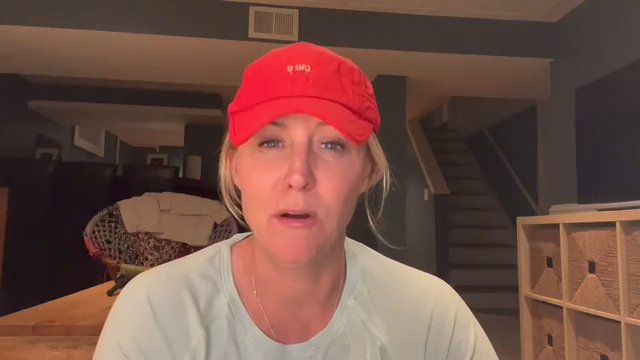
Kaje friends, welcome back to Allowed. I'm on my floor in my basement today. Number two in the five steps that we take to stop living in survival mode, number two is the hardest. When I'm having a hard time or when I'm grieving, I have to go to the ground.
Shannon: I have a CPTSD diagnosis. She says she didn't receive the emotional support she needed as a child. Says saying it out loud for the first time changed everything for her.
Kaje friends, welcome back to Allowed. We are here today, coming to you from St. Paul, Minnesota. I'm on my floor in my basement today, and that is because when we talk about number two in the five steps that we take to stop living in survival mode, number two is the hardest. And what I've learned works for me is that when I'm having a hard time or when I'm grieving or when I'm in the thick of something emotional, I have to go to the ground. My body wants to go to the ground, so I'm doing that today.
So here I am. All right, so we talked last week about the number one thing I learned in seven and a half years of therapy, dealing with anxiety and being a special needs parent and CPTSD and the five steps that I use to recover from that. And step one we talked about was knowing. And so knowing is just paying attention and knowing that there's a misalignment between who you are and your soul and how you're presenting in the world that something is off. So once you do that, step number two comes along.
And step number two, for me, was the most significant one in changing my life. It was also the most difficult for me because it really uncovered and underscored something I didn't know was true until I said it out loud. So I know I've shared. I have a CPTSD diagnosis. And essentially what that means is that there were times when I was growing up developmentally that I didn't receive the emotional support that I should have as a kid. And that kind of, at times, can sound like, meh, right? You weren't.
I wasn't physically abused. My needs were met. But what I didn't know at that time was that I had been neglected emotionally. And so, essentially what that means is I grew up thinking like something was wrong with me. I had all these feelings. Why did I have them? Was I crazy? I mean, I would, you know, assign. I would hear about a mental illness like schizophrenia or bipolar, and I would say, is that what I have? Is that what makes me weird or different? And I had friends that came out as gay, and I thought, could I be gay?
I knew I wasn't attracted to women, but it. It would make something about me. It's different, right? It's not typical, I guess, is how I looked at it at the time. And what I learned in therapy was, in digging through my past with my therapist, I learned that I didn't have the support I needed when I was going through these traumatic experiences. I thought some of the things I went through were normal. I thought that feeling frozen was normal. I, I thought that needing to feel really small was normal.
And so I would always downplay them. And one day in therapy, as I was going through some things with my therapist, she said, you know, Shannon, I want you to think about something. Is it possible that you, is it possible that you might have not had the mother you needed when you were a child? And she said that to me and it felt like fire. That's how I described it to her at that time, is, that's not something that I can't even think about. I can't even think about saying it, much less say it. So we worked for two and a half years to slowly go through this process of saying, what if there isn't anything inherently wrong with you?
What if you just didn't receive the right emotional support at those developmental milestones? To know that you're valuable, to know that you matter, to know that you're not, there's nothing wrong with you. To know that emotions are human, to know that feelings are to be talked about. And I slowly over time, started to absorb that. And one day, I remember, I remember saying it out loud for the first time, and I can feel in my body right now as I'm saying it to you, the nervousness and the anxiousness that existed in that moment, it's still honestly really hard for me to say sometimes.
And I said, you know, yeah, maybe my mother wasn't the mother I needed growing up and not even the maybe right, even that again, now in this moment, as I say it too, she wasn't, she wasn't the emotional support that I needed and it's not her fault and it still happened. And so saying it out loud changed everything for me. Saying it out loud both to myself and to a human who heard it and validated it, not from the perspective of I'm the expert and you're the person that needs help, but from the perspective of, I can see, Shannon, that you believe that and you now know that's true.
And so manifesting it in the world with words changed everything. It took me years. It took me years. And that's okay. So step number two and stop, to try to stop living in survival mode is now that you've noticed this thing that's not in alignment with you, what can you say out loud about it that's true? And if it takes you six months to say that thing, if you're looking at this today and going, oh my God, I have no idea what the thing is. Fine. If you know exactly what the thing is and you're not able to say it out loud, fine.
If you can say it to yourself, fine. If you can say it to me in a DM. Great. Anywhere, any way that you can start to think about doing that step is going to be a big one to getting you to finding peace. So that's step two. Step two is say it out loud. Number one. No. Number two, say it out loud. We'll be back with more, but I just want to thank everyone for being here. And I want to remind you that you are valid and you are whole and you are right, exactly as you are. More from allowed soon. Thank you for joining us on Cadre, and I hope you have a beautiful day, and we'll see you soon, friends.
Bye.