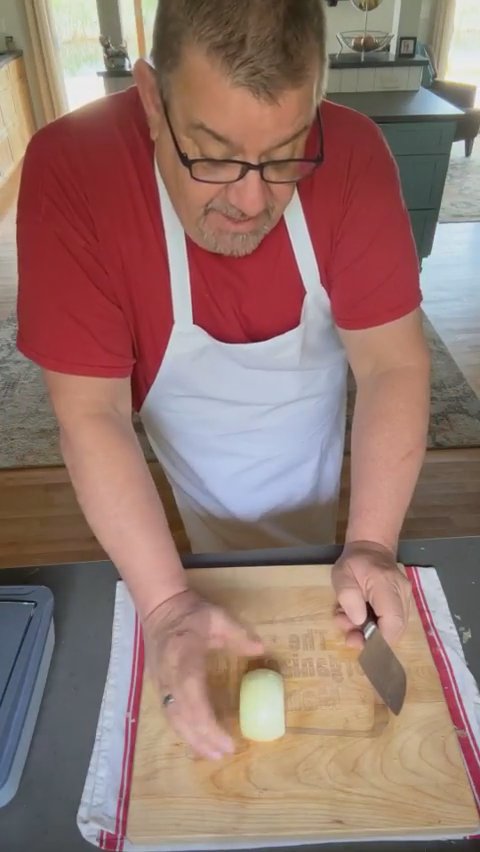
Cadre Life, Organization and Culinary Coach Dan Cunningham shares kitchen tips and tricks, recipes, and strategies for less stress and anxiety throughout the coming week, both in and out of the kitchen.
We're going to be talking about everything onion. We'll also talk a little bit about herbs and herb storage. And I'm going to show you some methods to prep and freeze commonly used vegetables in recipes.
This is a combination bag of onions that they sell in my local grocery store. Yellow onions are like, I call them the onion that Goldilocks chose. White onions are a little bit more sweet and oniony. Spanish purple red onions are fantastic raw.
Next we'll talk about the green onion or the shallot. These are baby onions. They're just spring onions. Shallots are more like garlic. They are fantastic in marinades and vinaigrettes and french dishes. Watch for those recipes that require shallots.
This slicer makes prepping really easy if you want to do batches. I always recommend that people do batches and keep them frozen for the grab when you're ready to go. It's great for peppers, for onion, carrot, celery. It saves so much time.
All right, I want to teach you a couple things about slicing. You slice the green onion like this, right? And you can just dice. Or a lot of times we make these look better by slicing them on the bias. Don't forget to have fun in the kitchen.
Two herbs that are best stored just like you would flowers in a cup of water. parsley and cilantro acts the same way. When buying onions, you want them to be firm and you want to avoid any that have the growth coming out.
Hi, there. You're in the kitchen with Dan. It's good to see everybody today and got a little lesson time in the kitchen. Today. We're going to be talking about everything onion. We're going to be talking about all the different varieties, most of the different varieties, and the differences between the differences in flavor, different cuisines that you might use different onions in. And we're going to talk a little bit about herbs and herb storage. And I'm going to show you some methods to prep and freeze commonly used vegetables in recipes to save you a ton of time and a ton of money.
So let's start. We've got, this is a combination bag of onions that they sell in my local grocery store, and for today, I grabbed it. Usually I'll grab what I need for the recipe, but this is a great grab at the store when you're just starting out on your onion journey. All right, so we've got a yellow onion, we've got a white. We have a spanish purple or red. They're referred to in those three ways. We have shallots and we have green onions. Now, I'll be talking about Vidalia, too, or walla walla, but we don't have either of those because I forgot to get them.
But we are going to talk about the rest. So I'm going to start with yellow. Yellow onions are like, I call them the onion that Goldilocks chose. They're right in the middle. They're a perfect all purpose onion. They're great across the board. They are the onion that you use to get the best french onion soup. They caramelize very well. So this is a good onion to keep around. It's usually the bag that I grab. I use yellow onions more than any other. Next is the white onion. This onion is a little bit more sweet and oniony than the yellow onion.
And this is also great across the board. It's great for cooking. It's great for dressings and raw on burgers and sandwiches as well. Now we talk about the spanish purple red onion. These are fantastic raw. They are a delicious flavor. They're more mild, which makes them great in sandwiches, on, you know, on burgers, diced in salsa. So they're a great raw onion. They're also really pretty. I love the color of these. All right, next we'll talk about the green onion or the shallot. These come in bunches usually, and the way you use these generally is just to slice them right across.
You either will use the white or the not. These are baby onions. They're just spring onions. Another, another word for these. And I'll show you some slicing methods for those in a minute. And then we've got shallots. Shallots are more like garlic. They are fantastic in marinades and vinaigrettes and french dishes use shallots. They are a little garlicky. They're sweet, and they're great for caramelizing as well. These are delicious for cooking and raw in different marinades and dressings. So watch for those recipes that require shallot.
Now you'll know why. All right, I want to talk for a second about prepping. So onion is one of the things that you can prep ahead of time and have frozen, ready to go in bags in the freezer. And they sell these at the, at the grocery store, right? These are convenience buys at the grocery store. It's simple to prep and do yourself, but if you're running, you know, you just don't want to spend the time doing things like this. This is available, but you pay for that. You pay for people to do that.
So I'm going to show you guys something that I use, this slicer here. You can find these in a bunch of different brand names, but this is, you know, generally what you're looking for is it's a box dicer, slicer, everything, and it comes with different size dice plates. We're going to use the tiny one today, and it makes prepping really easy if you want to do batches. So I always recommend that people do batches and keep them frozen for the grab when you're ready to go. A lot of times, people don't want to spend the time cooking because they have to prep everything, and it takes a long time.
If you do this, you know, all at once, I'm going to show you how quick this is. It just saves you so much time, and it also saves you a lot of money. So I'm going to put the, put the knife right through the center of the very bottom of the onion. This is where the roots come out. Flip it over. And I'm going to. For this, I'm taking off both ends, and we're just gonna peel it right across. And one of the, one of the television chefs that I used to follow a lot always said, take off one layer of the onion more than you think you should, because that layer is usually, you know, that last layer, that's kind of questionable.
It usually is really tough. More tough than the next layer in. All right, so what we want for the slicer is just disc slices of onion like that. So I just run the knife through that to get the slice. And watch this. Then you got a nice even dice. So imagine doing this. Get five onions or whatever and you just keep the process going. Grab yourself a container that you can put in the freezer and you are good to go. This also works with celery. Celery tops are really good for soups. You can freeze these as well.
Alright, we're just going to do a couple demo celery's. Pop them in there, one slam down. There you go. Celery added to the toys. I love this thing so much. It saves so much time. And especially when you do things in batches, that's how we do it in the restaurant. Everything in batches, we make everything large. All right, so let's try it with a carrot. Just peel this up a bit, slice through there. You don't want it too big. Anyway. Boom, there you go. So imagine a bag chuck full of each one of those in the, in the freezer.
You need them for a recipe. Grab the bag, measure out as much as you need and you're ready to go. It's great for peppers, for onion, carrot, celery. I recommend those for batch dicing and freezing. All right, I want to teach you a couple things about slicing, actually. It's just kind of one thing. You slice the green onion like this, right? And you can just dice. You can dice the whole in the batch and then just come up with that dice. Or a lot of times we make these look better by slicing them on the bias.
So you're slicing straight across this way. Just turn your knife at an angle and watch how these look. You know, you get this, a different slice. They call that slicing on the bias. And it just makes, it makes things look prettier. If you're finishing dishes with the green onion, it's kind of fun making this mess here today. Don't forget to have fun in the kitchen. It makes the whole process so much better. All right, last thing for the day, I'm going to talk about two herbs that are best stored just like you would flowers in a cup of water.
This is parsley. I bought this parsley over a week ago and it's been sitting on the counter, not even refrigerated. And actually it was wilted the day I bought it. Like, I held it to the side and it just drooped over. I put it in water, cold water. It perked right up and it stayed fresh for over a week. Now you do the same with cilantro. Cilantro acts the same way. This cilantro was droopy. I put it in water when I got home. But you want to change the water. You know, when it starts looking green like that, pull these out, rinse the bottoms and put them back in just like you would a bouquet of flowers to make them last longer.
All right. So there you have it. Oh. When buying onions, you want them to be firm and you want to avoid any that have the growth coming out. And I think that does it for today. Thank you so much. And leave me a comment below if there's any content that you'd like to see in the future in the kitchen with Dan right here on Cadre. Thanks. Bye, you guys.