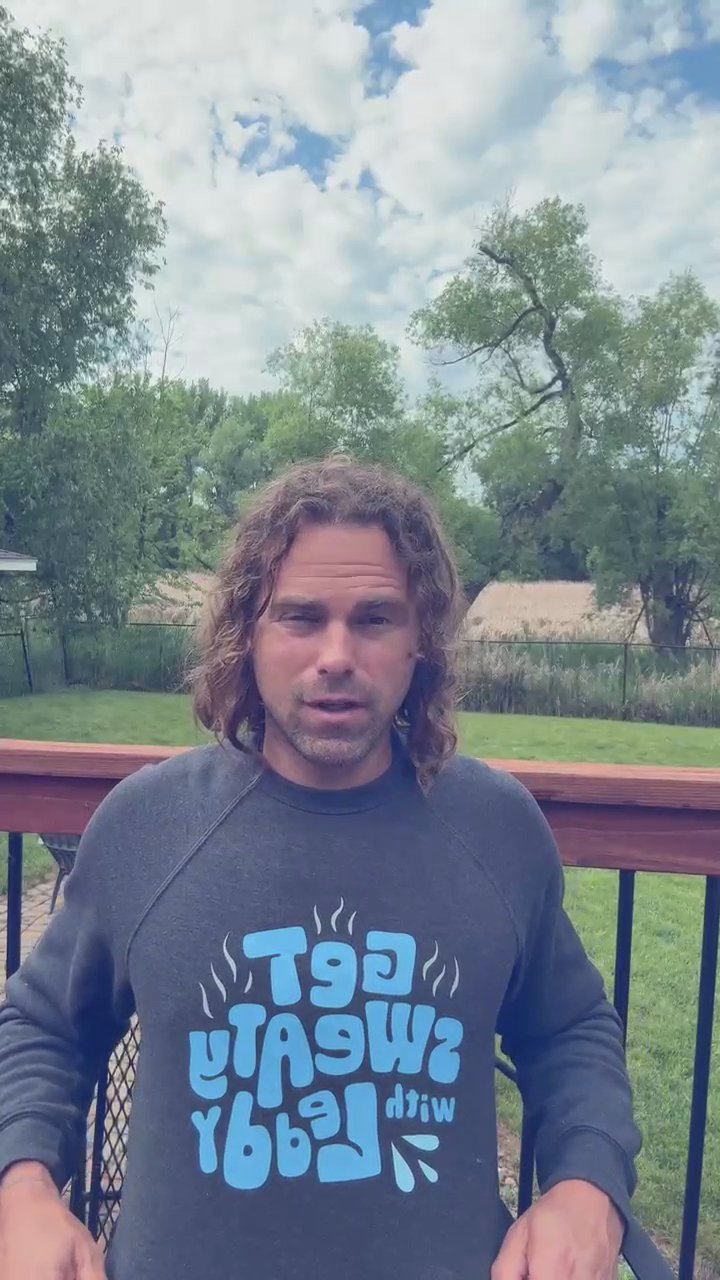
Tales from a life of battling pain—physical, mental, emotional, spiritual. I’ve faced it all. Now, my purpose is to turn my experience into a roadmap to healing for others.
The speaker greets the audience, describes a peaceful morning after a storm, and introduces the central topic: the relationship between pain and rest. This short opening establishes tone and context for the discussion.
The speaker shares their history of spinal and joint injuries and explains how pain often signals a need for rest or action. They emphasize that pain can trick you and should be interpreted as information to guide decisions.
After waking with nerve pain potentially from wake surfing, the speaker decides to act by doing a cold plunge and light bodyweight movements. They describe how choosing difficult but restorative actions can lead to feeling better.
The speaker explains their use of an ARP machine for strength without heavy lifting, then follows it with a sauna and a multi-mile rollerblade outing. They report the nerve pain dissipating and waking up pain-free the next morning.
The speaker outlines the physiological reason movement combats pain by reactivating muscles and coordinating the nervous system, warning against prolonged inactivity. They also reflect on a lifelong mindset of movement and how that has shaped their approach to healing.
The speaker summarizes the core message: move through physical, mental, or spiritual pain while balancing it with intentional rest, and use filters to prioritize rest and action. The chapter closes with a call to follow their YouTube channel and friendly sign-off.
Good morning, everybody. Hope anybody in Minnesota enjoyed that storm that rolled through this morning. It was pretty glorious. Lots of rain, little thunder. Love that. When I woke up, came out here to journal this morning, the birds were extra chirpy and it was just nice listening to the water droplets fall from the gutter. Water droplets falling from the leaves when the wind picks up. It's just a really peaceful setting. And that'll bring me into what I'm going to chat about today. And it's that relationship between pain and rest.
And I had a good experience with this yesterday because I was dealing with a little bit of nerve pain in my low left back. And I wasn't exactly sure where it came from. And this is common for me. If you don't know me, I've broken my back, which led to spondylolisthesis. That's my spine sliding forward, fusing itself together, stunting my growth and creating compensation patterns that then led to three ACL surgeries, torn labrum in my hip, partially torn hip abductor muscles, multiple herniated discs.
and there's more out there, but those are the more significant ones. So I'm used to just having little bits of pain creep up. Usually it is from inaction. Sometimes it's from action and then I got to take some inaction, rest, to get back to proper functioning again. But that's that balance that we need to have when it comes to rest. Too much rest can actually be bad for you. So It's very necessary to build rest into your life, and that's what I've been forced to do with my appendix surgery, and I'm grateful for that.
But that gave me this mindset of like, all right, I gotta rest, I gotta rest. And over the past couple weeks, as I've been getting more healthy and feeling strong again and needing to reintroduce physical activity into my life, I was really paying attention to that little bit of pain, and it was It was doing what pain does, and that's trick you. It's a sneaky little devil, right? I say pain is information, and you need to receive that information and do with it to the best of your ability. And you can make bad decisions with pain and let the pain persist, or you can make good decisions and encounter that pain.
So for me, the pain was continuing to say, tell myself, just rest a little bit more, you know, you had a big surgery. You need that time. And then yesterday I woke up and this nagging little nerve pain was really bothering me. And that was probably because I went wake surfing for the first time this summer, Monday night at my friend's house. And if you're not familiar with wake surfing, You know, your body is twisted as you're getting going and then you're getting pulled by a rope and you're standing up and then you're falling and then eventually you're going to fall.
So kind of taking my body for a ride that it hasn't been on in a while and it was a blast. It was a lot of fun. I love wake surfing. When I woke up yesterday morning, yeah, I could feel the repercussions of moving my body in ways that I hadn't for a while and You know, after a period of rest, you can't just jump into something full steam. You got to ease into it. And yesterday or Monday night, wake surfing was easing into it, but it's still, you know, it's going to come with soreness or what have you.
So I wake up yesterday morning, I'm like, man, I am not enjoying bending down. I could feel that pull in my back and I just don't like that. And I told myself, you know what? I'm going to plunge this morning and I'm going to fix this pain. Today is the day. I'm going to be moving my body again to fight this pain. So I go and I do the plunge and I had to talk myself into it. And sometimes in the morning, this morning especially, do the thing that you don't want to do because it's probably going to be the best thing for you.
And maybe it's doing some laundry. Maybe it's preparing meals for the day. Maybe it's cold plunge, maybe it's a workout. And you're just like, gosh, I don't want to do this, but it's one of those things that when you do do it, you feel amazing afterwards. So I cold plunge, I get out, feel invigorated, and I notice shortly after that my back feels a little bit better. I'm like, okay, nice. Take note of that. And Then throughout the day, I'm doing some pushups, doing some other just minor body weight stuff, and just feeling a little more motivation.
And continue to go throughout my day. And I finally, I talk myself into, all right, I'm going to do some strength training here. I'm going to use ARP machine. It's one of my favorite devices that has kept me strong over the past 15 years. And you can learn about the ARP on my YouTube channel, Get Sweaty with Letty. I've got an episode with the owner's son, who's now operating the modality. A good friend of mine, Colt Thompson, his dad, Dennis, who created that, the ARP machine passed away. So Colt's a good friend of mine, did the episode with him.
It's a wonderful device. I'll tell the story, that'll be a whole cadre cadre session for me talking about the arc machine at some point. But I was going to use this machine. And for me, as someone that's had three knee surgeries, the back problems, hip problems, it's hard for me to keep strong if I'm going to do traditional lifting because my body does not like squats. It doesn't like Olympic lifts. My body is a little too broken for that type of pounding. So this art machine has been integral in keeping up my strength for the past 15 years.
I don't lift weights and this thing has been just everything for me. And so I, I do this, do this workout. Essentially the art machine, it's like a very sophisticated stem blasting electricity through me while I'm doing elongated holds such as wall sits, lunge holds. hamstring holds, all types of movements like that. And I get done and I'm feeling good, right? I'm like, oh my gosh, this is making me feel even better. That nerve pain has dissipated even more. So then I'm on that exercise high and I decide, you know what, I'm going to fire up the sauna And I'm gonna go for a rollerblade.
So, I'll do that. Fire up the sauna, and being that it was as hot as it was yesterday, the hot room was already 110, so it was pretty much already sauna. I didn't have far to go. So that was perfect. Fire up the sauna, go for about a six, seven mile rollerblade down the Dakota Trail, which is one of the most scenic paths that you can enjoy in the state of Minnesota. Cuts right through Lake Minnetonka, going over a bunch of bridges, lots of beautiful scenery. So go for a good rip on the blades, first time this year.
And I don't even know if I went last year because I had that knee injury that I was dealing with. So it was the first time in a while and it felt just incredible. First couple strides, body's like, oh boy, I don't know if I should be doing this, I just worked out my legs. pretty tired here. If I'm tired, I might not have proper mechanics and I might be compensating for something which then could lead to more pain. But after I stride it out for the first quarter mile, I felt I got loose and was able to push through.
And when I got home afterwards, I have a dinner, have a sauna, and I'm feeling super relaxed. And I couldn't wake up. I couldn't I couldn't wait to wake up today to see how I felt, to see if all that work paid off. So I wake up this morning and I get out of bed. Well, actually, I'm sorry, at first I always do the big cat stretch when I'm in bed full on just everything. And that's how I start my day, just essentially like turn on my muscles with a big full body stretch, roll out of bed. I bend down on that left, using my left knee, thinking, okay, let's see how this nerve pain feels today.
No nerve pain, none. And I'm like, gosh, pain tricked me again. It gets me thinking that I got to just wait a little longer to deal with this physical pain. But that's not what you should do. You got to move the body to counter pain with movement. And when you're moving, it's turning on muscles that are essentially dormant from inactivity. When you turn those muscles on, now your brain, your nerves, your muscles are all firing together. And like a car, like an engine, how everything's working together, right?
And if you plug something up, you're going to have a problem. Your engine's not going to be running as well. And if you ever Like it's like in Minnesota winters, when you're near, if you're not starting your vehicle, it doesn't start. And the same goes for your body. If you're just keeping it idle, not moving it, not starting it, it's going to be more difficult to get it going in the right way. And one of the biggest barriers to healing from physical pain is this concept that we need to rest it out and That's just not how you're going to fix physical pain.
You need to take action for it. And I guess for me, as I think about that, when I think about all my injuries, chronic pain was introduced to me at age 11. So I've always had this mentality that I need to be moving. And over the years, that mentality caught up to me in the form of in the form of stress, in the form of kind of getting caught up in an identity and having a tough time moving through that and kind of filling my time doing too much to compensate for the injuries that I have, the pain that I experienced, the pain that kind of set me back for a period of time but also set me up for success because I'm using that pain as information, information to make myself the best self that I can be.
So. move your body. And as I kind of circle it back around to where I'm at today, I'm really relearning my relationship with rest and it's great. There's a lot of times when I want to just get after it and go and do something, but I try to run it through this filter that I have now. It's like a filter of importance and a filter of now. And if I run something through my filter and it's not benefiting my immediate goals or my year-long goals and it just ends up being a task, then it doesn't pass through the filter.
It gets put into a different category and allows me to rest as opposed to constantly finding time to build something in and looking out for the future of where I can fit things in. Now I'm looking out for the future of where I can rest. And then prior to that rest, I want to move my body so that my body can rest so that it's not getting restless by too much rest. So I guess if there's anything to take from today, it's that when you're feeling physical pain or mental pain or spiritual pain, You got to move through that, through some movement.
But you've got to also balance it with rest. So it's a give and a take. Too much of anything is never a good thing, even if it's a good thing. So make sure you find that balance, get to a homeostasis between production, rest, and make sure you're just present in the moment with how you are feeling. All right. That's gonna do it for me today. I hope my words help you out a bit. And if you wanna know more about pain, you should subscribe to my YouTube channel, Get Sweaty with Letty. Lots of good stuff going on over there.
It's kind of my main source for information to help people navigate pain by providing a roadmap towards natural healing. So that's who I am. That's what I'm about. And that's what I'm going to leave you with today. So enjoy this Wednesday, this June Wednesday. And I know I'll see you next week, but hopefully I'll see you before that with something that I drop into the cadre sphere. Until then, cheers.