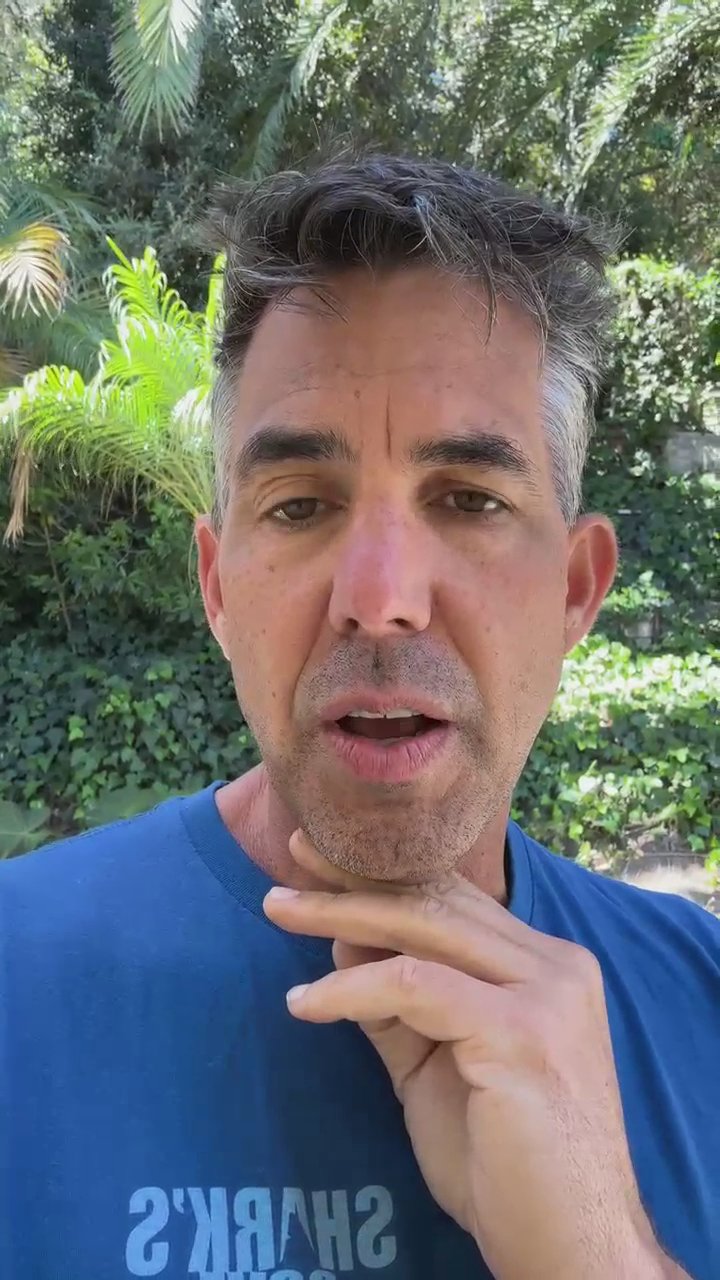
It is so tempting to take care of kids long after they need us to. It is easy to think our love for them requires us to do things for them long after it is not only helpful but appropriate. It’s much more important to teach our kids to fish than to keep giving them fish
The speaker takes a moment to breathe, get present, and introduce the series and the day's topic: 'Teach Them How to Fish.' He also briefly identifies himself and frames the talk without prescribing parenting advice.
The speaker presents the 'give a fish/teach to fish' proverb and connects it to parenting choices, saying he errs toward encouraging independence. He begins to outline why teaching children to do for themselves matters.
Using a grilling example and everyday chores, he illustrates how he invites his daughter to help and practices giving her responsibilities. These anecdotes show how small teaching moments prepare children for independence.
He warns that constantly doing things for kids produces helplessness in a generation, arguing this isn't innate but learned through repeated parental actions. He emphasizes he doesn't want that for his daughter and acknowledges the tension in his own parenting.
The speaker admits to occasional lapses and describes coordinating with his partner to assign responsibilities. He stresses the importance of teaching children skills rather than always providing help so they can grow confident and independent.
He ties the philosophy back to conscious fatherhood, asking listeners to consider what kind of teacher they want to be and affirming his commitment to teaching his daughter to be self-reliant before signing off.
All right, Cadre Sphere. I'm just going to take a nice little deep breath, then going from one thing to the next. Had to navigate different things. So I'm just going to get present. Take a deep breath, another deep breath. Always feels good just to take some time to breathe. So this is the second week and I do fatherhood on the second week. And you know, we do conscious fatherhood and that today, right, the title is Teach Them How to Fish. And you know, I'm A Gen. Xer and hey, there's Jordan Smith.
What's up, buddy? I am a Gen. Xer and you know, we are known for having not only had a certain kind of parenting, but for parenting a certain way. And I'm not trying to give anybody parenting advice, but I will say that there is a balance. Here, we'll get out of the sun a little bit. There's this balance, right? The line from the title of this talk actually goes from a saying, right, where You give a man a fish, he'll eat for a day. You teach him how to fish and he'll eat forever. You give a kid a fish and he'll eat for a day and you teach a kid how to fish, they'll eat forever.
So I know that I probably err on the side of my daughter having to do more stuff on her own. And I'm not trying to indict parents and I'm not trying to judge or criticize parents. And I will say, I know that it's a hard decision sometimes, but wow, I hear some parents struggling with stuff that it's like, hold on a second. Your child is 17 years old coming in at 11 o'clock at night and you feel guilty because when they ask you to make them some food and you say no, they get upset and then you feel you feel guilty about that?
I wouldn't. I would not feel the slightest of guilt about that. But that's the philosophy of teaching our kids how to fish. And then you have to think about like for parenting and like being a dad, right? Being a dad like there's the stoic dad and there's the detached dad and there's the firm dad and There's that idea of how dads are supposed to be, but I know a lot of dads that struggle in this particular area. They struggle with doing stuff for their kids that they don't need to be doing for their kids.
They got no business doing for their kids. And the challenge is like, who are you doing this for? That's the bottom line, right? As parents, our job is to constantly ask ourselves, who's this for? Am I doing this for my daughter because it's easier than trying to get her to do it and ask her all the time for her to do it? Am I doing it because I feel guilty about something else and so I'm trying to make up for it that way? Am I doing it for her because I don't know, whatever reason. What I do know is that my goal, my intention as a father is to teach my daughter how to fish.
I was cooking on the grill the other day and we have a propane tank and I wanted to show Grace several aspects of taking care of a grill. and then grilling, actually grilling. And then I had her flip the hamburgers and do all the different stuff. And she's like, why are you even teaching me this? I said, well, who knows? You're going to be in college, might be having a party. They break out the grill and you're like, I know how to do it. And There's so many things where these days I'm doing something and I stop and I'm like, I want Grace to help.
I want Grace to help. I want Grace to have some of these responsibilities. I want Grace to do some of these things for herself and to know how to do them. Instead of cooking dinner, I invite her to help me to cook dinner. It's like these little things teaching our kids how to fish. is everything. It's everything because otherwise we have a generation of kids that are helpless. We have a generation of kids, oh sure, it's great that they rely on their parents. Great. But at what cost? At what cost have we created that?
I hear parents all the time kind of talking about, oh my son's so helpless and he can't do this and he can't do that. I'm like, how do you think he got it that way? You think he was born that way? Is that some genetic abnormality of this generation of young men? No. It's like the little things over time, over and over and over and over again, and you create this expectation, you create this dependency of our kids on us. I don't want that. You know, I don't want that for my daughter. I never have.
And I've never acted that Way and I've tried to really work to support her mom in not doing that as well and it's been a wonderful and interesting tension at times between Those two things because there's no question at all that I have erred on the side of like Not enough not doing enough for grace so now I catch myself, and I have been for years actually, catching myself and being like, oh, no, I'm going to do that for you. I want to do that for you. I'm happy to do that for you. And other times, not.
And then other times, when her mom's getting ready to do something, and I'm like, hey, that's Grace's job, right? That's Grace's job. Or, I think it's okay. I think she can do that. I think she can do that on her own. So it's a team. We're a team and we play to our strengths and it's a great thing. But we teach our kids how to fish. We're not failures if we don't. But it's hard to truly support our children becoming adults if we're not teaching them how to fish. It's truly hard for our kids to feel good about themselves if they don't have parents who are teaching them how to fish instead of constantly giving them fish.
And at the end of the day, we say it's for our kids, but I don't think it is. I don't think it is. If we were really thinking of our kids, we'd be thinking about what they need to become independent adults able to take care of themselves. So what's that have to do with conscious fatherhood? I think it has everything to do with conscious fatherhood. Because wherever you're at on the spectrum of giving your kids independence or giving your kids dependence or whatever it is that you, wherever it is you fall, it's that idea for me personally of like who do I want to be in my daughter's life, right?
What kind of teacher do I want her to see me as? And right now I think I'm doing pretty good. I'm not perfect by any means, but I think I'm doing pretty damn good and I've worked hard to do it. And most of it has been driven by the philosophy of I want to teach my daughter how to fish. So on that note, have a great weekend.